Can I Wear Red in Taiwan?
Yes, you can wear red in Taiwan, and in Tainan it fits right in. What red means locally, when to skip it, and how a qipao rental in Anping lets you wear it properly.
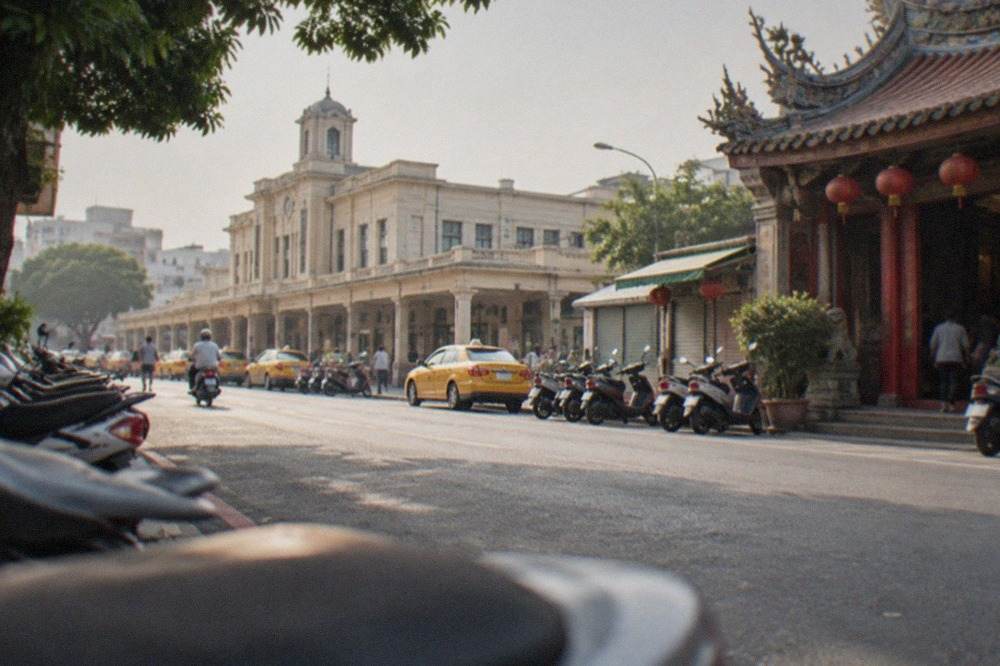
Red is not just acceptable in Taiwan, it is the color of the culture's happiest occasions. Weddings, Lunar New Year, temple processions and shop openings all reach for red first, and a traveler in a red shirt or dress in Tainan blends into a city where red lanterns, red banners and red-painted temple doors are part of the everyday streetscape. The short answer to the question is an easy yes, with one narrow exception around funerals that is worth knowing before you pack.
Is Red Ever the Wrong Color in Taiwan?
The only setting where red is out of place is a Taiwanese funeral, where white is the mourning color and bright red reads as disrespectful to the family of the deceased. Everywhere else, red signals celebration and good fortune, and a visitor wearing it is read as festive, not odd. Weddings, Lunar New Year, temple festivals and business openings are precisely the moments red is worn on purpose.
That single exception aside, red carries no social penalty anywhere a tourist will realistically go. Temples welcome it, night markets welcome it, and the city's festival calendar leans on it heavily. The Tainan City Government Tourism Bureau's calendar of city events shows a year built around Lunar New Year countdowns, the Yanshui Beehive Fireworks in February and the Yuejin Lantern Festival from February to March, all occasions where red decoration and red clothing dominate the visual landscape.
A useful contrast to hold in mind: in parts of the West red can read as loud or attention-seeking, while in Taiwan it reads as participation. If your trip lands during a festival period, red is arguably the most appropriate thing you could wear. If you are attending a funeral or visiting a family in mourning, pack something muted instead.
There is also a practical reading of the question that has nothing to do with etiquette. Red is a hot color in a hot city, and travelers sometimes wonder whether it is somehow unsuitable for the climate or too conspicuous for daily sightseeing. Neither concern applies. Locals wear red year-round, and the color of your shirt has no bearing on how you are treated at a ticket gate, a food stall or a temple entrance. The question is really a cultural one, and culturally the answer is firmly in red's favor.
| Setting | Red appropriate? | What locals typically wear |
|---|---|---|
| Temple visit | Yes, fully | Everyday clothes, red common at festivals |
| Night market | Yes | Anything casual |
| Wedding banquet | Yes, encouraged | Red is the guest of honor's color; avoid upstaging the couple in full bridal red |
| Lunar New Year | Yes, encouraged | New red clothes are traditional |
| Funeral | No | White, black or muted tones |
Where Red Shows Up Across Tainan
Tainan is one of the most temple-dense cities in Taiwan, and red is the working color of its religious architecture: gates, lanterns, blessing papers and procession banners at sites like the Grand Matsu Temple, which the Tourism Bureau's page lists as free to enter and open 06:00 to 21:00 daily. A visitor in red matches the buildings rather than clashing with them.
The Grand Matsu Temple is a good example because it sits in the old city core and costs nothing to enter, which makes it an easy stop on any first walk. The city's own page for the temple records its daily hours and free admission, so there is no ticket barrier between a visitor and some of the reddest interiors in Tainan. The same goes for the Tainan Confucius Temple, free to enter and open 08:30 to 17:30, and the Kaiyuan Temple, free and open 06:00 to 17:00. Between those three alone, a visitor can spend a full morning surrounded by red without paying a single New Taiwan dollar in admission.
If you want the question answered by the city itself, spend an evening at a night market during a festival window. The Tourism Bureau's Grand Matsu Temple page is the kind of official source that documents how these spaces operate, and the market pages do the same for the night markets, where red stall lighting and red signage are everywhere. None of it is a dress code. It is simply the color the city dresses itself in.
The night market schedule matters here, because the big outdoor markets rotate by day of the week. Garden Night Market runs Thursday through Sunday, Wusheng runs Wednesday, Friday and Saturday, and Dadong runs Monday, Tuesday and Friday, all per the Tourism Bureau's own pages, with hours of 17:00 to 00:00 for the first two and 18:00 to 01:00 for Dadong. Friday is the one night all three big outdoor markets run, and it is also the night when the festival red of the stalls is at its densest. Siaobei Night Market is indoors and open every day, noon to midnight, which makes it the wrong-night and wet-weather fallback. Always check the city's pages before you go, because the days do change.
For visitors planning a longer stay, our two-day Tainan itinerary routes you past several of these sites in an order that makes sense on foot.
What a Qipao Rental in Anping Involves
Renting a qipao in Anping is the one bookable way to wear red in Tainan with intent, and the listing on the operator's live page offers a full-day rental of the traditional high-collared dress, rated highly by past renters. It exists because Anping's old streets, tree house and fort walls have become the standard backdrop for portrait photography in period dress, and red is the most photographed qipao color of all.
The Anping district is the historic end of the city, where the Dutch East India Company built Fort Zeelandia beginning in 1624, and its brick and whitewashed surfaces are exactly what makes a red dress pop in photographs. The rental experience covers a full day, which is enough time to move between Anping Old Fort, the Anping Tree House and the old street without hurrying. Both of those historic sites charge NT$70 at the gate per the city's published prices, and the Tree House opens at 08:30 while the fort's listed hours run to 17:10. The city's pages note that Tainan residents enter free with ID, a concession that does not extend to visitors, and that the on-site notice governs the final price. More of these guides are collected on Tainan Travel Guide.
Should you book it? If portrait photography matters to you, yes: it is one of the few Tainan experiences built entirely around wearing something beautiful in a historic setting. If you just want to sightsee, your own red shirt does the job fine.
One practical note before you commit to a full day in a qipao: Anping involves a lot of walking on old streets, and the dress is fitted. Renters on the operator's live listing consistently describe the experience as a photography outing rather than a full sightseeing day, so plan the heavy walking for the morning and the portrait session for the golden hours before the fort's 17:10 closing.
What to Pack Beyond Red for a Tainan Trip
Pack for heat first and color second: the Central Weather Administration's 1991 to 2020 normals for Tainan show 186 days a year above 30C, with April through October above 30C on most days, so light, breathable fabrics matter more than any color choice. Red is welcome everywhere, but in summer the practical question is what you can wear for a full day of walking without wilting.
The same climate dataset shapes the rest of your packing list. Tainan's rain is almost entirely a summer event: August averages 466 mm across about 16 wet days, while December brings just 16 mm across 3. Close to three-quarters of the annual 1,761 mm falls from May to September. October to March is the dry, comfortable half of the year, with October recording fewer wet days than any other month, 2.8, while still averaging 30.8C maxima. A summer trip wants an umbrella regardless of wardrobe color; a winter trip barely needs one.
Color-wise, nothing is forbidden for everyday sightseeing beyond the funeral context. White is fine at temples and markets despite its funeral association, because the association is situational, not absolute. Bright colors generally are unremarkable in a city that decorates itself in them.
| Season | Typical daytime high | Rain reality | Wardrobe advice |
|---|---|---|---|
| Oct to Mar | 24C to 31C maxima | Dry, 2.4 to 4.2 rain days a month | Light layers, red photographs beautifully |
| Apr to May | 29C to 31C maxima | Rain rising from 69.8 mm to 165.6 mm a month | Breathable fabrics, compact umbrella |
| Jun to Sep | 32.4C to 33C maxima | 370.5 to 466.1 mm a month at the peak | Loose clothing, sun protection, umbrella |
If the packing question is really a trip-planning question, our guide to where to go in Tainan for the first time and our honest take on whether Tainan is worth visiting cover the decisions that matter more than wardrobe.
Common Questions About Wearing Red in Taiwan
Can I Wear Red In Taiwan?
Yes. Red is Taiwan's celebration color, worn at weddings, Lunar New Year and festivals, and completely unremarkable at temples, night markets and every tourist setting in Tainan. The only place to avoid it is a funeral, where white and muted tones are the norm.
Is red disrespectful at Taiwanese temples?
No. Temples themselves are decorated in red, from gates to lanterns, and red clothing is associated with festivity and good fortune. Everyday modest dress is the only expectation at religious sites.
Can men wear red in Taiwan?
Yes. Red shirts and jackets are ordinary menswear, and during Lunar New Year red is worn by everyone. There is no gendered restriction on the color.
What colors should I avoid in Taiwan?
For everyday travel, none. White and black are normal casual wear. Only at funerals does the palette narrow, to white, black and muted colors, with bright red specifically avoided out of respect.
Where can I wear a red qipao in Tainan?
Anping is the standard setting. Its old streets, the Anping Tree House and the fort walls are the city's established backdrop for qipao photography, and full-day rentals are available on the operator's live listing.
The honest summary: wear red in Tainan with confidence, save it for the funeral you will hopefully never attend, and if you want the full experience, put a red qipao against Anping's brick walls and let the city's own favorite color do the work.