Fo Guang Shan Buddha Museum Day Trip
Fo Guang Shan is the biggest Buddhist monastery complex in southern Taiwan, and it sits close enough to Kaohsiung that a day trip from Tainan is straightforward. This guide covers the verified transport costs, the climate numbers that should shape your date choice, and an honest look at when a guided tour earns its price.
Short answer
Fo Guang Shan is a large Buddhist monastery and museum complex in Dashu District, northeast of Kaohsiung. From Tainan, the fastest rail link is the High Speed Rail to Zuoying, a verified NT$140 standard-class fare, followed by a local transfer. The site pairs naturally with a Kaohsiung stopover on the way back.
Fo Guang Shan Buddha Museum Day Trip
Fo Guang Shan is one of the largest Buddhist monastery complexes in Taiwan, located in Dashu District on the northeast side of Kaohsiung, roughly an hour's rail hop down the island's western plain from Tainan. For a traveler based in Tainan it works as a clean, single-destination day trip: out in the morning, back after dark, with the option of stopping in Kaohsiung on the return leg. This page lays out what the site is, what the verified transport costs look like, what the climate data says about when to go, and whether an organized tour is worth the money compared with going independently.
A note on how this page was put together: nobody writing for this site has been to Tainan or to Fo Guang Shan, so every number here comes from a published official source, and where something could not be verified, the page says so instead of guessing. That is the standard the whole Tainan Travel Guide holds itself to.
What Is Fo Guang Shan and Why Do People Day Trip There?
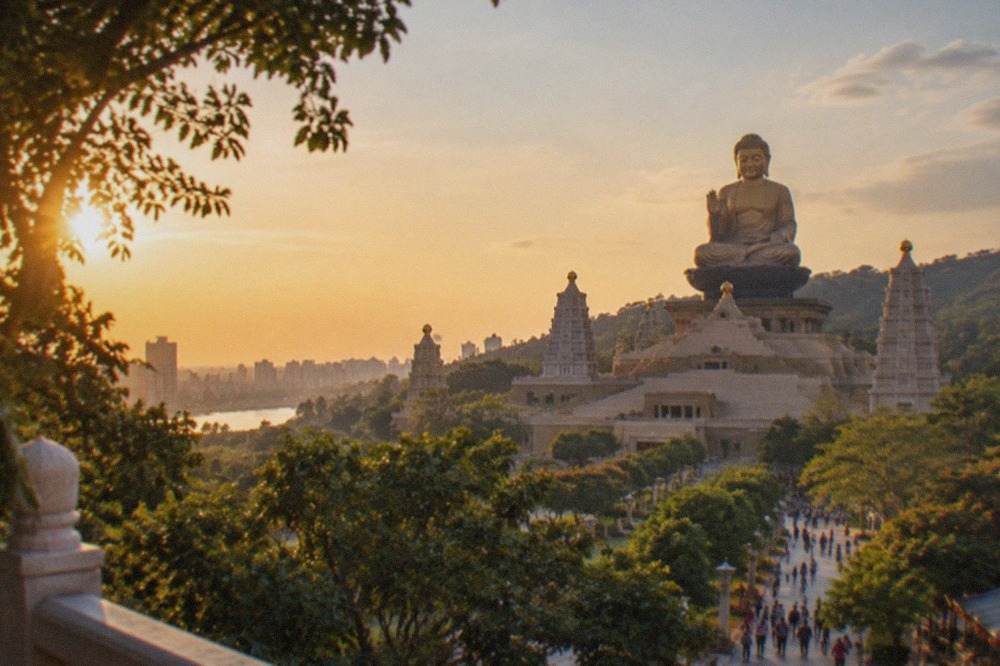
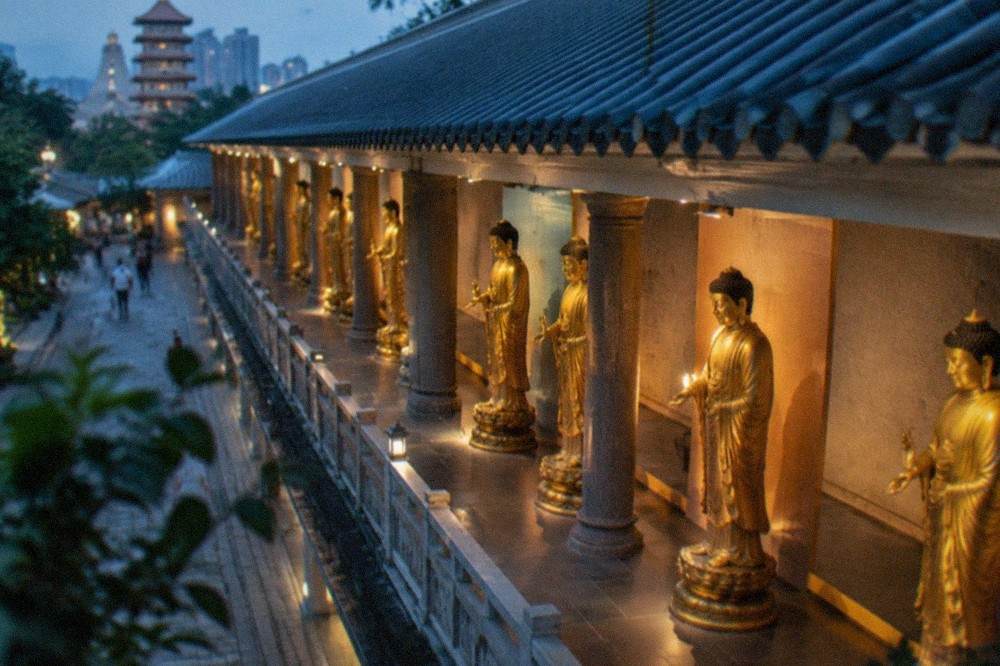
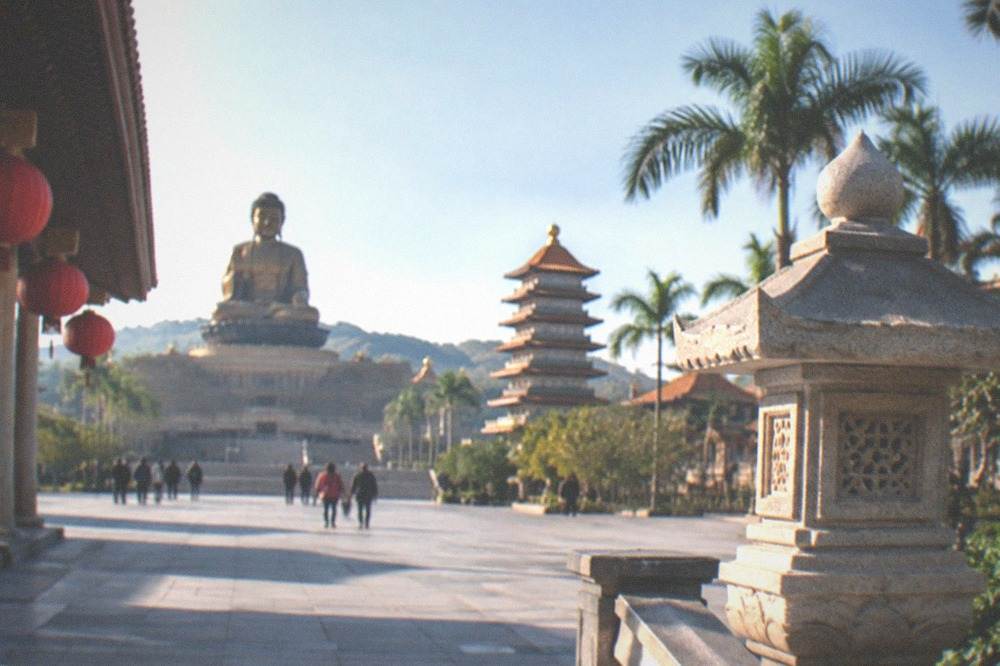
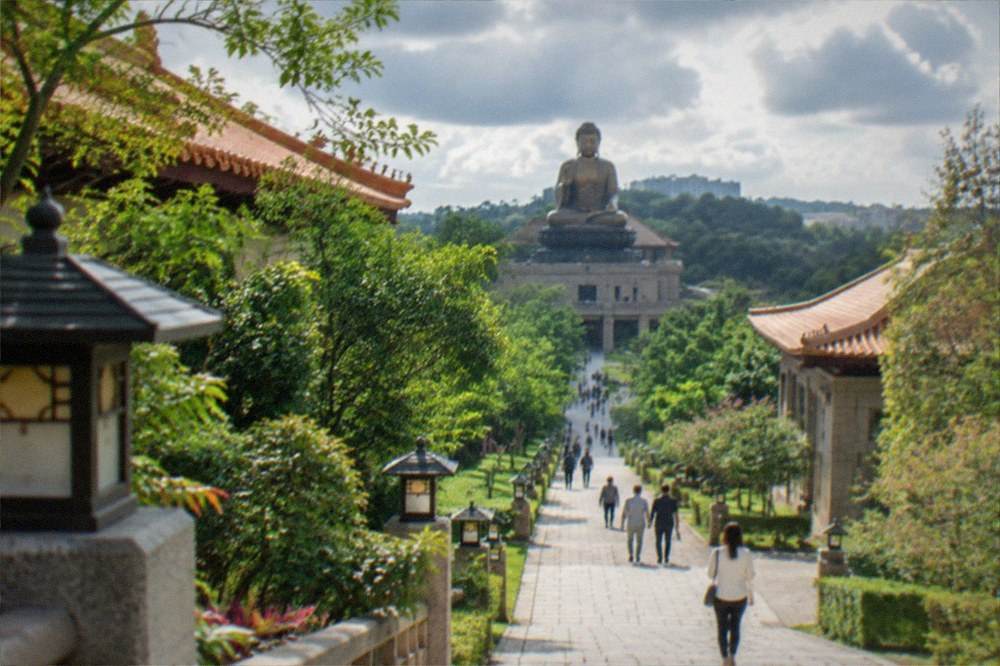
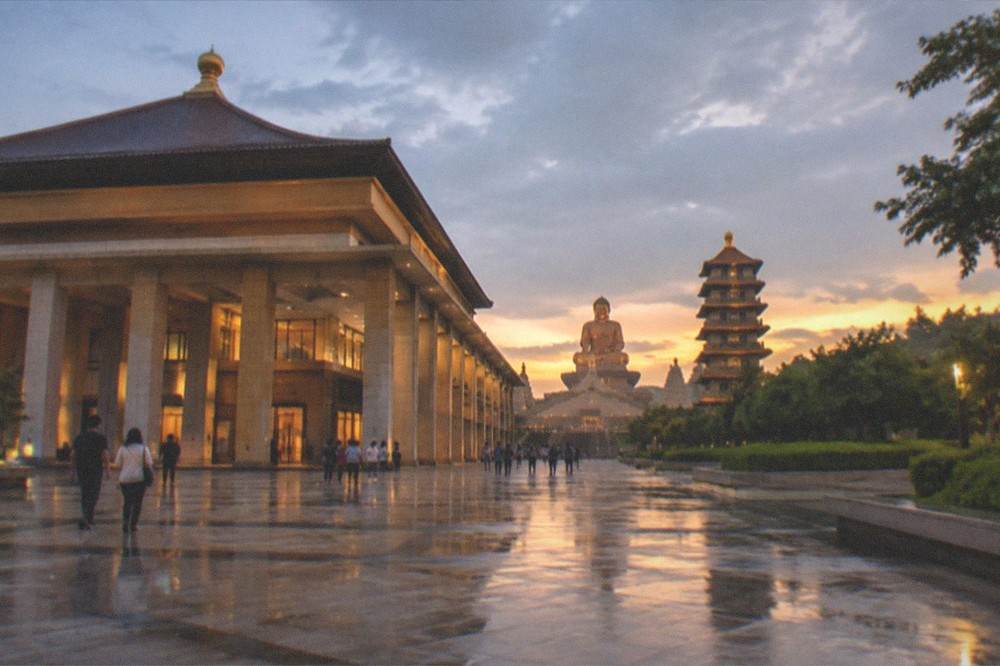
Fo Guang Shan is a large Buddhist monastery, educational and museum complex in Dashu District, Kaohsiung, founded in the twentieth century by the monastic order that still runs it today. Its most photographed feature is a giant seated Buddha statue flanked by rows of smaller figures, and the site also includes a purpose-built Buddha Museum, temples, gardens and visitor facilities. It is one of southern Taiwan's most significant religious destinations and a common pairing with a Tainan stay.
The complex sits inland from the Kaohsiung city center, on the slope of a low hill above the Gaoping River plain. Visitors generally come for three things: the main monastery grounds, the Buddha Museum with its exhibition halls and ceremonial spaces, and the walking paths that connect them. The site is run by a Buddhist organization with branch temples around the world, and it functions as both an active religious community and a public-facing attraction, which means dress and behavior expectations are closer to a working temple than to a theme park.
The reason it works so well as a day trip from Tainan is geography. Tainan and Kaohsiung are neighboring special municipalities on the western plain, and the High Speed Rail connects their stations directly. Once you are in the Kaohsiung area, Fo Guang Shan is a local bus or taxi ride away from the urban core. The whole excursion can be done with one long morning outbound, a full afternoon on the site, and an evening return, optionally broken by dinner in Kaohsiung. Travelers weighing it against other options can compare it against the Kaohsiung day trip from Tainan, since the two share the same outbound rail leg.
One honest caveat: the specific opening hours, admission arrangements and shuttle schedules for Fo Guang Shan itself were not verified against an official page in the research behind this site, so this page does not print them. Check the monastery's own visitor information before you lock a date, and treat anything you read on a third-party listing as provisional until the official page confirms it.
How Do You Get from Tainan to Fo Guang Shan?
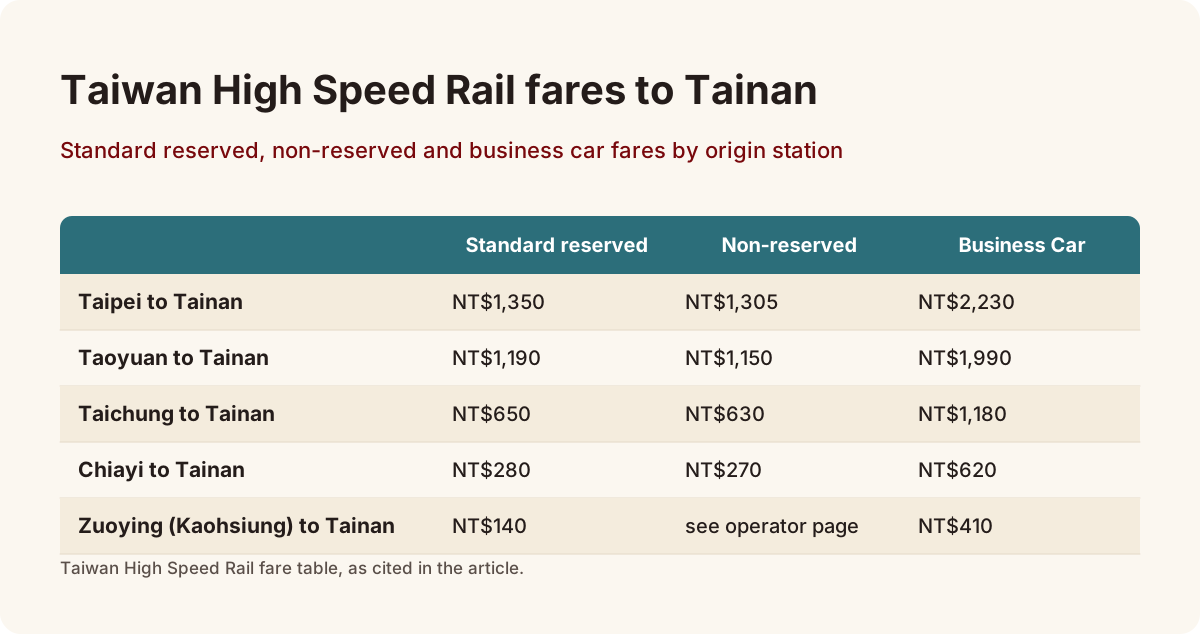
The fastest verified link is Taiwan High Speed Rail from Tainan station to Zuoying in Kaohsiung, a NT$140 standard-class reserved fare, or NT$1,350 from Taipei if you are coming from the capital. From Zuoying or central Kaohsiung, Fo Guang Shan is reached by local bus or taxi, a leg whose fares this site has not verified. The HSR station at Tainan is at Shalun in Guiren District, outside the old city, so reaching it means a transfer.
Two things in that answer deserve expansion, because both are where travelers lose money or time. First, the fare: Taiwan High Speed Rail's own fare table lists the Tainan to Zuoying standard-class reserved fare at NT$140, and the same table shows Taipei to Tainan at NT$1,350 reserved or NT$1,305 non-reserved. Read the operator's grid carefully if you look it up yourself, because the upper-right triangle of that grid is the Business Car fare, and mistaking it for the standard fare overstates the price by roughly two-thirds. The verified fares are below.
| Route | Standard Car, reserved | Non-reserved | Business Car |
|---|---|---|---|
| Taipei to Tainan | NT$1,350 | NT$1,305 | NT$2,230 |
| Taoyuan to Tainan | NT$1,190 | NT$1,150 | NT$1,990 |
| Taichung to Tainan | NT$650 | NT$630 | NT$1,180 |
| Chiayi to Tainan | NT$280 | NT$270 | NT$620 |
| Zuoying (Kaohsiung) to Tainan | NT$140 | see operator page | NT$410 |
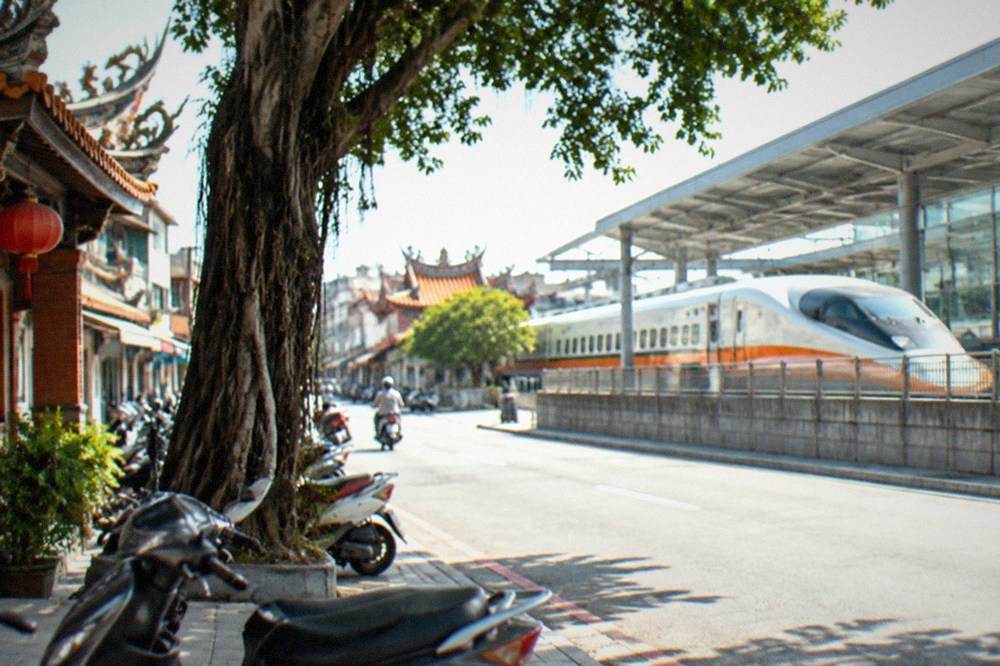
Second, the station location: Tainan's HSR station is not in the old city. It sits at Shalun in Guiren District, and every arrival and departure through it involves a transfer of some kind. The verified onward option is the H31 Tainan City Government Line express bus, which is free for HSR passengers on production of a ticket stub, with no card tap needed; other passengers pay NT$18 for one section or NT$36 for two, with the section break at the Chimei Museum. There is also a Taiwan Railway branch line connecting the HSR station toward the city, but its fare and frequency were not verified, so check the railway operator's own fare query before relying on it. If you are still deciding whether a Taipei day trip is realistic at all, the Taipei to Tainan day trip page works through the same fare table in detail.
For the final leg from Kaohsiung to Fo Guang Shan, local bus services and taxis exist, but no verified fare or timetable for that leg appears in this site's research, so the honest advice is to check the Kaohsiung transit operator's own site the day before. Budget a generous buffer: the monastery is inland and uphill from the main transit corridors, and the last thing you want is to miss a return bus at the end of the afternoon.
If the transfer puzzle at both ends sounds like more logistics than you want, this is exactly the decision point where a guided day tour earns its keep: the operator handles the rail-adjacent driving and the timing, and you spend the day looking at the site instead of at a timetable.
What Does a Sensible Fo Guang Shan Day Trip Schedule Look Like?
A workable shape is an early departure from Tainan by HSR, arrival in the Kaohsiung area by mid-morning, three to five hours at Fo Guang Shan covering the Buddha Museum and the main monastery grounds, then a late-afternoon return with an optional Kaohsiung stopover for dinner before the final rail leg home. Doing it this way keeps the site time in the middle of the day and leaves a margin for slow local transport at both ends.
The schedule below is a planning frame, not a promise: journey times for the HSR were not verified against an official timetable, so the page deliberately leaves the rail legs unpriced in minutes and you should read the operator's own timetable search for exact departures. What the frame does is put the fragile part of the day, the local transfer to and from the monastery, in daylight hours where a missed connection is an inconvenience rather than a crisis.
| Time block | What you are doing | Notes |
|---|---|---|
| Early morning | Tainan city to Tainan HSR station | H31 shuttle free with an HSR ticket stub |
| Morning | HSR Tainan to Zuoying | NT$140 standard reserved |
| Mid-morning | Zuoying to Fo Guang Shan by bus or taxi | Leg fares unverified, check transit operator |
| Midday to late afternoon | Buddha Museum, monastery grounds, walking paths | Allow three to five hours on site |
| Late afternoon | Return transfer toward Zuoying or central Kaohsiung | Leave buffer for the local leg |
| Evening | Optional Kaohsiung dinner, then HSR back to Tainan | Zuoying to Tainan NT$140 |
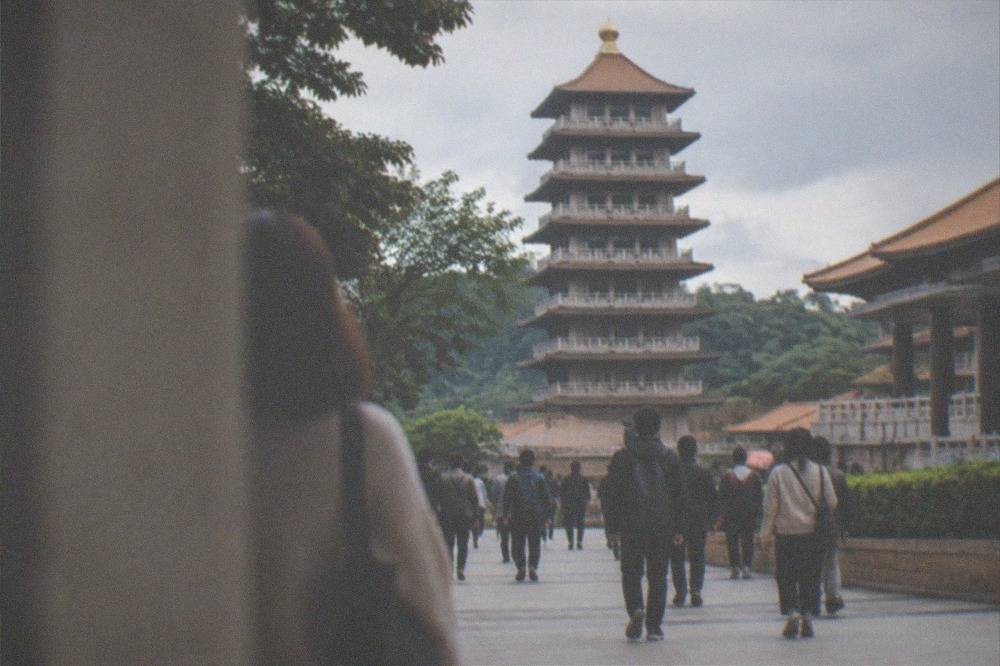
On site, plan around the two main zones rather than trying to see everything. The Buddha Museum side holds the giant seated Buddha, the flanking rows of figures and the exhibition halls; the monastery side holds the working temples and the gardens. Walking between them takes real time in hot weather, and the climate data below explains why the middle of the day in summer is the worst possible window for it. Shade, water and a slower pace matter more here than in the coastal parts of Kaohsiung, where the sea breeze takes the edge off.
If you would rather not build the day yourself, the guided option below covers Tainan-area highlights with the logistics handled, and it is a reasonable fit for a traveler who wants the region's big sights without the transfer puzzle.
When Is the Best Time of Year for a Fo Guang Shan Day Trip?
October to March is the best window, because the Central Weather Administration's 1991 to 2020 normals for Tainan show the dry half of the year then, with October averaging just 2.8 wet days while still reaching 30.8C maxima. Summer is the hard season: August alone averages 466 mm of rain across 16 wet days, and Tainan records 186 days a year above 30C. Winter is dry, sunny and warm rather than cold.
That climate table deserves attention, because it inverts the assumption most European and North American travelers bring. The comfortable season in southern Taiwan is the northern hemisphere's winter, and the punishing season is July to September, when typhoon risk also concentrates. The verified numbers for the Tainan station, which sits on the same western plain as the route down to Kaohsiung, are below.
| Month | Mean max C | Rain mm | Rain days | Days over 30C |
|---|---|---|---|---|
| January | 23.0 | 20.7 | 3.8 | 0.0 |
| February | 24.0 | 21.6 | 4.1 | 0.9 |
| March | 26.6 | 30.4 | 4.2 | 4.1 |
| April | 29.3 | 69.8 | 5.9 | 14.9 |
| May | 31.4 | 165.6 | 9.0 | 25.2 |
| June | 32.4 | 370.5 | 12.1 | 26.2 |
| July | 33.0 | 374.6 | 13.0 | 28.9 |
| August | 32.6 | 466.1 | 15.8 | 27.6 |
| September | 32.4 | 170.5 | 8.5 | 27.8 |
| October | 30.8 | 30.8 | 2.8 | 23.6 |
| November | 28.1 | 23.8 | 2.4 | 6.1 |
| December | 24.4 | 16.2 | 3.0 | 0.5 |
Two practical readings follow. If you go in the October to March window, plan the full walking day without much weather contingency, but note that October maxima still average above 30C, so the sun, not the rain, is the thing to manage. If you go between May and September, build a wet-weather fallback into the day: nearly three-quarters of the annual 1,761 mm of rain falls in that stretch. Typhoon days in Taiwan are declared locally by the city or county government, and when one is declared, attractions and transport suspend, so check the forecast the evening before rather than the morning of. The Central Weather Administration's published climate normals are the source for the table above, and its live warnings are the source to watch close to your travel date.
Should You Book a Tour or Go to Fo Guang Shan Independently?
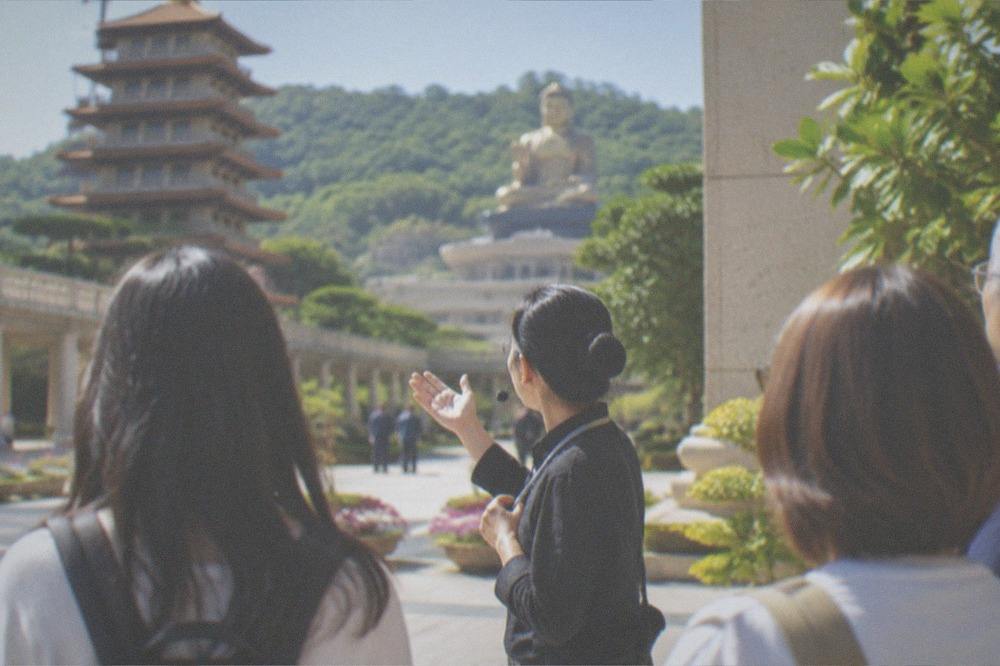
Going independently is the cheaper option and is entirely workable: the verified rail fare is NT$140 each way between Tainan and Zuoying, and the site itself is a public religious complex rather than a ticketed attraction in the way a museum is. A guided tour is worth it when you value the transfer logistics being handled, when you want interpretation of the Buddhist iconography, or when you are combining Fo Guang Shan with other southern Taiwan stops into one efficient day.
The honest breakdown looks like this. The independent route costs you the HSR fares, whatever the unverified local bus or taxi leg charges, and a fair amount of schedule attention. What it buys you is total flexibility: a long afternoon on site if the place grips you, a short one if it does not, and the freedom to stop in Kaohsiung for the evening. The guided route costs more per person, but the operator absorbs the transfer puzzle that this page has spent several paragraphs explaining, and a good guide turns the rows of statues and the temple halls from impressive scenery into something you can actually read.
The middle option is a hybrid: go independently to Kaohsiung, then join a local sightseeing structure there. Whatever you choose, book nothing that promises a fixed itinerary you cannot keep, and remember that on this site every tour link leads to the operator's live listing, where the current price and terms are the ones that count.
How Does Fo Guang Shan Compare with Other Day Trips from Tainan?
Fo Guang Shan is the region's flagship religious site and the natural pick for a temple-focused day, but Tainan's day-trip radius also includes the Qigu salt flats on the lagoon coast, the Guanziling hot springs inland, the mountain forests of Alishan on a longer loop, and the old streets of Yanshui and Jingliao. The choice comes down to what kind of day you want: coastal, hot-spring, mountain or monastic, and the climate table should steer the timing of each.
The comparison below is qualitative by design: this site does not print a journey time it has not verified, so the table compares character and seasonality rather than minutes. All of these destinations have their own pages in this guide's day-trips section, linked in the rows.
| Day trip | Character | Best season fit | Pairs well with |
|---|---|---|---|
| Fo Guang Shan | Buddhist monastery and museum complex | October to March for walking comfort | Kaohsiung city on the return |
| Qigu salt flats | Coastal salt landscape and lagoon boats | Winter and spring, cooler on the exposed flats | Sicao Green Tunnel boat ride |
| Guanziling hot springs | Inland hot spring town | Cool months, and the town's festival runs September to November | A slow half-day rather than a rushed one |
| Alishan | Mountain forest, needs the most travel time | Avoid mid-summer rain; check the railway operator | An overnight rather than a day trip |
| Yanshui and Jingliao | Old streets and temple culture | February if the Beehive Fireworks appeal | A quiet weekday |
One structural point worth knowing before you choose: Tainan's own visitor numbers, from the Tourism Administration's dataset, show that the region's biggest draws are temples, not forts. Nankunshen Daitian Temple drew 6,583,100 visitors in 2023 against Chihkan Tower's 443,622, and the peak months across Tainan's sites are January and February, driven by pilgrimage and Lunar New Year. Fo Guang Shan belongs to that same category of destination: a living religious site whose visitation pattern follows the temple calendar, not the beach calendar. If your dates are flexible and you want to see southern Taiwan's religious culture at full volume, the winter months deliver both the weather and the crowds.
What Should You Pack and Know Before a Fo Guang Shan Day Trip?
Pack for sun and for temple etiquette: covered shoulders and knees, comfortable walking shoes for long paved distances, more water than you think you need, and cash for small purchases along the way. As a working religious site, Fo Guang Shan expects quiet behavior in its halls, photography restrictions where posted, and respectful dress, so treat it as a temple first and an attraction second.
The clothing point is not decorative. Taiwan's western plain records 186 days a year above 30C, and a monastery complex of this scale involves serious distances between its zones, mostly on open paved walks with limited shade in the middle hours. Loose, light clothing that still covers shoulders and knees solves both problems at once. Cash matters too: while cards are accepted in Taiwan's hotels, chains and convenience stores, smaller vendors, temple shops and many local transport services remain cash-first, and the last leg of this trip runs through exactly that economy.
Two more practical notes from this site's verified research. First, on drinking water: this site does not tell readers that Taiwanese tap water is safe to drink unboiled, because the utility's own wording was not verified; the honest line is that bottled and filtered water are everywhere, convenience stores are on every corner, and most locals boil or filter. Second, on connectivity: tourist SIM and eSIM options are widely available at airport counters and online, so there is no reason to navigate the return transfer without a working map app.
Is a Fo Guang Shan Day Trip Right for Your Trip?
For most travelers spending three or more days in Tainan, yes: it is the region's most significant religious site, the verified rail fare makes it an inexpensive excursion, and it contrasts cleanly with Tainan's forts and night markets. It fits less well on a one- or two-day Tainan visit, where the old city's own density of temples, historic sites and street food will absorb every hour you have, and a day away costs you more than it gives.
The arithmetic of the decision is simple. A one-day Tainan visit should stay inside the old city, and the one day in Tainan itinerary exists precisely because the city's core is that dense. Two days still belongs mostly to Tainan, with Anping and the night markets claiming the second day. From three days onward, a day trip starts to pay, and Fo Guang Shan competes well for that slot against the coastal and hot-spring options because it offers something Tainan itself does not: monastic architecture and museum-scale Buddhist art on a site built for visitors.
If your southern Taiwan plans run longer than Tainan alone, the multi-day option below strings Tainan, Kaohsiung and Kenting into one loop and removes the day-trip decision entirely, which suits travelers who would rather see the whole southern third of the island than commute back to the same hotel each night.
For travelers who want to stay closer to Tainan itself, there is also a full-day private option that keeps the focus on the old city's layers of history, and it suits a different kind of day: one spent inside Tainan rather than riding out of it.
Common Questions About Fo Guang Shan Day Trips
Is Fo Guang Shan worth visiting from Tainan?
For trips of three days or more in Tainan, yes. It is one of southern Taiwan's most significant religious complexes, the verified HSR fare from Tainan to Zuoying is NT$140 each way, and the site offers monastic architecture and Buddhist museum content that the old city itself does not. For a one- or two-day Tainan visit, the old city's own density of sites makes staying put the better use of the time. The fuller argument is on the is Fo Guang Shan worth visiting page.
How do you get from Tainan to Fo Guang Shan?
Take Taiwan High Speed Rail from Tainan station to Zuoying, a verified NT$140 standard-class fare, then use a local bus or taxi for the final leg inland to Dashu District. Remember that Tainan's HSR station is at Shalun in Guiren District, outside the old city, and the H31 shuttle bus covers that leg free for HSR passengers with a ticket stub. The final local leg's fares were not verified, so check the Kaohsiung transit operator's own site.
What is the best month to visit Fo Guang Shan?
October is the standout: the Central Weather Administration's 1991 to 2020 normals for Tainan show it as the driest month by wet days, 2.8, while still averaging 30.8C maxima. November to March is the wider dry, comfortable window. July and August are the hardest months, with August averaging 466 mm of rain across 16 wet days.
Is there an admission charge at Fo Guang Shan?
This site has not verified Fo Guang Shan's current admission or booking arrangements against an official page, so it prints no number. Check the monastery's own visitor information before you go. As a general rule for the region, many of Tainan's temples are free entry, including the Confucius Temple, the Grand Matsu Temple and Kaiyuan Temple, while the city's historic forts charge NT$70 at the gate.
Can you combine Fo Guang Shan with Kaohsiung in one day?
Yes, and it is the natural shape of the trip. The outbound HSR leg lands you in the Kaohsiung area in the morning, Fo Guang Shan absorbs the middle of the day, and the return leg can be broken in central Kaohsiung for the evening before the final NT$140 rail hop back to Tainan. If Friday is your day, you can even end at one of Tainan's big night markets, since all three outdoor markets run that night.
What should you wear at Fo Guang Shan?
Covered shoulders and knees, and shoes you can walk long distances in. The complex is large and mostly open-air paved walking, and the western plain records 186 days a year above 30C, so light clothing that still respects the site's religious character is the practical answer. Quiet behavior in the halls and respect for posted photography rules apply as they would at any working temple.
The short version of all of this: Fo Guang Shan is a genuinely different day from anything inside Tainan's old city, the verified costs of getting there are modest, and the climate record says do it between October and March if your calendar allows. Verify the site's own hours and the local transfer schedules the day before you travel, carry water and cash, and give the place a full afternoon rather than a rushed hour. If the logistics still look like more planning than you want, the guided options on this page handle the transfers and the timing, and the operator's live listing always carries the current price and terms.