Do They Speak English in Tainan?
English in Tainan is uneven but workable: bilingual signage is spreading through tourist areas, museums and buses, while night markets and small eateries stay mostly Chinese-language. Here is what to expect and how to manage without Mandarin.
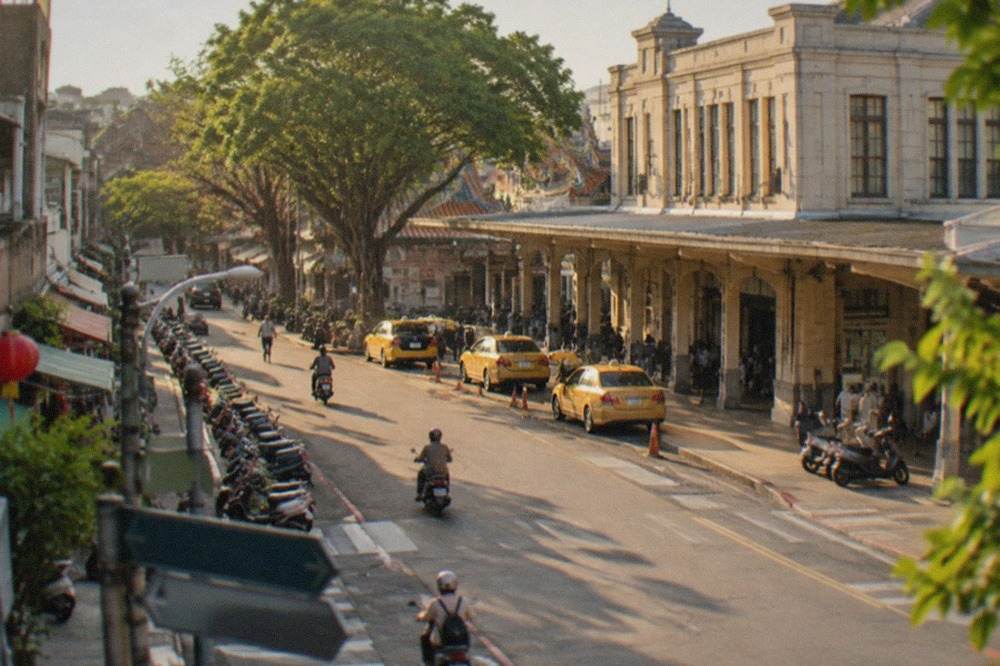
Do They Speak English in Tainan?
Tainan is Taiwan's oldest city and its most Chinese-language city in daily texture. It is also a city that has spent recent years deliberately adding English to its public face, from bilingual signs at the West Market and Garden Night Market to an English-Friendly Emblem program that certifies shops used to dealing with foreign visitors. The result is a place where a first-time visitor can navigate the big attractions almost entirely in English, and where a back-lane noodle stall still runs on pointing, gesture and the universal language of a steaming bowl.
The city government's own information office describes its ongoing push for multilingual signage across markets, buses and public facilities, including Chinese-English displays at demonstration sites such as the West Market and Garden Night Market, part of a broader bilingual initiative. That investment is real, but it is not universal: the same official reporting notes that coverage thins out in smaller and older spots, and that occasional signage errors slip through. For a fuller treatment of the language landscape, our guide to English in Tainan goes site by site.
This page answers the practical version of the question: how much English you will actually encounter, where it helps, and what to do in the gaps. If you are still deciding whether the city rewards the effort at all, start with is Tainan worth visiting and where to go in Tainan for the first time.
Do They Speak English in Tainan Day to Day?
No, everyday Tainan runs on Mandarin and Taiwanese, not English, but the tourist layer is increasingly bilingual. Museum staff, hotel desks, HSR and city bus signage, and the certified English-friendly shops will meet you in English. Small eateries, traditional markets, temples and many taxi drivers will not, so plan on a translation app, pointing, and a handful of polite phrases for the parts of the day outside the main sights.
The split is predictable once you see it. The Tainan City Government Tourism Bureau maintains its attraction pages in English, the Chimei Museum and the Tainan Art Museum publish full English visitor information, and the city's bus authority, which runs the 2384 journey planner, presents fares and rules in English. Those are the surfaces built for visitors. Below that surface, Tainan is a working Taiwanese city where the corner shop, the temple volunteer and the night market vendor conduct their lives in Taiwanese-accented Mandarin.
The city's English-Friendly Emblem program is the bridge between the two layers. Shops and restaurants that earn the emblem have staff prepared to serve foreign customers and menus or signage in English. The city's reporting presents the program as part of a push toward bilingual public services, with demonstration sites including the West Market and Garden Night Market. It is genuinely useful: an emblem on a door means the ordering transaction inside will not require mime.
None of this makes Tainan an English-speaking city, and pretending otherwise sets a visitor up for frustration in exactly the places Tainan is best at, the small food stalls and the neighborhood temples. The realistic posture is: English for the frame of the trip, translation apps and gestures for the substance.
Where English Signage Helps Most in Tainan?
Bilingual signage is strongest at the major attractions, on city buses, at the HSR station and in the certified markets, and thinnest in old lanes, small temples and neighborhood eateries. The Chimei Museum, the Tainan Art Museum, Chihkan Tower and Anping Old Fort all carry English information, and the city's bus stops increasingly show route names in both languages. Beyond that core, expect Chinese only and lean on a map app.
The pattern follows the visitor numbers. The attractions the city knows foreigners visit are the ones with English panels, ticket information and, often, audio guides. The city's information office describes expanding multilingual coverage including Japanese and Korean at key markets, buses, taxis and public facilities, while acknowledging it is not universal and that errors occasionally appear.
Two practical consequences follow. First, the big museum day is the easiest day to run without any Chinese: the Tainan Art Museum's own hours-and-tickets page is published in English and states that the desk accepts EasyCard and iPASS alongside cash and cards, so even the payment step needs no negotiation. Second, the old-street wander is the hardest: Shennong Street, Guohua Street and the Anping lanes are where the signage runs out and the translation app earns its keep.
For structure, the split looks like this:
| Situation | English available? | Best backup |
|---|---|---|
| Hotel front desk, HSR station, city buses | Yes, signage and usually staff | None needed |
| Chimei Museum, Tainan Art Museum, Chihkan Tower, Anping Old Fort | Yes, panels and ticket info | Museum map app |
| Certified English-friendly shops | Yes, that is the point of the emblem | None needed |
| Night market stalls, small eateries | Rarely | Pointing, photos of dishes |
| Neighborhood temples, old lanes | Rarely | Translation app, gesture |
A guided walk is the single biggest lever for the language gap. A guide who translates between you and the stall owner converts the entire street-food layer of the city from inaccessible to open, which is why a food and culture walk earns its place on an English-in-Tainan page rather than on a generic things-to-do page.
Can You Get Around Tainan Without Speaking Chinese?
Yes, comfortably, because the transport layer is the most English-supported part of the city. The HSR station, the city bus network and the main attraction entrances all carry bilingual information, and an EasyCard or iPASS removes the need to speak to anyone at all on a bus. The gap is taxis and scooter rental, where a written address and an official licence page matter more than conversation.
The bus system is the best example. The city's own ticketing page explains in English that trunk and branch routes are free for the first 8 km with an electronic card, that you must tap on and tap off, and that the cash fare for the same trip is NT$26. That page is the whole conversation you would otherwise need to have, published in your language. The scheme runs through the 2026 calendar year, so treat it as current policy rather than permanent law, and check the page before relying on it. The wider set of guides lives on Tainan Travel Guide.
Taxis are the weak point. No published Tainan taxi fare schedule exists on a city page we could verify, and driver English cannot be assumed. The standard workaround works: have your destination written in Chinese characters, use a ride-hailing app that handles the address in the app itself, and agree the destination before moving.
Scooter rental has a sharper edge than language. Taiwan treats an International Driving Permit as something you register at a Motor Vehicles Office, not something that is simply valid on arrival, and rental shops may refuse without that registration. The honest line is that an IDP is not automatically sufficient, that the Motor Vehicles Office's registration page is the official source, and that no writer on this desk can promise either way what a given shop will accept. Read the page before you plan around a scooter.
For arrival logistics, the HSR station is at Shalun in Guiren District, outside the old city, so every arrival involves a transfer, and the H31 shuttle is free for HSR passengers on production of a ticket stub. Our Taipei to Tainan guide covers the fare side, and the transfer itself is signed bilingually.
How Do You Order Food in Tainan Without Mandarin?
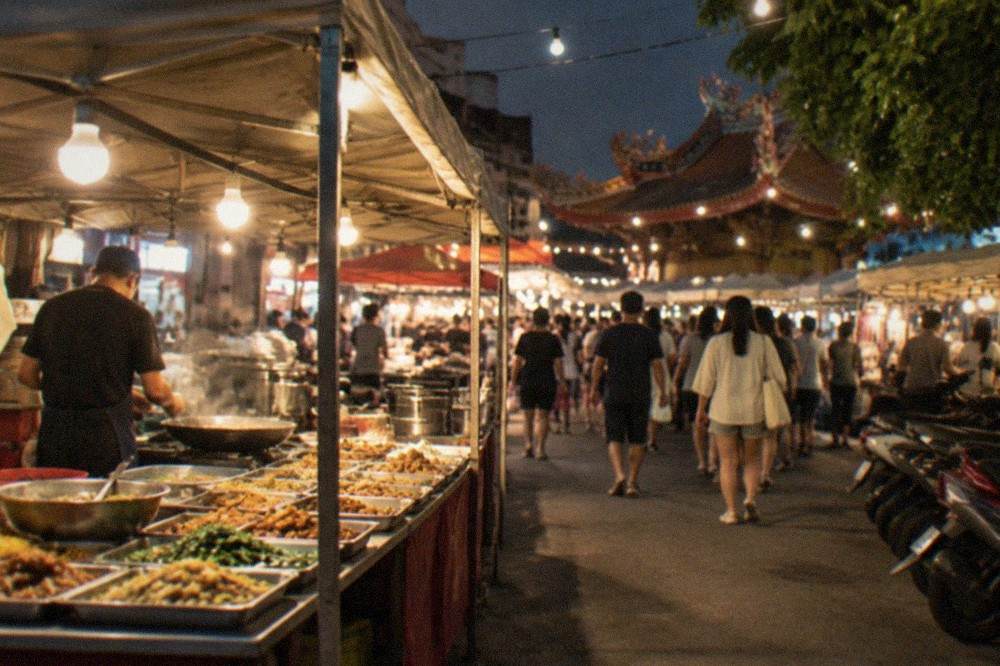
Pointing, photo menus and a translation app cover almost every food situation in Tainan, because street food is ordered by sight at the counter and paid in cash on the spot. The stalls cook in front of you, the finished dishes are often visible, and prices are written on boards even when nothing else is in English. A phrase list of six or seven words handles the rest.
Tainan's food culture is unusually friendly to the language-free visitor, and that is a structural fact rather than luck. Danzai noodles, beef soup, coffin bread and milkfish dishes are ordered at a counter from a board, served fast and eaten standing or at shared tables. There is no reservation conversation, no waiter dialogue and no negotiation. The transaction is: point, pay, eat.
The night market layer works the same way at scale. One planning fact matters more than language on a night market night: the big markets rotate by day of the week, and the schedule is verified from the city's own pages. Garden opens Thursday to Sunday, Wusheng Wednesday, Friday and Saturday, Dadong Monday, Tuesday and Friday, and Siaobei is indoors and open every day. Friday is the only night all three big outdoor markets run. Check the city's pages before you go, because the days do change.
| Day | Big outdoor markets open | Indoor option |
|---|---|---|
| Monday | Dadong | Siaobei, every day |
| Tuesday | Dadong | Siaobei |
| Wednesday | Wusheng | Siaobei |
| Thursday | Garden | Siaobei |
| Friday | Dadong, Wusheng and Garden | Siaobei |
| Saturday | Wusheng, Garden | Siaobei |
| Sunday | Garden | Siaobei |
A small phrase list does more work in Tainan than in Taipei, where English penetration is deeper. Learn these and the food layer opens almost completely:
| Phrase | Mandarin | When you use it |
|---|---|---|
| This one, please | 這個 (zhège) | Pointing at any dish or stall |
| How much? | 多少錢 (duōshǎo qián) | Any unlabeled stall |
| Not spicy | 不辣 (bù là) | Beef soup, noodle stalls |
| To go | 外帶 (wàidài) | Night market stalls |
| Eat here | 內用 (nèiyòng) | Small shops with seats |
| Thank you | 謝謝 (xièxie) | Everywhere, constantly |
The one place the language gap costs real money rather than convenience is a guided food experience booked in the wrong language. Check that the listing states its tour language before booking, because a Mandarin-only walking tour with an English-speaking guide absent is a wasted evening, and the listing says which language each tour runs in.
Do Tainan Tours and Museums Run in English?
Some do, and the listing for each product states its tour language, so check before booking rather than assuming. The big museums publish English visitor information themselves, and guided experiences in the city run in English where the listing says so. A tea ceremony or a guided walk is precisely the kind of experience where a bilingual host changes everything, because the content is explanation, not just transport.
This is where the honest answer to the page question becomes a booking decision. A temple you can wander alone, signage or no signage. A tea ceremony cannot be wandered: its entire value is someone telling you what the leaves are, what the water temperature means and what the sequence of bowls represents. Book one that runs in a language you understand, and the cultural layer of Tainan opens in a way no translation app can manage mid-pour.
The same logic applies to the historical sites. Anping Tree House and Chihkan Tower have bilingual panels, but a guide adds the layer the panels cannot: why the banyan was allowed to swallow the warehouse, what the early-1650s Dutch construction at Chihkan means against the 1624 story at Anping, and how the 1975 renovation shaped what visitors photograph today. The city's own pages carry those facts in English, which is how this desk reports them, but a guide delivers them standing in front of the thing.
For museum-goers, the Chimei Museum and the Tainan Art Museum are the two easiest English days in the city, and both publish their own visitor pages in English. The Chimei Museum closes every Wednesday and the Tainan Art Museum closes Mondays, so the calendar matters as much as the language when you plan a museum day.
Common Questions About English in Tainan
Do They Speak English In Tainan?
Not as a default. Everyday Tainan runs on Mandarin and Taiwanese, but the tourist layer, museums, buses, the HSR station and certified English-friendly shops, is increasingly bilingual. Expect English where the city has invested in visitors and a translation app everywhere else.
Is English Enough For Tainan's Night Markets?
Yes, functionally. Stalls are ordered at the counter by pointing, prices are written on boards, and payment is cash on the spot. The bigger night-market challenge is the schedule, not the language: Garden, Wusheng and Dadong rotate by day of week, and only Siaobei is open daily, indoors.
Do Tainan Taxi Drivers Speak English?
Do not count on it. The reliable workarounds are a destination written in Chinese characters or a ride-hailing app that carries the address inside the app. No verified Tainan taxi fare schedule exists on a city page, so agree the destination before the car moves.
Are Tainan Museum Signs In English?
Yes. The Chimei Museum and the Tainan Art Museum publish their own English visitor pages, and city-run sites such as Chihkan Tower and Anping Old Fort carry bilingual information through the Tourism Bureau's English pages. The Chimei Museum closes Wednesdays and the Tainan Art Museum closes Mondays.
What Should I Do If Nobody Understands English?
Use a translation app with the camera feature pointed at menus and signs, carry your hotel's card with its Chinese address, and lean on the phrase list: "this one, please", "how much", "not spicy". Tainan's food counters and temple courtyards are forgiving of gesture, and the city's English-Friendly Emblem marks shops that are prepared for foreign customers.
The short version: Tainan will not speak English to you, but it has built enough English into its museums, buses, markets and certified shops that the language gap is a nuisance to manage rather than a barrier. Bring the app, learn six phrases, book the experiences whose listings state your language, and the oldest city in Taiwan opens up in spite of the words you do not share.