Shennong Street
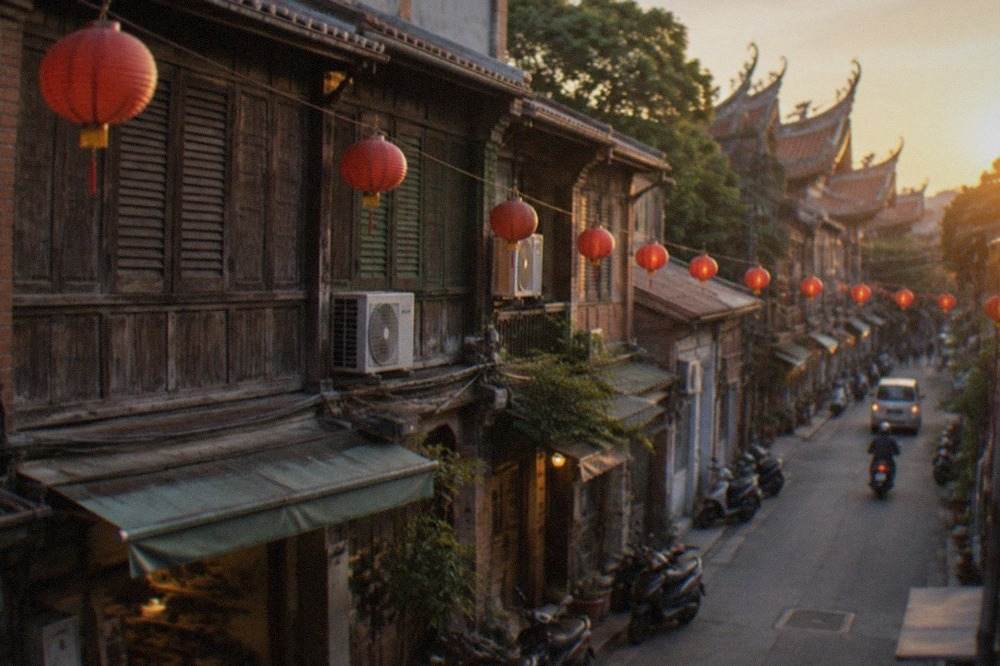
Shennong Street is a narrow, restored old lane in Tainan's West Central District, a short walk from the canal, lined with preserved townhouse fronts that now hold small shops, cafes and studios. It is free to walk, open at any hour as a public street, and busiest in the early evening.
Short answer
Shennong Street is a free public street in central Tainan, a five to ten minute walk from the canal side, best visited in the late afternoon and early evening when the shops are open and the lanterns are lit. There is no ticket, no gate and no closing time, though individual shops keep their own hours.
Shennong Street
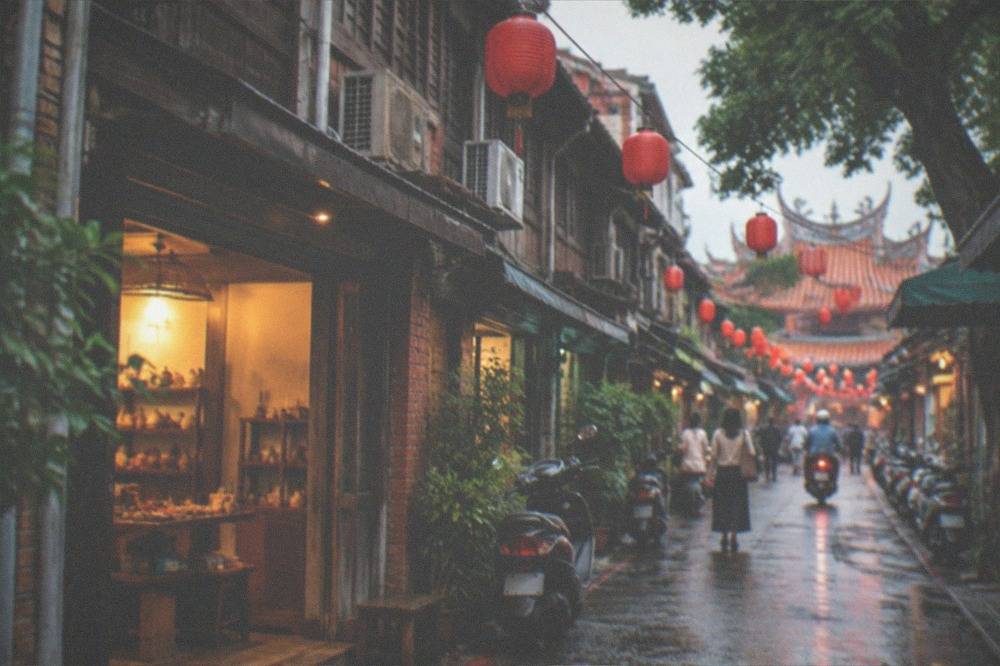
Shennong Street is a narrow old lane in Tainan's West Central District, running parallel to and a short walk from the city canal, lined with two-story townhouses whose fronts have been restored rather than replaced. The ground floors now hold small independent shops, tea rooms, cafes and design studios, and the upper floors keep their original timber facades. It is one of the most photographed streets in the city and, unlike almost every other headline attraction in Tainan, it costs nothing and never closes, because it is a public street rather than a ticketed site.
This page lays out what the street is, how to reach it using the city's bus network, what it costs, when to go given Tainan's climate, and what to pair it with, all drawn from official sources rather than guesswork. For the wider food picture around the old core, our Tainan street food guide covers the dishes worth hunting down nearby.
What Is Shennong Street?
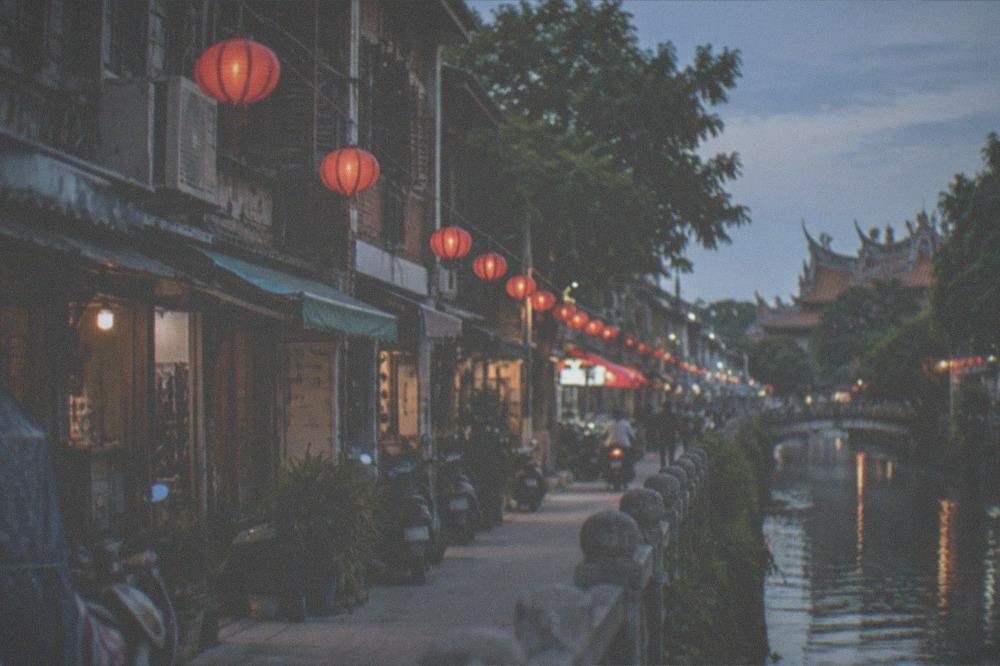
Shennong Street is a restored historic lane in central Tainan, a few minutes from the canal, where two-story townhouse facades from the city's merchant past now front small shops, cafes and studios. It is a public street with no ticket, no gate and no fixed hours, and it is at its liveliest in the late afternoon and evening, when shop lights and lanterns are on.
The street belongs to the layer of Tainan that predates the department-store era. The city was Taiwan's capital for more than two centuries, until the late nineteenth century, and its old commercial quarter grew up around the canal and the harbor trade that fed it. Streets like this one housed merchants and their families, with the shop at street level and the household above. The facades visitors photograph today are the surviving fronts of those buildings, restored rather than rebuilt, which is exactly why the lane reads as old rather than as a themed reconstruction.
What makes the street unusual in a Taiwanese context is how it was revived. Rather than a single developer flattening the block, the change came shop by shop: small businesses moved into the old units one at a time, kept the fronts, and turned the lane into a place people walk for the atmosphere rather than for any single destination inside it. The result is a street that works as a slow stroll, a photo stop and a browsing circuit all at once, and that costs nothing beyond whatever you choose to buy.
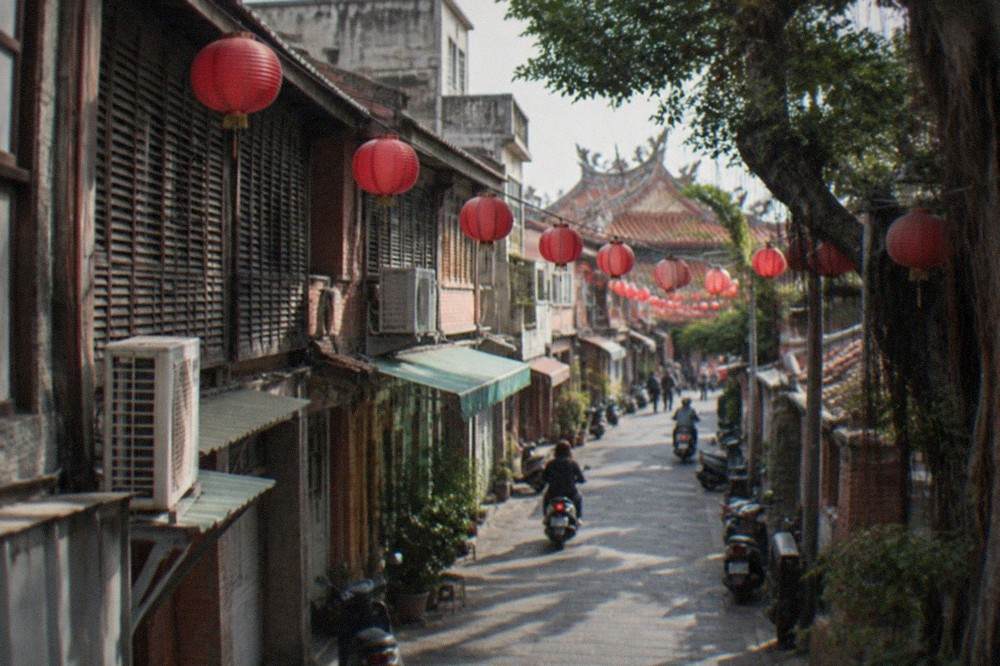
It is worth setting expectations honestly. The lane is short, and a walk from one end to the other takes minutes rather than an hour. The pleasure is in slowing down: the details are in the timber upper floors, the shop interiors and the small courtyards, not in a long promenade. Visitors who arrive expecting a market-sized stretch will be done quickly; visitors who treat it as a place to linger with a drink or a snack will get far more from it.
For contrast, Anping Old Street is the other famous old street in the city, out in the Anping district near the fort, with a busier, more market-like feel. The two are different experiences and are not substitutes for each other.
Where Is Shennong Street and How Do You Get There?
Shennong Street sits in Tainan's West Central District, a short walk from the canal and within the old core, close to Hayashi Department Store and the Chihkan Tower area. City buses are free for the first 8 km with an electronic card on the trunk and branch network, tap on and tap off, and the cash fare for the same trip is NT$26. The street itself is reached on foot once you are in the old core.
The practical starting point is that the old core of Tainan is compact. Chihkan Tower, the Hayashi Department Store area and the canal-side lanes are all within walking distance of one another, and Shennong Street sits inside that cluster. Most visitors reach the district on foot from wherever they have parked, from a bus stop on a trunk route, or from a hotel in the center.
The bus detail matters more than most visitors expect. The city's own bus site states that trunk and branch routes, the green, blue, brown, orange, yellow and red networks, are free for the first 8 km of travel distance with a stored-value card: a Citizen Card, iPASS, EasyCard or iCash 2.0. The waiver is worth NT$26, which is the cash fare for the same trip. Two conditions trip people up: you must tap on AND tap off, and the tap-off is the part visitors miss, and the scheme runs for the 2026 calendar year, so it is a current policy rather than a permanent one. The Tainan City Government bus ticket page sets out the full conditions.
| Mode | Cost | Condition |
|---|---|---|
| City bus, trunk or branch route | Free for first 8 km | Electronic card, tap on and tap off, 2026 policy year |
| City bus, cash | NT$26 | No card |
| Bus transfer discount | NT$9 off a city bus | TRA-to-bus transfer within 2 hours, same card |
| Walking from Chihkan Tower area | Free | The old core is compact |
If you are arriving by High Speed Rail, remember that the HSR station is not in Tainan itself: it sits at Shalun in Guiren District, outside the old city, and reaching the center means a transfer. The H31 HSR express bus is free for HSR passengers on production of a ticket stub, with no card tap needed, and other passengers pay NT$18 for one section or NT$36 for two. From there the old core is walkable or a short bus hop.
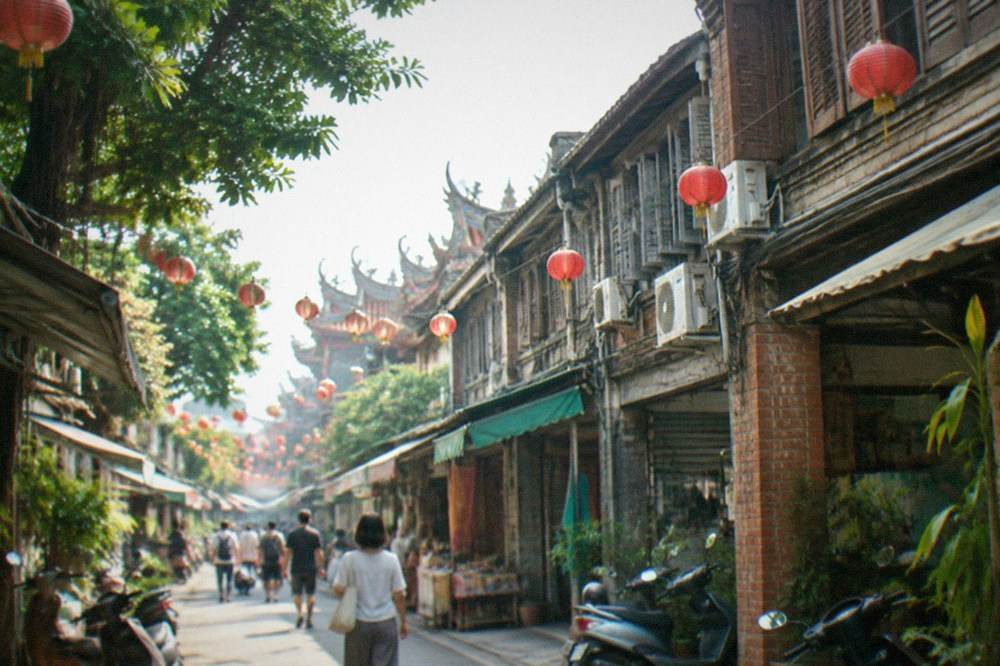
For orientation once you are in the district, the lane runs near the canal, and the easiest plan is to combine it with the Hayashi Department Store, a restored Japanese-era building a few minutes away, and with Chihkan Tower, the Dutch-era site whose grounds anchor the old core. Chihkan Tower is open 08:30 to 21:30 daily, which the Tainan City Government Tourism Bureau's page for the site confirms, and its late closing makes it one of the few historic sites in the city you can see after dinner.
Does Shennong Street Cost Anything and When Is It Open?
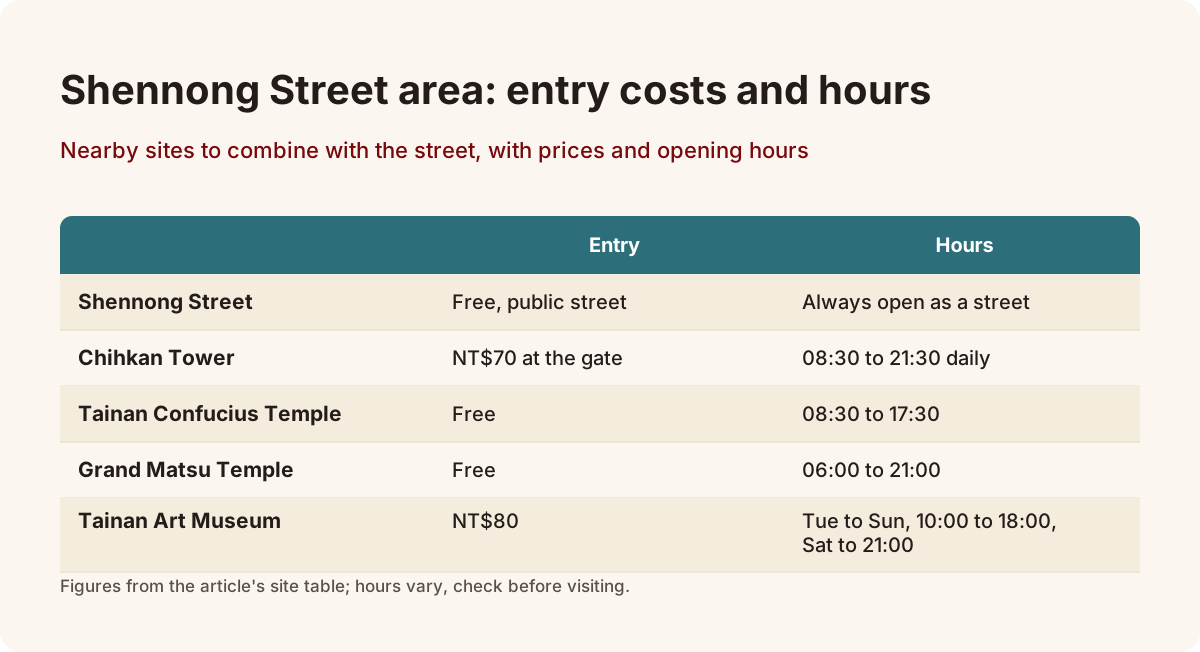
Shennong Street costs nothing to walk and has no opening hours, because it is a public street rather than an attraction with a gate. Individual shops keep their own hours and most open from late morning into the evening, with the street busiest after dark when the lanterns are lit. Nothing on the street requires a ticket, and the nearest paid sites are elsewhere in the old core.
This is the honest answer, and it is worth stating plainly because so much of Tainan is the same. The temples, the old streets, the canal and the lanes cost nothing and need no booking. The city's ticketed sites are separate: Chihkan Tower is NT$70 at the gate, Anping Old Fort is NT$70, the Anping Tree House is NT$70, and concessions are half price at the city sites, while Tainan residents enter free with ID. A visitor is not a resident, so never assume the free entry applies to you. The city's own pages carry the disclaimer that the on-site notice governs, so treat every printed price as "at the gate" rather than guaranteed.
| Site | Entry | Hours | Notes |
|---|---|---|---|
| Shennong Street | Free, public street | Always open as a street | Shop hours vary individually |
| Chihkan Tower | NT$70 at the gate | 08:30 to 21:30 daily | Late closing, rare for the city |
| Tainan Confucius Temple | Free | 08:30 to 17:30 | Closed Lunar New Year's Eve |
| Grand Matsu Temple | Free | 06:00 to 21:00 | Central, walkable |
| Tainan Art Museum | NT$80 | Tue to Sun, 10:00 to 18:00, Sat to 21:00 | Closed Mondays |
The free-entry list is genuinely useful for planning a day around the street. The Tainan Confucius Temple, the Grand Matsu Temple, the Five Concubines Temple and Kaiyuan Temple all charge nothing, per the Tourism Bureau's own pages for each site, which means a full day in the old core can be built almost entirely around free sites with one or two paid ones added by choice. Our free things to do in Tainan page expands on this.
One planning note on money: cash remains essential at small shops, street food stalls and night markets, even though cards work at hotels, department stores and convenience stores. A mix is the standard advice, and ATMs inside convenience stores are the reliable fallback. Our page on cash and cards in Tainan covers this in detail.
What Is There to See on Shennong Street?
The sights on Shennong Street are the street itself: restored two-story townhouse facades with timber upper floors, hanging lanterns, small independent shops and studios, and the atmosphere of a merchant lane that survived redevelopment. There is no single headline monument on the street, and the point of a visit is the walk, the details and the shops, not a ticketed interior.
The facades are the draw. Tainan's old merchant houses put the shop at street level and the family above, and the surviving timber fronts on this lane show that pattern clearly: shutters, projecting upper floors and narrow frontages packed side by side. Because the revival came shop by shop rather than as a single redevelopment, the fronts vary, and the variation is what gives the lane its texture. Photographers tend to work the lane in the early evening, when shop lights and lanterns fill the narrow frame.
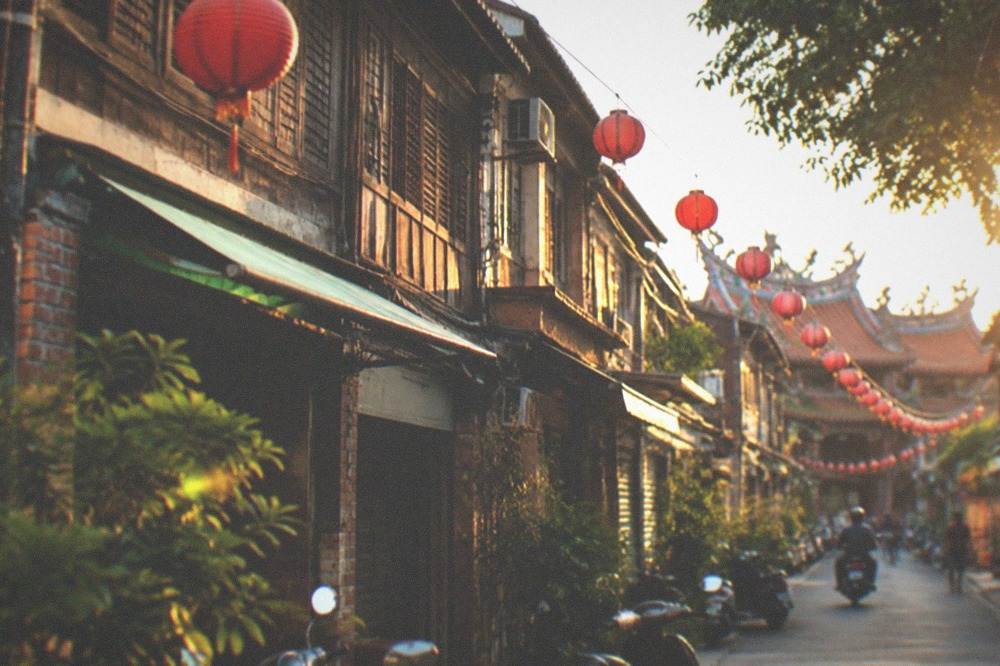
The shops are the second layer. Small studios, tea rooms, cafes and design shops occupy the ground floors, and the mix changes as units turn over, so no fixed list of shop names would stay accurate. What stays stable is the character: small, independent, and oriented toward browsing rather than bulk buying. If you want a structured version of that browsing with food folded in, a guided walk is the bookable way to get it, and the evening walking tour is the natural fit for this street, since the lane is at its best after dark.
The third layer is the surrounding block. The lane sits inside a grid of old streets that rewards wandering, and the canal side is minutes away. Visitors who enjoy this lane's texture tend to also enjoy Jingliao Old Street in the city's rural north, a much quieter old street with a completely different pace, and Guohua Street, the food street a short distance away where several of Tainan's classic dishes are concentrated.
When Is the Best Time to Visit Shennong Street?
The best time to visit Shennong Street is the late afternoon into evening, when shops are open and the lanterns are lit, and the best months are October to March, when Tainan is dry and warm rather than wet and hot. The Central Weather Administration's 1991 to 2020 normals for Tainan show October is the driest month by wet days, 2.8, while still averaging 30.8C maxima, and December brings only 16 mm of rain across 3 wet days.
The climate table is the single most useful planning tool for Tainan, and it is worth reading closely because it contradicts what northern-hemisphere visitors assume. Tainan's rain is almost entirely a summer event: August brings 466 mm across 16 wet days, while December brings 16 mm across 3. Close to three-quarters of the annual 1,761 mm falls between May and September. The Central Weather Administration's published normals are the source for every figure here.
| Month | Mean max C | Rain mm | Wet days |
|---|---|---|---|
| January | 23.0 | 20.7 | 3.8 |
| April | 29.3 | 69.8 | 5.9 |
| July | 33.0 | 374.6 | 13.0 |
| August | 32.6 | 466.1 | 15.8 |
| October | 30.8 | 30.8 | 2.8 |
| December | 24.4 | 16.2 | 3.0 |
Two implications follow. First, the dry half of the year, October to March, is the comfortable half, and the visitor numbers agree: the Tourism Administration's own dataset shows Tainan's peak months are January and February, driven by temple pilgrimage and Lunar New Year, which is the opposite of the European assumption that summer is high season. Second, the street itself is unshaded in stretches and Tainan has 186 days a year above 30C, so an evening visit in the hot months is not just prettier, it is cooler.
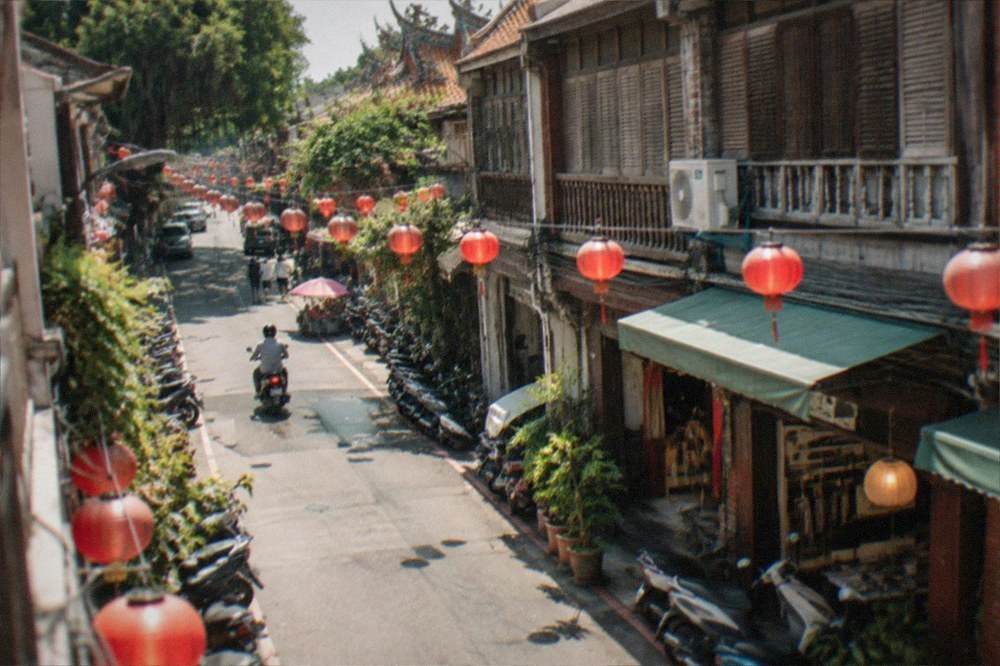
If your trip lands in the wet season, the street is still walkable in the gaps between showers, but the city's indoor options are the better wet-weather plan. Siaobei Night Market is indoors and open every day from 12:00 to 00:00, which makes it the wrong-night and rainy-night answer, and the Tainan Art Museum and the Chimei Museum are the two big indoor anchors. The Chimei Museum charges NT$200 for the permanent collection and is closed every Wednesday, a closure visitors routinely miss.
What Should You Combine with Shennong Street?
The best combinations with Shennong Street are the rest of the old core on foot, Chihkan Tower for the Dutch-era history, the Confucius Temple and Grand Matsu Temple for free entry, and a night market in the evening, chosen by day of the week. Garden Night Market opens Thursday to Sunday, Wusheng opens Wednesday, Friday and Saturday, and Dadong opens Monday, Tuesday and Friday, so the day of your visit decides which market you get.
The night market schedule is the single most useful practical fact in Tainan, and it is verified market by market from the Tourism Bureau's own pages. The markets rotate by day of the week, and getting this wrong is the most common planning mistake in the city.
| Day | Big outdoor markets open |
|---|---|
| Monday | Dadong |
| Tuesday | Dadong |
| Wednesday | Wusheng |
| Thursday | Garden |
| Friday | Dadong, Wusheng and Garden |
| Saturday | Wusheng, Garden |
| Sunday | Garden |
Siaobei Night Market is indoors and open every day, so it fills the gaps. The city updates these pages and the days do change, so check before you go. The Tainan City Market Administration's official roster is the authoritative register.
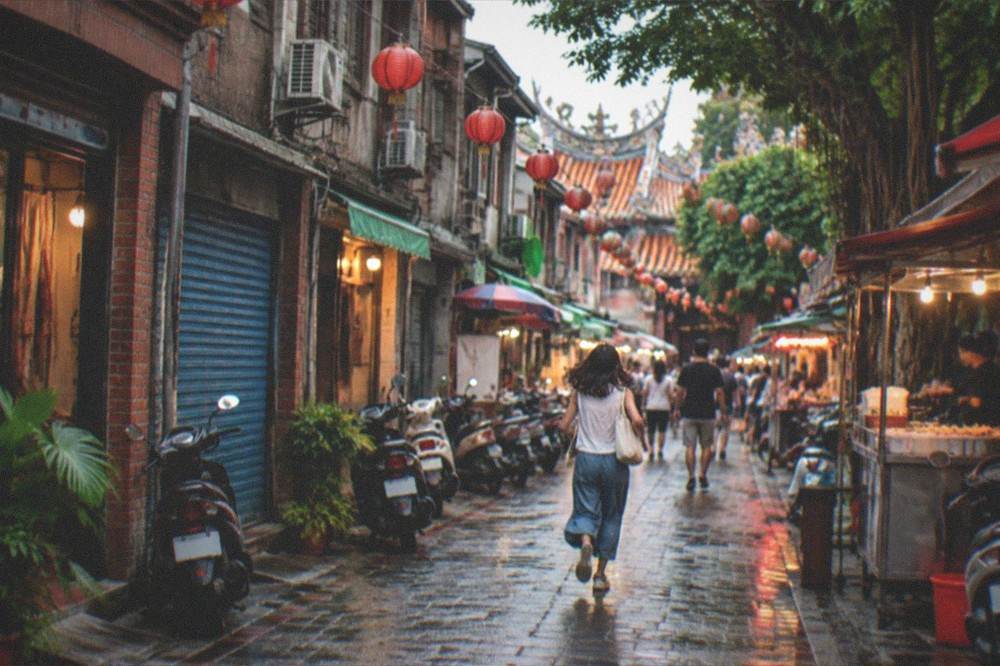
A workable evening shape, built entirely from verified hours: walk the street in the last hour of daylight, move on to Chihkan Tower before its 21:30 close, then finish at whichever market is open that night. On a Friday you have your pick of all three big markets. On a Wednesday, Wusheng is the only big outdoor option, and Siaobei is the backup.
For a fuller day, the deeper history sits at the National Museum of Taiwan History, which tells the island's story in English-friendly galleries and is closed Mondays, with last admission at 16:30. Its entry ticket is the one booking in this area genuinely worth making ahead of a visit.
And if the street's old-lane atmosphere is what drew you to Tainan in the first place, a tea ceremony is the indoor counterpart to it: the same appreciation of slow craft and old interiors, in a single sitting rather than a stroll.
Common Questions About Shennong Street
Is Shennong Street free?
Yes. It is a public street with no gate, no ticket and no closing time. The shops along it are private businesses with their own hours, but the walk itself costs nothing, and most of the old core around it, including the Confucius Temple and the Grand Matsu Temple, is also free to enter.
How long does Shennong Street take?
The lane itself is short, and a straight walk end to end takes only minutes. Most visits run longer because the pleasure is in browsing the shops and photographing the facades, and because the surrounding block rewards wandering. Plan on half an hour to an hour, more if you stop for a drink.
When is Shennong Street open?
Always, as a street. Individual shops typically open from late morning into the evening, and the street is at its liveliest after dark, when the lanterns and shop lights are on. There is no official closing time because there is no gate to close.
How do I get to Shennong Street?
It sits in the West Central District, a short walk from the canal and close to Chihkan Tower and the Hayashi Department Store. City buses are free for the first 8 km with an electronic card on the trunk and branch network, tap on and tap off, and the cash fare is NT$26. HSR arrivals should remember the HSR station is at Shalun in Guiren District, outside the old city, and requires a transfer.
What is the best time of year to visit Shennong Street?
October to March. The Central Weather Administration's 1991 to 2020 normals show Tainan's rain is almost entirely a summer event, with August bringing 466 mm across 16 wet days against December's 16 mm across 3. October is the driest month by wet days while still averaging 30.8C maxima, and the city's visitor numbers peak in January and February.
Can you visit Shennong Street at night?
Yes, and night is when it is at its best. The lanterns and shop lights make the lane's narrow frame photograph well after dark, and the evening is also when it pairs naturally with a night market, chosen by day of the week: Garden Thursday to Sunday, Wusheng Wednesday, Friday and Saturday, Dadong Monday, Tuesday and Friday.
Shennong Street rewards a slow evening and costs nothing, which is the honest summary. Walk it as the light drops, fold in Chihkan Tower before its unusually late 21:30 close, and finish at whichever market the day of the week gives you. For everything else in the old core, Tainan Travel Guide has the site-by-site pages, and the street-food guide linked above covers what to eat between stops.