What Is a Good 3-Day Itinerary for Tainan?
A practical three-day Tainan itinerary: old-city temples and Chihkan Tower on day one, Anping on day two, the Qigu lagoon coast on day three, with verified hours, fares and night market days.
What Is a Good 3-Day Itinerary for Tainan?
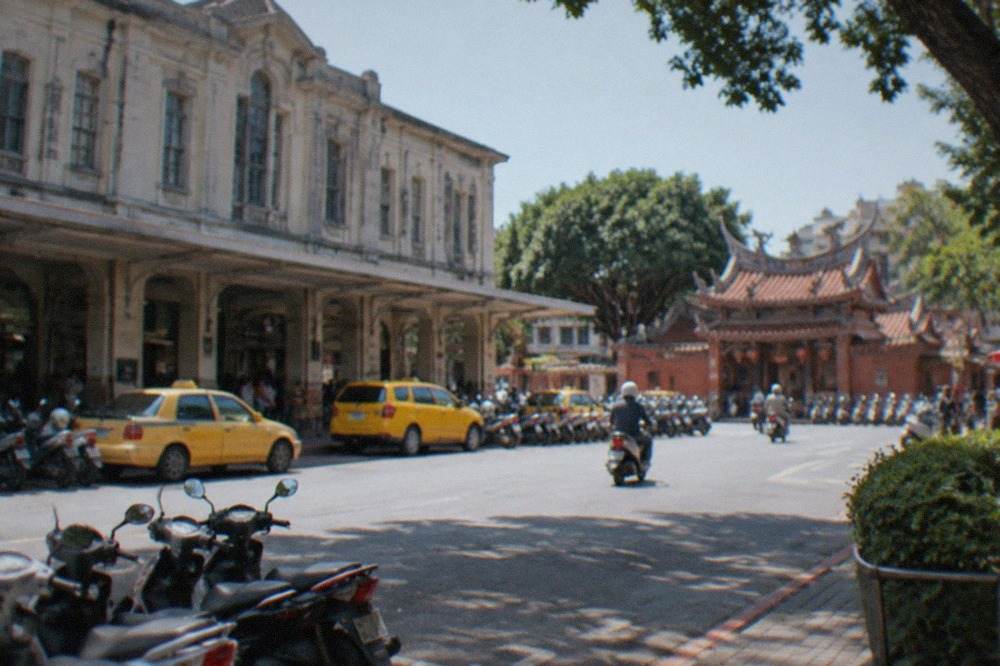
Tainan rewards a three-day visit more than almost any other city in Taiwan, because its sights split cleanly into three zones: the old city around Chihkan Tower and the Confucius Temple, the Anping district on the coast, and the lagoon country of Qigu and Sicao further north. The Tainan City Government Tourism Bureau's page for Chihkan Tower records a city that was Taiwan's capital for more than two centuries, until the late nineteenth century, and much of what it built in that time still stands within a few kilometres of the old walls. A good plan gives each zone its own day, and lets the night market schedule decide which evenings you eat where.
What Are the Best Three Days in Tainan?
A good three-day Tainan itinerary spends day one in the old city around Chihkan Tower and the Confucius Temple, day two in Anping covering the Old Fort, the Tree House and the old street, and day three on the lagoon coast at Sicao and Qigu Salt Mountain. Evenings follow the rotating night market schedule, and Friday is the one night all three big outdoor markets run.
The logic behind the split is distance. The old-city sights cluster within walking distance of each other, Anping sits about twenty minutes west by bus, and the Qigu coast is a genuine half-day trip beyond that. Trying to combine Anping and Qigu in one day leaves both rushed, and the verified opening hours make the split easy anyway: Chihkan Tower stays open until 21:30, which the Tourism Bureau's own page notes is unusual, so the old city absorbs a late evening without any cost.
Budget roughly NT$200 of admission across the whole three days if you enter every ticketed site once: the four big historic sites are NT$70 each at the gate, the Confucius Temple and the Grand Matsu Temple are free, and the Sicao boats are NT$200. Most of Tainan is not a booking. Temples, old streets and the canal cost nothing, and the city's pages state that the on-site notice governs prices, so treat every figure here as what the gate charges today rather than a guarantee.
What Should Day One in the Old City Look Like?
Day one covers Chihkan Tower, the Confucius Temple, the Grand Matsu Temple and Shennong Street, with a night market in the evening. Chihkan Tower costs NT$70 at the gate and opens 08:30 to 21:30 daily, the Confucius Temple is free and opens 08:30 to 17:30, and the Grand Matsu Temple is free and opens 06:00 to 21:00.
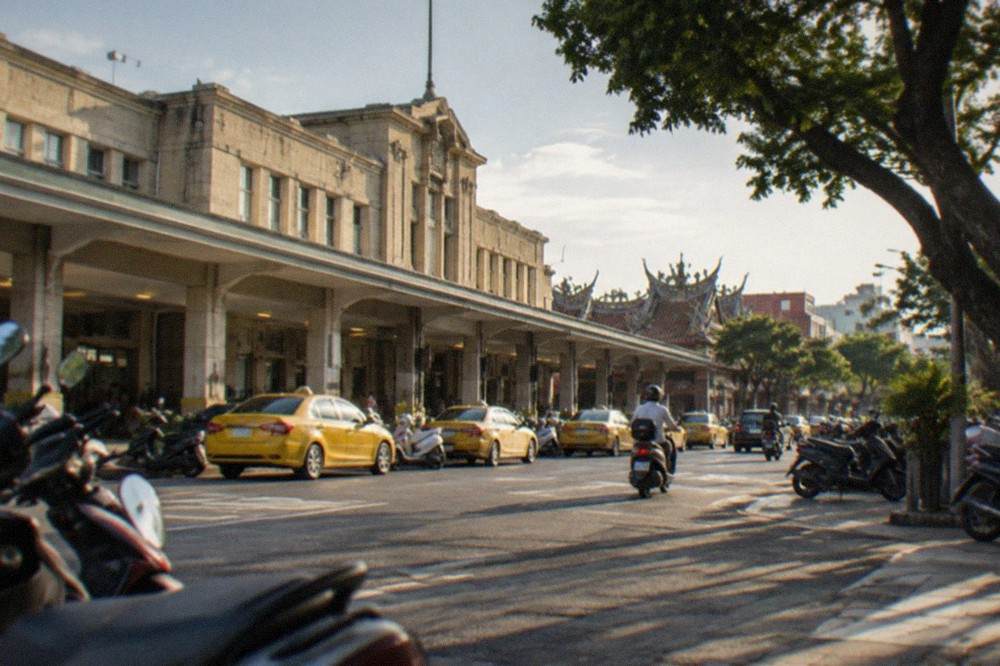
Start at Chihkan Tower, built by the Dutch as Fort Provintia in the early 1650s. The Tourism Bureau's page for the site records the 1652 construction date and the long closing hour that makes it one of the few historic sites in the city a visitor can see after dinner. Walk south from there to the Confucius Temple, which the city lists with no ticket at all, then to the Grand Matsu Temple, free and open from dawn to nine at night. Both are working temples, so dress modestly and keep your voice down in the main halls.
Shennong Street, a short lane of low restored shopfronts, sits between the two, and the one-day Tainan itinerary covers it in more depth if you want a finer-grained walking route. The afternoon belongs to the smaller old-city temples: the Five Concubines Temple is free and open 08:00 to 17:00, and Kaiyuan Temple, further east, is free and open 06:00 to 17:00.
The evening depends on the day of the week. If day one falls on a Thursday, Friday, Saturday or Sunday, Garden Night Market runs from 17:00 to midnight. If it falls on a Monday or Tuesday, Dadong is the big outdoor option from 18:00 to 01:00, and on Wednesday Wusheng stands alone. Siaobei Night Market is indoors and open every day from noon to midnight, which makes it the answer on a wet night or a Wednesday.
How Do You Spend Day Two in Anping?
Day two goes to Anping: the Old Fort at NT$70 and open 10:00 to 17:10, the Tree House at NT$70 and open 08:30 to 17:30, the Eternal Golden Castle at NT$70 and open 08:30 to 17:30, and Anping Old Street, which is free public space. Finish with a Sicao Green Tunnel boat ride at NT$200, which runs 08:00 to 16:00 daily.
Anping is where the Dutch East India Company landed in 1624 and began Fort Zeelandia, which the Tourism Bureau records as completed in 1634. The Bureau's page for the site is candid about what survives: the only genuine Dutch-period remains are the brick walls of the south outer rampart, and most of what visitors photograph, including the white-walled lookout tower, is Japanese-era rebuilding and a 1975 city renovation. That honesty makes the site more interesting, not less.
Work the district in a loop. The Tree House, a former warehouse the city's page describes as swallowed by banyan roots, sits beside the old street, and the Eternal Golden Castle, a Qing-era battery built partly from dismantled Zeelandia brick, lies a short ride south. The Anping half-day itinerary gives the walking version if you would rather trim this to an afternoon and spend the morning elsewhere.
The Sicao Green Tunnel boats leave from the north side of the district, and both routes cost the same NT$200: the mangrove Green Tunnel and the longer Taijiang route. The city's page lists departures from 08:00 to 16:00, weather and demand permitting, and the boats leave when roughly thirty passengers have gathered or after a wait. Book the evening by the market schedule again, and note that Anping as a district drew 4,441,443 visitors in 2023 against Chihkan Tower's 443,622, so weekends here feel busy.
What Makes Day Three Different: The Lagoon Coast?
Day three leaves the city for the lagoon coast: Qigu Salt Mountain, open 09:00 to 18:00 with a NT$50 cleaning fee per person on foot or NT$100 per car, the Sicao and Taijiang boat routes at NT$200, and the black-faced spoonbill wetlands in the cooler months. It is the one day that genuinely needs a bus, a car or a tour.
Qigu is the payoff for the long ride north. The salt mountain is exactly what it sounds like, a heap of harvested salt the height of a small building, and the operator charges a cleaning fee rather than a ticket: NT$50 per person arriving on foot, by scooter or by bicycle, NT$100 per car, with coaches of twenty seats or more free. The Qigu salt flats day trip page covers the surrounding salt-field landscape, including the tile-paved fields at Jingzijiao.
The wetlands matter as much as the salt. Black-faced spoonbills, a globally scarce species, winter in the Qigu wetlands and the Zengwen River estuary, generally arriving in September or October and departing by spring. The visitor counts underline how much of Tainan's tourism is temple-driven rather than fort-driven: Nankunshen Daitian Temple in Beimen drew 6,583,100 visitors in 2023, roughly fifteen times Chihkan Tower's total, and the peak months citywide are January and February, driven by pilgrimage and Lunar New Year. The caveat the dataset carries is that each site compiles its own count, so an open old street and a ticketed museum are not measured the same way. The rest of the planning pages sit on Tainan Travel Guide.
If three days in Tainan leaves you wanting the rest of the south, the natural extension is the loop through Kaohsiung and Kenting, and a guided version of that circuit exists.
How Does the Night Market Schedule Shape Your Three Days?
The big outdoor night markets rotate: Garden opens Thursday to Sunday, Wusheng opens Wednesday, Friday and Saturday, and Dadong opens Monday, Tuesday and Friday, all roughly 17:00 or 18:00 to midnight or later. Friday is the only night all three run, and Siaobei is indoors and open daily from 12:00 to 00:00 as the wet-weather fallback.
This is the single most useful practical fact for planning any Tainan stay, and it is verified market by market from the Tourism Bureau's own pages. Fit your three days around it rather than fighting it.
| Day | Big markets open | Hours |
|---|---|---|
| Monday | Dadong | 18:00 to 01:00 |
| Tuesday | Dadong | 18:00 to 01:00 |
| Wednesday | Wusheng | 17:00 to 00:00 |
| Thursday | Garden | 17:00 to 00:00 |
| Friday | Dadong, Wusheng and Garden | 17:00 to 01:00 |
| Saturday | Wusheng, Garden | 17:00 to 00:00 |
| Sunday | Garden | 17:00 to 00:00 |
Siaobei Night Market runs every day of the week, noon to midnight, under cover. Locals use a seven-character rhyme to remember the rotation, but it is folk shorthand rather than an official schedule, and against the city's current published hours it misses that Garden also opens Friday and Saturday and that Wusheng also opens Friday. Trust the table, and check before you go, because the city updates these pages and the days do change.
What Should You Know About Transport and Weather?
Getting around needs a stored-value card: city buses are free for the first 8 km on trunk and branch routes with an EasyCard, iPASS, iCash 2.0 or Citizen Card, provided you tap on and tap off, and the cash fare for the same trip is NT$26. The High Speed Rail station is at Shalun in Guiren District, outside the old city, so every HSR arrival means a transfer.
The bus policy is the one to internalise. The city's own bus site states the free first 8 km on the green, blue, brown, orange, yellow and red networks, and the part visitors miss is the tap off, without which the fare is charged. The scheme runs for the 2026 calendar year, so treat it as current policy rather than a permanent right. HSR passengers also ride the H31 shuttle free on production of a ticket stub, with no card tap needed, and the section break at the Chimei Museum puts that museum on the shuttle route. Other H31 passengers pay NT$18 for one section or NT$36 for two.
Weather shapes the plan more than most visitors expect. The Central Weather Administration's 1991 to 2020 normals for Tainan show August bringing 466 mm of rain across 16 wet days, against December's 16 mm across 3, and close to three-quarters of the annual 1,761 mm falls between May and September. The city also records 186 days a year above 30C. October to March is the dry, comfortable half of the year, and October is the driest month by wet days, 2.8, while still averaging 30.8C maxima. Typhoon risk concentrates in the late summer months, and typhoon days are declared locally by the city government, not nationally.
Should You Book a Tour or Explore Tainan Independently?
Most of Tainan needs no booking at all: the temples are free, the old streets are public space, and the ticketed sites sell at the gate. The exceptions worth considering are the Sicao boats, where a prepaid ticket removes the thirty-passenger wait, and the lagoon coast, where a day tour replaces two bus transfers each way.
The honest division of labour is this: the old city and Anping are self-guided by design, walkable and free or cheap at the gate, and the Tainan food crawl and temple trail pages give you the routes. The lagoon coast is where a tour earns its price, because Qigu and the Sicao docks sit at the end of infrequent bus lines and the salt mountain, the boats and the spoonbill reserve are scattered across several kilometres of flat coast.
For a first three-day visit, the strongest pattern is two independent days in the city and Anping plus one booked day on the coast, or the full southern loop if Tainan is one stop in a wider Taiwan trip. Whichever way you go, carry an EasyCard or iPASS, check the market days against the table above before you commit your evenings, and keep Friday free for the one night all three big markets run at once.
Common Questions About a Three-Day Tainan Itinerary
What Is A Good 3-Day Itinerary For Tainan?
Day one in the old city around Chihkan Tower, the Confucius Temple and the Grand Matsu Temple, day two in Anping covering the Old Fort, the Tree House and a Sicao boat ride, and day three on the Qigu lagoon coast at the salt mountain and the spoonbill wetlands. Evenings follow the rotating night market schedule, with Friday the one night all three big outdoor markets run.
Is Three Days In Tainan Enough?
Three days covers the old city, Anping and the Qigu coast at a comfortable pace, which is the core of what most visitors come for. It leaves little time for the northern districts such as Yanshui and Beimen or the hot springs at Guanziling, so add a fourth day if those appeal. The two-day version squeezes Anping and the old city together and drops the coast.
Which Night Market Should I Go To In Tainan?
Match the market to your day of the week: Garden on Thursday to Sunday, Wusheng on Wednesday, Friday and Saturday, Dadong on Monday, Tuesday and Friday. Siaobei is indoors and open every day, noon to midnight, which makes it the choice on a rainy night or on a Wednesday when the outdoor options are thinnest. Check the city's pages before you go, because the days change.
How Much Do The Main Tainan Sights Cost?
Chihkan Tower, Anping Old Fort, the Anping Tree House and the Eternal Golden Castle are each NT$70 at the gate, with half-price concessions and free entry for Tainan residents with ID. The Confucius Temple, Grand Matsu Temple, Five Concubines Temple and Kaiyuan Temple are free. The Sicao boats are NT$200 on both routes, and Qigu Salt Mountain charges a NT$50 cleaning fee per person on foot or NT$100 per car.
Do I Need A Car In Tainan For Three Days?
No. City buses are free for the first 8 km with an EasyCard, iPASS, iCash 2.0 or Citizen Card, provided you tap on and tap off, and the old city and Anping are walkable once you are in them. The exception is the Qigu coast on day three, where buses are infrequent and a tour, a taxi or a rental car saves the most time.
When Is The Best Time Of Year For A Three-Day Tainan Trip?
October to March. The Central Weather Administration's 1991 to 2020 normals show Tainan's rain is almost entirely a summer event, with August alone bringing 466 mm, while October gets fewer wet days than any other month and still averages 30.8C maxima. January and February are also the city's busiest months, driven by temple pilgrimage and Lunar New Year.