Tainan Food Crawl Itinerary
Tainan is widely described as Taiwan's food capital, and the honest way to eat it is not one restaurant at a time but a crawl: a bowl of beef soup at dawn, snacks through the old streets all day, and a night market that only exists on certain nights.
Short answer
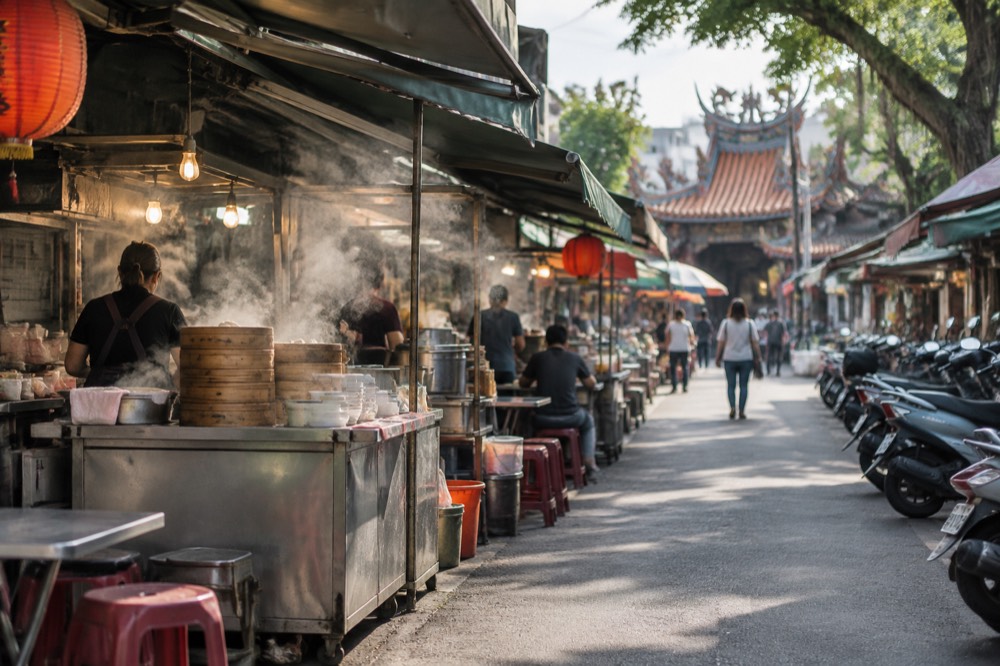
Plan a Tainan food crawl around three anchors: an early beef soup stop, a daytime snack walk through West Central District and Guohua Street, and the night market that matches your day of the week. The city's markets rotate, buses are free for the first 8 km with a tap card, and Chihkan Tower stays open until 21:30 if you want a sight between courses.
Tainan Food Crawl Itinerary
Tainan is the city most Taiwanese food writers point to when the argument is about where to eat on this island. It was Taiwan's capital for more than two centuries, until the late nineteenth century, and the dishes that were born in its temple courtyards and harbor-side stalls, danzai noodles, coffin bread, milkfish soup, beef soup, spread outward from here. A food crawl is the local way to eat the city: small portions, many stops, one district at a time, on foot and by bus.
This itinerary is built as one full day, from a dawn soup stop to a night market finish, with the verified opening hours, market rotation days and bus facts you need to keep it moving. It pairs with our broader Tainan food guide if you want depth on any single dish, and with one day in Tainan if food is only part of your plan. Nobody needs to book a table anywhere here: almost everything on this route is street food, market food or a small shop with a counter.
What Is a Tainan Food Crawl, and Why Does It Work Here?
A Tainan food crawl is a day structured around many small eating stops rather than one or two restaurant meals, and it works in Tainan because the city's signature dishes are counter foods and street foods sold in small portions, clustered in walkable old districts, with night markets that rotate by day of the week so the evening stop changes with the calendar.
The logic is portion discipline. A bowl of danzai noodles is small by design. A coffin bread is a single hollowed loaf. Beef soup in Tainan is served as one bowl, often eaten standing or perched on a stool before work. None of these is a sit-down commitment, which is exactly why locals chain them together. The crawl is not a tourist invention imposed on the city; it is closer to how the city already eats.
The second reason it works is geography. The densest food streets, Guohua Street, the lanes around the Grand Matsu Temple, the Confucius Temple quarter and the Chihkan Tower block, sit within a couple of kilometres of each other in West Central District. Anping, the old coastal district with its own snack culture, is a short bus ride away. You can walk most of a crawl and bus the rest, and the city's own bus policy makes that cheap: the first 8 km on trunk and branch routes are free with an electronic card, as long as you tap on and tap off.
The third reason is the calendar. Tainan's big night markets do not all open every night, so the day of the week you crawl decides where you finish. That is a constraint, but it is also a feature: it means the plan below has a branch for every day of the week rather than one fixed route.
Where Should a Tainan Food Crawl Start in the Morning?
Start in West Central District with a bowl of beef soup, Tainan's signature dawn dish, eaten in the early morning when the shops that specialize in it are at their busiest, then walk toward the Confucius Temple and Chihkan Tower area for a second stop. Beef soup in Tainan is fresh-cut beef in clear broth, served fast, and it is a morning food by tradition rather than a lunch or dinner one.
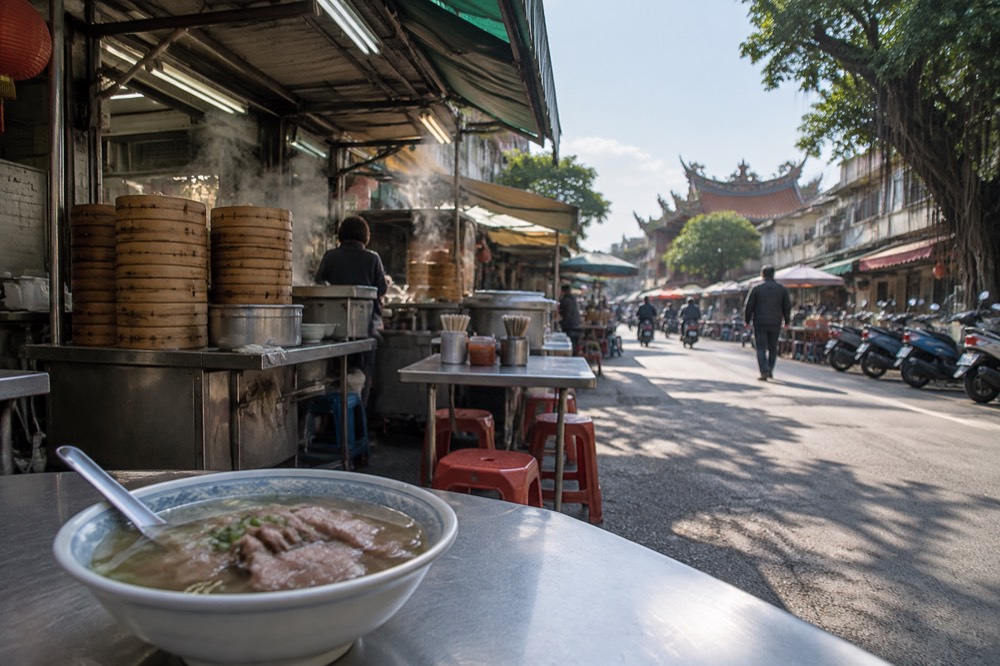
Beef soup is the dish Tainan is most defensive about. The local style uses freshly butchered beef, sliced thin and dropped into hot broth at the last second, which is why the classic shops open extremely early, some before sunrise, aligned with the morning slaughter. We will not name a shop or claim one is the original, because no verified source in our research supports any single "oldest" claim, and the honest position is that the dish, not one address, is the institution. Our Tainan beef soup page goes deeper on the style.
After the soup, the morning walk writes itself. The Tainan Confucius Temple is free to enter, open 08:30 to 17:30 and closed only on Lunar New Year's Eve, so an early bowl can be followed by a slow lap of the temple's courtyard while the district wakes up. From there it is a short walk east to the Chihkan Tower block, where the old streets around it carry breakfast stalls and old-school shops.
A practical note on pacing: the crawl works best if the morning holds two stops and nothing else. Beef soup plus one breakfast item, then a walk and a temple, gives the day a spine without filling you before the snack streets open properly. Tainan's breakfast culture is strong enough that the temptation is to eat four things by 09:00, and the rest of the day pays for it.
Where Do You Eat at Midday: Guohua Street and the Old Lanes?
At midday, head to Guohua Street and the surrounding lanes in West Central District, the densest concentration of Tainan's snack classics anywhere in the city, where danzai noodles, milkfish soup, oyster omelettes, meatballs and shaved-ice desserts are sold within a few blocks of each other, all in counter-sized portions built for grazing.
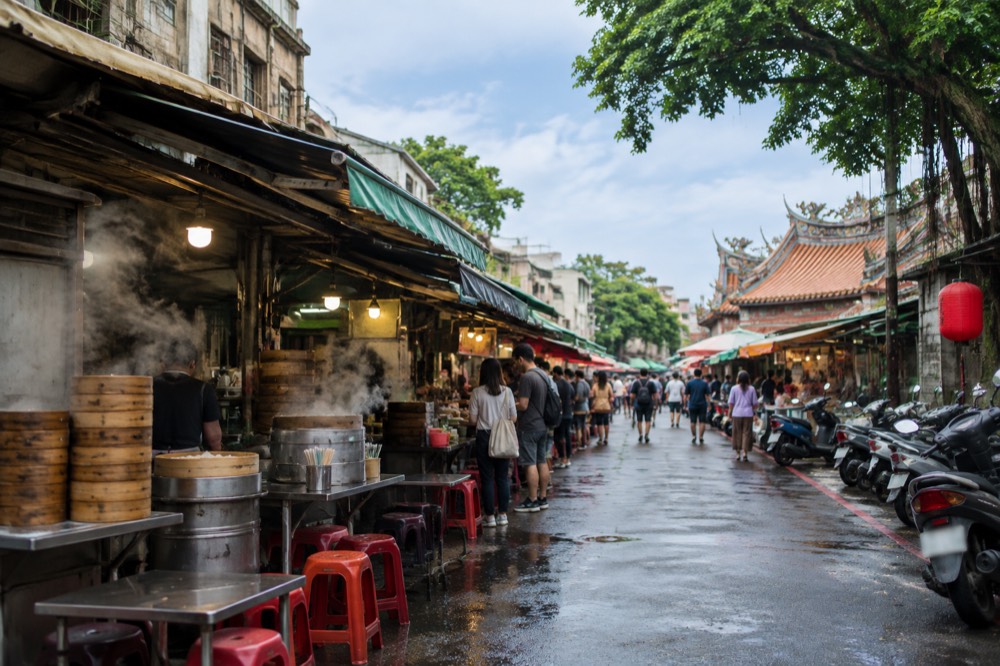
Guohua Street is the closest thing Tainan has to a single street that summarizes the city's snack canon. Our Guohua Street area guide maps it in detail, and our Tainan street food page lists the dish families you will meet there. What we can say with sources behind us is what each dish is, not which stall is best, and no dish price in Tainan is verifiable from official sources, so we print none anywhere on this site.
The classics you should be able to find in this district, described honestly rather than tasted:
| Dish | What It Is | When It Fits a Crawl |
|---|---|---|
| Danzai noodles | Small bowl of noodles in broth with pork and shrimp, served quickly | A between-stops filler, small by design |
| Milkfish soup | Mild milkfish belly or fillet in clear broth, a Tainan staple | A light midday stop |
| Coffin bread | A thick fried toast loaf hollowed out and filled with a savory stew | One is plenty, share if crawling |
| Oyster omelette | Eggs, oysters and a starchy binder fried with leafy greens | Best fresh off the griddle, eat standing |
| Shaved ice and fruit | Ice desserts, and mango-based ones in season | The afternoon reset between districts |
The one thing worth scheduling rather than wandering into is the mango window. The city's own festival calendar places Taiwan Mango Season and the Tainan International Mango Festival in June and July, and the Yujing area inland is the production heartland. A June or July crawl can end its afternoon with mango ice in a way a November crawl simply cannot, and that is a fact from the city's calendar, not a taste claim.
If the midday walk is where you most want a local's hand on the tiller, the Food and Culture Walking Tour in Tainan exists for exactly this stretch: four hours, the old city, and the dishes that define it.
Which Night Market Should You Finish at, and on Which Day?
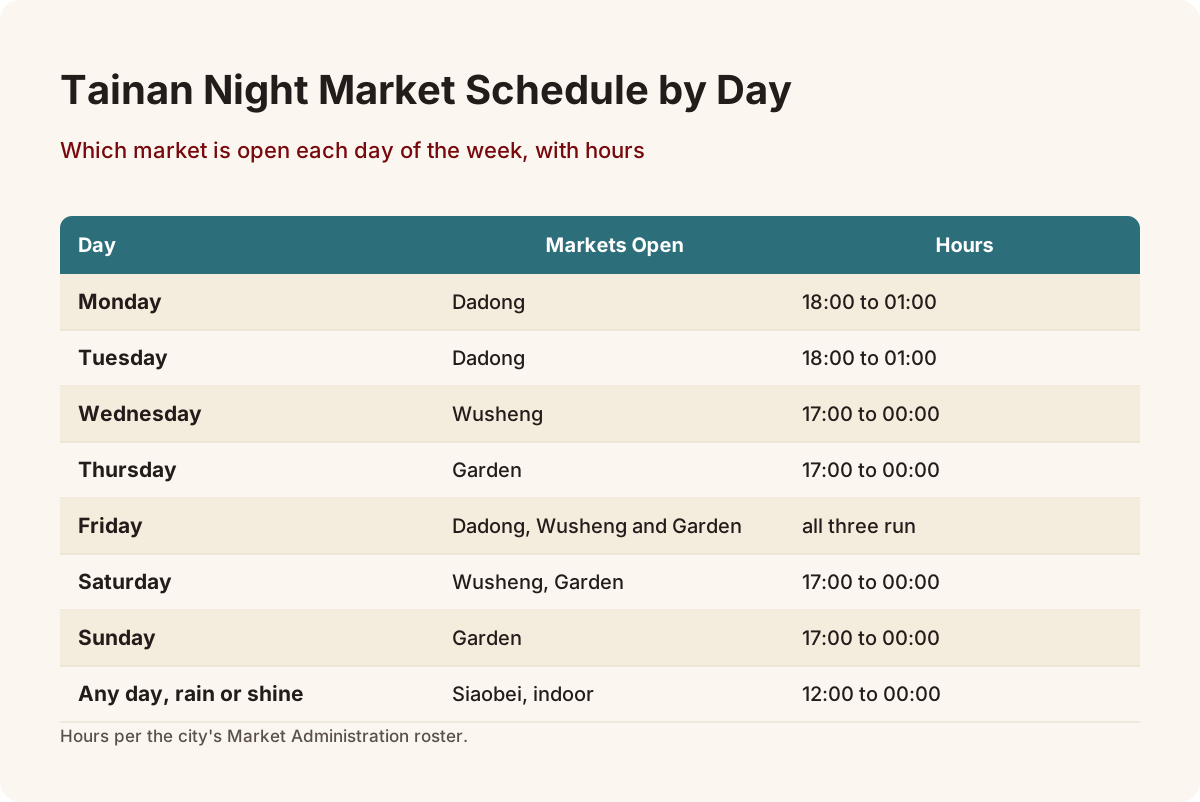
Match the night market to your day of the week, because Tainan's big outdoor markets rotate. Garden Night Market opens Thursday to Sunday, Wusheng opens Wednesday, Friday and Saturday, and Dadong opens Monday, Tuesday and Friday, all from early evening; Friday is the only night all three run, and Siaobei, which is indoors and open daily from noon, is the wrong-night and rain answer.
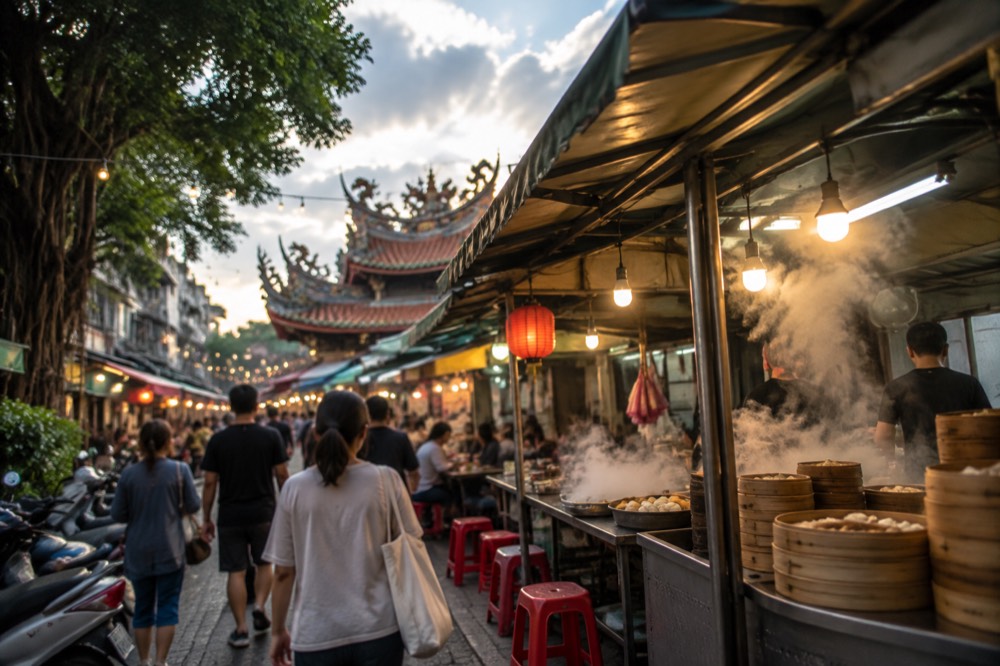
This table is verified market by market from the Tainan City Government Tourism Bureau's own attraction pages, and it is the single most useful piece of planning data on this page. The city updates these pages, so check before you go.
| Day | Markets Open | Hours |
|---|---|---|
| Monday | Dadong | 18:00 to 01:00 |
| Tuesday | Dadong | 18:00 to 01:00 |
| Wednesday | Wusheng | 17:00 to 00:00 |
| Thursday | Garden | 17:00 to 00:00 |
| Friday | Dadong, Wusheng and Garden | all three run |
| Saturday | Wusheng, Garden | 17:00 to 00:00 |
| Sunday | Garden | 17:00 to 00:00 |
| Any day, rain or shine | Siaobei, indoor | 12:00 to 00:00 |
Locals compress this into a seven-character rhyme, but it is a memory aid, not a schedule: it names the primary market per night and misses that Garden also opens Friday and Saturday and that Wusheng also opens Friday. The table above is the schedule; the rhyme is trivia. The city's Market Administration roster is the official register if you want to check a market before committing your evening.
Two planning consequences follow. If your crawl lands on a Wednesday, Wusheng is your only big outdoor option, which makes it either a quiet night or the night to try Siaobei instead. And if you can choose your day, choose Friday: it is the one night the whole market system is switched on, and it is the closest thing Tainan has to a food-crawl jackpot.
What About Anping for the Afternoon Stretch?
Spend the afternoon in Anping, the old coastal district where the snack culture leans toward shrimp rolls, oyster dishes and bean jelly desserts, and where the eating can be interleaved with Anping Old Street, the Tree House and the Old Fort, all of which are within walking distance of each other and open through the late afternoon.
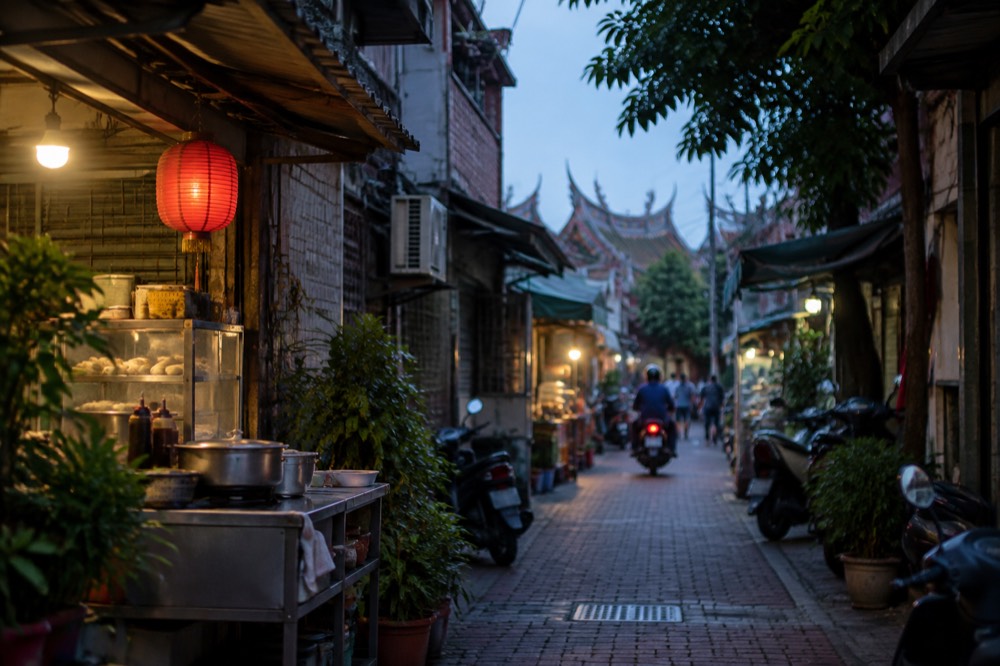
Anping is where Tainan's harbor history and its food history sit in the same few blocks. The verified sight hours make an easy sandwich: Anping Old Fort is open 10:00 to 17:10 with admission at the gate of NT$70, the Anping Tree House is open 08:30 to 17:30 at the same gate price, and the old street between them carries the district's snack stalls. Our Anping half day itinerary covers the sightseeing side in full, and our Anping Old Fort page has the history.
The food logic of Anping is coastal. Shrimp rolls, oyster dishes and the district's variations on tofu and bean desserts all trace back to a fishing economy that the Dutch-era fort overlooks. As everywhere on this page, no stall is named as the original and no price is printed, because neither claim survives a fact-check against official sources. What is verifiable is the shape of the afternoon: eat, walk a fort, eat again, walk the tree house, and let the district's own scale keep the crawl honest. The wider set of guides lives on Tainan Travel Guide.
If your crawl falls in July or August, the city's festival calendar puts the Qigu Seafood Festival on in the lagoon district just north of Anping, which is the season the coastal-food half of a Tainan crawl is at its most outward-facing. The Longhai ecological tour with the oyster buffet is the bookable version of exactly that coast, and it fits a food-crawl day that wants a lagoon interlude.
How Do You Get Between the Food Stops?
Move between crawl stops on foot inside each district and by city bus between districts, where the first 8 km on trunk and branch routes are free with an electronic card, Citizen Card, iPASS, EasyCard or iCash 2.0, provided you tap on and tap off; the cash fare for the same trip is NT$26, and the free-8-km policy runs for the 2026 calendar year, so re-check it before you travel.
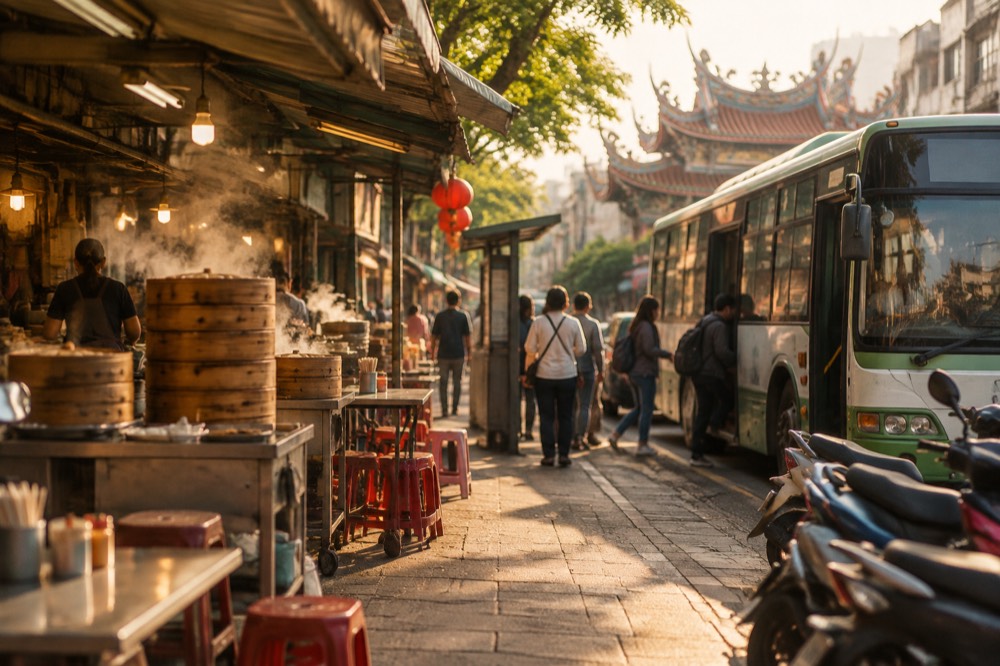
The tap-off rule is the part visitors miss, and it is the difference between a free ride and a full fare. The city's own bus site, 2384.tainan.gov.tw, sets out the scheme in English: the free distance applies to the main and branch networks, the green, blue, brown, orange, yellow and red routes, and tourist buses are excluded. Our getting around Tainan page and our EasyCard in Tainan page cover the mechanics in more depth.
For a crawl specifically, the pattern is simple. West Central District's food streets are walkable end to end, so the morning and midday legs need no vehicle at all. Anping is the one leg that usually wants a bus, and it is exactly the kind of short trunk-route trip the free 8 km covers. The evening run to whichever night market your day of the week has switched on is another short bus hop, Garden in the north of the city, Wusheng in the west, Dadong in the east.
One caution we will not soften: do not assume an International Driving Permit lets you rent a scooter on arrival. Taiwan expects an IDP to be registered with a Motor Vehicles Office, and rental shops may refuse without it. A food crawl does not need a scooter anyway, and walking between stops is the whole point.
When Is the Best Season for a Tainan Food Crawl?
The best season for a Tainan food crawl is October to March, when the city is dry and comfortable, but the best food-specific months are June and July for mango desserts and July and August for the Qigu Seafood Festival, so the honest answer is that the dry half of the year is the easiest to crawl and the summer half is the most flavorful, and January and February are the busiest months of all.
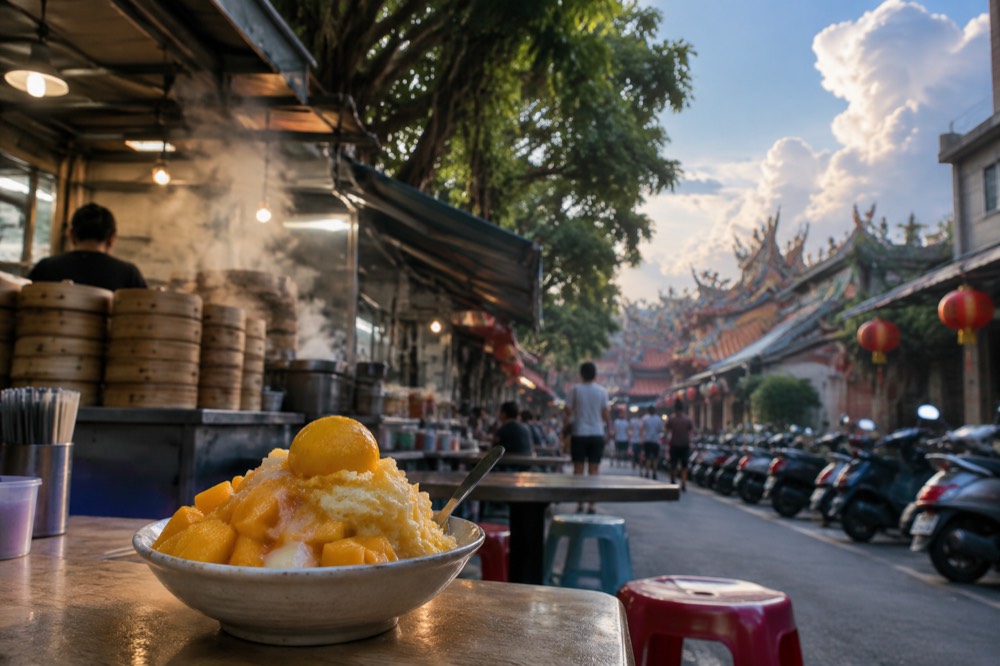
The climate case comes from the Central Weather Administration's 1991 to 2020 normals for Tainan station. Tainan's rain is almost entirely a summer event: August averages 466 mm across 16 wet days, December 16 mm across 3, and close to three-quarters of the annual 1,761 mm falls between May and September. October is the driest month by wet days, 2.8, while still averaging maxima of 30.8C. In other words, an October crawl gets near-summer warmth with almost no rain risk, and an August crawl gets the seafood festival but should carry a rain plan, which in Tainan means Siaobei Night Market, indoors and open daily.
| Period | Crawl Conditions |
|---|---|
| October to March | Dry, warm, comfortable; the easiest walking weather |
| June and July | Mango season and the city's mango festival; hot and increasingly wet |
| July and August | Qigu Seafood Festival; peak heat and peak rain, plan indoor backups |
| January and February | Peak visitor season, driven by pilgrimage and Lunar New Year; busiest stalls |
The January and February peak is worth knowing because it inverts the usual assumption. The Tourism Administration's own visitor data shows Tainan's biggest draws are temples, not forts, and the pilgrimage and Lunar New Year traffic pushes the city's food streets to their busiest in what is otherwise the calmest weather of the year. If you want the dry season and the thin crowds, November and the shoulder edges of October and March are the quiet compromise.
How Do You Pace a Full-Day Food Crawl Without Burning Out?
Pace the crawl as roughly five to seven small stops across the day, one anchor dish per district, with walks and sights between the eating legs, water from convenience stores rather than assumptions about taps, and a hard rule of stopping when two stops in a row feel like a chore rather than a pleasure, because the crawl is a format for enjoying the city, not a checklist to survive.
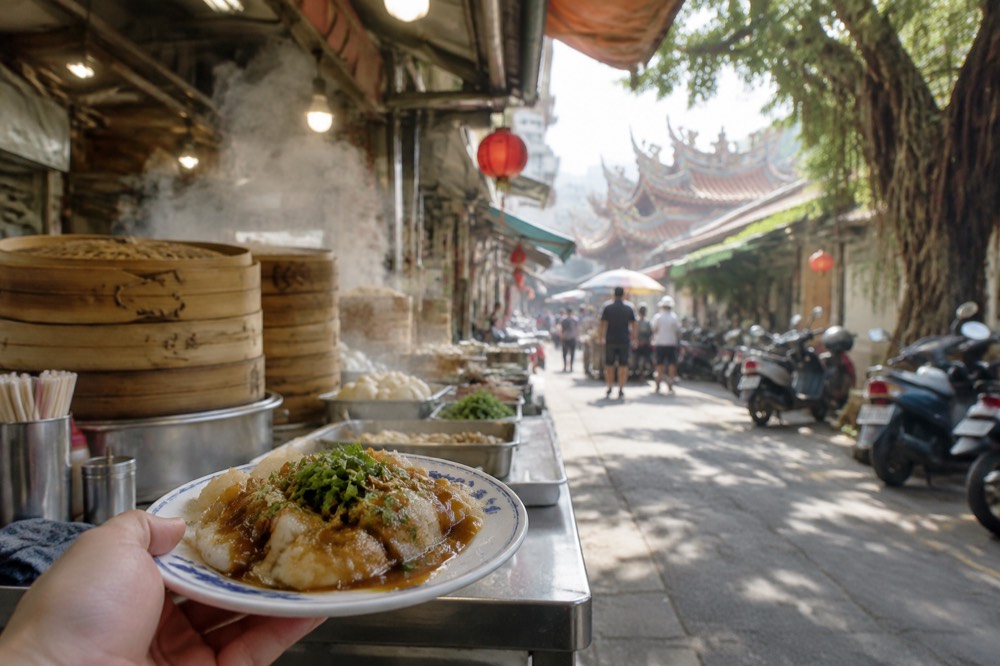
A shape that holds up across every day of the week:
| Time | Stop | District |
|---|---|---|
| Early morning | Beef soup | West Central |
| Morning | Breakfast item and temple walk | Confucius Temple quarter |
| Midday | Guohua Street snack round | West Central |
| Early afternoon | Bus to Anping, shrimp rolls and old street | Anping |
| Late afternoon | Tree House or Old Fort between bites | Anping |
| Evening | The night market your day of the week has open | Varies by day |
On water: do not plan around drinking from the tap. The honest, sourced line is that bottled and filtered water are everywhere, convenience stores are on every corner, and most locals boil or filter, so buy bottles and let the convenience store network do the rest. On cash: night markets and small stalls expect cash, so carry it even though cards work at hotels and chains, a point our Tainan cash and cards page expands on.
And on the after-dinner stretch: Chihkan Tower is open until 21:30 daily, which is unusual for a historic site in this city and makes it one of the few sights that fits after the night market run. The Tainan after dark itinerary builds a whole evening around that late-closing fact.
If a self-directed day feels like too much bookkeeping, the guided versions cover the same ground with someone else holding the map. The city walking tour with snacks and street food takes the midday leg, and the six-hour format suits travelers who want the crawl's variety without the logistics.
Between the guided walk and a fully private day there is a wide middle ground, and it is worth being honest about what each layer adds. A guided walk buys context and a route someone else has already stress-tested. A private day trip, which can depart from Kaohsiung as well as Tainan, buys the whole schedule to yourself, including the drives out to the lagoon coast that a walking crawl never reaches. For most first-time visitors the walk is enough; for a group with strong opinions about what it wants to eat, the private option earns its price.
For longer stays, our two days in Tainan and three days in Tainan itineraries spread the same food stops across more mornings, and the Tainan temple trail pairs the crawl with the temple culture that produced half these dishes in the first place.
Common Questions About Tainan Food Crawls
What is a Tainan food crawl itinerary?
A structured day of many small eating stops across Tainan's districts, typically beef soup at dawn, snacks around Guohua Street and the Confucius Temple quarter at midday, an Anping afternoon, and the night market that matches your day of the week, since the big outdoor markets rotate by day.
Which night market should I pick for a food crawl in Tainan?
Match the market to your day: Garden opens Thursday to Sunday, Wusheng Wednesday, Friday and Saturday, Dadong Monday, Tuesday and Friday. Friday is the only night all three run. Siaobei is indoors and open daily from noon to midnight, so it covers rain and wrong nights. Check the city's pages before you go, because the days change.
Can you do a Tainan food crawl without a guide?
Yes. The districts are walkable, the city's buses are free for the first 8 km with an electronic card when you tap on and off, and the dish canon is well documented. A guided food walk adds context and removes guesswork, but nothing on this route requires a booking.
How many food stops should a Tainan crawl include?
Roughly five to seven small stops across a full day, one anchor dish per district, with walking and sightseeing between the eating legs. The portions are small by design, but the point is variety, not volume.
What is Tainan famous for in food?
Beef soup served at dawn, danzai noodles, milkfish soup, coffin bread, oyster omelettes and shrimp rolls, plus mango desserts in the June and July season. The city is widely described as Taiwan's food capital, and its dishes grew out of its history as the island's earliest urban center.
When is mango season in Tainan?
June and July, per the city's own festival calendar, which places Taiwan Mango Season and the Tainan International Mango Festival in those months. Yujing, inland from the city, is the main production area, and mango shaved ice is the crawl-friendly way to eat the season.
The crawl format is the honest way to meet Tainan: it takes the city at its own pace, respects the rotation of its markets, and leaves room for the temples and forts that made the food worth gathering around in the first place. Pick your day of the week first, because the night market decides itself, and let everything upstream of that fall into place.