Anping Old Fort (Fort Zeelandia)
Anping Old Fort stands on the site where the Dutch East India Company built Fort Zeelandia, completed in 1634, making it the oldest European-style stronghold in Taiwan. Most of what a visitor photographs today, though, is not Dutch at all, and knowing which bricks are which is the difference between a quick photo stop and a visit that makes sense.
Short answer
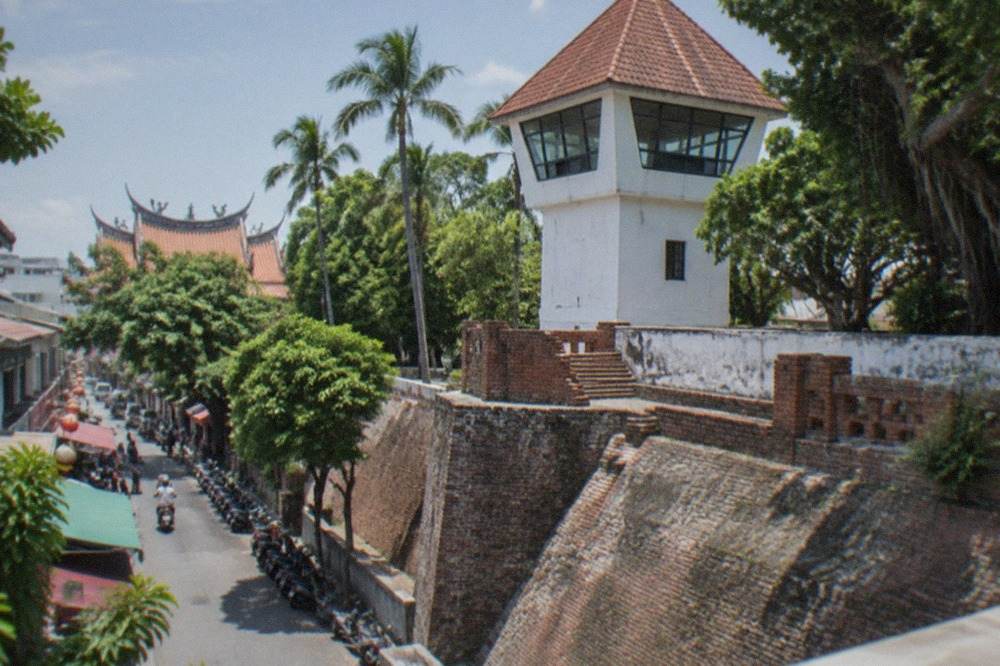
Anping Old Fort is open 10:00 to 17:10 daily and costs NT$70 at the gate, NT$35 with a concession. The Dutch East India Company began the fort in 1624 and completed it in 1634 as Fort Zeelandia; Koxinga took it in 1662. Only the brick walls of the south outer rampart survive from the Dutch period.
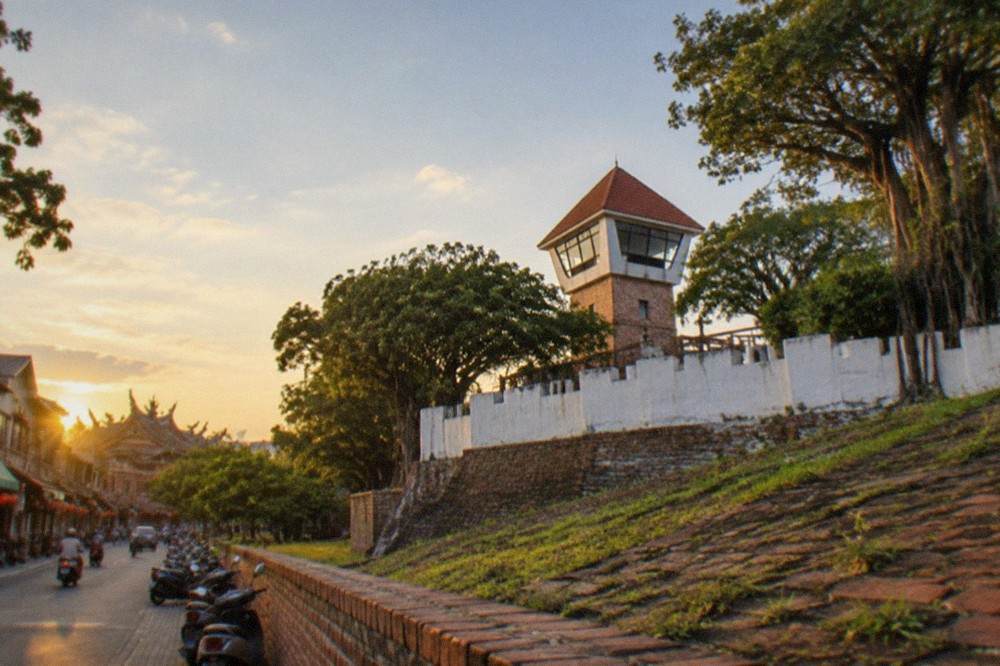
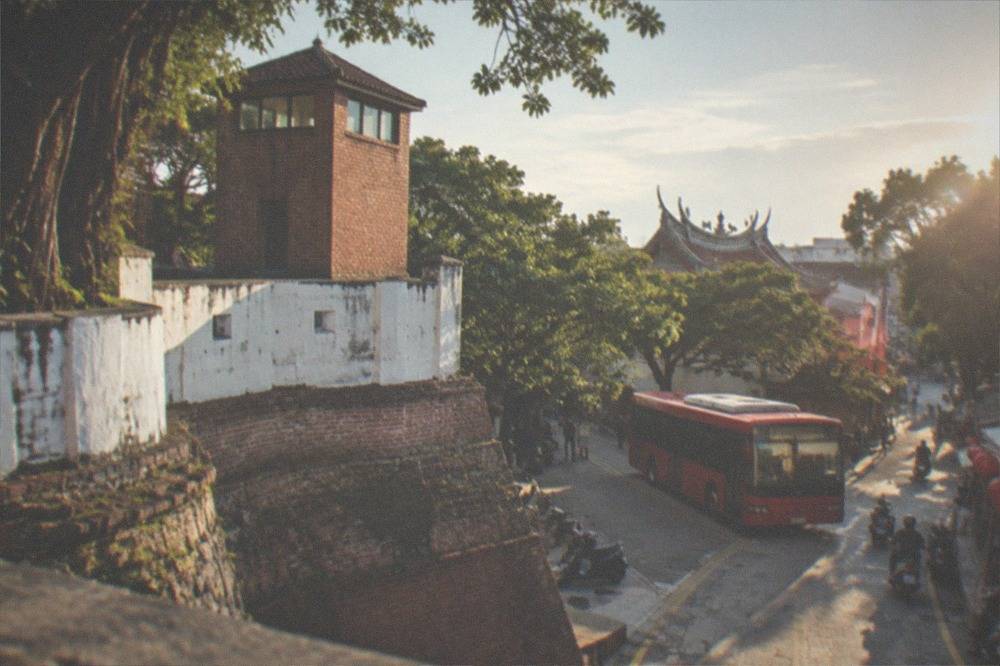
Anping Old Fort stands on the site where the Dutch East India Company built Fort Zeelandia, completed in 1634, making it the oldest European-style stronghold in Taiwan. Koxinga took the fort in 1662 and renamed the place Anping, and the inner fort became his residence, which locals called the King's Castle. Most of what a visitor photographs today, though, is not Dutch at all: the pointed roof on the lookout tower and the white-painted walls date from a 1975 city renovation, and the only genuine Dutch-period remains are the brick walls of the south outer rampart in front of the fort. Knowing which bricks are which is the difference between a quick photo stop and a visit that makes sense.
What Is Anping Old Fort (Fort Zeelandia)?
Anping Old Fort is the present-day name of the site where the Dutch East India Company built Fort Zeelandia, beginning the work in 1624 and completing it in 1634 as its defensive stronghold in Taiwan. Koxinga captured the fort in 1662, renamed the place Anping, and made the inner fort his residence, which locals called the King's Castle. Today it is a city-run historic site at NT$70 at the gate, open 10:00 to 17:10 daily.
The story starts with trade. The Dutch East India Company wanted a fortified base on the Taiwan coast and chose the sandbar peninsula at what is now Anping, building a stronghold whose full works were finished in 1634. The Tainan City Government Tourism Bureau's page for the site records that sequence plainly, and it also records the ending: Koxinga, the Ming loyalist general, took the Dutch fort in 1662 and renamed the settlement Anping. The inner fort became his residence.
What happened after that is why the site looks the way it does. Under the Qing the Taijiang inner sea silted up, Tainan's center of gravity shifted, and Qing troops dismantled parts of Fort Zeelandia to build the Eternal Golden Castle elsewhere in the city. The fort was rebuilt under Japanese rule, and after the Second World War the site took its present name, Anping Old Fort. In 1975 the Tainan City Government renovated it, adding the pointed roof to the lookout tower and painting the walls white, which is what visitors see today.
The honest detail most guides skip: the only genuine Dutch-period remains are the brick walls of the south outer rampart in front of the fort. Everything else is Japanese-era rebuilding and 1975 work. That does not make the site a disappointment, it makes it a layered one, and the layers are visible if you know to look. For the fuller political story, the Tainan history guide covers how the city was Taiwan's capital for more than two centuries, until the late nineteenth century.
What Are the Opening Hours and Ticket Prices at Anping Old Fort?
Anping Old Fort is open 10:00 to 17:10 every day, and admission is NT$70 at the gate for an adult, NT$35 for a concession. Concessions are half price at the city's historic sites, and Tainan residents enter free with ID, but a visitor is not a resident, so do not count on free entry. The city's own pages state that prices are for reference and the on-site notice governs, so check the board at the ticket counter.
The 10:00 opening is later than most of Tainan's historic sites, and the 17:10 closing is earlier, so the fort is a mid-day stop rather than a first-thing or after-dinner one. If an evening visit matters to your plan, note that Chihkan Tower is the outlier in this city: it stays open until 21:30 daily, one of the few historic sites a visitor can see after dinner. Anping Old Fort does not.
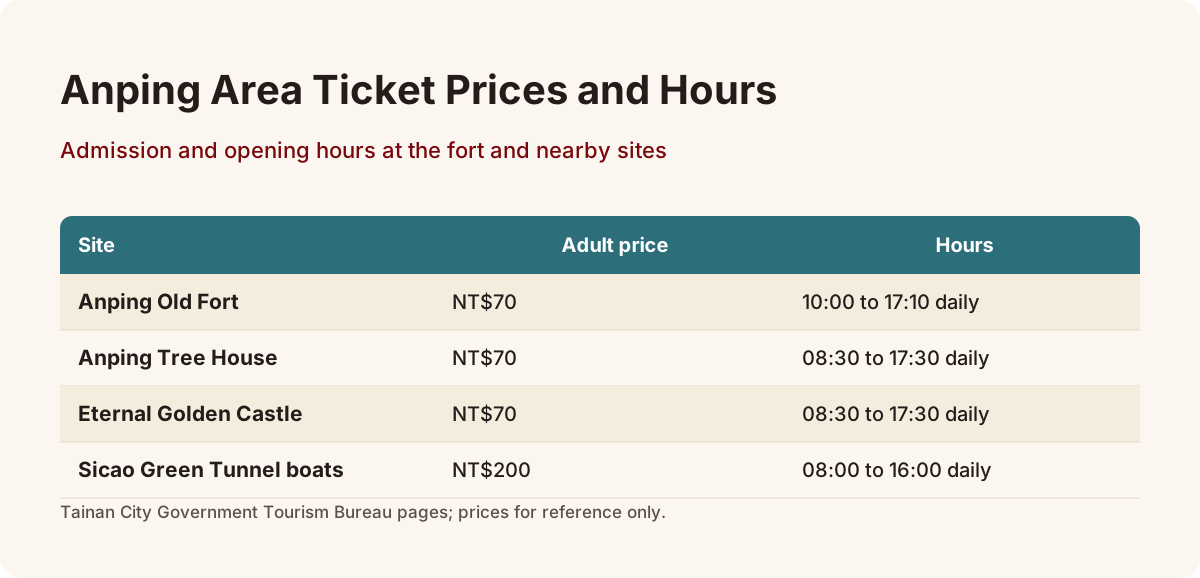
The fort sits in a cluster of ticketed Anping sites. Here is what the city's own pages list:
| Site | Adult price | Hours | Closed |
|---|---|---|---|
| Anping Old Fort | NT$70 | 10:00 to 17:10 daily | none listed |
| Anping Tree House | NT$70 | 08:30 to 17:30 daily | none listed |
| Eternal Golden Castle | NT$70 | 08:30 to 17:30 daily | none listed |
| Sicao Green Tunnel boats | NT$200 | 08:00 to 16:00 daily | none listed |
All prices are "at the gate," not guaranteed: the Tourism Bureau's pages carry a standing note that the on-site notice governs. A combined ticket covering the fort and the Anping Tree House is sometimes rumored, but no combined ticket is confirmed on any official page, so plan on separate NT$70 tickets at each site rather than assuming a bundle exists.
The Anping Tree House is a ten-minute walk away through the old street, and the Anping Tree House guide covers it in detail. If you are building a full circuit of the district, the Anping half-day itinerary sequences the fort, the Tree House, the old street and the canal in a workable order.
How Old Is the Fort Really, and What Survives from the Dutch Period?
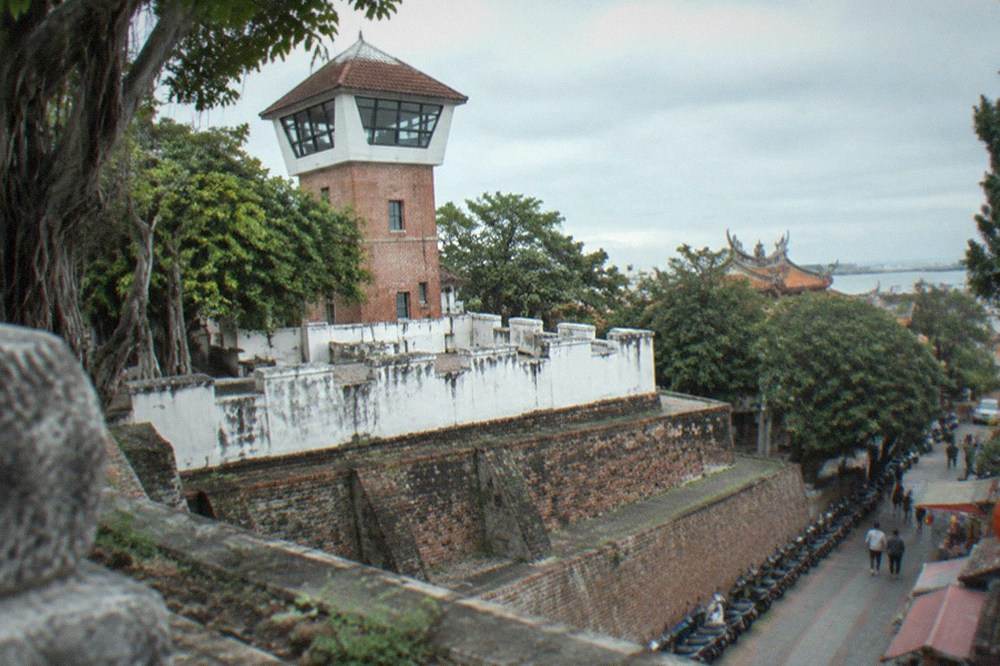
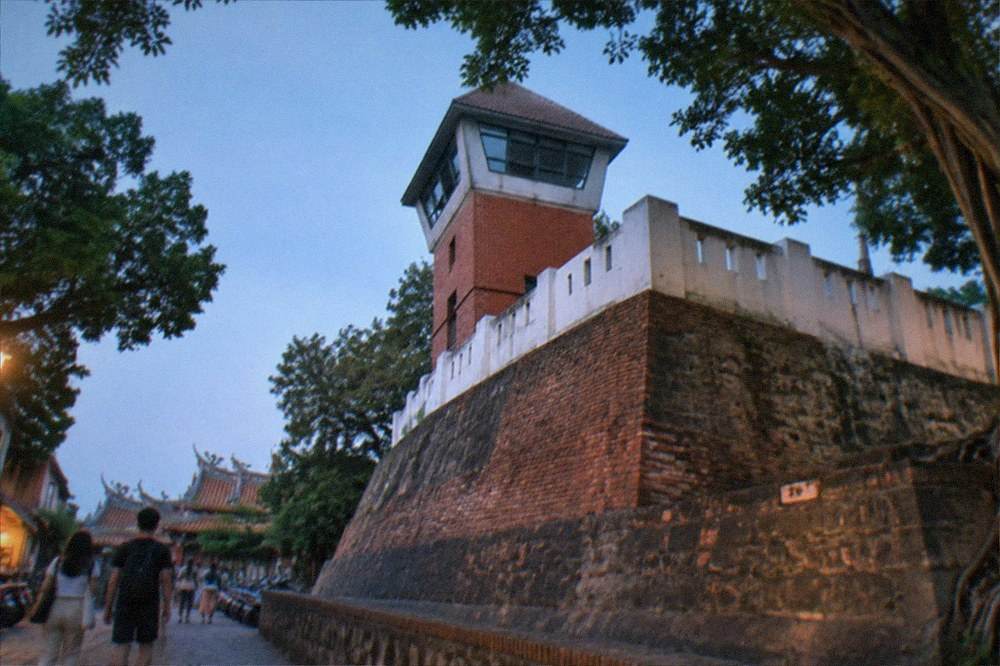
Only the brick walls of the south outer rampart in front of the fort survive from the Dutch period. The Dutch East India Company occupied the site in 1624 and completed Fort Zeelandia in 1634, but the pointed-roof lookout tower and white-painted walls that define the postcard view are a 1975 Tainan City Government renovation, and much of the intervening structure is Japanese-era rebuilding. The fort is nearly four centuries old as a site, but mostly decades old as a building.
That distinction is worth walking with. The rampart bricks in front of the fort are the genuine Dutch-era masonry, low, weathered and grass-grown. The tower behind them is the 1975 work: the city added the pointed roof to the lookout structure and painted the walls white that year, and the Tourism Bureau's page says so directly. Under Japanese rule the site had already been rebuilt once, so the visitor is looking at three layers stacked on one small hill.
Here is the layer map:
| Period | What was built or changed |
|---|---|
| 1624 to 1634 | Dutch East India Company builds Fort Zeelandia; the south outer rampart walls are what remains |
| 1662 | Koxinga takes the fort, renames the place Anping, the inner fort becomes his residence, the King's Castle |
| Qing period | The Taijiang inner sea silts up; parts of the fort are dismantled to build the Eternal Golden Castle |
| Japanese era | The site is rebuilt |
| 1975 | City renovation adds the pointed roof to the lookout tower and paints the walls white |
One caution on dates: the siege that ended Dutch rule is often given a start year of 1661, but the Tourism Bureau's own page records only the 1662 outcome, so this site reports 1662 and frames the siege as the events leading to it. The same caution applies to Fort Provintia at Chihkan Tower: the city's page there says the Dutch built it in the early 1650s, and that is the range we stand behind. If the colonial handover interests you, the Chihkan Tower guide covers the other half of the Dutch story, and the answers page on what happened at Fort Zeelandia goes deeper into the siege.
For the wider context of the island's colonial record, the National Museum of Taiwan History is the city's serious museum on the subject, open Tuesday to Sunday 9:00 to 17:00 and closed Mondays.
How Do You Get to Anping Old Fort?
Anping Old Fort is in Anping District, on the western edge of Tainan, away from the railway station and the old city core. There is no rail line to Anping: visitors arrive by city bus, and the city's buses are free for the first 8 km with an electronic card, against a NT$26 cash fare for the same trip. High Speed Rail passengers arrive at Shalun in Guiren District, outside the old city, and transfer onward.
Start with the geography. The fort sits at the heart of old Anping, the peninsula where the Dutch landed, and it is roughly a 20 to 30 minute bus ride from Tainan Railway Station, though no official journey time is published, so treat that as a planning range and check the route. The getting around Tainan guide covers the full picture.
The bus fare rule is the one that saves money. The city's own bus fare notice states that trunk and branch buses are free for the first 8 km of travel with an electronic card, a NT$26 discount, for the 2026 calendar year. The cards that work are the Citizen Card, iPASS, EasyCard and iCash 2.0, and you must tap on AND tap off: tap off is the part visitors miss, and skipping it can cost you the discount. The cash fare for the same trip is NT$26. The scheme runs through 31 December 2026, so it is a current policy, not a permanent one.
If you are coming in by High Speed Rail, remember that the HSR station is not in Tainan: it is at Shalun in Guiren District, outside the old city. The verified onward option is the H31 Tainan City Government Line HSR express bus, which is free for HSR passengers on production of a ticket stub, with no card tap needed. Other passengers pay NT$18 for one section or NT$36 for two, with the section break at the Chimei Museum, which means the museum sits on the shuttle route. The Shalun Line train also connects the HSR station to the rail network, but it is a paid Taiwan Railway ticket, not a free transfer, and its fare and frequency are not published in a source we can stand behind.
| Way in | What it costs | Notes |
|---|---|---|
| City bus, with card | Free for the first 8 km | Tap on and tap off; Citizen Card, iPASS, EasyCard, iCash 2.0; 2026 policy |
| City bus, cash | NT$26 | Same trip, no card |
| H31 HSR shuttle, with HSR ticket stub | Free | No card tap needed; section break at Chimei Museum |
| H31 shuttle, no HSR ticket | NT$18 one section, NT$36 two | Chimei Museum is the break point |
| High Speed Rail, Taipei to Tainan | NT$1,350 reserved standard seat | Station is at Shalun, Guiren District, not the old city |
Scooter rental is popular in Tainan, but be careful with the licence question: an International Driving Permit is not automatically sufficient in Taiwan, Taiwan expects it to be registered at a Motor Vehicles Office, and rental shops may refuse without it. Check the official Motor Vehicles Office guidance before assuming a foreign licence is enough.
What Else Can You See Around Anping Old Fort?
Anping Old Fort sits inside a walkable cluster of sites: Anping Old Street and its sword-lion doorways, the Anping Tree House with its banyan-grown brick warehouse, the Anping Canal waterfront, and the Eternal Golden Castle a short ride south. The fort, the Tree House and the street can be covered in one afternoon on foot, with the canal as the connecting thread. Nothing in that circuit needs a car.
The Anping Old Street runs through the heart of the old settlement, and its signature detail is the sword lions, carved lion faces with swords in their teeth that guard doorways, a folk tradition born in this district. The street food there is the reason many visitors come to Anping at all, and the dish worth seeking out ranges from danzai noodles to coffin bread. No official price list for any snack exists, so treat food costs as small and variable rather than quoting numbers.
The Anping Tree House is the district's second ticketed site, NT$70 at the gate and open 08:30 to 17:30, a former merchant warehouse that banyan roots have slowly taken over. The Anping Canal links the district to the city center and carries boat traffic, and the Sicao Green Tunnel mangrove boat ride, NT$200 for either route, is a short ride north. Both Sicao routes cost the same, the Green Tunnel and the longer Taijiang route, so do not let anyone tell you one is cheaper.
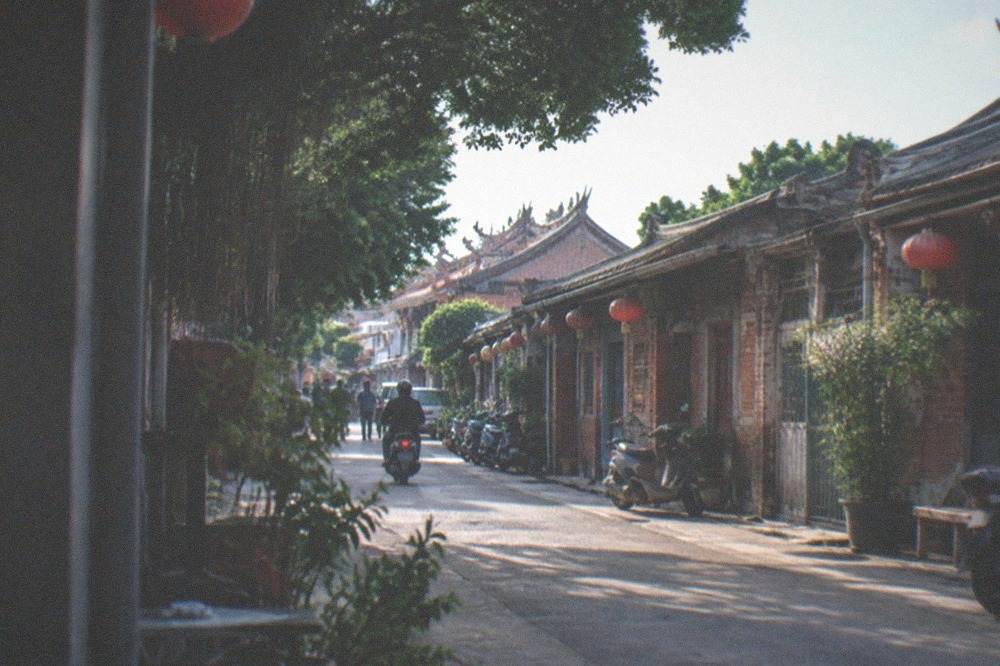
The fort's white walls and old brick are also one of Tainan's favorite photo backdrops, and one of the most popular ways to use them is a rented qipao: the Anping qipao rental experience is a full-day rental, which pairs naturally with an afternoon walking the ramparts and the old street. Check availability if a photo set around the fort is part of your plan.
The qipao idea works because the fort's rampart brick and the old street's weathered doorways sit within ten minutes of each other, so a single rental window covers both backdrops plus the canal. Book the morning slot if you want the light on the white walls before the 17:10 closing, since a full-day rental gives you the flexibility to shoot the fort at midday and the street at dusk.
When Is the Best Time to Visit Anping Old Fort?
The best time to visit Anping Old Fort is October to March, Tainan's dry half of the year, when rainfall is minimal and daytime maxima sit between about 24C and 31C. The worst months for this outdoor site are June to August, when August alone averages 466 mm of rain across 16 wet days. Within any day, the fort's 10:00 to 17:10 window means late afternoon light is the best a photographer gets.
The Central Weather Administration's 1991 to 2020 normals for Tainan show a city whose rain is almost entirely a summer event. Nearly three-quarters of the annual 1,761 mm falls between May and September, while December brings just 16 mm across about three wet days. October is the driest month by wet days, 2.8, while still averaging 30.8C maxima, which makes it close to ideal for walking an outdoor fort. Tainan has 186 days a year above 30C, and from April to October it is above 30C on most days, so shade and water matter more than an umbrella in the dry months too.
| Period | Rain | Daytime feel | Verdict for the fort |
|---|---|---|---|
| October to March | 16 to 70 mm per month, few wet days | 24C to 31C maxima | Best: dry, sunny, comfortable |
| April to May | Rising, 69.8 mm in April to 165.6 mm in May | Hotting up, above 30C most days from May | Fine, watch late May |
| June to August | 370.5 to 466.1 mm per month | Hot and humid | Wettest; typhoon risk peaks late summer |
| September | 170.5 mm | Still hot | Improving but changeable |
Typhoon risk concentrates in the late summer months, and when the Tainan City Government declares a typhoon day, attractions and transport may suspend; the Tainan Art Museum states on its own hours page that it closes when the city announces a work suspension, which is a concrete example of how the policy works. The Tainan weather guide carries the full month-by-month tables.
One counter-intuitive fact worth planning around: Tainan's peak visitor months are January and February, driven by temple pilgrimage and Lunar New Year, not by summer. The Tourism Administration's 2023 dataset shows Anping as a district drew 4,441,443 visitors against Chihkan Tower's 443,622, and the district's peak month is February. Winter is both the best weather and the busiest season, so arrive at the fort near the 10:00 opening in January and February if crowds matter to you.
Is Anping Old Fort Worth Visiting?
Anping Old Fort is worth visiting as a site with a genuine Dutch-era core and a layered later history, provided you go in knowing that the tower is 1975 and the Dutch bricks are the low rampart walls out front. At NT$70 it is one of the cheaper ticketed sites in the district, and it anchors a walkable circuit of old street, Tree House and canal that fills half a day easily.
Skip it only if you have no interest in history and are in Anping purely to eat.
The verdict depends on expectations. A visitor expecting an intact Dutch fortress will be misled by the postcard, because most of what stands is Japanese-era rebuilding and 1975 renovation. A visitor expecting the oldest European stronghold site in Taiwan, with genuine Dutch rampart brick, a Koxinga story and a view over the old settlement, gets exactly that. The Tourism Bureau's page for the site is candid about all of it, and this site's job is to pass that candor on.

Pair the fort with the rest of the district rather than treating it as a standalone. The Tree House is the strongest companion ticket, the old street supplies the food, and the canal or the Sicao boats add the water. If your time in the city is short, a single-day plan that fits Anping in alongside the old city core is the realistic maximum, and the evening is better spent in the city itself, where the night markets rotate by day of the week.
For visitors who want the district explained rather than self-guided, an evening walking tour is the bookend option: the Tainan by Night evening walking tour runs three hours through the city after dark, and Anping's own sites close by 17:30, so the tour works best as a separate evening. If that suits your schedule, decide it early, because the tour and the fort make a natural same-day pair, one in the afternoon and one after dark.
If you are staying in the city rather than day-tripping, compare the districts before booking a room: Anping itself is one of the options, quieter at night than the old core but close to everything this page describes. Whatever you choose, this Tainan Travel Guide page set covers the rest of the district's sites in the same verified, no-guesswork style.
Common Questions About Anping Old Fort
Can you visit Fort Zeelandia?
Yes. Fort Zeelandia is the original Dutch name of what is now Anping Old Fort, a city-run historic site open 10:00 to 17:10 daily at NT$70 for an adult, NT$35 with a concession. The answer page on [can you visit Fort Zeelandia](/answers/can-you-visit-fort-zeelandia/) covers the details, but the short version is that the site is fully open to visitors, with only the south outer rampart walls surviving from the Dutch fort itself.
How much does Anping Old Fort cost?
Admission is NT$70 at the gate for an adult and NT$35 for a concession. Tainan residents enter free with ID, but a visitor is not a resident, so do not count on free entry. The city's pages state that prices are for reference and the on-site notice governs.
How old is Anping Old Fort?
The site dates to 1624, when the Dutch East India Company occupied the Anping sandbar and began Fort Zeelandia, completed in 1634. Koxinga took the fort in 1662. The building you see is layered: the rampart brick is Dutch, much of the rest is Japanese-era rebuilding, and the pointed-roof tower and white walls are a 1975 city renovation.
What happened at Fort Zeelandia?
The Dutch East India Company built it as its defensive stronghold between 1624 and 1634, and Koxinga captured it in 1662, renaming the place Anping and making the inner fort his residence, the King's Castle. Under the Qing, parts of the fort were dismantled to build the Eternal Golden Castle. The [what happened at Fort Zeelandia](/answers/what-happened-at-fort-zeelandia/) page tells the full story.
Is there a combined ticket for Anping Old Fort and the Anping Tree House?
No combined ticket is confirmed on any official page, so plan on separate NT$70 tickets at each site. The two are a short walk apart through Anping Old Street, and both are open daily, the Tree House from 08:30 to 17:30 and the fort from 10:00 to 17:10.
How do I get to Anping Old Fort by public transport?
City buses serve Anping from Tainan Railway Station and the old city, and with an electronic card such as EasyCard or iPASS the first 8 km are free under the city's 2026 policy, provided you tap on and tap off. The cash fare for the same trip is NT$26. There is no rail line to Anping itself.
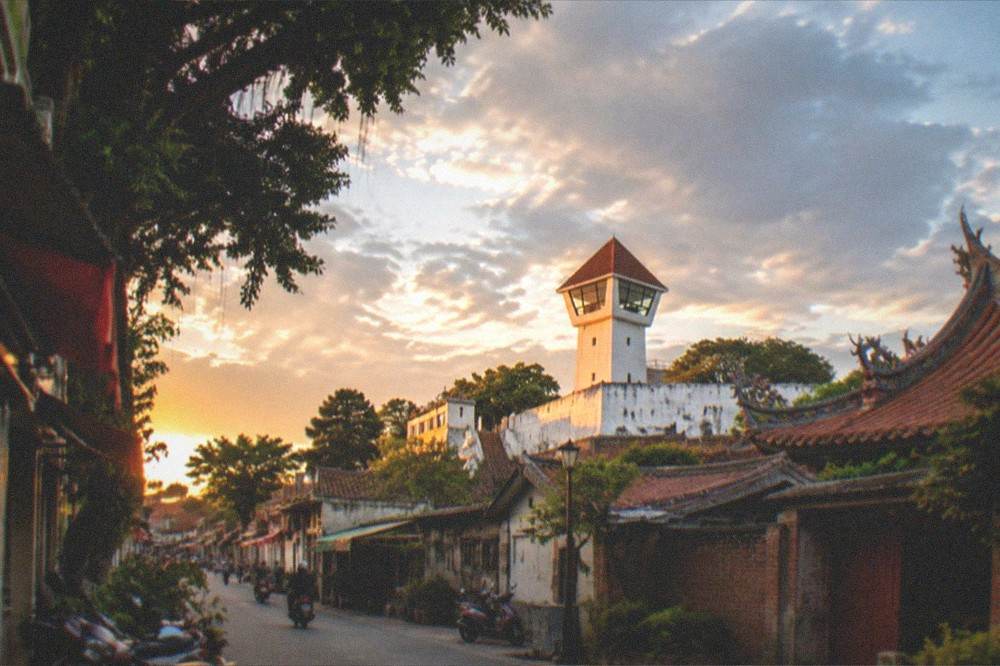
Anping Old Fort rewards a visitor who arrives with the right frame of mind: it is not a preserved Dutch fortress but a four-hundred-year-old site wearing a 1975 jacket over a Japanese-era rebuild, with genuine Dutch rampart brick out front and the whole Koxinga story attached to it. At NT$70, inside a walkable district full of food, temples and tree-grown warehouses, it is the anchor of Anping rather than a standalone stop. Go in the dry months if you can, catch the late-afternoon light before the 17:10 closing, and read the rampart walls for what they are: the oldest European masonry in Taiwan, still standing where the Dutch laid it nearly four centuries ago.