What Is Special About Tainan?
Tainan was Taiwan's capital for more than two centuries, and it still behaves like it: the oldest forts, the densest temple landscape on the island, a food culture locals treat as a civic asset, and night markets that rotate by day of the week.
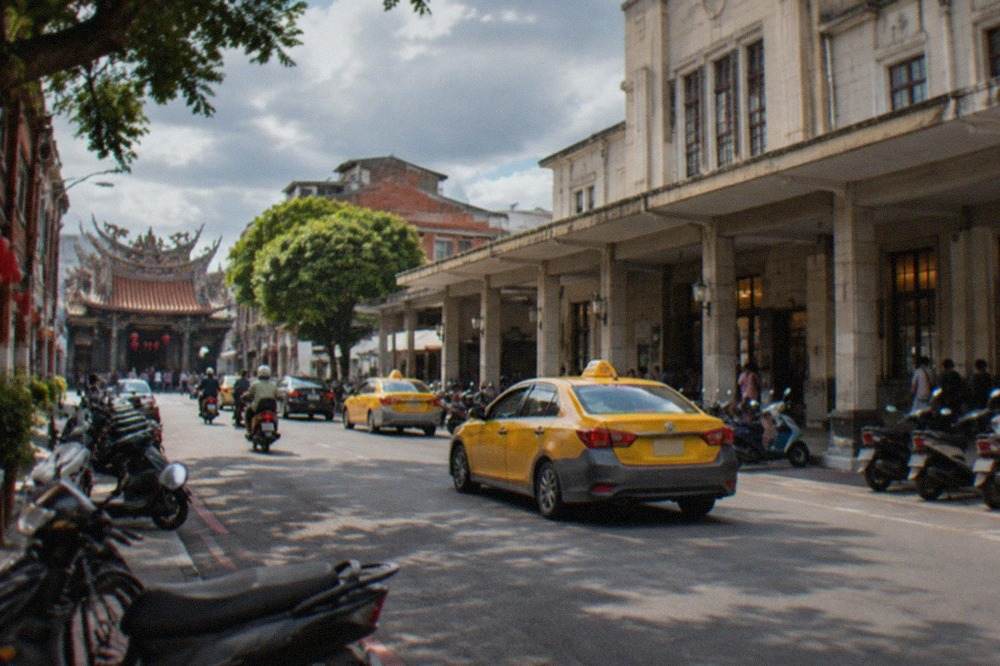
Tainan was the capital of Taiwan for more than two centuries, until the late nineteenth century, and the city has never stopped behaving like it. The Tainan Travel Guide desk covers the city's forts, temples and food culture in depth, but the short version of what makes Tainan special is this: it holds the island's oldest European-built structures, its densest concentration of temples, and a street-food reputation that Taiwanese travelers treat as a reason to make the trip in itself.
Why Is Tainan Called Taiwan's Ancient Capital?
Tainan was the political and cultural capital of Taiwan for more than two centuries, until the late nineteenth century, and it holds the island's oldest surviving European fortifications, begun by the Dutch East India Company in 1624 at what is now Anping. The city's own Tourism Bureau records Fort Zeelandia's completion in 1634 and the Dutch build of Fort Provintia at what is now Chihkan Tower in the early 1650s.
That Dutch chapter is the foundation of the city's identity. The Tainan City Government Tourism Bureau's page for Anping Old Fort states that the Dutch East India Company occupied the site in 1624 and finished Fort Zeelandia in 1634, and that after Koxinga took the fort in 1662 it became his residence, which locals called the King's Castle. The Bureau is equally candid about what survives: the only genuine Dutch-period remains at the site are the brick walls of the south outer rampart. Most of what visitors photograph today is Japanese-era reconstruction plus a 1975 city renovation that added the pointed roof to the lookout tower.
The layering is the point. Anping Old Fort carries Dutch brick, Qing dismantling, Japanese rebuilding and a modern city renovation in one small site, and Chihkan Tower, a short distance away in the old city, sits on the footprint of the Dutch Fort Provintia. Very few cities anywhere let a visitor read four centuries of colonial history off a single set of walls. For a longer treatment, see what Tainan is best known for, and for the oldest-city question specifically, whether Tainan is the oldest city in Taiwan.
Why Is Tainan's Food Culture Such a Big Deal?
Tainan is widely regarded within Taiwan as the island's capital of street food and traditional snack cuisine, the place where dishes such as danzai noodles, beef soup, coffin bread and milkfish preparations either originated or reached their standard form. The city's food identity grew directly out of its history as the old political center, and Taiwanese travelers rank eating among the main reasons to visit.
No official price list exists for a bowl of beef soup or a plate at a night market stall, and this site does not invent one. What is verifiable is the structure: Tainan's snack culture is tied to the old capital's merchant and temple life, and the dishes the city is known for, danzai noodles, coffin bread, milkfish soup, braised pork rice, are tied to specific streets and specific old shops rather than to a generic night-market format. The city's tourism apparatus promotes food trails as a primary product, and the calendar builds whole festivals around seasonal produce, including mango season at Yujing from June to July and the Qigu Seafood Festival from July to August.
A guided walk is the efficient way to sample the scene, because the famous stalls are scattered across the old city rather than gathered in one place.
For a deeper dive into the dishes themselves, start with what Tainan is famous for in food, and for the practical question of fitting the eating into a single day, a one-day plan for Tainan.
How Do Tainan's Night Markets Rotate?
Tainan's big outdoor night markets do not open every night. Garden Night Market opens Thursday to Sunday, Wusheng opens Wednesday, Friday and Saturday, and Dadong opens Monday, Tuesday and Friday, all roughly 17:00 to midnight, while the indoor Siaobei Night Market opens every day around noon. Friday is the only night all three big outdoor markets run at once, and the schedule is published by the city.
The rotation is the single most useful practical fact about visiting Tainan, because a traveler who arrives on a Wednesday without checking will find only Wusheng open among the big three. The Tainan City Government Tourism Bureau's own attraction pages publish the days, and the city updates them, so the honest instruction is to check before you go.
| Market | Open | Hours | Notes |
|---|---|---|---|
| Garden Night Market | Thu, Fri, Sat, Sun | 17:00 to 00:00 | The largest of the big three |
| Wusheng Night Market | Wed, Fri, Sat | 17:00 to 00:00 | The only big market open Wednesday |
| Dadong Night Market | Mon, Tue, Fri | 18:00 to 01:00 | The only big market open Monday and Tuesday |
| Siaobei Night Market | Every day | 12:00 to 00:00 | Indoor, the wet-weather answer |
Siaobei's indoor format makes it the reliable fallback on any night of the week and in any weather. Locals use a seven-character rhyme to remember the rotation, but the rhyme is shorthand rather than an official schedule, and the table above is what the city itself publishes.
Which Temples and Forts Define the City?
Tainan's defining sites are its Dutch-era forts and its temple landscape: Anping Old Fort and Chihkan Tower anchor the colonial story, while the Tainan Confucius Temple, the Grand Matsu Temple, Five Concubines Temple and Kaiyuan Temple are all free to enter. Chihkan Tower is unusual among the city's historic sites in staying open until 21:30 daily, making it one of the few a visitor can see after dinner.
The temple side of the city is bigger than most first-time visitors expect. The Tourism Administration's own visitor dataset for 2023 shows that Tainan's biggest draws are not the forts at all: Nankunshen Daitian Temple recorded 6,583,100 visitors against Chihkan Tower's 443,622, roughly fifteen times as many. Anping as a whole district drew 4,441,443. The counts are compiled by each operator and the methods differ between a ticketed museum and an open old street, but the shape is clear: temple pilgrimage, not fort sightseeing, is the engine of Tainan's tourism, and it peaks in January and February around Lunar New Year.
| Site | Entry | Hours |
|---|---|---|
| Anping Old Fort | NT$70 at the gate | 10:00 to 17:10 daily |
| Chihkan Tower | NT$70 at the gate | 08:30 to 21:30 daily |
| Anping Tree House | NT$70 at the gate | 08:30 to 17:30 daily |
| Eternal Golden Castle | NT$70 at the gate | 08:30 to 17:30 daily |
| Tainan Confucius Temple | Free | 08:30 to 17:30, closed Lunar New Year's Eve |
| Grand Matsu Temple | Free | 06:00 to 21:00 daily |
| Chimei Museum | NT$200 for the permanent collection | Last entry 17:00, closed every Wednesday |
Concessions are half price at the city-run sites, and Tainan residents enter free with ID, which does not extend to visitors. The city's own pages state that the on-site notice governs prices, so treat every figure above as the gate price rather than a guarantee.
When Is the Best Time to Visit Tainan?
The best time to visit Tainan is October to March, the dry half of the year. The Central Weather Administration's 1991 to 2020 normals for Tainan show October averages just 2.8 wet days while still reaching 30.8C maxima, and December brings only 16 mm of rain across about three days, against August's 466 mm across 16 wet days. Nearly three-quarters of the annual 1,761 mm falls between May and September.
The Central Weather Administration's published normals also explain the visitor pattern. Tainan records 186 days a year above 30C, concentrated from April to October, and typhoon risk concentrates in the late summer months, which the rainfall table independently confirms. The city's peak visitor months are January and February, driven by pilgrimage and Lunar New Year, which is the opposite of the assumption a European-trained traveler might make: winter is Tainan's comfortable season, with mean temperatures around 17.9C in January and sunshine totaling 2,185 hours across the year.
The festival calendar follows the same shape. The city's own calendar places the Yanshui Beehive Fireworks in February, on the Lantern Festival, the Yuejin Lantern Festival in February to March, the Taiwan International Orchid Show in March, and the Guanziling Hot Spring and Food Festival from September to November.
How Do You Fit the Old City Into a Short Visit?
Most first-time visitors need two to three days for Tainan's core: one day for Anping's forts and tree house, one for the old city around Chihkan Tower and the Confucius Temple, and a third for the lagoon coast at Sicao and Qigu. The Sicao Green Tunnel boat costs NT$200 for either route, and Qigu Salt Mountain charges a NT$50 cleaning fee on foot.
The geography makes this straightforward. Anping's sites cluster within walking distance of each other at one end of the city, the old-city temples and Chihkan Tower cluster at the other, and the coastal wetlands sit a bus or car ride to the north. Travelers weighing Tainan against Taiwan's other big cities can compare Tainan or Kaohsiung, and those arriving from the north should note that the High Speed Rail station is at Shalun in Guiren District, outside the old city, so every arrival involves a transfer. The fare from Taipei is NT$1,350 for a reserved standard seat on Taiwan High Speed Rail's own fare table.
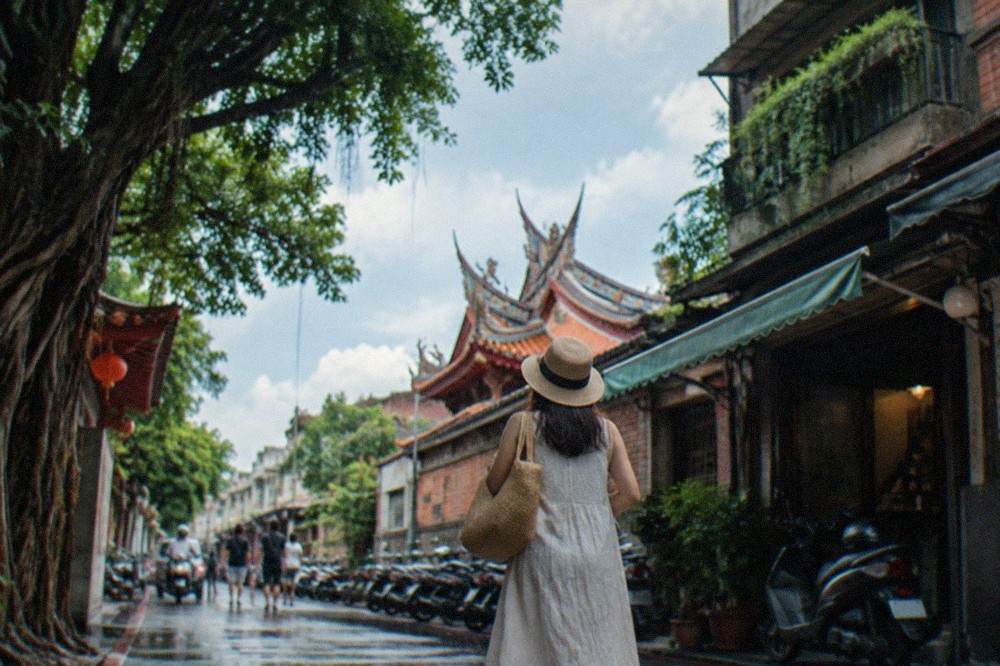
One experience pairs particularly well with Anping's old streets: renting a traditional qipao for the day and photographing it against the fort walls and lanes, which has become a signature way to mark a visit to the old capital.
Common Questions About What Makes Tainan Special
What Is Special About Tainan?
Tainan was Taiwan's capital for more than two centuries, until the late nineteenth century, and it retains the island's oldest European fortifications, its densest temple landscape, and its strongest street-food tradition. The night markets rotate by day of the week, the historic sites are inexpensive at NT$70 or less at the gate, and the dry, sunny winter is the comfortable season.
Is Tainan worth visiting compared to Taipei or Kaohsiung?
Tainan trades skyscrapers for depth: it is the destination for colonial history, temples and traditional food, while Taipei and Kaohsiung are the bigger, more modern cities. Many travelers split a trip between them, since the High Speed Rail connects Kaohsiung to Tainan for NT$140 standard class.
What food is Tainan famous for?
Danzai noodles, beef soup, coffin bread, milkfish dishes and braised pork rice are the signature items, tied to specific old shops and streets rather than to a single market. No official price list exists, but eating in Tainan is generally regarded within Taiwan as inexpensive relative to the bigger cities.
How many days do you need in Tainan?
Two days covers the old city and Anping at a reasonable pace, and three allows the lagoon coast at Sicao and Qigu. The night-market rotation means the day of the week you choose affects which markets are open.
When is the best month to visit Tainan?
October to March is the dry, comfortable half of the year. October averages just 2.8 wet days on the Central Weather Administration's 1991 to 2020 normals, against August's 16 wet days and 466 mm of rain.
Do you need tickets for Tainan's temples?
No. The Tainan Confucius Temple, Grand Matsu Temple, Five Concubines Temple and Kaiyuan Temple are all free to enter, and the city-run forts charge NT$70 at the gate. Chihkan Tower stays open until 21:30 daily, which makes it an after-dinner option.
The short answer to what is special about Tainan is that the city kept what the rest of Taiwan moved past. The capital left, the forts stayed, the temples multiplied, and the food culture became the island's reference point. Plan around the night-market rotation and the dry winter months, and the old city rewards however many days you give it.