What Is Tainan Best Known For?
Tainan is best known as Taiwan's oldest city and former capital, famous for its Dutch-era forts, historic temples, and the street food culture many consider the island's finest.
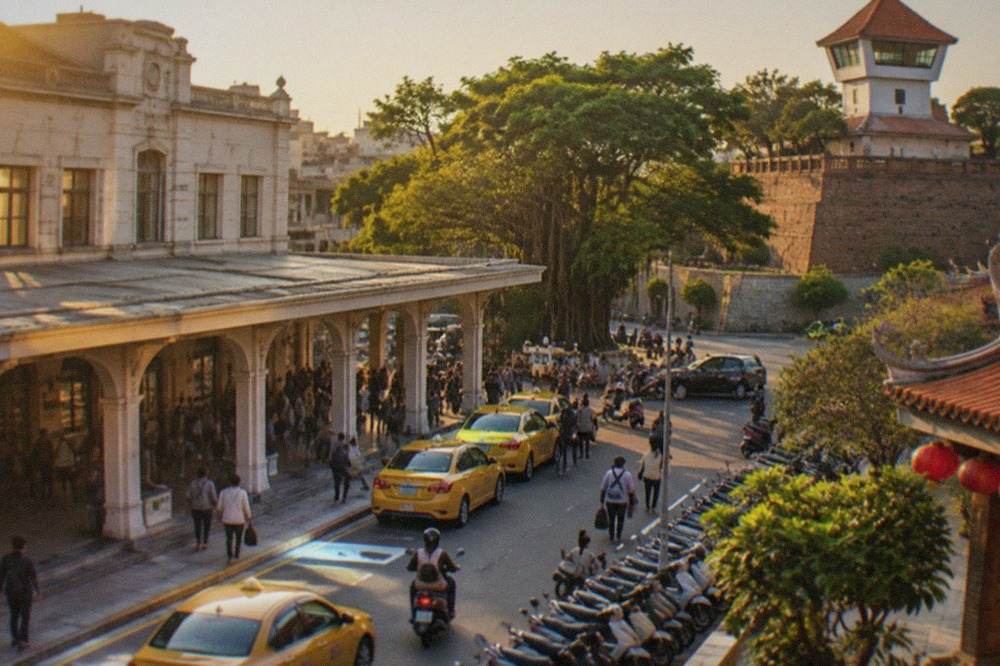
Tainan is the city Taiwan points to when the subject is history. It was the island's capital for more than two centuries, until the late nineteenth century, and almost every layer of that run is still standing: Dutch brick at Anping and Chihkan, Koxinga-era temples, Qing gates and Japanese department stores, all inside a compact old core that a visitor can cross on foot. The second thing it is known for is food. Taiwanese cooks and writers routinely credit Tainan with the island's most distinctive dishes, from beef soup breakfasts to danzai noodles, and the city's night markets rotate by day of the week in a way no other Taiwanese city matches. This page sets out what Tainan is genuinely famous for, with the verified numbers behind each claim.
What Is Tainan Best Known For?
Tainan is best known for three things together: being Taiwan's oldest city and former capital, holding the island's densest concentration of historic temples and Dutch-era sites, and serving as the place Taiwanese food culture measures itself against. The Tourism Bureau's own pages record Dutch settlement from 1624, and the city's night markets, beef soup and danzai noodles are nationally famous.
No other Taiwanese city has that combination. Taipei has the skyline and the museums, Kaohsiung has the port, but Tainan has the timeline. The Dutch East India Company occupied what is now Anping in 1624 and completed Fort Zeelandia in 1634, and the city remained the island's political center for more than two centuries, until the late nineteenth century. That is the frame everything else sits inside: the temples, the food, the night market rhythm, even the city's reputation as the place where Taiwanese tradition is most intact.
The reputation is not just local pride. The Tourism Administration's visitor dataset for 2023 shows where people actually go: Nankunshen Daitian Temple drew 6,583,100 visitors and the Anping district drew 4,441,443, against 443,622 for Chihkan Tower. Tainan's biggest magnets are working temples and old districts, not the forts foreign visitors photograph, and the peak months are January and February, driven by pilgrimage and Lunar New Year rather than summer holidays. If you want a fuller argument for the trip itself, see is Tainan worth visiting.
Why Is Tainan Called Taiwan's Ancient Capital?
Tainan was Taiwan's capital for more than two centuries, until the late nineteenth century, and it holds the island's oldest urban fabric: Fort Zeelandia's Dutch walls date to 1624 to 1634, Fort Provintia was built in the early 1650s, and the Confucius Temple carries the title "first academy of Taiwan." The city's nickname, the ancient capital, is a description of record, not marketing.
The Dutch period is the anchor. The Tourism Bureau's Anping Old Fort page states the company occupied the site in 1624 and finished Fort Zeelandia in 1634, and that after Koxinga took the fort in 1662 it became his residence, which locals called the King's Castle. One honest detail from the same page: the only genuine Dutch-period remains at the site are the brick walls of the south outer rampart. Most of what visitors photograph at Anping Old Fort today is Japanese-era reconstruction and 1975 city renovation work, which added the pointed roof and white walls.
Inland, the Dutch built Fort Provintia in the early 1650s at what is now Chihkan Tower, which the city's page for the site records. Admission is NT$70 at the gate, and it is open 08:30 to 21:30 daily, an unusually late closing that makes it one of the few historic sites a visitor can see after dinner. Concessions are half price, and Tainan residents enter free with ID, a benefit that does not extend to visitors.
The Qing and Japanese layers sit on top. Qing troops dismantled parts of Fort Zeelandia to build the Eternal Golden Castle, and the Japanese rebuilt the Anping fort structure before it took its present name after the Second World War. For the deeper version of this story, including whether the "oldest city" title is exactly right, read is Tainan the oldest city in Taiwan.
What Food Is Tainan Famous For?
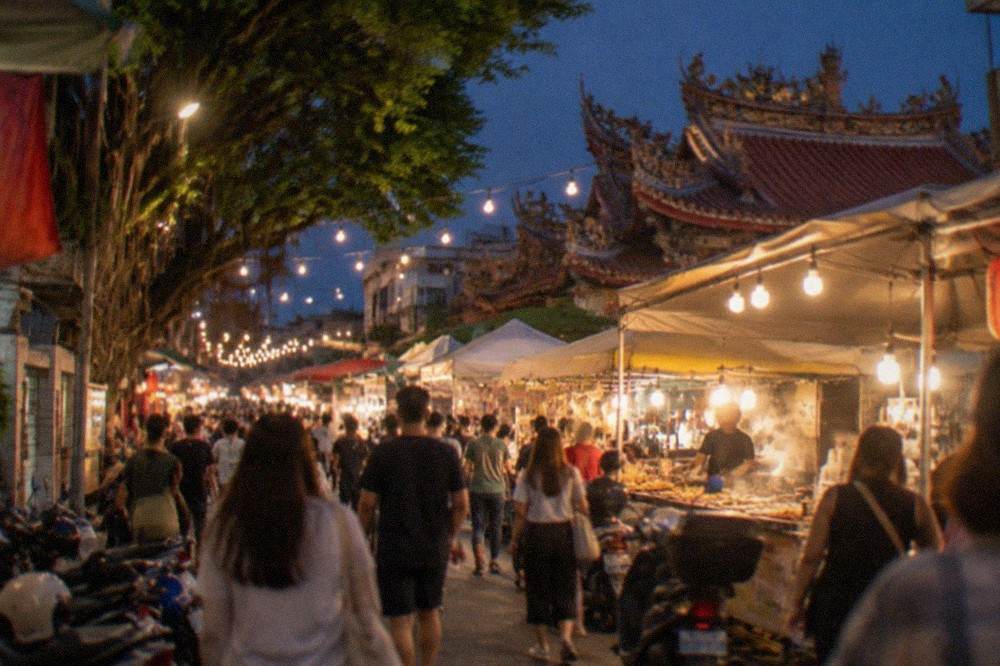
Tainan is famous as the source city of Taiwanese dishes that spread island-wide: beef soup served at dawn, danzai noodles, coffin bread, milkfish soup and shrimp rolls all trace their canonical versions here. The city's night markets rotate by day of the week, so which market a visitor can eat at depends on the calendar, and Friday is the one night all three big outdoor markets run.
The food reputation rests on the city's history as the capital: the gentry kitchens of the Qing period and the temple feast traditions produced a cuisine that is sweeter, more refined and more broth-focused than the street food of Taipei or Kaohsiung. No official price list exists for any of these dishes, and this site does not print invented numbers, but the verified practical fact is the market schedule, published by the Tainan City Government Tourism Bureau market by market:
| Market | Open | Hours |
|---|---|---|
| Garden Night Market | Thursday, Friday, Saturday, Sunday | 17:00 to 00:00 |
| Wusheng Night Market | Wednesday, Friday, Saturday | 17:00 to 00:00 |
| Dadong Night Market | Monday, Tuesday, Friday | 18:00 to 01:00 |
| Siaobei Night Market | every day, indoor | 12:00 to 00:00 |
The city updates these pages, so check before you go, because the days do change. Wednesday is the thinnest night, with Wusheng alone. Siaobei is indoors and open daily, which makes it the wet-weather and wrong-night answer. Locals compress the rotation into a seven-character rhyme, but it is folk shorthand rather than an official schedule, and against the city's current published hours it misses that Garden also opens Friday and Saturday.
For the dish-by-dish version, see what is Tainan famous for food.
Which Temples and Historic Sites Define Tainan?
Four sites define the city's historic core: Chihkan Tower at NT$70, Anping Old Fort at NT$70, the free Tainan Confucius Temple, and the Grand Matsu Temple, also free. Beyond them, the Eternal Golden Castle and Anping Tree House at NT$70 each, and the Chimei Museum at NT$200, round out the set most visitors actually see, all "at the gate" prices rather than guarantees.
The temples are the living half of the city's fame, and several of the most important cost nothing. The Tainan Confucius Temple is free, open 08:30 to 17:30 daily and closed only on Lunar New Year's Eve. The Grand Matsu Temple, a Qing-era temple raised from a royal residence, is free and open 06:00 to 21:00. The Five Concubines Temple and Kaiyuan Temple are free as well. The paid sites cluster at NT$70 full price with half-price concessions:
| Site | Adult entry | Hours | Closed |
|---|---|---|---|
| Chihkan Tower | NT$70 | 08:30 to 21:30 daily | none listed |
| Anping Old Fort | NT$70 | 10:00 to 17:10 daily | none listed |
| Anping Tree House | NT$70 | 08:30 to 17:30 daily | none listed |
| Eternal Golden Castle | NT$70 | 08:30 to 17:30 daily | none listed |
| Chimei Museum | NT$200 | last entry 17:00 | every Wednesday |
| Tainan Art Museum | NT$80 | Tue to Sun, 10:00 to 18:00, Sat to 21:00 | Mondays |
Two closure rules matter more than the prices. The Chimei Museum closes every Wednesday, and the Tainan Art Museum closes Mondays, so a two-day visit that lands on the wrong pair of days can miss both. The city's own pages carry the disclaimer that the on-site notice governs, which is why every figure above is written as the gate price. The Chimei Museum's own visitor page sets out the permanent collection at NT$200 with concessions at NT$150, and the Tainan Art Museum's hours and tickets page lists NT$80 general admission and accepts EasyCard and iPASS at the desk. The wider set of guides lives on Tainan Travel Guide.
For a first-visit routing through these sites, where to go in Tainan for the first time breaks the old city into a walkable order.
When Is the Best Time to Visit Tainan?
October to March is the comfortable half of the year: October averages 30.8C maxima with just 2.8 wet days, the lowest of any month, and December brings only 16 mm of rain. The Central Weather Administration's 1991 to 2020 normals for Tainan show rain is almost entirely a summer event, with August at 466 mm across 16 wet days, so the dry season, not summer, is the prime visiting window.
The full shape of the year, from the Central Weather Administration's published climate normals for station 467410:
| Period | Character | Rain |
|---|---|---|
| January to February | warm, dry, pilgrimage peak | about 20 mm per month |
| March to April | warming, still light | 30 to 70 mm per month |
| May to September | hot, humid, wet | 165.6 to 466.1 mm per month |
| October to December | dry and sunny | 16 to 31 mm per month |
Nearly three-quarters of the annual 1,761 mm falls between May and September, and 186 days a year go above 30C. Typhoon risk concentrates in the late-summer months, which the rainfall table independently confirms. The counter-intuitive part is that Tainan's visitor peak, January and February, lines up exactly with the dry season, because it is driven by temple pilgrimage and Lunar New Year rather than by school holidays. A visitor who wants the weather without the crowds should aim for October to December or March to April.
What Else Is Tainan Known for Beyond the Old City?
Tainan is also known for the lagoon coast north of the city: the Sicao Green Tunnel mangrove boat rides at NT$200, Qigu Salt Mountain at a NT$50 cleaning fee on foot, and the winter black-faced spoonbill season in the Qigu wetlands. Further out, Guanziling hot springs, the Yanshui Beehive Fireworks in February and Yujing's mango season in June and July extend the city's reach.
The coastal strip is the part of the city most first-time visitors skip, and it is where the geography explains the history: the Taijiang inner sea that once let ships reach the Dutch forts has silted into lagoon and mangrove, and boat rides now run through it. Both Sicao boat routes, the Green Tunnel and the longer Taijiang route, cost the same NT$200 full fare, so there is no cheaper option to hunt for. The black-faced spoonbills arrive in the Qigu wetlands around September and October and depart by March to May, following a migratory pattern rather than a published calendar.
The festival year is fixed by the city's own calendar: the Yanshui Beehive Fireworks in February, on the Lantern Festival, the Yuejin Lantern Festival from February to March, the Taiwan International Orchid Show in March, mango season from June to July, the Qigu Seafood Festival from July to August, and the Guanziling Hot Spring and Food Festival from September to November. Months only, because the exact Gregorian dates for lunar events are published closer to the event by the city.
One of the gentlest ways into Tainan's traditional culture is its tea. The island's oolong tradition is strong, and a short ceremony session in the old city is an easy pairing with a morning of temples.
The city rewards a slow pace, and the length of stay question has a clear answer on this site: how many days do you need in Tainan covers the trade-offs, and what to do in Tainan in 1 day handles the tight-schedule case.
Common Questions About What Tainan Is Best Known For
What Is Tainan Best Known For?
Tainan is best known as Taiwan's oldest city and former capital, for the densest concentration of historic temples and Dutch-era sites on the island, and as the source of the Taiwanese dishes the rest of the island measures itself against, including beef soup, danzai noodles and coffin bread.
Is Tainan the oldest city in Taiwan?
Yes, in the sense that matters: Dutch settlement at Anping began in 1624, earlier than any other Taiwanese urban center, and the city served as the island's capital for more than two centuries, until the late nineteenth century.
What food should a first-time visitor try in Tainan?
The canonical list is beef soup served at dawn, danzai noodles, milkfish soup, coffin bread and shrimp rolls. No official price list exists for these dishes, so treat any price you see quoted online as a snapshot rather than a fact.
Which night market should I go to in Tainan?
It depends on the day of the week. Garden Night Market opens Thursday to Sunday, Wusheng Wednesday, Friday and Saturday, and Dadong Monday, Tuesday and Friday. Siaobei is indoors and open every day, which makes it the reliable fallback.
How many days do you need for Tainan?
Two days covers the old city core, Anping and one night market. Three days adds the lagoon coast at Sicao and Qigu, and four allows a hot spring or temple trip further out.
When is the best month to visit Tainan?
October to March. October is the driest month by wet days, 2.8, while still averaging 30.8C maxima, and the rainy season runs May to September, with August alone bringing 466 mm.
That is the honest summary of the city's fame: a capital for more than two centuries whose walls, temples and kitchens are still in daily use, a food culture the rest of Taiwan treats as the reference standard, and a practical rhythm, rotating night markets, free temple entry, a dry winter, that rewards a little planning. Pick your days around the market schedule and the museum closure days, and the city does the rest.