Eternal Golden Castle
The Eternal Golden Castle is a nineteenth-century artillery fort on the southern edge of Anping, built when Qing officials realized the Dutch-era harbor defenses pointed the wrong way for modern naval guns. It is one of the four ticketed historic sites of old Tainan, and its moat, banyan trees and cannon emplacements make it the most atmospheric of the set.
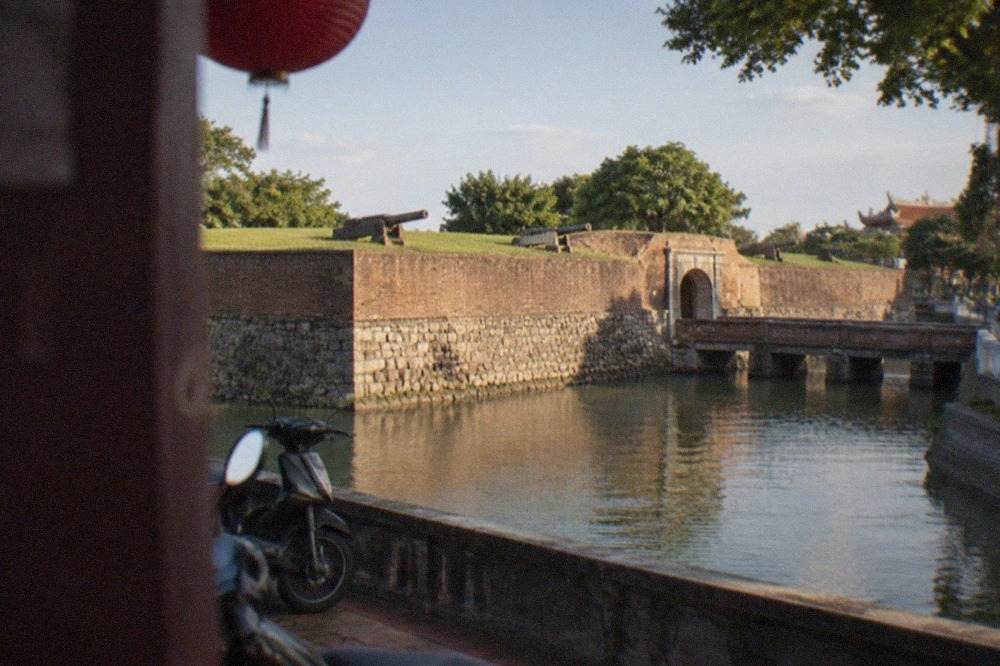
Short answer
The Eternal Golden Castle is a Qing-era fort in Anping, Tainan, built in the late nineteenth century to defend the outer harbor with modern Armstrong-style artillery. Admission is NT$70 at the gate, half price for concessions, and Tainan residents enter free with ID. It opens 08:30 to 17:30 daily and sits at the southern end of Anping, about a fifteen-minute walk from Anping Old Fort.
The Eternal Golden Castle sits at the quiet southern end of Anping, where the old harbor used to open toward the sea. It is the youngest of Tainan's major fortifications by a wide margin: the Dutch forts up the road date to the seventeenth century, while this one went up in the late nineteenth century as a response to a completely different threat, rifled naval guns and ironclad ships. The Tainan City Government Tourism Bureau's page for the site records its layout, its moat and its artillery history in detail, and the picture the page paints is of a fort that was obsolete almost before the mortar dried. That is precisely what makes it worth the walk: it is the one place in Anping where the story is about the island's late-Qing anxiety rather than the Dutch trade century.
This page covers what the castle is, why it was built, what you actually see inside, the verified ticket and hour details, and how to fold it into a day in Anping alongside Anping Old Fort and the Anping Tree House. Everything priced or timed here comes from the city's own published pages, and where the sources disagree or stay silent, this guide says so rather than guessing.
What Is the Eternal Golden Castle?
The Eternal Golden Castle is a moated artillery fort in Anping, Tainan, built by the Qing administration in the late nineteenth century to guard the outer harbor with imported breech-loading cannon. It is a rectangle of earth-and-brick ramparts surrounded by a water moat, with an arched main gate, and it is one of the best-preserved nineteenth-century military sites on the island. Entry is NT$70 at the gate, and the site opens 08:30 to 17:30 daily.
The Chinese name, Yizai Jincheng, translates as Eternal Golden Fortress, and the site is sometimes called the Erkunshen Battery in older English sources, after the sandbar it stands on. The Tourism Bureau's page for the castle describes a square plan with ramparts on all four sides, a moat encircling the whole work, and a central parade ground. The gate you enter through is a brick arch facing north, toward the old harbor channel, and the walls are thick enough that the interior stays noticeably sheltered even when the Anping wind is doing what it does off the Taiwan Strait.
What separates it from every other fort in the city is the artillery story. The Dutch built Fort Zeelandia for sailing ships and smoothbore cannon two centuries earlier; the Eternal Golden Castle was designed around Armstrong guns, breech-loaders that could fire shells through wooden hulls. The Bureau's page notes that the fort's guns were purchased from Britain, mounted on emplacements along the ramparts, and that the fort held a garrison with barracks, a magazine and an office within the walls. A replica Armstrong cannon stands on one emplacement today, and it is the single most photographed object on the site.
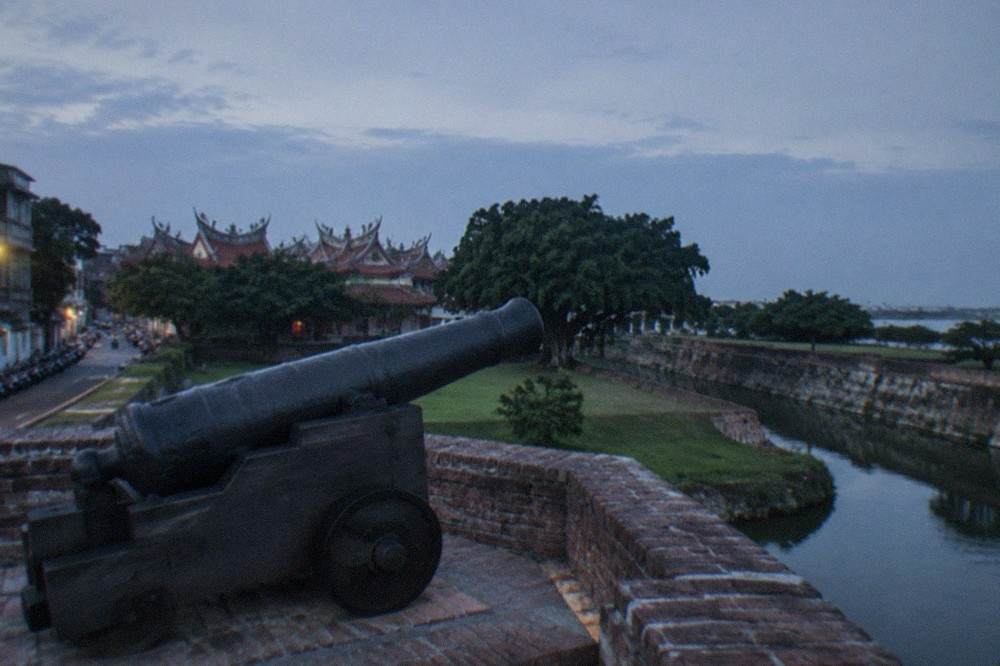
The fort never fought a serious battle. Its guns were removed during the Japanese period, and the site spent decades as a quiet, semi-forgotten corner of Anping before the city restored it as a heritage park. The melancholy of that arc, a fortress built for a war that never came, is part of what visitors respond to, and the city's own text does not hide it.
Why Was the Eternal Golden Castle Built?
The fort was built in the late nineteenth century because Qing officials understood that Fort Zeelandia and the inner harbor defenses could not stop a modern navy. After a Japanese military expedition to southern Taiwan exposed the coast's weakness, the administration ordered new western-style artillery positions, and the Erkunshen sandbar at Anping was chosen for the largest one. The moat and low profile were deliberate: a low earth-and-brick fort survives shellfire better than a tall stone one.
The trigger matters for understanding the site. A Japanese punitive expedition landed in southern Taiwan in the 1870s, and although it did not attack Tainan, the ease with which a foreign force established itself on the coast alarmed the Qing court. The response across coastal Taiwan was a wave of new fortification, and Anping, the traditional gateway to Tainan, received the most serious works. The Tourism Bureau's history of the castle places its construction in this program, with the noted Qing official Shen Baozhen associated with the coastal defense reforms of the period.
The design choices are legible the moment you look at the walls. Old European forts in Taiwan are tall, because seventeenth-century cannon wanted height and range over protection. This fort is low, because modern naval shells would have gone through tall masonry; the ramparts are broad earth banks faced with brick, and the guns fired over the parapet rather than through tall embrasures. The moat is not decorative either: it slowed landing parties and made direct assault on the gate expensive. Every element answers a specific question of its era.
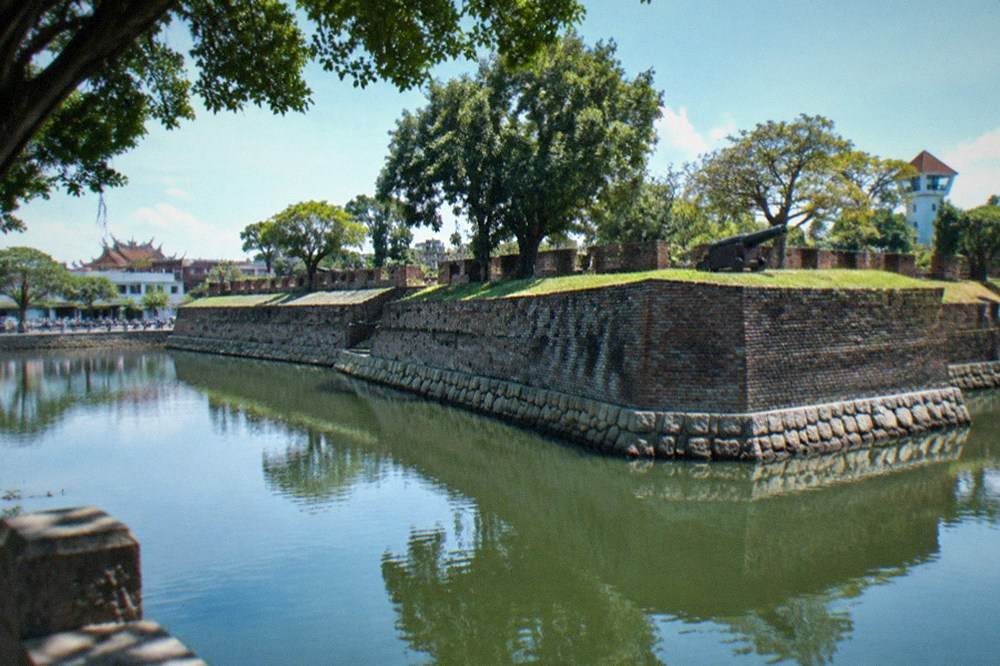
The fort's active life was short. The harbor it guarded silted, the guns were dismantled under Japanese rule, and by the twentieth century the site had become a leafy ruin that locals knew mainly as a place to walk. The city's restoration preserved the ramparts, the gate, the moat and the emplacements, and today the fort is managed as one of the ticketed historic sites of old Tainan, in the same family as Chihkan Tower and Anping Old Fort.
If you are planning the Anping half of your day around tickets and timing, these are the options that solve the most common planning problems, from skipping a ticket counter to ending the day with a guided walk.
What Will You See Inside the Castle Grounds?
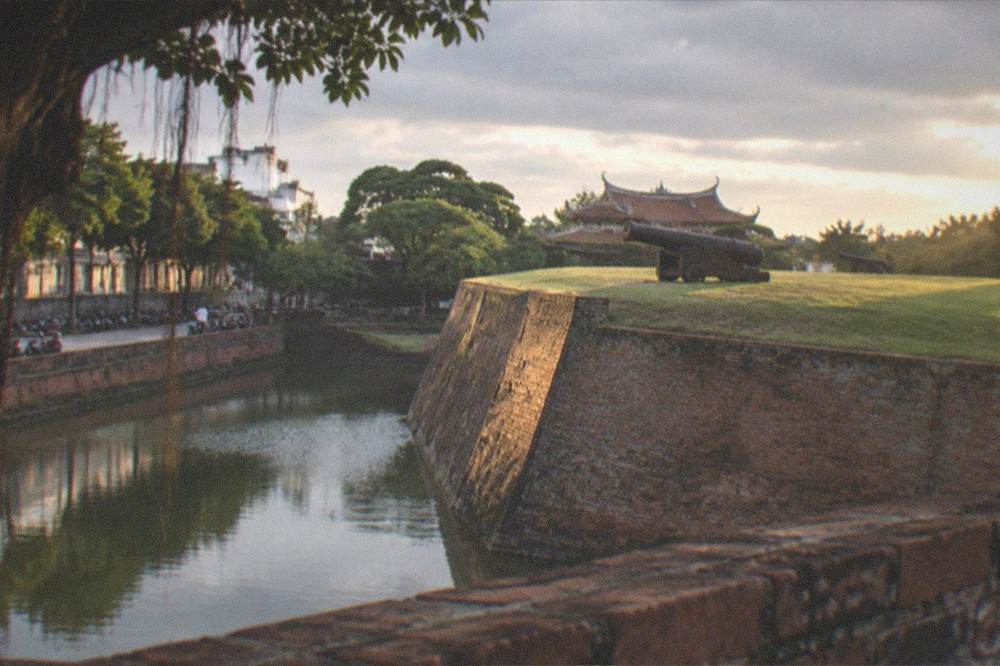
Inside the walls you find a large grassed parade ground, brick rampart walks on all four sides, gun emplacements with a replica Armstrong cannon, the arched main gate with its inscription, and a moat with a bridge approach planted with banyan and palm trees. The circuit of the ramparts takes most visitors under thirty minutes at a walking pace, and the site is compact enough that an hour covers it thoroughly.
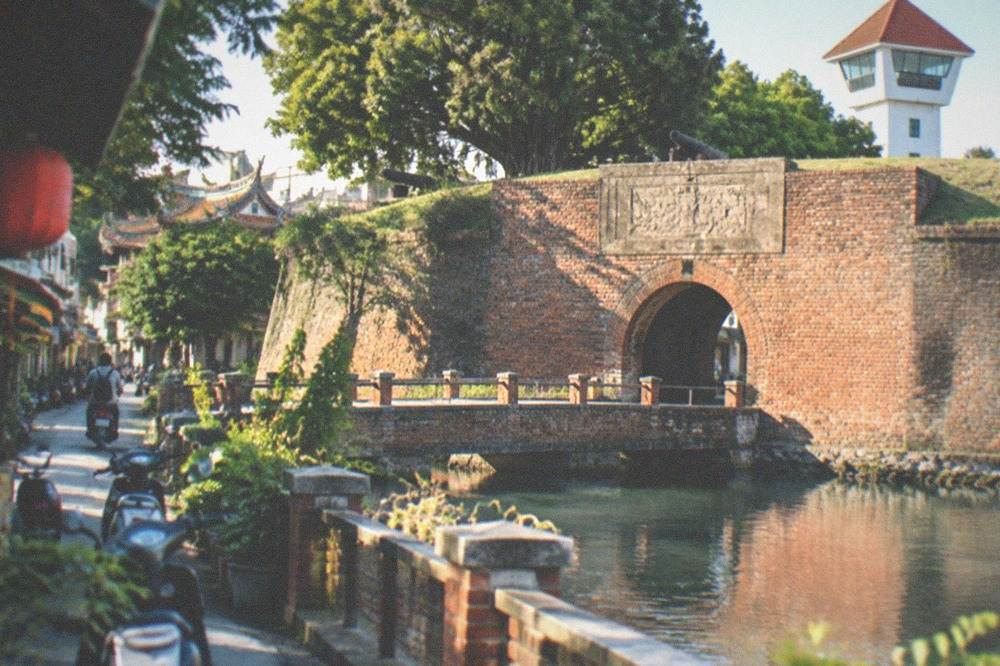
The Tourism Bureau's page for the castle lists the surviving elements, and the honest summary is that this is a landscape fort rather than a building fort. There is no keep, no casemate interior and no museum hall; the experience is the ramparts, the views over the moat to the surrounding Anping streets, and the emplacements. The gate arch carries a stone inscription with the fort's name, and it is the one piece of decorative stonework on the site.
The replica cannon is the centerpiece. It sits on a reconstruction of an original emplacement on the western rampart, aimed toward where the harbor channel ran when the fort was built. Around it, the emplacements are marked, so the layout of the battery is readable: the guns were spaced along the walls to cover both the channel and the open sea approach. Standing on the rampart walk you can trace the whole defensive logic in one glance, which is something the taller, older Dutch forts do not offer.
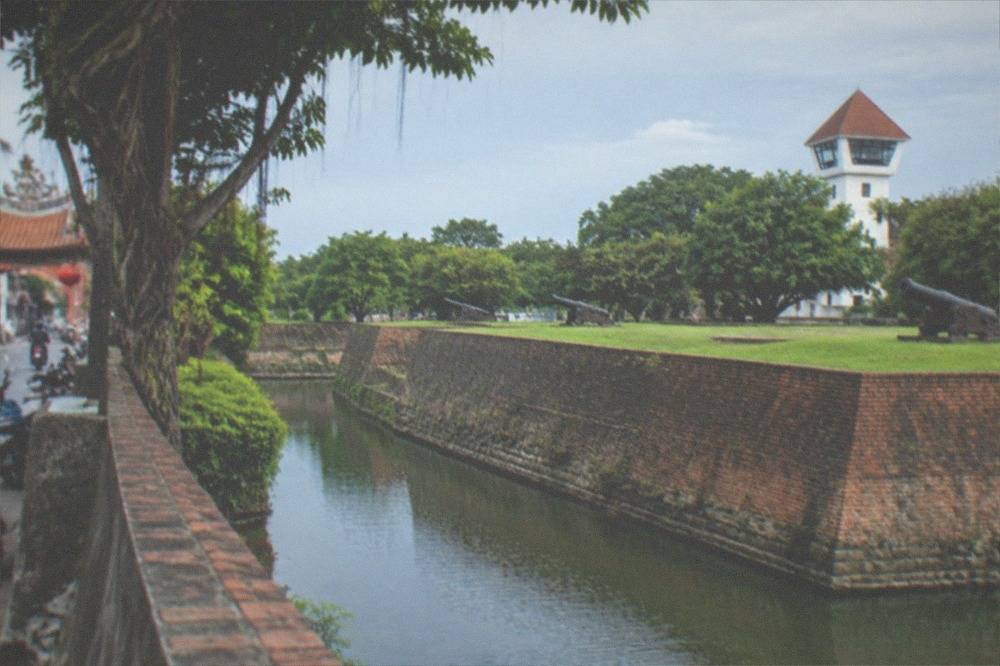
The moat deserves more attention than most itineraries give it. The Bureau's page describes it as encircling the fort completely, crossed by a bridge at the gate. The water is still, shaded and full of fish in the warmer months, and the trees along its banks are the reason the fort photographs so well in the late afternoon. The whole site is at its best in the last two hours before closing, when the sun drops behind the ramparts and the heat leaves the grass.
One practical note: the fort is low and open, so shade is limited to the trees along the moat and the gate. In Tainan's summer, when the Central Weather Administration's 1991 to 2020 normals for the city show an average of 27.6 days above 30C in August alone, an 08:30 arrival is genuinely more comfortable than a midday one. The normals, published by the Central Weather Administration, also show why the Anping coastal strip feels hotter than the number: humidity sits in the high seventies percent through summer.
What Are the Ticket Prices, Hours and Rules?
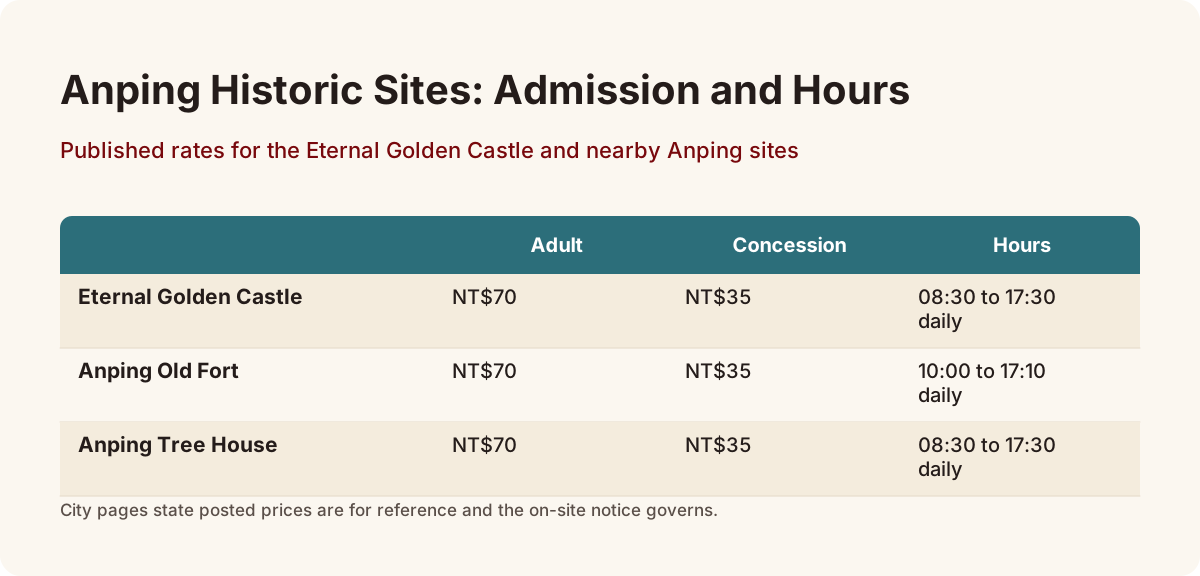
Admission is NT$70 at the gate for adults, NT$35 for concessions, and Tainan residents enter free with ID, which does not extend to visitors. The castle opens 08:30 to 17:30 daily, with no listed closure day. The city's own pages state that posted prices are for reference and the on-site notice governs, so treat these as the published rates rather than a guarantee.
The verified details for the castle and its two companion ticketed sites in Anping:
| Site | Adult | Concession | Hours | Closed |
|---|---|---|---|---|
| Eternal Golden Castle | NT$70 | NT$35 | 08:30 to 17:30 daily | none listed |
| Anping Old Fort | NT$70 | NT$35 | 10:00 to 17:10 daily | none listed |
| Anping Tree House | NT$70 | NT$35 | 08:30 to 17:30 daily | none listed |
The concession rate covers the standard groups the city lists at its other sites: students, military and police personnel, firefighters, and visitors 65 and over. The free-entry provision for Tainan residents is a residency policy, and a traveler is not a resident; plan on paying the NT$70. A combined ticket covering the castle together with the Tree House or Anping Old Fort is not confirmed on any official page, so this guide does not claim one exists; buy tickets at each gate unless a notice at the counter says otherwise.
Cash is the safe assumption at the gate. The Tainan Art Museum is the one site in the city whose own page confirms EasyCard and iPASS acceptance at its ticket desk, and no equivalent statement exists for the historic forts, so arrive with notes. For the same reason, this is a site where an advance ticket genuinely saves a small hassle, and the Tree House admission option below is the natural pairing since the two sites share the same published hours and the same NT$70 price.
How Do You Get to the Eternal Golden Castle?
The castle stands at the southern end of Anping, on Guangzhou Road reachable by city bus along the Anping corridor, and Anping Old Fort is roughly a fifteen-minute walk north. Tainan city buses are free for the first 8 km with an electronic card, tap on and tap off, and the cash fare for the same trip is NT$26. The HSR station is at Shalun in Guiren District, well outside the old city, so rail arrivals need a transfer.
The bus detail is the one worth internalizing. The city's own bus ticketing page states that trunk and branch routes (the green, blue, brown, orange, yellow and red networks) are free for the first 8 km of travel with a Citizen Card, iPASS, EasyCard or iCash 2.0, a discount worth NT$26 off the cash fare. The catch is the tap: you must tap on and tap off, and tap off is the step visitors miss, which can leave a deduction on the card. The scheme runs for the 2026 calendar year, so treat it as current policy rather than permanent, and check the city bus ticketing page before relying on it.
| Transport | Cost | Notes |
|---|---|---|
| City bus, first 8 km | free with electronic card | tap on AND tap off; Citizen Card, iPASS, EasyCard, iCash 2.0 |
| City bus, cash | NT$26 | base fare for the same trip |
| H31 HSR shuttle | free with HSR ticket stub | otherwise NT$18 per section, NT$36 for two |
| HSR Taipei to Tainan | NT$1,350 standard reserved | station is at Shalun, Guiren District, not the city center |
If you are coming from the HSR station, the H31 shuttle is the verified trick: it is free for HSR passengers on production of a ticket stub, no card tap needed, and other passengers pay NT$18 for one section or NT$36 for two, with the section break at the Chimei Museum. From the city center, the Anping buses run frequently enough that most visitors simply ride to the Anping stops and walk the rest. Within Anping itself, everything is walkable: the castle, the fort, the Tree House and Anping Old Street form a loose line along the district's south edge, and the castle is the southern terminus of that line.
How Does the Castle Compare with Anping Old Fort?
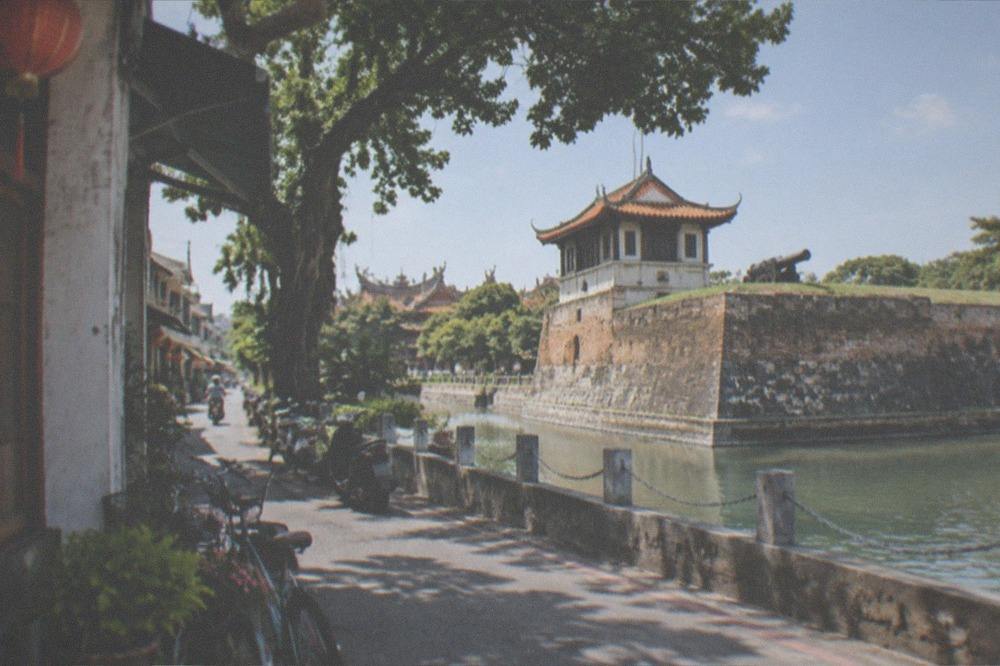
Anping Old Fort is the seventeenth-century Dutch site, Fort Zeelandia, whose visible tower and walls are largely Japanese-era rebuilding and a 1975 city renovation; the Eternal Golden Castle is the late-Qing fort, whose ramparts and moat are the original work. The castle is calmer, greener and better for photography of the fortification itself, while the Old Fort carries the bigger historical name and the denser street life around it. Both cost NT$70.
The contrast in authenticity is the interesting part. The Tourism Bureau's page for Anping Old Fort is unusually candid about what survives: the only genuine Dutch-period remains are the brick walls of the south outer rampart in front of the fort. The lookout tower visitors photograph was renovated by the Tainan City Government in 1975, which added the pointed roof and painted the walls white, and much of the rest is Japanese-era rebuilding. The Eternal Golden Castle has no such asterisk; the ramparts, gate, moat and emplacements are the fort that was built, restored rather than reconstructed.
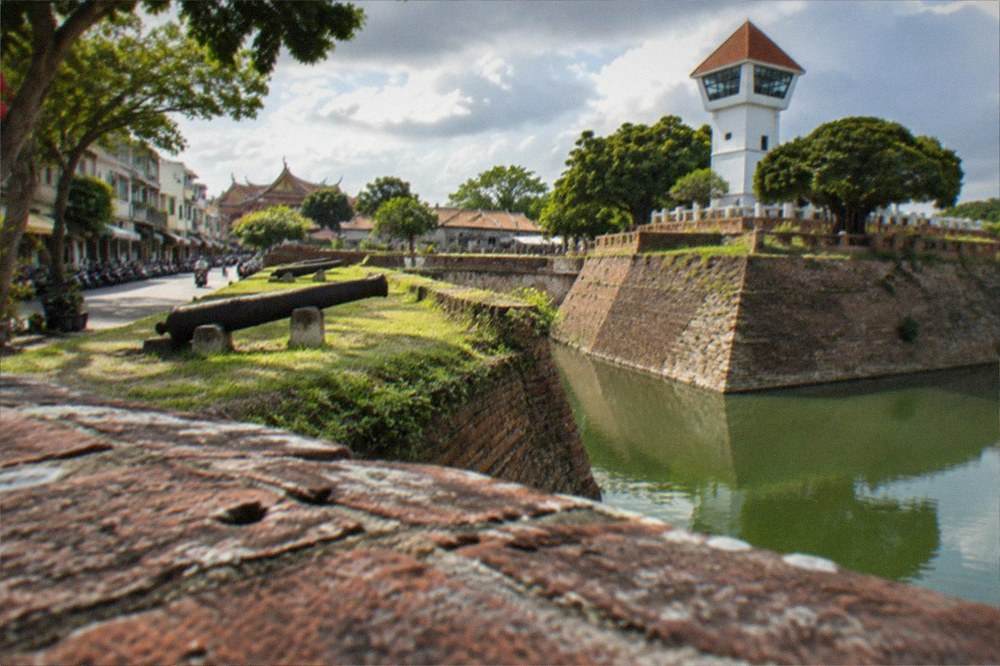
For sequencing, most itineraries run the Old Fort first, then Anping Old Street for food, then the Tree House, then the castle last, because the castle is the most restful of the four and the moat trees are at their best late in the day. The castle also has the shortest queue of the ticketed sites, so it is the one you can safely leave to the final hour before the 17:30 close. If your day runs out of daylight, the honest note is that none of the Anping forts open in the evening; only Chihkan Tower in the city center keeps late hours, 08:30 to 21:30 daily, which makes it the after-dinner historic site in Tainan.
A day built around Anping's coast can stretch further than the fort line. The lagoon boat rides out of Sicao, a few kilometers north, are the other water-side experience in the district, and the short mangrove route is the one most visitors choose.
When Is the Best Time to Visit?
October to March is the best window: the Central Weather Administration's 1991 to 2020 normals for Tainan show October averaging just 2.8 wet days while still reaching 30.8C maxima, and December dropping to 16 mm of rain across three days. Summer visits are hot and wet, with August alone bringing 466 mm across about 16 wet days, so an early-morning arrival is the practical summer strategy.
The full monthly picture, from the Administration's published normals for station 467410:
| Month | Mean max C | Rain mm | Rain days |
|---|---|---|---|
| January | 23.0 | 20.7 | 3.8 |
| April | 29.3 | 69.8 | 5.9 |
| July | 33.0 | 374.6 | 13.0 |
| August | 32.6 | 466.1 | 15.8 |
| October | 30.8 | 30.8 | 2.8 |
| December | 24.4 | 16.2 | 3.0 |
Close to three-quarters of the annual 1,761 mm falls between May and September, so the castle's unshaded parade ground and the moat walk are two very different experiences depending on season. Typhoon risk concentrates in the late-summer months, and if the Tainan City Government declares a typhoon day, attractions and transport can suspend, so keep an eye on official announcements if you are traveling July through September. Winter is the reward season: dry, warm by any northern standard, and the moat trees hold their color through it.
One timing note that runs against the usual travel instinct: Tainan's peak visitor months are January and February, driven by temple pilgrimage and Lunar New Year, not by summer holidays. The city's biggest draws by a wide margin are its temples, with the Tourism Administration's 2023 dataset showing Nankunshen Daitian Temple drawing 6,583,100 visitors against Chihkan Tower's 443,622, so the fort sites stay comparatively calm even in the Lunar New Year rush. If you want the castle's ramparts nearly to yourself, a weekday morning in any month delivers it.
How Do You Fit the Castle Into an Anping Day?
The castle works best as the fourth stop of an Anping circuit: Anping Old Fort from 10:00 when it opens, Anping Old Street for lunch, the Tree House in the mid-afternoon, then the castle for the final two hours before its 17:30 close. Friday and Saturday evenings offer the Garden Night Market afterward, open 17:00 to midnight, and Siaobei Night Market is the indoor daily fallback if the weather turns.
The night market schedule is the one piece of Tainan logistics worth memorizing, because the big markets rotate by day of the week and the city publishes the days on its own pages:
| Night | Markets open |
|---|---|
| Monday | Dadong (Siaobei, indoor, every day) |
| Wednesday | Wusheng |
| Thursday | Garden |
| Friday | Dadong, Wusheng and Garden |
| Saturday | Wusheng, Garden |
| Sunday | Garden |
Friday is the only night all three big outdoor markets run, and Wednesday is the thinnest, with Wusheng alone. The days do change; the city updates these pages, so check before you go. Siaobei is indoors and open daily noon to midnight, which makes it the wrong-night and wet-weather answer. After a full Anping afternoon, Garden Night Market is the closest big option to the district, and the evening walking tours below handle the after-dark half of the day for you.
If the day runs long and you would rather someone else hold the itinerary, the guided day tours covering the lagoon coast and the temple circuit take the Anping logistics off your plate entirely, and the private options let you set the pace. The tea ceremony is the counterweight to a fort-heavy day: ninety minutes indoors, seated, with the oolong service explained as it is poured.
For everything else the district and the city offer, the Tainan Travel Guide homepage holds the full site index, from Shennong Street in the old canal quarter to the temple trail and the lagoon coast.
Common Questions About the Eternal Golden Castle
How much is admission to the Eternal Golden Castle?
NT$70 at the gate for adults, NT$35 for concessions, and free for Tainan residents with ID. The city's pages state that posted prices are for reference and the on-site notice governs, so confirm at the counter.
What are the Eternal Golden Castle opening hours?
08:30 to 17:30 daily, with no listed closure day. The last hour before closing is the best light for photographs of the moat and ramparts.
Is the Eternal Golden Castle the same as Anping Old Fort?
No. Anping Old Fort is the seventeenth-century Dutch Fort Zeelandia site, largely rebuilt in the Japanese period and renovated by the city in 1975. The Eternal Golden Castle is a separate, later fort built by the Qing administration in the late nineteenth century, about a fifteen-minute walk south.
Can you buy a combined ticket for the Anping sites?
No combined ticket is confirmed on any official page, so this guide does not claim one. The castle, Anping Old Fort and the Anping Tree House each charge NT$70 at their own gates.
How long does a visit take?
The rampart circuit takes under thirty minutes at a walking pace, and an hour covers the site thoroughly, including the moat walk and the gun emplacements. Most visitors pair it with the Tree House in the same afternoon.
When is the best time of year to visit?
October to March, when the Central Weather Administration's normals for Tainan show the dry half of the year: October averages 2.8 wet days and December only three. Summer visits are best made at the 08:30 opening, before the heat builds.
The Eternal Golden Castle is the quietest of Tainan's ticketed historic sites, and that is its case for the last slot in your Anping day: original ramparts, a working moat, one very good replica cannon, and a story about a fort built for a war that never came. Walk the walls in the late afternoon, tap your card off the bus, and let the Garden Night Market finish the night if the calendar cooperates.