Is Taiwanese Food Different from Chinese Food?
Taiwanese food grew out of Chinese regional cooking but is not a copy of it. Here is what actually separates the two, and where Tainan fits in.
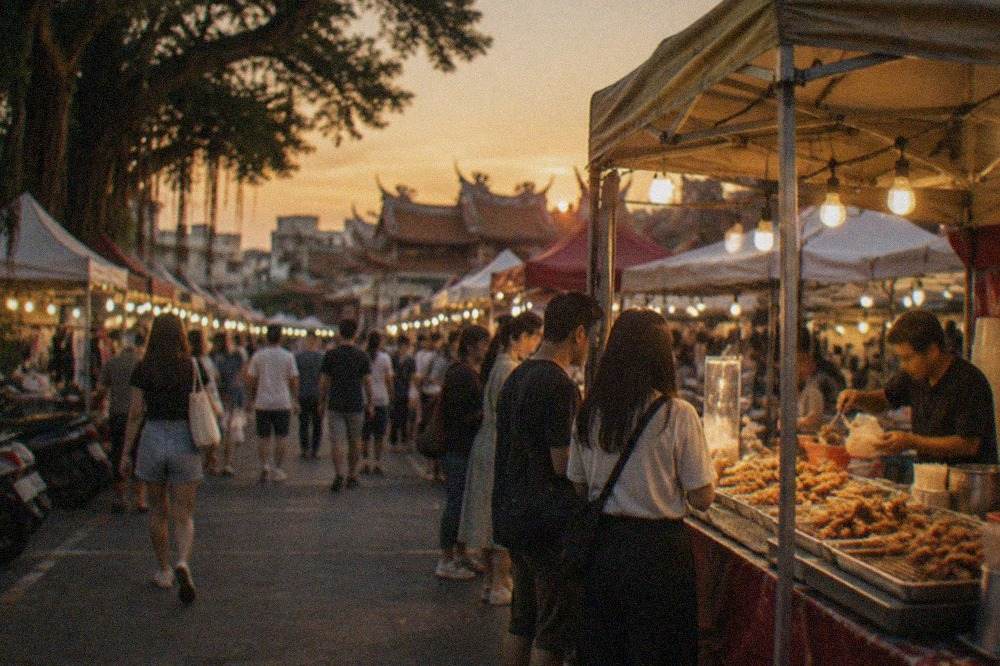
Taiwanese food and Chinese food are related the way a dialect is related to a language. Most of Taiwan's cooking arrived with migrants from Fujian and, later, from every other province of China, so the raw material is recognizably Chinese. But the island spent more than a century on a different political path, absorbed fifty years of Japanese rule, mixed regional traditions that stayed separate on the mainland, and built dishes that exist nowhere else. The short answer is yes, they are different, and the difference is easiest to see in Tainan, the city most Taiwanese food writers treat as the island's food capital. For the food-specific picture of the city, start with what Tainan is famous for in food and the full Tainan food guide.
Is Taiwanese Food Different from Chinese Food?
Yes, Taiwanese food is a distinct tradition that grew out of Chinese cooking rather than a subset of it. Its base is Fujianese, its shaping force was fifty years of Japanese colonial rule, and its signature dishes, beef noodle soup, bubble tea, danzai noodles, coffin bread, do not exist as native dishes anywhere in China. The two cuisines share techniques, ingredients and a soy-sauce-and-pork vocabulary, but a menu in Taipei reads differently from one in Xiamen, and a menu in Tainan reads differently from both.
The comparison matters because "Chinese food" is not one thing either. China's cooking is regional to the point of mutual unintelligibility: the food of Guangzhou and the food of Chengdu share a script and almost nothing else. Taiwanese food is closest to the food of southern Fujian, directly across the strait, which is where the bulk of the island's Han migration came from. That inheritance shows up in the staples: rice rather than wheat, seafood, slow-simmered broths, and the sweet-savory seasoning profile that Fujianese cooking carries.
What changed it was separation. After the late nineteenth century, Taiwan's political history diverged from the mainland's, and the food diverged with it. Japanese rule brought Japanese techniques, Japanese ingredients and a Japanese habit of eating that never left: sashimi-grade fish handling, miso, rice wine, bento culture, and the raw-fish confidence that shows up in Taiwanese seafood culture today. Later, migrants from every mainland province arrived in the late 1940s and each brought a regional kitchen, which is why a single Taiwanese night market can sell Sichuan, Cantonese, northern and Fujianese-derived food side by side, all of it locally adapted.
The result is a cuisine that is recognizably descended from Chinese food but is eaten differently, seasoned differently and organized differently. Taiwan's food culture is street-first: night markets, breakfast shops and afternoon snack stalls do the work that restaurants do elsewhere. And Tainan, the island's oldest city and its capital for more than two centuries until the late nineteenth century, is where that culture is densest and most self-aware.
Where Does Taiwanese Food Actually Come From?
The foundation is Fujianese cooking brought by migrants across the strait, reshaped by indigenous Austronesian ingredients, fifty years of Japanese colonial rule, and a post-war influx of cooks from every mainland province. Each layer is still visible: the broths are Fujianese, the raw fish and bento habits are Japanese, and the spicy noodle stalls are mainland arrivals gone local. None of the four layers erased the others, which is why Taiwanese food reads as a mixture rather than a branch.
Tainan's own cooking is the oldest stratum. The city predates every other Han settlement of size on the island, and its food culture grew out of the same Fujianese root with a local twist: because Tainan was the island's administrative center for so long, its cooking absorbed banquet dishes and temple-offering traditions that coastal fishing villages never developed. Taiwanese food writers treat Tainan's snack culture, the bowl-food and broth-food sold from small shops, as the island's reference standard, and Tainan's shops have been exporting their dishes to the rest of the island for a century.
Two things make the Tainan stratum distinct from anything on the mainland. First, the city's cooks use a sweet edge, a spoonful of sugar in the braising liquid, that Fujianese cooking uses more sparingly, and locals explain it as a leftover of wealth: sugar was a Tainan-area industry and it went into the pot. Second, the city's signature dishes are tied to place names and shop names rather than to provinces. Danzai noodles, coffin bread, milkfish soup and beef soup are Tainan dishes in the way Peking duck is a Beijing dish, and the rest of Taiwan identifies them by their city.
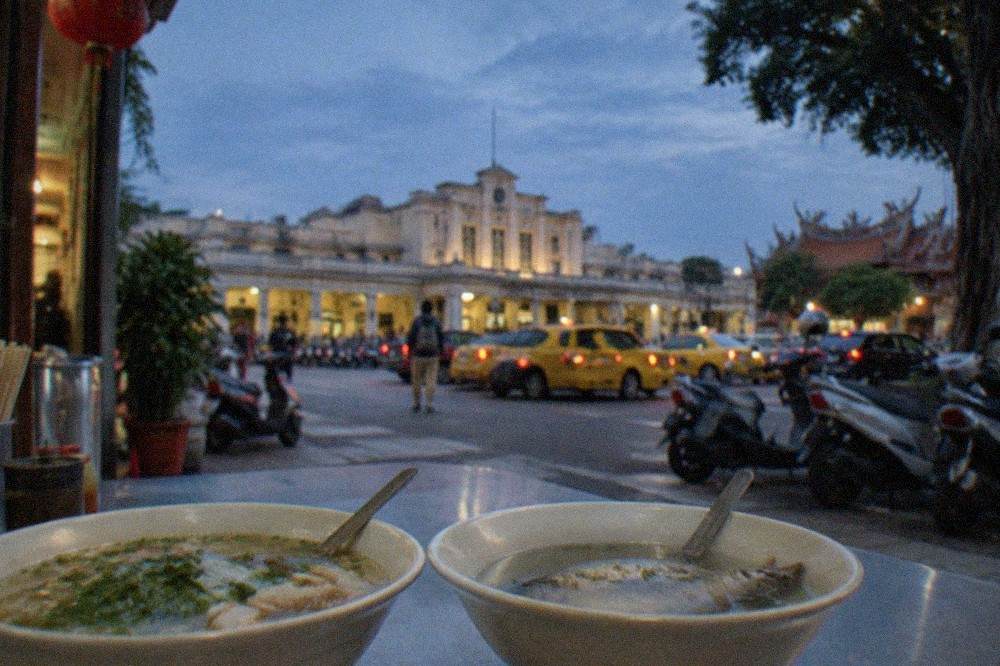
The practical upshot for a visitor is that Tainan is the single best place on the island to taste the difference between Taiwanese and Chinese food, because it holds the oldest layer of the tradition and the densest concentration of it. The Tainan street food guide maps the dishes worth ordering, and a planned Tainan food crawl strings them into a day.
Which Dishes Exist in Taiwan but Not in China?
Beef noodle soup, bubble tea, danzai noodles, coffin bread and the braised-pork rice bowl as Taiwan eats it are all Taiwanese creations with no mainland original. Beef noodle soup is the clearest case: it was assembled in Taiwan by mainland migrant cooks in the mid-twentieth century from ingredients available there, and searching for its ancestor on the mainland finds only cousins, not a source. Bubble tea is younger still, a Taiwanese invention now exported worldwide under Taiwan's name.
Coffin bread is the strangest and most local of the group. It is a thick slab of toast, hollowed out and fried, then filled with a creamy stew, and it reads as a Chinese-French hybrid that could only have been invented somewhere with both bread and chowder in the food supply. Tainan claims it, and Tainan shops still sell it as a city specialty. Danzai noodles are the same story in miniature: a bowl of noodles in a small amount of concentrated broth, topped with minced pork and a shrimp, served from a carrying pole in its original form, a Tainan street format with no mainland equivalent.
The dish list matters for the comparison because it settles the question of direction. Taiwanese cooking did not just inherit Chinese dishes; it invented its own, and those inventions now travel the world labeled as Taiwanese. When a menu in another country sells bubble tea or beef noodle soup, it is selling Taiwan, not China, and the distinction is commercially recognized everywhere outside the politics.
Here is a short table of the clearest Taiwanese-only dishes and where to find them in Tainan:
| Dish | What It Is | Where It Fits In Tainan |
|---|---|---|
| Danzai noodles | Small bowl of noodles in concentrated broth with minced pork and shrimp | A Tainan creation, sold citywide, strongest in the old west-center streets |
| Coffin bread | Fried hollowed toast filled with creamy stew | A Tainan invention, still a city signature |
| Milkfish soup | Whole cuts of milkfish in clear broth, belly or head | A Tainan breakfast-and-lunch staple tied to coastal fishing |
| Beef soup | Thin-sliced beef in clear broth, eaten at dawn | A Tainan ritual with its own shop culture |
| Bubble tea | Sweet milk tea with tapioca pearls | Island-wide, invented in Taiwan, sold at every Tainan night market |
None of these has a verified price worth printing, and none should have one invented: stall and shop prices vary and no official list exists. What is verifiable is the schedule around them, because Tainan's night markets rotate by day of the week, and the city's market roster, maintained by the Tainan City Market Administration, is the reference for which market runs tonight.
Why Is Taiwanese Food Sweeter and More Seafood-Heavy?
Taiwanese food leans sweeter than most mainland Chinese cooking because sugar was refined on the island, especially around Tainan, and it went into local braising liquids, while the seafood emphasis comes from an island food supply plus Japanese-era fish handling that made raw and lightly cooked seafood normal. Both traits are strongest in Tainan, and both are things mainland visitors comment on when they eat there.
The sugar story is a Tainan story specifically. The island's cane sugar industry was centered on the Tainan plain, and the city's cooks used what was local. The result is the sweet note in Tainan's braised pork rice, its noodle broths and its sauce work that distinguishes it even from Fujianese cooking across the strait. Whether the sweetness is a legacy of wealthy households showing off, or simply of cheap sugar, locals dispute, but the sweetness itself is not in dispute. More of these guides are collected on Tainan Travel Guide.
The seafood story is broader. An island eats from the sea, and fifty years of Japanese rule left Taiwan with Japanese-grade fish handling, wet markets organized around freshness and a comfort with raw fish that most of southern China never developed. Tainan's coastal lagoon district, the Qigu and Sicao area, supplies milkfish, oysters and shrimp to the city's kitchens, and the city's Qigu Seafood Festival, held in July and August per the city's own festival calendar, is built entirely around that supply. The Qigu lagoon area is where the oysters in the city's oyster omelettes come from.
The third flavor trait is mildness. Taiwanese food, as served in Tainan especially, is not built around chili heat the way Sichuan or Hunan cooking is. The island's own chili tradition is modest, and the spicy food sold in Taiwanese night markets is mostly a post-war mainland import, toned down for local palates. A reader expecting mainland-level heat will find Taiwanese food gentler, and a reader expecting Fujianese subtlety will find it sweeter.
How Do Night Markets Make Taiwan's Food Culture Different?
Taiwan's night markets are a rotating, scheduled, city-administered institution rather than a fixed set of streets, and that format is Taiwanese in a way no mainland city replicates: the stalls move, the markets open only on their nights, and eating out at a market several nights a week is a normal Taiwanese dinner. In Tainan the rotation is the single most useful practical fact a food visitor can hold, because the big markets do not all open nightly.
The verified schedule, from the city's own tourism pages:
| Market | Open | Hours |
|---|---|---|
| Garden Night Market | Thursday, Friday, Saturday, Sunday | 17:00 to 00:00 |
| Wusheng Night Market | Wednesday, Friday, Saturday | 17:00 to 00:00 |
| Dadong Night Market | Monday, Tuesday, Friday | 18:00 to 01:00 |
| Siaobei Night Market | every day, indoors | 12:00 to 00:00 |
Friday is the one night all three big outdoor markets run, and Wednesday is the thinnest, with Wusheng alone. Siaobei is the wet-weather and wrong-night answer because it is indoors and daily. Locals compress all this into a seven-character rhyme, but the rhyme is a memory aid, not a schedule: it misses that Garden also opens Friday and that Wusheng does too. Check before you go, because the city updates these pages and the days do change.
The market format is itself part of the Taiwanese-versus-Chinese answer. Mainland Chinese cities have food streets, but the Taiwanese night market, with its game stalls, its seating-free eat-as-you-walk rhythm and its published weekly rotation, is an institution the island built under its own food culture, and it is where the island's invented dishes live. A first-time visitor deciding where to start can work through where to go in Tainan for the first time, and the Guohua Street area is the daytime equivalent: an old street of small shops selling the city's bowl foods in daylight hours.
Getting between the food stops is cheap by design. Tainan's city buses are free for the first 8 km with an electronic card, an iPASS, EasyCard, iCash 2.0 or Citizen Card, provided you tap on and tap off, and the policy runs through the 2026 calendar year. The cash fare for the same trip is NT$26. That makes a multi-stop eating day across the old city cost almost nothing in transport.
Is Tainan the Best Place to Taste the Difference?
Tainan is the strongest single choice on the island for tasting what separates Taiwanese food from Chinese food, because it holds the oldest Fujianese-rooted layer of the cuisine, the densest snack-shop culture, and the dishes, danzai noodles, coffin bread, milkfish soup and beef soup, that the rest of Taiwan identifies as distinctly and originally Taiwanese. Taipei shows the mixture; Tainan shows the root.
The city's advantage is depth rather than variety. Taipei has more regional mainland food than Tainan does, because the post-war migrants concentrated there, but Tainan has more of the island's own tradition per square block. Its food shops are small, specialized and old, many selling one dish for generations, and the city's eating day has a rhythm visitors can plan around: beef soup before dawn, bowl foods through the morning, a night market on the right night, and Chihkan Tower open until 21:30 if an after-dinner walk is wanted, one of the few historic sites in the city a visitor can see after dark.
That rhythm is why a guided walk earns its place here. The Tainan: City Walking Tour with Snacks and Street Food runs six hours through the old city's food streets with snacks built into the route, which solves the single hardest problem in Tainan eating: knowing which shop on which street sells the version worth ordering.
Common Questions About Taiwanese Food Versus Chinese Food
Is Taiwanese Food Different From Chinese Food?
Yes. Taiwanese food descends from Chinese regional cooking, mainly Fujianese, but it was reshaped by Japanese colonial rule, local ingredients and post-war migration from every mainland province, and it has invented its own signature dishes, including beef noodle soup, bubble tea, danzai noodles and coffin bread, which have no mainland original.
Is Taiwanese food just Fujianese food?
Its base is Fujianese, but no. The broths and rice-centred cooking came across the strait, while the sweetness level, the Japanese-influenced seafood handling and the invented dishes are Taiwanese developments. Tainan's version is the oldest and most distinct of all.
What dishes are Taiwanese inventions?
Beef noodle soup, bubble tea, danzai noodles, coffin bread and the Taiwanese braised-pork rice bowl as the island eats it. Tainan specifically created danzai noodles, coffin bread and its own milkfish and beef soup cultures.
Which city in Taiwan has the best food?
Tainan is the island's acknowledged food capital. It holds the oldest layer of Taiwanese cooking and the densest snack-shop culture, and its signature dishes are identified by the city's name across Taiwan.
Do night markets exist in China too?
Chinese cities have food streets, but the Taiwanese night market, with its weekly rotation and its scheduled open nights, is a Taiwanese institution. In Tainan the big markets rotate: Garden opens Thursday to Sunday, Wusheng Wednesday, Friday and Saturday, and Dadong Monday, Tuesday and Friday, with Siaobei indoors daily.
Is Taiwanese food spicy?
Generally no. Tainan's cooking in particular is mild and slightly sweet, built on broths rather than chili heat. The spicy dishes sold in Taiwanese night markets are mostly post-war mainland imports adapted to local palates.
The honest summary is that Taiwanese food is a cousin with its own house. It shares ancestry with Chinese food, keeps the Fujianese broths and the rice bowl at its center, and then does things with sugar, seafood and street format that the mainland never did. Tainan, the island's oldest city and its food capital, is where that divergence is most visible, one small shop and one night market at a time, and it is the place to eat if the question matters to you.