Tainan's History: From Zeelandia to Today
Tainan was Taiwan's capital for more than two centuries, and its historic core still shows the layers: Dutch brick, Koxinga's Anping, Qing temples, Japanese-era department stores and a 1975 renovation that shaped what most visitors photograph today.
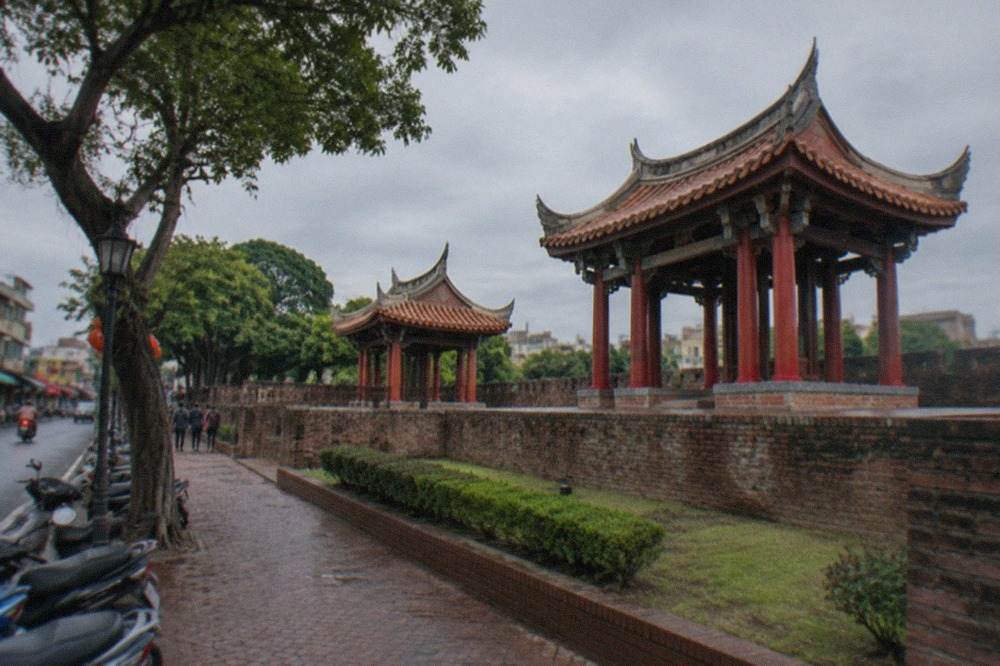
Short answer
Tainan's documented story starts in 1624, when the Dutch East India Company occupied what is now Anping and began Fort Zeelandia, completed in 1634. Koxinga took the fort in 1662 and renamed the place Anping. Tainan then served as Taiwan's capital for more than two centuries, until the late nineteenth century. Much of what visitors see at the old sites today, though, is Japanese-era rebuilding and a 1975 city renovation.
Tainan is the city where Taiwan's written history is densest. The Dutch East India Company occupied what is now Anping in 1624 and completed Fort Zeelandia in 1634; Koxinga took the fort in 1662 and renamed the place Anping; and the town that grew around these events served as Taiwan's capital for more than two centuries, until the late nineteenth century. That is the verified spine. Around it sits a cloud of dates that travel writing repeats confidently, 1661, 1683, 1887, 1895, some of which the official sources do not actually confirm, and this page separates the two throughout. The Tainan Travel Guide editorial desk reports what the city's own Tourism Bureau pages state, and flags what they do not.
What Happened at Fort Zeelandia?
The Dutch East India Company occupied what is now Anping in 1624 and completed Fort Zeelandia in 1634 as its defensive stronghold. Koxinga took the fort in 1662, renamed the place Anping, and made the inner fort his residence, which locals called the King's Castle. Only the brick walls of the south outer rampart survive from the Dutch period itself; most of the rest is later rebuilding.
The Tainan City Government Tourism Bureau's page for Anping Old Fort records the sequence plainly: occupation in 1624, the fort's completion in 1634, and Koxinga's takeover in 1662. After the Dutch surrendered, the inner fort became Koxinga's residence, and the name Anping dates from that moment. Under the Qing the site declined as the Taijiang inner sea silted up, and Qing troops dismantled parts of Fort Zeelandia to build the Eternal Golden Castle elsewhere in the city.
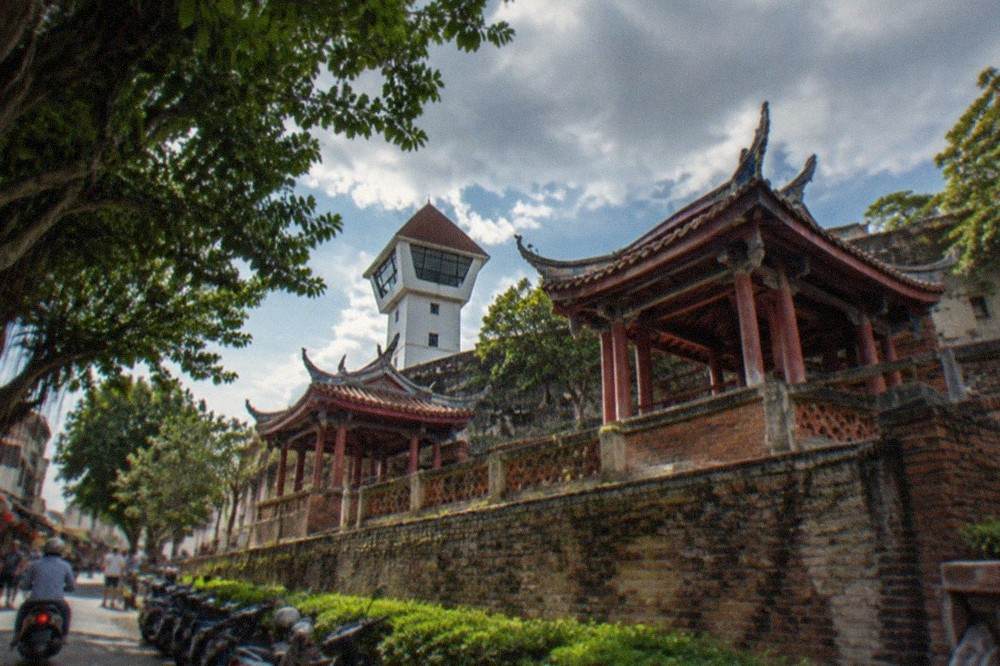
The honest detail most guides skip: the genuine Dutch-period remains at Anping Old Fort are limited to the brick walls of the south outer rampart in front of the fort. The site was rebuilt under Japanese rule, and after World War II it took its present name, Anping Old Fort. In 1975 the Tainan City Government renovated the site, adding the pointed roof to the lookout tower and painting the walls white. That 1975 work, not seventeenth-century masonry, is what most visitors photograph. If you want the full story of the site's later life, can you visit Fort Zeelandia? and what happened at Fort Zeelandia? are covered in detail on their own pages.
Who Was Koxinga and Why Does Tainan Remember Him?
Koxinga, the Ming loyalist commander also known as Zheng Chenggong, took the Dutch fort in 1662 and renamed the settlement Anping, ending the Dutch position on the island. The inner fort became his residence, the King's Castle in local usage, and his name is still attached to a shrine in the city today. The city's own page records the 1662 outcome but not the siege's start date.
Koxinga is the hinge of Tainan's story. The Tourism Bureau's Anping Old Fort page records that he took the Dutch fort in 1662 and that the inner fort became his residence. What the official page does not state is the start of the siege, often given as 1661 elsewhere. Because no official source in this desk's verified files confirms it, this page does not print it as fact. The pattern matters: Tainan's history is heavily narrated by people who paste dates from other travel sites, and several of those dates have never been checked against a primary source.
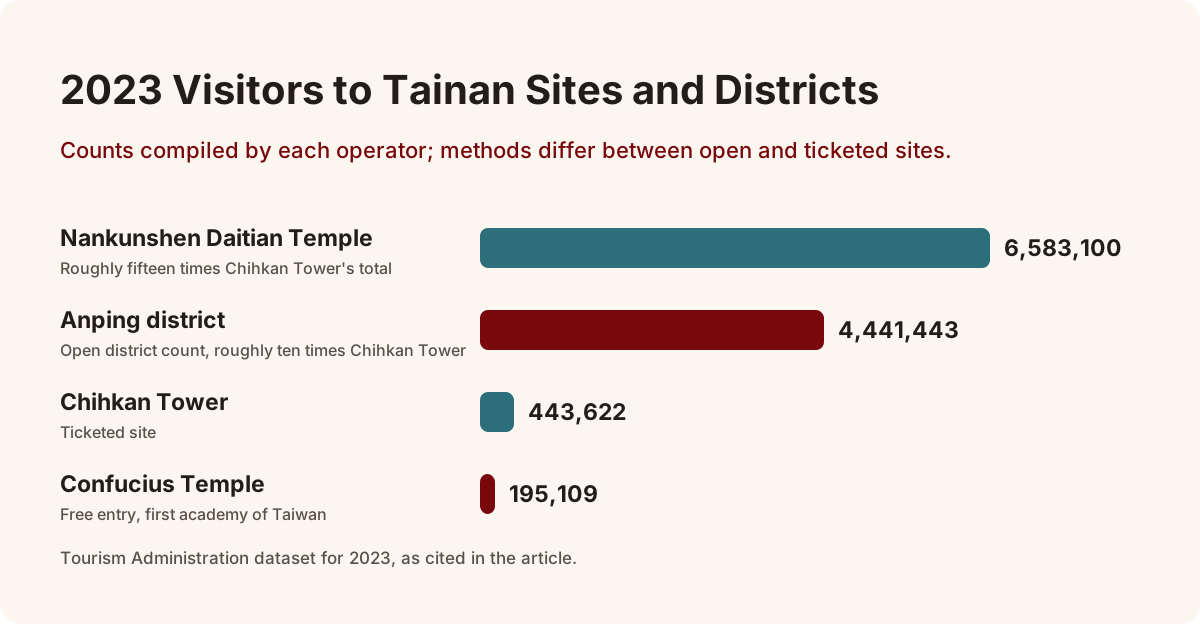
His legacy is physical. The Koxinga Shrine stands in the city, and the name Anping itself is his naming. The Anping district drew 4,441,443 visitors in 2023 according to the Tourism Administration's dataset, roughly ten times Chihkan Tower's 443,622, though the counting methods differ between an open district and a ticketed site. History here is not a museum piece; it is the reason the crowds come.
Why Is Chihkan Tower Standing in the Middle of the Modern City?
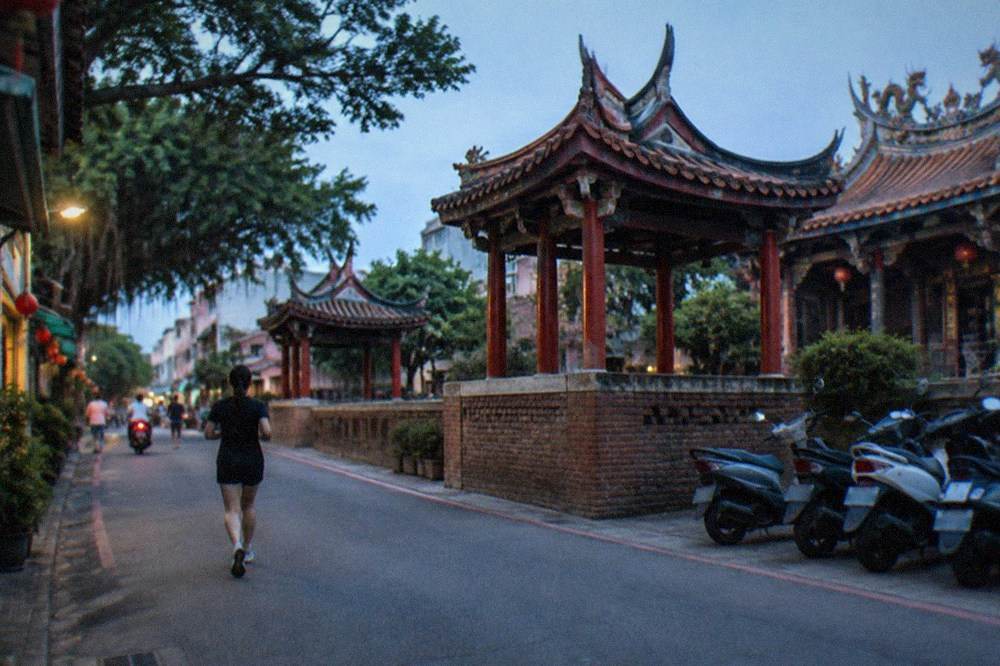
Chihkan Tower occupies the site of Fort Provintia, which the Dutch built in the early 1650s. The city's own page gives 1652 for the fort's construction, while 1653 is the more commonly cited date elsewhere, so the early 1650s is the honest phrasing. Admission is NT$70 at the gate, and the site opens 08:30 to 21:30 daily, one of the few historic sites open after dinner.
Fort Provintia's founding year is the clearest example of why this page refuses to pick between contested dates. The Tourism Bureau's own Chihkan Tower page says 1652; other sources say 1653. Both readings exist in respectable places, so "the early 1650s" is what gets printed here. The site's later life is better documented: the fort's ruins were built over, and the Chinese pavilions and stone steles that stand there today belong to later periods, which is why the tower looks nothing like a European fortress.
The practical detail worth knowing: Chihkan Tower is open 08:30 to 21:30 daily, with tickets until 21:00, and admission is NT$70 at the gate, NT$35 for concession holders, free for Tainan residents with ID. The late closing is unusual in a city where most historic sites shut in the late afternoon. Anping Old Fort closes at 17:10; the Tree House at 17:30; the Eternal Golden Castle at 17:30. Chihkan Tower is the one major historic site a visitor can see after dark, which pairs well with the evening food streets around it.
How Long Was Tainan Taiwan's Capital?
Tainan was Taiwan's capital for more than two centuries, until the late nineteenth century. The sources disagree on a single end year: 1887 for the province's creation and 1894 for the capital's formal move to Taipei are both defensible readings of a two-stage change, so no single year is printed here. The Confucius Temple's title as the first academy of Taiwan is real and verified.
This is the contested date that matters most, because so many travel articles print one year with total confidence. The verified facts file records the disagreement explicitly: the province of Taiwan was established in 1887 with a new central capital designated, and the capital formally moved to Taipei in 1894. Both are defensible readings of a two-stage administrative change. A writer who picks one is guessing, and this page does not guess. "More than two centuries, until the late nineteenth century" is the sentence that survives scrutiny.
The Confucius Temple carries the same caution. Its founding year, commonly given as 1665, was not confirmed on any reachable official page in this desk's verification pass, so no year is printed. What is verified is the title: the "first academy of Taiwan", the first place of formal learning on the island. Entry is free, with hours of 08:30 to 17:30 daily, closed only on Lunar New Year's Eve. The temple drew 195,109 visitors in 2023, modest against the temple-district giants, but its cultural weight is the point.
The visitor numbers tell a story that contradicts the usual European assumption about peak season. Nankunshen Daitian Temple drew 6,583,100 visitors in 2023, roughly fifteen times Chihkan Tower's total, and the peak months across Tainan's sites are January and February, driven by pilgrimage and Lunar New Year. The caveat that comes with every figure: counts are compiled by each operator, methods differ between a ticketed museum and an open old street, and the 2020 to 2022 years are COVID-depressed.
What Did the Japanese Era Leave Behind?
The Japanese colonial period rebuilt Fort Zeelandia's site, and much of the structure visitors see at Anping Old Fort today is Japanese-era rebuilding rather than Dutch masonry. The 1895 and 1945 colonial boundary dates are not confirmed on an official source in this desk's files, so they are framed as a period rather than printed as years. The 1975 city renovation then shaped the modern appearance.
Writing about the Japanese era honestly means resisting the temptation to pin the standard 1895 to 1945 dates onto the page as sourced facts. What the Tourism Bureau's page actually confirms is narrower and still vivid: the fort site was rebuilt under Japanese rule, and after World War II it took its present name. The physical legacy is visible across the city, from the Hayashi Department Store in the West Central District to the street grid around the railway station. Tainan's layers sit on top of each other rather than replacing each other, which is why a single walk can pass Dutch brick, Qing temple, Japanese shopfront and later modernist concrete within a few blocks.
The 1975 renovation deserves its own sentence, because it is the most under-reported fact on this page. The pointed roof on the Anping Old Fort lookout tower and the white paint on its walls are city government work from that year. A visitor expecting authentic seventeenth-century architecture is looking at a modern interpretation of it, standing beside a small piece of the real thing.
Where Can You See Tainan's History Today?
The main historic sites are Anping Old Fort at NT$70, the Anping Tree House at NT$70, the Eternal Golden Castle at NT$70, Chihkan Tower at NT$70 and the Chimei Museum at NT$200 for the permanent collection, closed every Wednesday. The Tainan Confucius Temple, Grand Matsu Temple, Five Concubines Temple and Kaiyuan Temple are free to enter. All prices are at the gate, and the city says the on-site notice governs.
The city's own disclaimer is worth taking seriously: prices are for reference and the on-site notice governs. Concessions are half price at the city sites, and Tainan residents enter free with ID, but a visitor is not a resident, so never plan on free entry. A combined ticket between Anping Old Fort, the Tree House and the Former Tait & Co. Merchant House is unverified, so this page does not claim one exists.
| Site | Adult entry | Hours | Closed |
|---|---|---|---|
| Anping Old Fort | NT$70 | 10:00 to 17:10 daily | none listed |
| Chihkan Tower | NT$70 | 08:30 to 21:30 daily | none listed |
| Anping Tree House | NT$70 | 08:30 to 17:30 daily | none listed |
| Eternal Golden Castle | NT$70 | 08:30 to 17:30 daily | none listed |
| Tainan Confucius Temple | free | 08:30 to 17:30 | Lunar New Year's Eve |
| Grand Matsu Temple | free | 06:00 to 21:00 | none |
| Chimei Museum | NT$200, permanent collection | last entry 17:00 | every Wednesday |
| National Museum of Taiwan History | NT$100 | 09:00 to 17:00 | Mondays |
For the deeper story of the island as a whole, the National Museum of Taiwan History covers the colonial and postwar periods in far more depth than any single site can, and the Tainan attractions overview pulls the full list of sites into one place. The Chimei Museum's own visitor page states its Wednesday closure and its NT$200 permanent-collection price, and it sits on the H31 shuttle route from the HSR station, which is free for HSR passengers with a ticket stub.
What Is Verified and What Is Contested About Tainan's History?
The verified spine holds four dates: 1624, the Dutch occupation of Anping; 1634, Fort Zeelandia completed; 1662, Koxinga takes the fort; and 1975, the city renovation of Anping Old Fort. Contested or unverified are the capital's end year, Fort Provintia's founding year, the 1661 siege start, the 1683 Qing annexation, the 1895 and 1945 colonial dates, the 2010 merger and the Confucius Temple's founding year.
This table is the information gain of the page: a first page of search results will give you all of these dates with equal confidence, but they do not all carry the same evidential weight.
| Claim | Status | What this page prints |
|---|---|---|
| Dutch occupation of Anping, 1624 | verified, Tourism Bureau page | 1624 |
| Fort Zeelandia completed, 1634 | verified, Tourism Bureau page | 1634 |
| Koxinga takes the fort, 1662 | verified, Tourism Bureau page | 1662 |
| Fort Provintia founded, 1652 vs 1653 | sources disagree | the early 1650s |
| Koxinga's siege begins, 1661 | unverified on an official source | not printed |
| Qing annexation, 1683 | unverified on an official source | not printed |
| Capital status ends, 1887 vs 1894 | sources disagree | late nineteenth century |
| Japanese colonial dates, 1895 and 1945 | unverified on an official source | framed as a period |
| City and county merger, 2010 | unverified on an official source | not printed |
| Confucius Temple founded, 1665 | unverified on an official source | no year; the first academy title stands |
| 1975 Anping Old Fort renovation | verified, Tourism Bureau page | 1975 |
The point is not pedantry. A reader who plans a trip around a wrong date notices nothing, but a reader who is told honestly which claims rest on the city's own pages and which rest on repetition learns something about how travel information works. The Tourism Bureau's Anping Old Fort page and its Chihkan Tower page are the two primary sources behind most of this article, and both carry visible last-updated dates of their own.
How Does History Shape a Visit to Tainan Now?
Tainan's history is not confined to forts and museums; it shapes the practical city, from the night market rotation to the food streets around Chihkan Tower to the fact that the HSR station sits outside the old city at Shalun in Guiren District. Understanding the layers makes the modern city easier to read and easier to plan.
The old capital's street pattern still organizes daily life. The food streets of the West Central District cluster around the historic sites, and the Tainan food guide covers the dishes that carry their own history, from danzai noodles to coffin bread to beef soup. The night markets rotate by day of week, verified market by market from the city's own pages, and that schedule is itself a piece of living urban custom rather than a modern invention.
| Night market | Open | Hours |
|---|---|---|
| Garden | Thursday, Friday, Saturday, Sunday | 17:00 to 00:00 |
| Wusheng | Wednesday, Friday, Saturday | 17:00 to 00:00 |
| Dadong | Monday, Tuesday, Friday | 18:00 to 01:00 |
| Siaobei | every day, indoor | 12:00 to 00:00 |
Check before you go, because the city updates these pages and the days do change. The Tainan night markets page carries the full breakdown.
Getting to the old city is the other piece of practical history. The HSR station is not in Tainan's historic core; it is at Shalun in Guiren District, and reaching the center means a transfer, covered in detail on the Tainan HSR station page and the getting around Tainan guide. City buses are free for the first 8 km with an electronic card under the city's current 2026 policy, provided you tap on and tap off, and the H31 shuttle from the HSR station is free for HSR passengers with a ticket stub.
Common Questions About Tainan's History
When was Tainan founded?
Tainan's documented history begins in 1624, when the Dutch East India Company occupied what is now Anping and began Fort Zeelandia, completed in 1634. Earlier Austronesian settlement on the island long predates that, but the city's recorded urban story starts with the Dutch period.
When did Tainan stop being Taiwan's capital?
Tainan was Taiwan's capital for more than two centuries, until the late nineteenth century. The sources disagree on a single year: 1887 for the province's creation and 1894 for the capital's formal move to Taipei are both defensible readings of a two-stage change, so no single year is printed.
Is Anping Old Fort actually a Dutch fort?
Only partly. The genuine Dutch-period remains are the brick walls of the south outer rampart in front of the fort. The site was rebuilt under Japanese rule, and the 1975 city renovation added the pointed roof to the lookout tower and painted the walls white, which is what most visitors photograph today.
How old is Chihkan Tower?
The site dates to the early 1650s, when the Dutch built Fort Provintia there. The city's own page says 1652 and other sources say 1653, so the decade is the honest phrasing. The Chinese pavilions and steles standing there today are from later periods.
What is the oldest temple in Tainan?
The Tainan Confucius Temple holds the verified title of the first academy of Taiwan, but its founding year is not confirmed on an official page, so this site prints no number for it. The Grand Matsu Temple, Five Concubines Temple and Kaiyuan Temple are all free to enter, with hours published by the city.
Where should a history-focused visitor start in Tainan?
Start with Anping Old Fort for the Dutch and Koxinga story, Chihkan Tower for Fort Provintia and the late closing hour, and the National Museum of Taiwan History for the island-wide context. The Confucius Temple and the Grand Matsu Temple cost nothing and sit inside the historic core.
Tainan rewards a visitor who knows which century each layer belongs to. Walk the Anping rampart brick and understand it is Dutch, look up at the white lookout tower and understand it is 1975, stand in the Confucius Temple and understand the academy title without needing a founding year to be true. The city keeps its history in use rather than under glass, and the verified spine, 1624, 1634, 1662 and 1975, is enough to read almost everything else against.