Taiwan Salt Museum
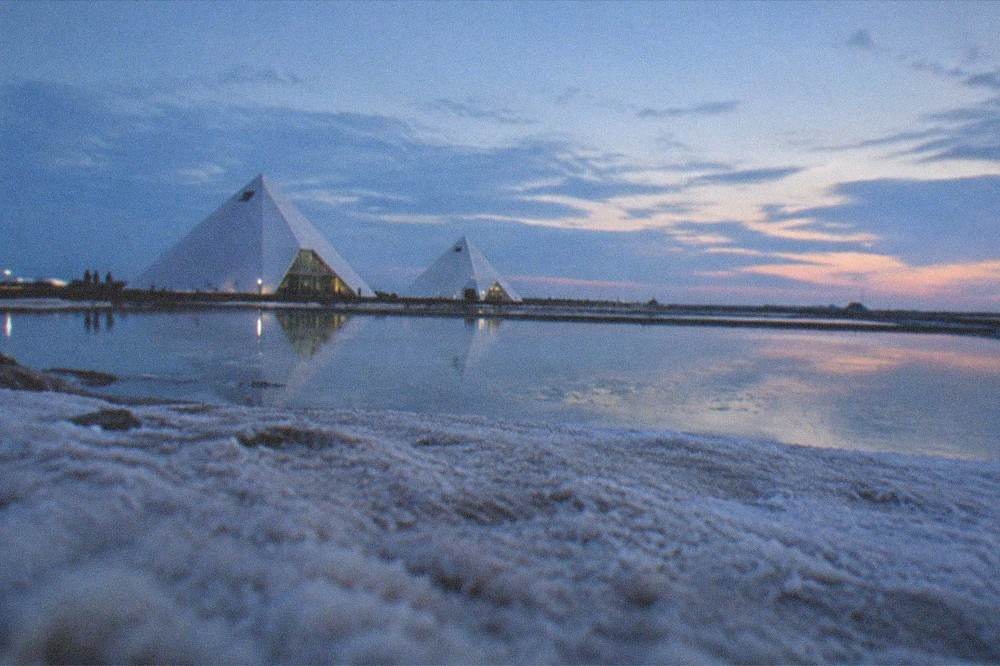
The Taiwan Salt Museum sits at the heart of the Qigu salt coast, the stretch of lagoon, salt flats and wind-swept recreation area that explains how a humble white crystal shaped Tainan's economy for three centuries.
Short answer
The Taiwan Salt Museum is the interpretive center of the Qigu salt coast, covering how salt was harvested, dried and shipped from this lagoon shore. Pair it with Qigu Salt Mountain, the Jingzijiao tile-paved salt fields and the Sicao Green Tunnel for a full coastal day.
Salt built the Tainan coast. For roughly three centuries the lagoon shore at Qigu produced the white crystal that preserved food, paid wages and shaped the daily life of an island, and the Taiwan Salt Museum is the place that story is told. The museum sits inside the Qigu salt industry recreation area, the same stretch of coast as the white pyramid of Qigu Salt Mountain, the tile-paved evaporation pans of Jingzijiao and the oyster farms of the lagoon. The Tourism Administration's own visitor dataset recorded 690,750 visitors to the Qigu Salt Industry Recreation Area in 2023, which makes the salt coast one of Tainan's steadier draws, well ahead of the Dutch-era forts that dominate the guidebooks.
This page gathers what is verified about the museum and its surroundings: how the coast works as a day trip, what the surrounding sites charge, when to go, and how the pieces fit together. Where a figure has not been confirmed on an official page, this guide says so plainly rather than guessing, because a confident wrong number is worse than an honest blank. The salt coast rewards planning more than most of Tainan, since it sits at the end of the bus network and its best hours are the ones before the mid-afternoon heat.
What Is the Taiwan Salt Museum?
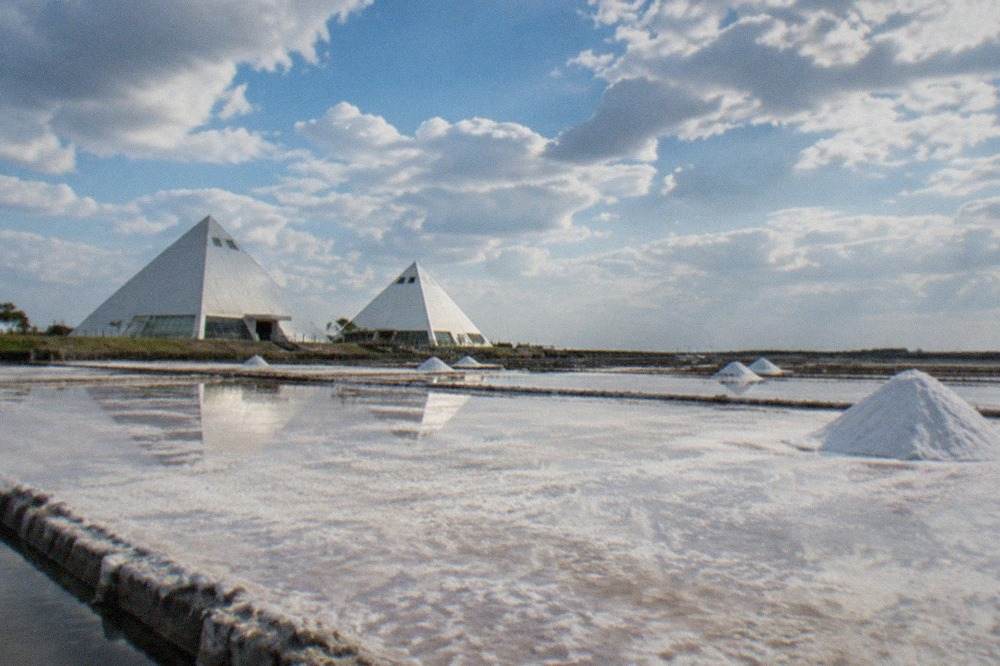
The Taiwan Salt Museum is the interpretive center of Tainan's Qigu salt coast, documenting how sea salt was evaporated, raked, dried and shipped from lagoon shore pans over three centuries of industry. It sits inside the Qigu salt industry recreation area beside Qigu Salt Mountain, roughly an hour from central Tainan, and it is the one stop on the coast that explains the landscape the rest of the day is spent looking at.
The coast here is a working landscape turned heritage site. Salt production on this shore ran on a simple physics: seawater was drawn into shallow tile-paved pans, the sun concentrated it over days, and workers raked the crystals that remained. The Jingzijiao Tile-Paved Salt Fields, a short way down the coast, preserve that older tile-pan method and drew 636,193 visitors in 2023 according to the same Tourism Administration dataset. Further up the shore, the Beimen Salt Industry Recreation Area, on the other side of the lagoon, recorded 344,093. The museum is the thread that ties these sites into a single story rather than a string of photo stops.
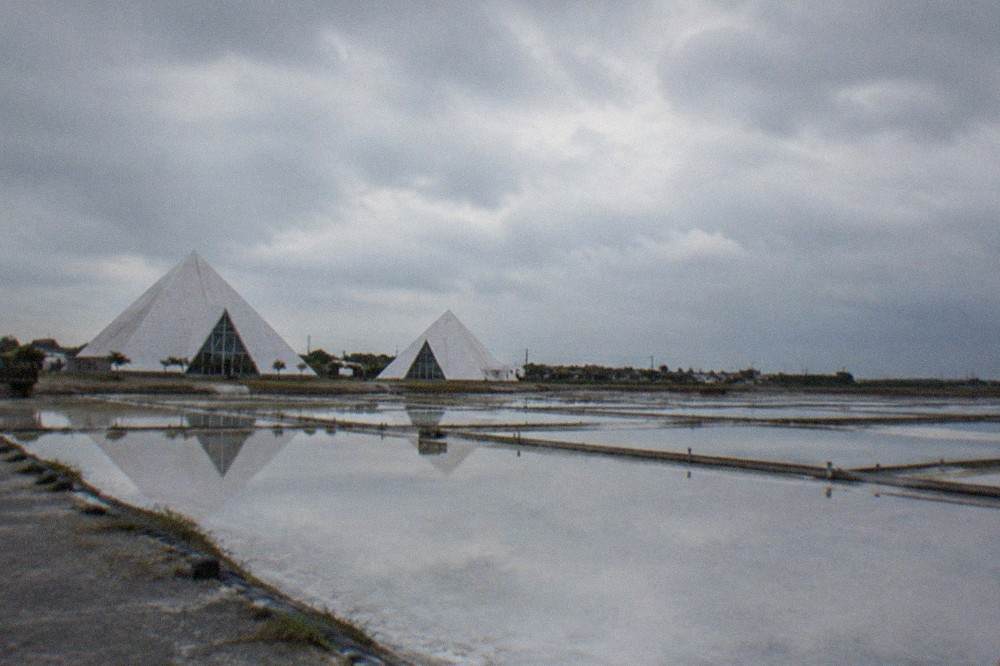
The Tainan City Government Tourism Bureau's page for Qigu Salt Mountain describes the wider site, and the museum's own displays cover the machinery, the labor and the trade. What the museum adds, beyond the mountain's spectacle, is context: why the salt pans were tile-paved, why the industry declined, and why the coast now sells sunsets, oysters and scenery instead of salt. A reader who wants the full coastal picture should also read the guide to the Qigu salt flats day trip, which lays out the route in order.
One honest caveat belongs up front. The museum's own admission price and opening hours have not been confirmed on an official page for this guide, so no number is printed here. The surrounding sites' fees below are verified against city sources, and the museum's current charges should be checked on the on-site notice when you arrive, which is the same standard the city's own pages apply to every price they list.
Where Is the Taiwan Salt Museum and How Do You Get There?
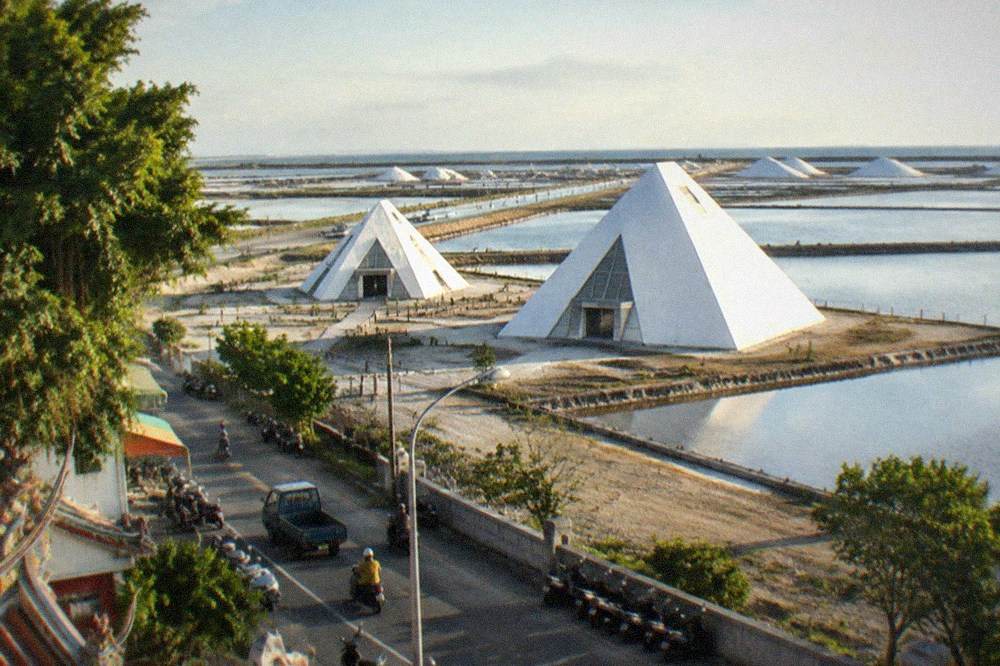
The Taiwan Salt Museum is in Qigu District, on Tainan's southwestern lagoon coast, inside the salt industry recreation area beside Qigu Salt Mountain. It is roughly an hour's drive from central Tainan and at the far end of the city bus network, which makes it a half-day to full-day commitment rather than a quick stop, and most visitors pair it with the salt mountain, the salt fields and a lagoon boat ride in one loop.
Getting there is the part most visitors under-plan. The site sits at the end of long, flat roads that run between fish ponds, oyster racks and drainage channels, and there is no rail line anywhere near the coast. City buses do reach Qigu, and the city's bus site confirms that trunk and branch routes are free for the first 8 km with an electronic card, tap on and tap off, a policy running through the 2026 calendar year. But Qigu is far beyond 8 km from the center, so the bus fare for a coast-bound ride is not free, and the cash fare baseline the city publishes is NT$26 for the waived distance, with distance charges beyond it.
For most travelers the realistic options are a rental car, a scooter or a guided day tour that handles the driving. The scooter question has a specific wrinkle: an International Driving Permit is not automatically sufficient in Taiwan, the country expects it to be registered with a Motor Vehicles Office, and rental shops may refuse without it, so check the official requirements before assuming anything. The practical alternative, and the one this site recommends most often for the coast, is a tour, because the distances between the museum, the salt mountain, the salt fields and the boat docks add up and the buses between them are infrequent.
The trio above is the shortlist for this coast. The ecological lagoon tour with the oyster buffet covers the water side, the Ten Drum and salt mountain day tour covers the inland loop, and a photoshoot pairs well with the coast's wide, flat light. Between them they cover every way of seeing Qigu without a car.
What Can You See at the Taiwan Salt Museum and Around It?
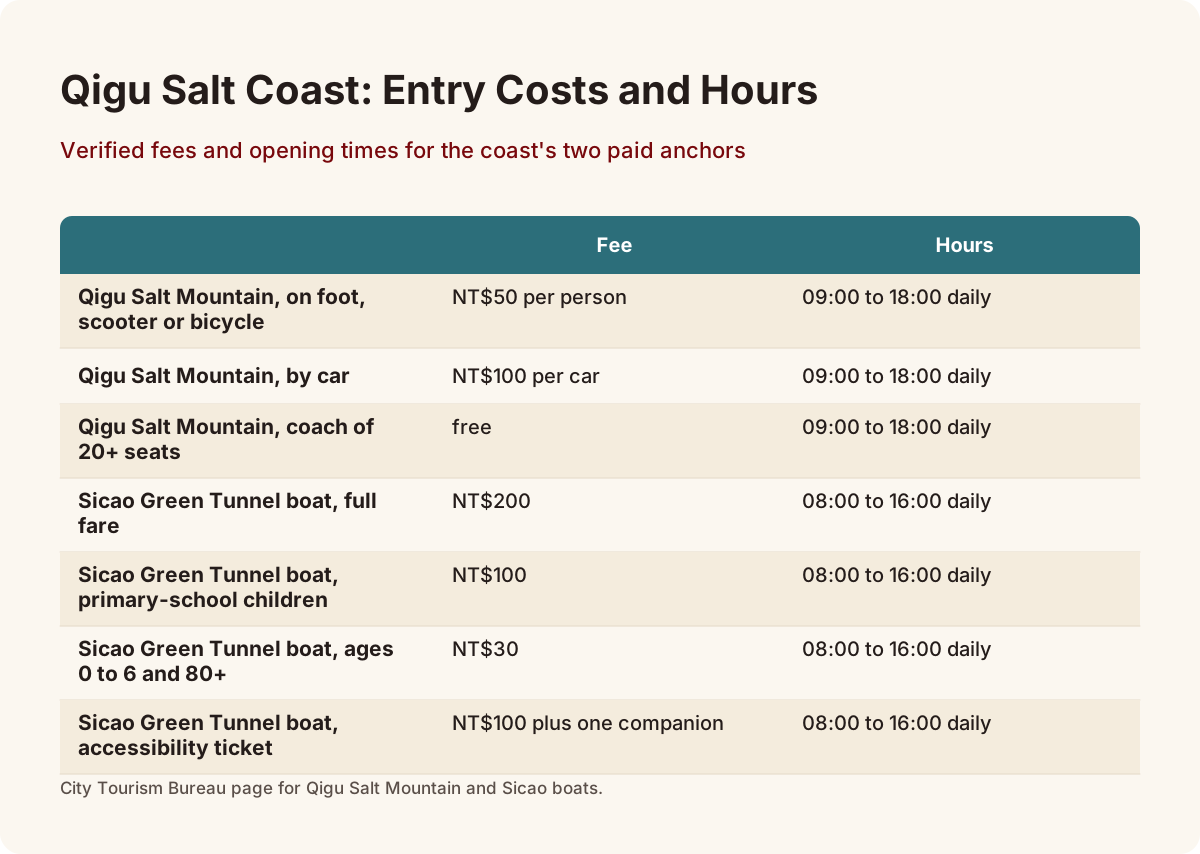
The museum's exhibits cover the salt-making process, the tools, the workers and the trade, while the surrounding recreation area holds Qigu Salt Mountain, a white crystallized salt pyramid you can climb, the salt flats themselves, and views across the lagoon to oyster farms. The verified anchor next door is the salt mountain, which charges a NT$50 cleaning fee per person on foot or per scooter or bicycle, NT$100 per car, and is open 09:00 to 18:00 daily.
The salt mountain is the visual centerpiece and the reason most cameras come to Qigu. The Tainan City Government Tourism Bureau's page for Qigu Salt Mountain lists those fees and hours directly, and the same page notes that coaches of 20 or more seats enter free. The mountain is exactly what its name suggests, a heap of harvested salt, and the climb to the top gives the coast's best single view: flat pans in one direction, the lagoon in the other, and on clear days the horizon of the Taiwan Strait. The city's own pages carry the standing caveat that prices are for reference and the on-site notice governs, so treat every figure here as the gate price rather than a guarantee.
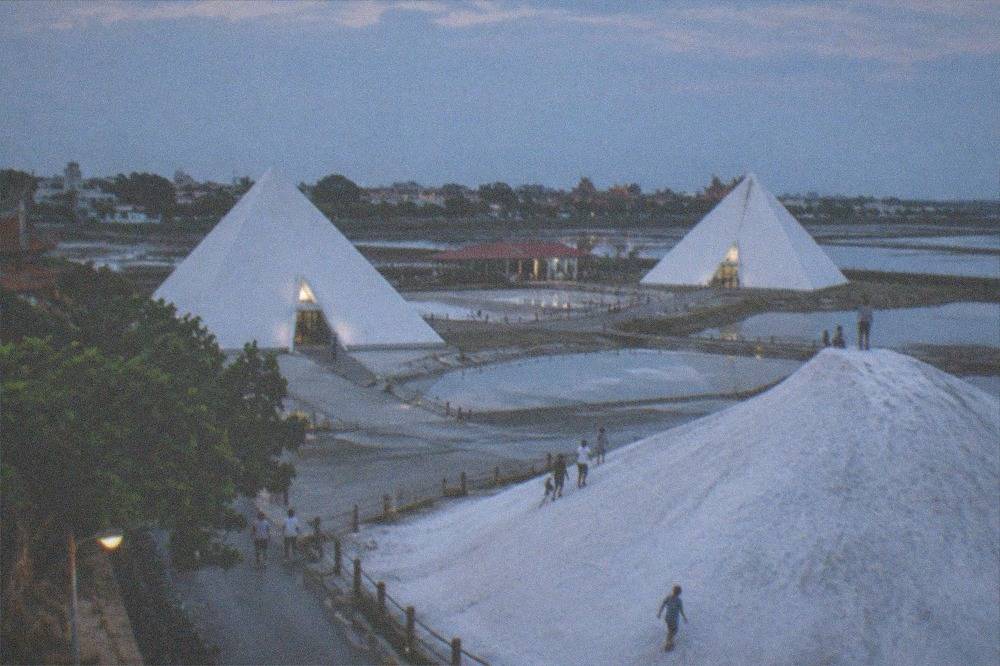
Around the museum and the mountain, the recreation area spreads out into salt flats, sculpture displays and open ground. The coast's second verified anchor is the boat. The Sicao Green Tunnel, on the eastern edge of the Taijiang wetlands between the city and the coast, runs boats from 08:00 to 16:00 daily at NT$200 full fare, NT$100 for primary-school children, a NT$30 "black-faced spoonbill" ticket for ages 0 to 6 and 80-plus, and a NT$100 accessibility ticket whose holder may bring one companion. The city's page for the site lists both routes, the Green Tunnel and the longer Taijiang route, at the same NT$200 fare, so there is no cheaper route to hunt for.
The verified salt-coast anchor prices, all from the city's own pages:
| Site | Entry cost | Hours | Source note |
|---|---|---|---|
| Qigu Salt Mountain | NT$50 per person on foot, per scooter or bicycle; NT$100 per car; coaches of 20+ seats free | 09:00 to 18:00 daily | City Tourism Bureau page |
| Sicao Green Tunnel boats | NT$200 full fare; NT$100 primary-school children; NT$30 ages 0 to 6 and 80+; NT$100 accessibility ticket plus one companion | 08:00 to 16:00 daily | City Tourism Bureau page |
| Jingzijiao Tile-Paved Salt Fields | no verified fee in this guide's sources, check on site | not verified, check on site | visitor dataset confirms scale only |
A note on the third row: the Jingzijiao fields are real, popular and part of the same story, but their current fee has not been confirmed on an official page, so the honest instruction is to check at the entrance. That is the standard this site applies everywhere rather than printing a plausible number.
If the coast's logistics look like work, that box is the shortcut. The lagoon ecological tour includes the boat-side of the day and an hour of all-you-can-eat oysters, which is the coast's other signature harvest, and the operator's live listing carries the current price and availability.
What Are the Opening Hours and Best Timing for a Salt Coast Day?
The verified hours for the coast's paid anchors are 09:00 to 18:00 daily at Qigu Salt Mountain and 08:00 to 16:00 daily for the Sicao boats, which makes the morning the natural shape of the day: boat first, museum and mountain after lunch, sunset from the flats if the season allows. The Central Weather Administration's 1991 to 2020 normals for Tainan show why timing matters, with 186 days a year above 30C and rain concentrated almost entirely in summer.
The climate table is the planning tool. Tainan's rain is a summer event: August alone averages 466 mm across 16 wet days, while December brings 16 mm across 3, and close to three-quarters of the annual 1,761 mm falls between May and September. October is the quiet outlier, the driest month by wet days at 2.8 while still averaging 30.8C maxima. For a coast day built around walking on white salt under an open sky, October through March is the comfortable half of the year, and the flats have almost no shade, so in summer the early morning is the only sane window.
| Month | Mean max C | Rain mm | Wet days | Days over 30C |
|---|---|---|---|---|
| Jan | 23.0 | 20.7 | 3.8 | 0.0 |
| Feb | 24.0 | 21.6 | 4.1 | 0.9 |
| Mar | 26.6 | 30.4 | 4.2 | 4.1 |
| Apr | 29.3 | 69.8 | 5.9 | 14.9 |
| May | 31.4 | 165.6 | 9.0 | 25.2 |
| Jun | 32.4 | 370.5 | 12.1 | 26.2 |
| Jul | 33.0 | 374.6 | 13.0 | 28.9 |
| Aug | 32.6 | 466.1 | 15.8 | 27.6 |
| Sep | 32.4 | 170.5 | 8.5 | 27.8 |
| Oct | 30.8 | 30.8 | 2.8 | 23.6 |
| Nov | 28.1 | 23.8 | 2.4 | 6.1 |
| Dec | 24.4 | 16.2 | 3.0 | 0.5 |
Source: Central Weather Administration station 467410, Tainan, 1991 to 2020 normals. Typhoon risk concentrates in the late-summer months, and the salt mountain's own listing notes closure on government typhoon days, so in July to September check the forecast the night before rather than the morning of.
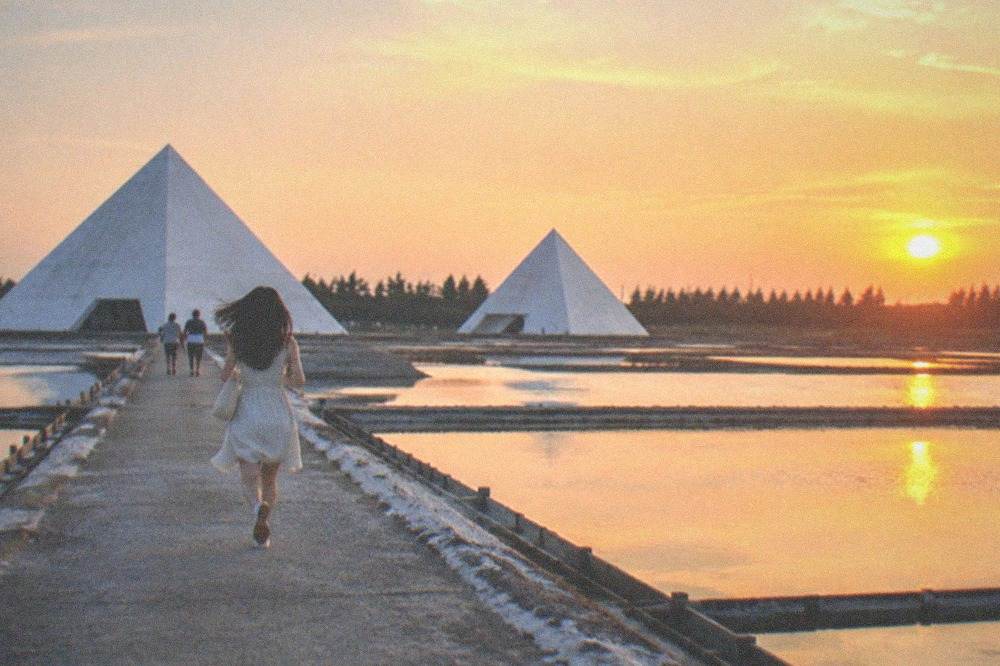
One more timing fact from the visitor data: Tainan's peak season is January and February, driven by temple pilgrimage and Lunar New Year, not by summer. The salt coast's own counts peak in January too. That means the coast is busiest exactly when the weather is best, and a weekday visit in the October to March window is the sweet spot for crowds and comfort together.
How Does the Salt Museum Fit Into a Tainan Itinerary?
The salt coast works as a half-day to full-day excursion from central Tainan, and the museum is the midpoint stop between the lagoon boat rides and the salt fields. Most itineraries pair it with Qigu Salt Mountain and the Sicao Green Tunnel in one coastal loop, or fold it into a wider southern Taiwan route, and visitors with two or more days should give the coast a full day rather than squeezing it alongside the old city's temples.
The old city and the coast are different trips. Central Tainan's dense cluster, Chihkan Tower, the Grand Matsu Temple and the Confucius Temple, is walkable and needs no vehicle. The salt coast is the opposite: spread out, flat and car-shaped. Treating them as one day shortchanges both, and the itineraries on this site, from one day in Tainan upward, consistently put the coast on its own day from two days onward.
A sample coastal day, built from the verified hours above:
| Time | Stop | What the verified schedule allows |
|---|---|---|
| 08:00 to 10:00 | Sicao Green Tunnel boat | boats run from 08:00, NT$200 either route |
| 10:30 to 12:30 | Drive out to Qigu, oyster farms | no rail on the coast, car or tour |
| 12:30 to 14:00 | Lunch, seafood or the oyster buffet tour | Qigu Seafood Festival runs July to August |
| 14:00 to 16:30 | Taiwan Salt Museum and Qigu Salt Mountain | salt mountain open 09:00 to 18:00, NT$50 on foot |
| 17:00 onward | Jingzijiao salt fields, sunset from the flats | check the entrance fee on site |
For museum-minded travelers, the coast also pairs naturally with Tainan's other big museums. The Chimei Museum holds one of the finest private collections in Asia, and the National Museum of Taiwan History covers the island's story, including its coastal industries, in a striking modern building. A reader deciding between them can start with the question is the Chimei Museum worth it. The salt museum is the smallest of the three but the only one whose subject is visible from its own front steps.
That tour is the efficient inland option: it bundles the Ten Drum Culture Village with the salt mountain and the Jingzijiao salt fields in one day, with the driving handled. It suits a visitor who wants the coast's highlights without renting anything.
What Else Is There to Do Around Qigu?
The Qigu coast rounds out with lagoon boat rides, oyster farm visits, wetland birdwatching and the seafood for which the district is known, plus the Taijiang National Park wetlands that stretch back toward the city. The verified water activity is the Sicao boat network at NT$200 either route, and the Qigu Seafood Festival runs July to August on the city's official festival calendar, which is the coast's own peak season for food.
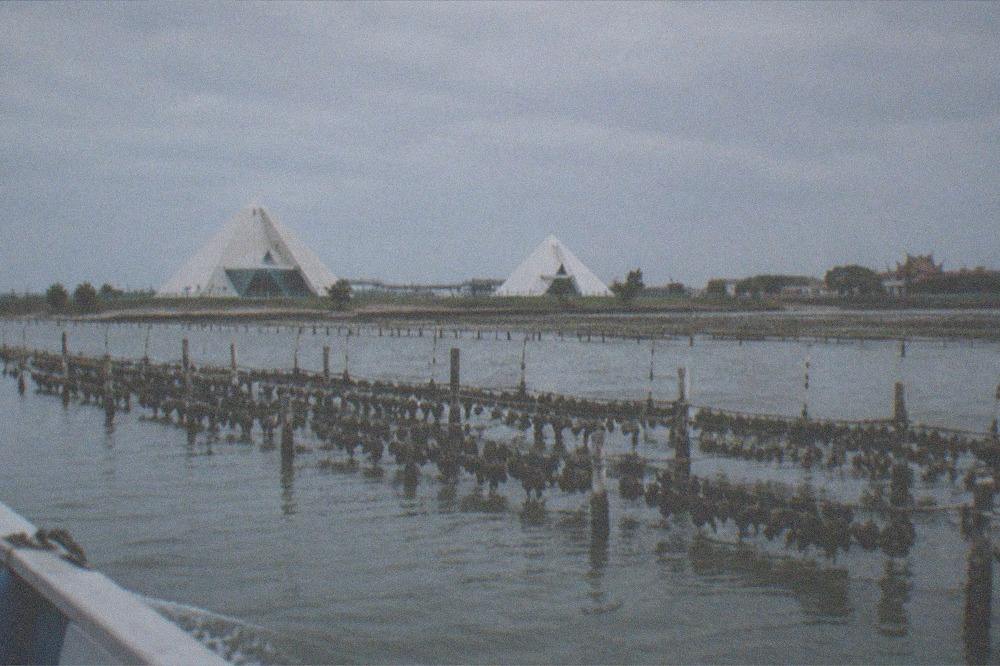
The lagoon is the coast's second industry. Oyster racks stand in rows across the shallow water, and the ecological tours that cross them, including the oyster buffet tour featured on this page, are the easiest way out onto the water without chartering anything. The city's official festival calendar places the Qigu Seafood Festival in July to August, the mango season in June to July, and the black-faced spoonbills' arrival in the wetlands in the colder months; the Tourism Administration's nature pages describe the spoonbill wintering around the Zengwen River estuary, with the core viewing season in the Qigu wetlands. No sighting is ever guaranteed, and no count is printed here because none is verified.
Back toward the city, the Taijiang National Park wetlands and the Sicao Green Tunnel sit between the coast and the urban area, so the boat ride can slot either before or after the museum depending on direction. And if the coast day ends early, the evening belongs to the city's night markets, which rotate by day of week: Garden runs Thursday to Sunday, Wusheng Wednesday, Friday and Saturday, Dadong Monday, Tuesday and Friday, and Siaobei is indoors and open daily, so check the schedule before promising yourself a night market on any given evening.
The second shortlist above is the same trio, repeated because by this point in the page the reader knows their own day shape: water, inland, or photographs. Each card carries the operator's live listing with current price and availability.
The coast's flat light and white ground make it one of Tainan's better photography settings, and a booked photoshoot is the way to be in the pictures rather than behind the camera. The Tainan Travel Guide homepage holds the full list of what the city offers if the salt coast has earned its day and the itinerary has room for more.
Common Questions About the Taiwan Salt Museum
How much does the Taiwan Salt Museum cost?
The museum's own admission price has not been confirmed on an official page, so this guide prints no number. The verified prices next door are Qigu Salt Mountain's NT$50 cleaning fee per person on foot, NT$100 per car, and the Sicao boats at NT$200 either route. Check the on-site notice at the museum entrance, which is the same standard the city applies to every price it publishes.
What are the Taiwan Salt Museum's opening hours?
The museum's hours are not verified in this guide's sources, so check before traveling. The surrounding anchors run 09:00 to 18:00 daily at Qigu Salt Mountain and 08:00 to 16:00 daily for the Sicao boats, so a morning boat followed by an afternoon at the museum and mountain fits the coast's verified schedule.
Can you climb Qigu Salt Mountain?
Yes, the salt mountain is walkable and the climb is short, on a heap of harvested salt rather than rock. The city's page for the site lists a NT$50 cleaning fee per person on foot and 09:00 to 18:00 daily hours, with closure on government typhoon days. The view from the top takes in the flats on one side and the lagoon on the other.
How do you get to the Taiwan Salt Museum without a car?
City buses reach Qigu, but the coast is well beyond the free first-8-km bus zone and the buses run infrequently, so most car-free visitors take a guided day tour. The tours on this page cover the salt mountain, the salt fields and the lagoon with the driving included. A scooter is possible, but Taiwan expects an International Driving Permit to be registered with a Motor Vehicles Office, and rental shops may refuse without it.
When is the best time to visit the Qigu salt coast?
October to March. The Central Weather Administration's normals show October as the driest month by wet days, 2.8, while still averaging 30.8C maxima, and December brings just 16 mm of rain. Summer is hot, with 186 days a year above 30C citywide and typhoon risk concentrated in the late-summer months, so visit early in the day if you go then.
Is the Taiwan Salt Museum worth it?
As the interpretive anchor of a coast day, yes: it is the one stop that explains the landscape the rest of the day is spent photographing. Pair it with the salt mountain, the Jingzijiao fields and a lagoon boat ride rather than visiting alone, because the coast's individual pieces are modest and the loop is what makes the trip.
The salt coast is Tainan at its most spacious, the opposite of the old city's temple alleys, and the Taiwan Salt Museum is the piece that turns a scenic drive into an understood landscape. Plan it as a full loop, check the on-site notices for the museum's own price and hours, go in the dry half of the year if the calendar allows, and let the lagoon, the oysters and the white mountain fill the rest of the day.