Tainan Coffee Shops
Tainan is Taiwan's food capital, and its coffee culture has grown up alongside the street food rather than in spite of it. This guide covers where to look, what to order and how the city's verified schedules and seasons shape a cafe day.
Short answer
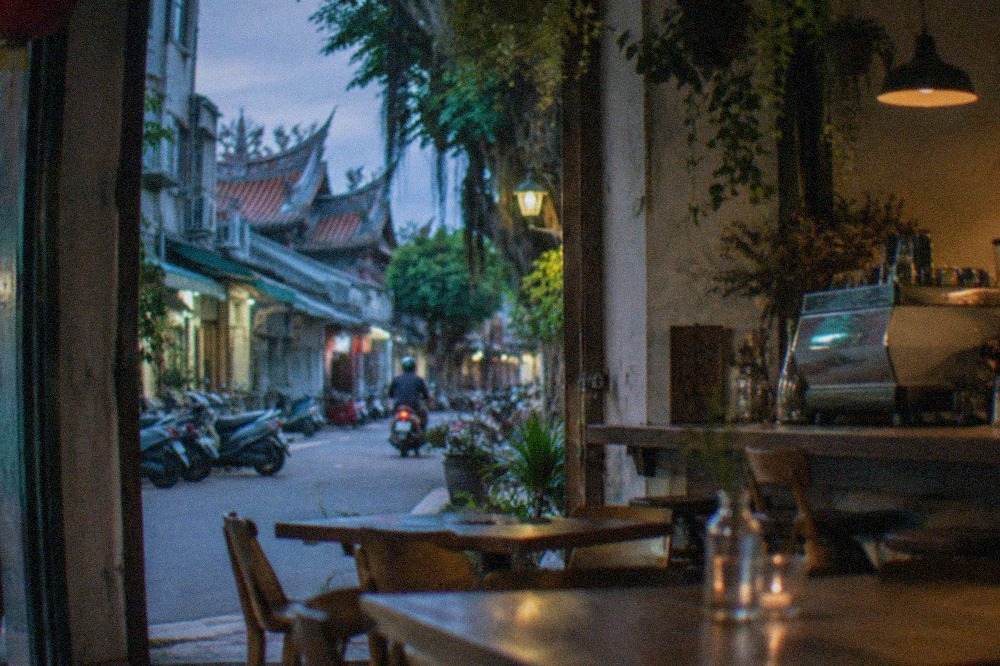
Tainan's coffee shops cluster in the old West Central District lanes, around Anping's heritage sites and in the East District's newer roasteries. Expect third-wave espresso in restored Japanese-era houses, plus milk-heavy local drinks. No coffee price is officially published, so treat every figure you see online as a listing, not a fact.
Tainan Coffee Shops
Tainan is the city travelers come to for beef soup at dawn and danzai noodles at midnight, but it is also one of Taiwan's most interesting places to drink coffee. The old capital's stock of Japanese-era houses, courtyard homes and heritage lanes has been converted into small cafes at a remarkable rate over the past decade, and the result is a scene where a single afternoon walk can pass a third-wave espresso bar, a 60-year-old bakery counter and a temple forecourt, sometimes within the same block. The Tainan City Government Tourism Bureau's own attractions pages list the heritage buildings that house many of these cafes, which is the best evidence of how intertwined the coffee scene has become with the city's historic fabric.
Nobody writing this guide has stood in any of these cafes, so nothing below is a tasting note or a verdict. What this page does instead is assemble the verified, checkable facts that shape a coffee day in Tainan: which neighborhoods the scene lives in, how the city's climate makes some months far better for cafe terraces than others, how the rotating night market schedule interacts with an evening coffee stop, and how the free first 8 km of bus travel makes a multi-neighborhood crawl realistic. Prices for individual cups are not published by any official source, so this guide does not print any, and neither should your planning notes.
Why Is Tainan Such a Good Coffee City?
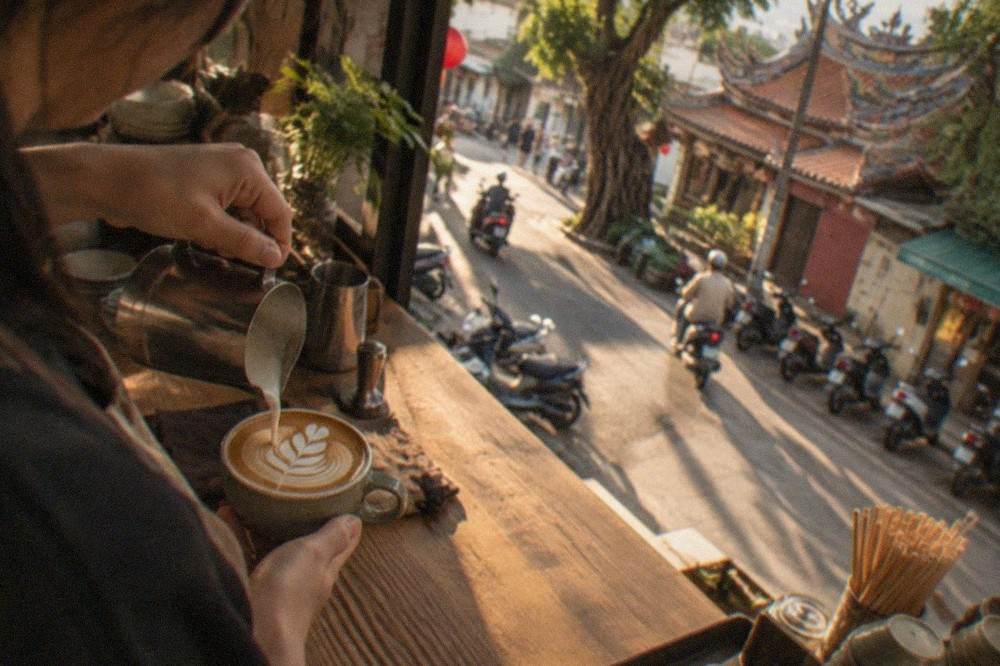
Tainan pairs a dense stock of restored heritage buildings with a slow, food-centered rhythm of daily life, and that combination produces small, characterful cafes rather than chains. The city was Taiwan's capital for more than two centuries, until the late nineteenth century, and the old streets around West Central District and Anping still carry the architecture of that era plus the Japanese colonial period. Low rents on narrow lane houses helped independent roasters and baristas open where bigger cities priced them out.
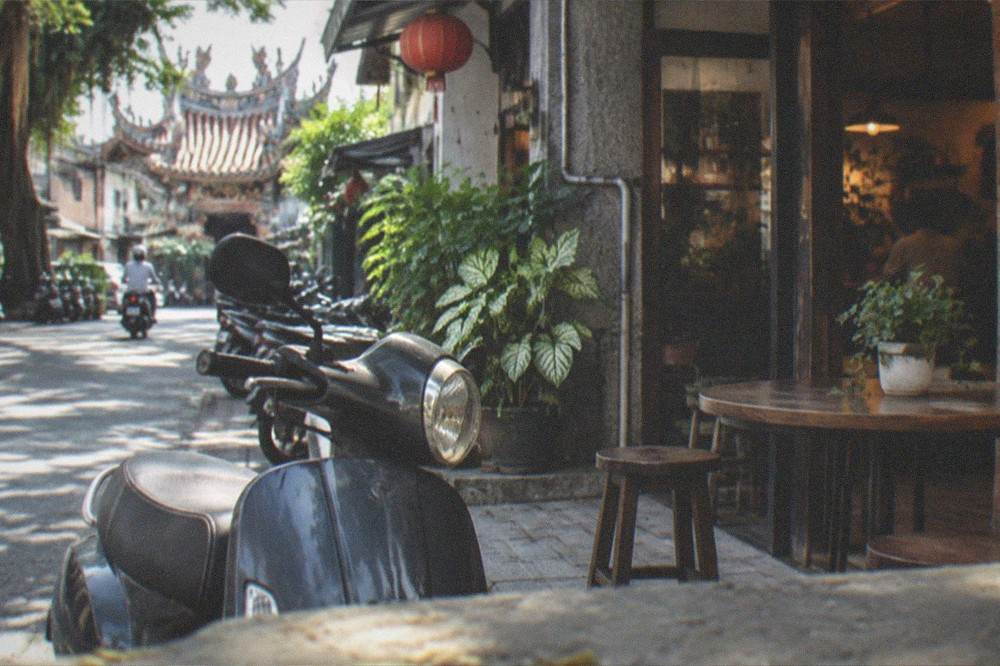
The physical setting matters more here than in most cities. The lanes around Shennong Street and the old commercial core are lined with two-story shophouses and courtyard homes, and converting one into a cafe usually means keeping the original timber frame, the courtyard or the tiled roof. The Tourism Bureau's heritage listings for the West Central District describe streetscapes that have survived largely intact, and cafe conversions are the most visible current use of those buildings. The result is that in Tainan the cafe is often the attraction: a visitor goes for the room as much as the drink.
The other half of the equation is pace. Tainan's tourism identity is built on eating slowly and walking between stops, and coffee slots naturally into the gaps. A typical local pattern, as described by the city's own food and festival calendars, is an early breakfast, a mid-morning pause, a long lunch of snacks treated as a moving feast, and an evening at a night market. Coffee occupies the mid-morning and mid-afternoon pauses, and the city's climate makes an air-conditioned cafe a genuinely necessary stop in summer rather than a luxury.
Where Are the Best Neighborhoods for Coffee in Tainan?
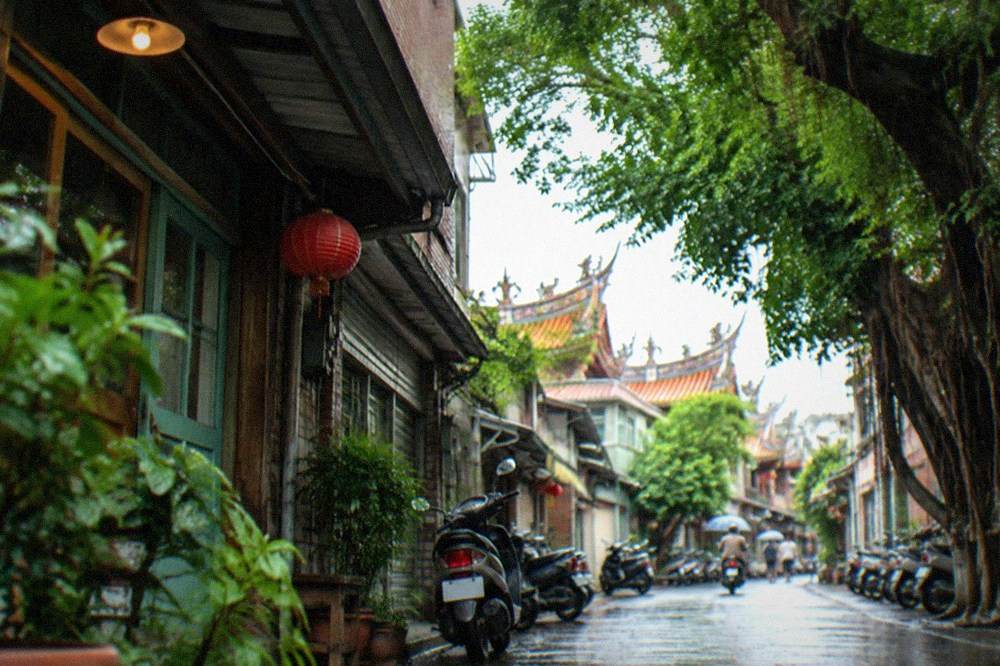
The main coffee clusters are West Central District's old lanes, the Anping heritage area, and the East District around the university and residential core, with a growing strip near the art museum. West Central District holds the densest concentration, in converted shophouses near the Confucius Temple and Chihkan Tower. Anping mixes cafes with the fort, the tree house and the old street. The East District skews newer, larger and more roastery-focused.
West Central District is where the postcard version of Tainan cafe culture lives. The streets around the Tainan Confucius Temple, which the city lists as free to enter and open 08:30 to 17:30, are a short walk from a dense band of lanes where cafes, tea houses and snack stalls share the same blocks. Chihkan Tower anchors the other end of that walk, and its verified hours, 08:30 to 21:30 daily, make it one of the few heritage sites a visitor can see after an evening coffee rather than before one. The city's own page for the tower records its Dutch-era origin in the early 1650s, when Fort Provintia was built on the site.
Anping works differently. The district drew 4,441,443 visitors in 2023 according to the Tourism Administration's dataset, ten times Chihkan Tower's 443,622, and its cafes sit inside and around the heritage quarter near Anping Old Fort and the Anping Tree House. The pattern there is courtyard seating, sea breezes and longer dwell times, with the old street and the canal providing the walk between stops. Both Anping heritage sites charge NT$70 at the gate per the city's pages, and both close in the late afternoon, 17:10 and 17:30 respectively, so Anping is a morning-to-mid-afternoon coffee neighborhood rather than an evening one.
The East District and the area around the Tainan Art Museum round out the map. The museum's own visitor page lists hours of 10:00 to 18:00 Tuesday to Sunday, with Saturday late opening to 21:00 and Monday closure, and it accepts EasyCard and iPASS at the ticket desk at NT$80 for an adult. A Saturday there pairs naturally with an evening coffee, since the museum runs two hours later than every other night of the week.
If you would rather have a guide arrange the walk between these neighborhoods, these are the tours that fit a cafe-centered day:
What Should You Order in a Tainan Coffee Shop?
Tainan's menus split between modern espresso drinks and older Taiwanese cafe staples, so the useful order depends on the shop's era. In a third-wave cafe, expect single-origin pour-overs, flat whites and locally roasted beans. In an older establishment, expect thick milk coffee, hand-drip black coffee and toast sets. Cold brew and ice drinks dominate in summer, when the city averages above 30C on most days.
The modern end of the scene behaves like any serious coffee city: light roasts, named farms, scales on the bar. What distinguishes Tainan is the older stratum, a cafe culture inherited from Japanese-era kissaten traditions that survives in a handful of long-running establishments. Those shops serve a darker, heavier style of coffee, often with a set that includes thick toast or a small cake, and they open early in a city where breakfast culture is strong. No official source publishes prices for any of this, and this guide will not guess at them.
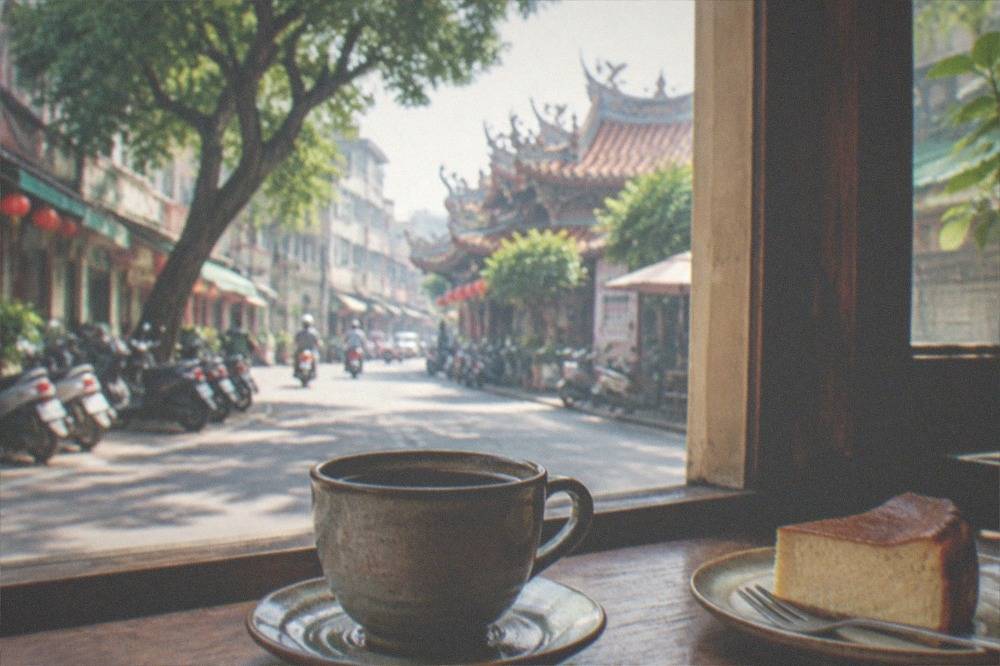
Season should drive the order more than most visitors expect. The Central Weather Administration's 1991 to 2020 normals for Tainan show 186 days a year above 30C, with April through October above 30C on most days. In August, the wettest month, 466 mm of rain falls across about 16 wet days. Practically, that means hot coffee is a December-to-February pleasure, when maxima average 23 to 24C and rain falls on fewer than four days a month, while the rest of the year belongs to iced drinks and indoor seats.
| Month | Mean max (C) | Rain (mm) | Rain days | What it means for a cafe day |
|---|---|---|---|---|
| January | 23.0 | 20.7 | 3.8 | Terrace season begins, hot drinks |
| March | 26.6 | 30.4 | 4.2 | Comfortable walking weather |
| May | 31.4 | 165.6 | 9.0 | Iced drinks, indoor seats |
| August | 32.6 | 466.1 | 15.8 | Peak rain, plan indoor cafes |
| October | 30.8 | 30.8 | 2.8 | Driest month by wet days, still hot |
| December | 24.4 | 16.2 | 3.0 | Driest month, best terrace weather |
Those figures come from the Central Weather Administration's published climate normals, and they carry the single most useful planning insight on this page: October is the sweet spot, with the fewest wet days of any month (2.8) while still averaging 30.8C maxima. A visitor choosing when to come for cafe terraces and walking should read the full Tainan weather picture, but the short version is that the dry half of the year runs October to March.
How Do Coffee Stops Fit Into a Day of Tainan Eating?
Coffee in Tainan works best as the pause between the city's food events rather than as a destination on its own, because the eating schedule is dense and the distances are short. A realistic pattern is an early beef soup breakfast, a mid-morning cafe stop in West Central District, a snack-crawl lunch, an afternoon iced coffee, and a night market evening. The city's buses make the hops free for the first 8 km with an electronic card.
The eating rhythm is the frame everything else hangs on. Tainan's famous breakfast is beef soup, served from before dawn, and the city's food pages treat Tainan beef soup, danzai noodles and coffin bread as the canonical snack trio. Between those events, a cafe stop is how locals cool down, and in a city where 186 days a year exceed 30C, the air conditioning is as much the product as the coffee.
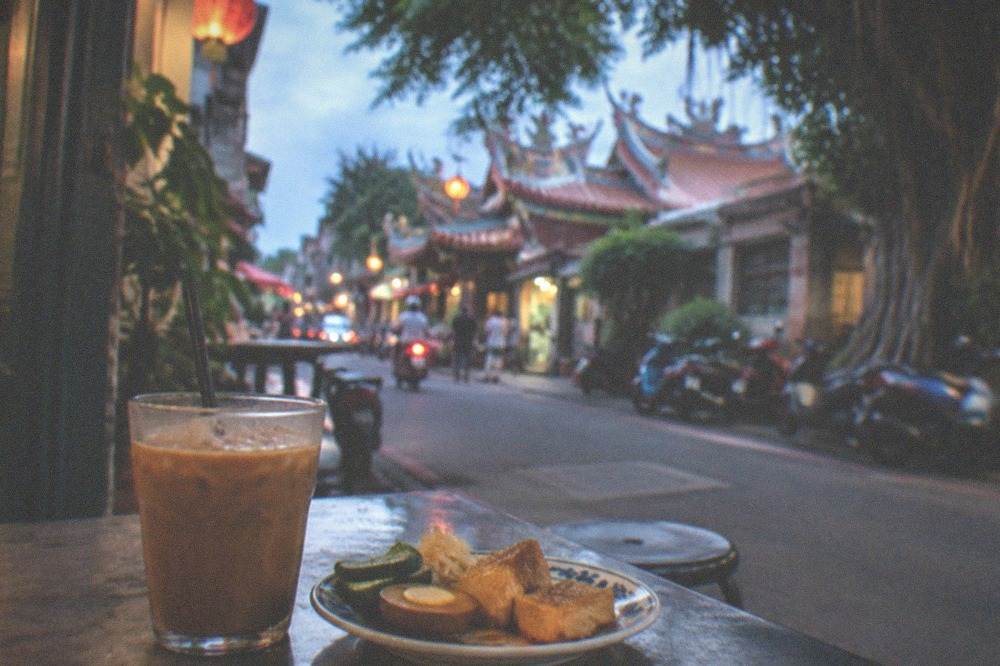
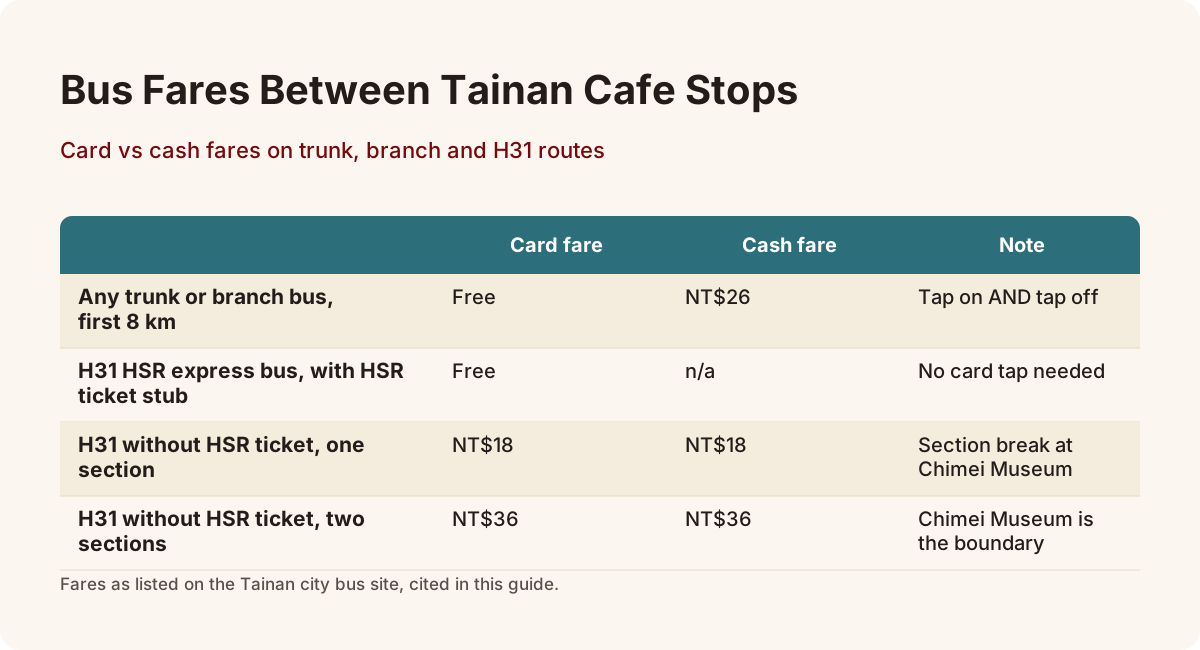
Getting between the stops is cheaper than most visitors expect. The city's own bus site states that trunk and branch routes are free for the first 8 km of travel with an electronic card, a Citizen Card, iPASS, EasyCard or iCash 2.0, and that the waiver covers the NT$26 base fare. Two conditions matter: you must tap on and tap off, and the tap off is the part visitors miss, and the policy is a 2026 calendar-year scheme rather than a permanent one. The same trip paid in cash costs NT$26. Full detail lives on the getting around Tainan page.
| Trip between cafe stops | Card fare | Cash fare | Note |
|---|---|---|---|
| Any trunk or branch bus, first 8 km | Free | NT$26 | Tap on AND tap off |
| H31 HSR express bus, with HSR ticket stub | Free | n/a | No card tap needed |
| H31 without HSR ticket, one section | NT$18 | NT$18 | Section break at Chimei Museum |
| H31 without HSR ticket, two sections | NT$36 | NT$36 | Chimei Museum is the boundary |
The H31 detail is worth knowing even for a coffee day: the shuttle's section break sits at the Chimei Museum, which means the museum sits on the shuttle route, and the museum's cafe-adjacent park makes a reasonable stop on a day that combines coffee with culture. The Chimei Museum charges NT$200 for the permanent collection at the gate, closes every Wednesday, and stops admitting at 17:00, per its own visitor page.
Which Night Markets Pair Best with an Evening Coffee?
Friday is the only night when all three big outdoor markets run, so it is the best evening for combining a coffee stop with a full market crawl. Garden Night Market opens Thursday to Sunday, Wusheng opens Wednesday, Friday and Saturday, and Dadong opens Monday, Tuesday and Friday. Siaobei Night Market is indoors and open every day, which makes it the wrong-night and wet-weather answer.
The rotation is the single most useful practical fact about Tainan evenings, and it is verified market by market from the Tainan City Government Tourism Bureau's own pages, not from the folk mnemonic. A visitor who plans a Saturday around Garden Night Market and Wusheng Night Market has two markets plus the evening hours of Chihkan Tower available, while a Wednesday visitor has Wusheng alone outdoors and Siaobei as the fallback.
| Market | Open nights | Hours | Character |
|---|---|---|---|
| Garden Night Market | Thu, Fri, Sat, Sun | 17:00 to 00:00 | Largest of the big three |
| Wusheng Night Market | Wed, Fri, Sat | 17:00 to 00:00 | Long-running local favorite |
| Dadong Night Market | Mon, Tue, Fri | 18:00 to 01:00 | Latest closing of the three |
| Siaobei Night Market | Every day, indoor | 12:00 to 00:00 | Covered, rain-proof |
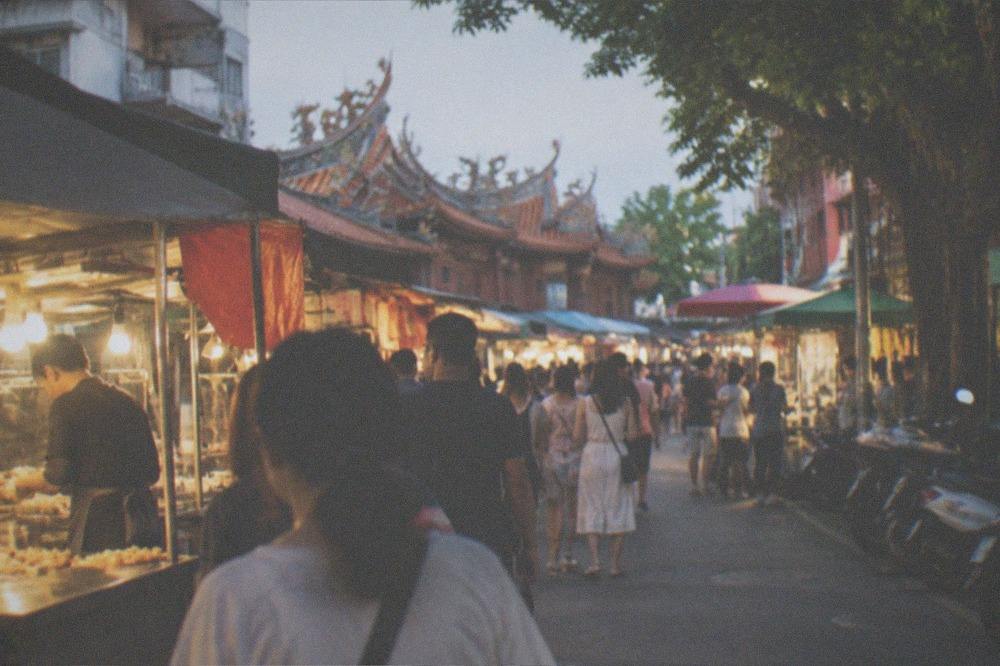
The city updates these pages, and the days do change, so check before you go. The Tainan City Market Administration's roster is the authoritative register. Locals use a seven-character rhyme to remember the rotation, but it is shorthand rather than a schedule, and against the city's current published hours it misses that Garden also runs Friday and Wusheng also runs Friday, which is why Friday is the big night.
Where does coffee fit? Dadong's 01:00 closing makes it the natural end of a late evening, and a cafe near the East District that stays open past midnight is the buffer before it. On a Thursday or Sunday, Garden's 17:00 opening means an early-evening coffee in West Central District can be walked off on the way. The full market-by-market picture, including Dadong Night Market and Siaobei Night Market, is on the Tainan night markets page.
What About Tea in a City Full of Coffee Shops?
Tainan's coffee scene sits beside an equally serious tea culture, and the two share buildings, customers and heritage streets rather than competing. The city's temple culture, its oolong traditions and its growing number of tea ceremony experiences mean a visitor can spend a morning on espresso and an afternoon on gongfu-style oolong without contradiction. Tea houses in the old lanes often occupy the same restored shophouses as the cafes.
The temple connection is not decorative. Tainan's biggest visitor draws are not the Dutch forts but its temples: the Tourism Administration's 2023 dataset puts Nankunshen Daitian Temple at 6,583,100 visitors against Chihkan Tower's 443,622, roughly fifteen times. Temple culture runs on tea, offered to guests, served at festivals, used in ritual, and the city's free-entry temples such as the Grand Matsu Temple, open 06:00 to 21:00, are places where tea is part of the furniture. A visitor building a Tainan temple trail day will pass more tea than coffee.
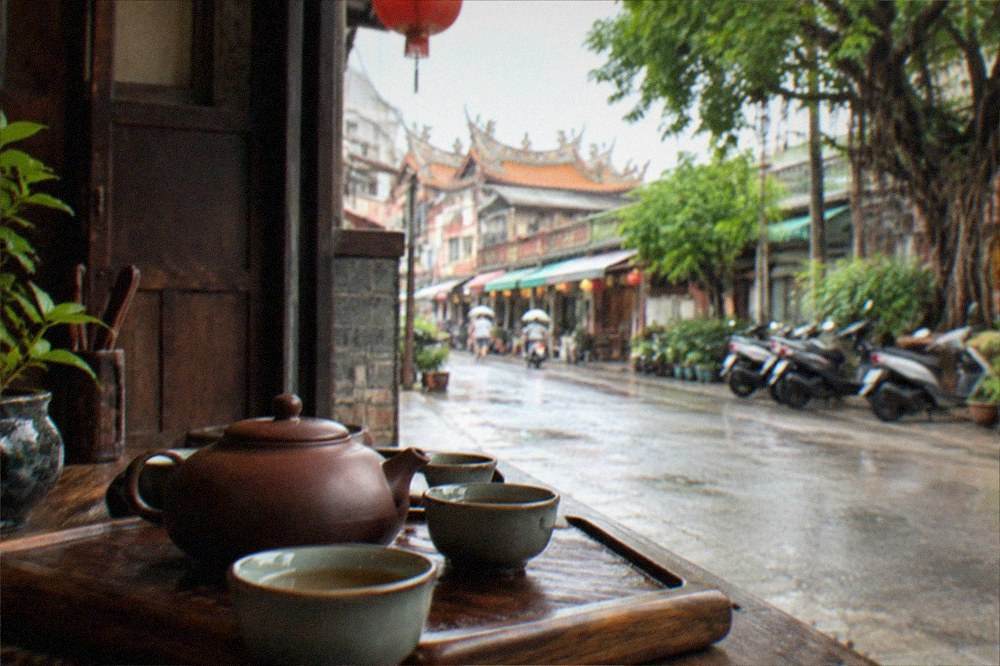
For a visitor who wants the tea side explained rather than improvised, a guided ceremony is the bookable answer. A structured oolong session covers the brewing method, the vessels and the etiquette in about ninety minutes, which is time well spent before wandering the old lanes independently. The caveat on numbers applies here as everywhere on this site: no tasting note on this page comes from anybody who has drunk anything in Tainan, because nobody writing Tainan Travel Guide has been there. What is checkable is the schedule, the price of entry to the surrounding sites, and the structure of the experiences on offer.
What Practical Tips Make a Tainan Coffee Day Easier?
Carry cash for small cafes and night market stalls, because cards are reliable at hotels and chains but not everywhere, and no official source publishes a citywide card-acceptance rule. English signage is improving but not universal in older lanes, so screenshot addresses in Chinese characters. City buses are free for the first 8 km with an EasyCard or iPASS, tap on and tap off, and typhoon risk concentrates in the late summer months, when August alone averages 466 mm of rain.
Payment is the first practical thing to get right. The honest, sourced position is that cash remains essential at night markets, street stalls and many small independent cafes, while cards work at hotels, department stores and convenience stores. Convenience store ATMs are the standard withdrawal point. Nothing in the verified facts file publishes an official card-acceptance policy for small businesses, so the safe planning assumption is a mix of both.
Language comes second. The city runs bilingual signage programs and its tourism pages are published in English, but the older the lane, the less reliable the English. The English in Tainan page covers what to expect; the coffee-specific advice is to save cafe addresses in Chinese characters, because a taxi driver or a local will read an address faster than a romanised name.
Season and storms are the third. Typhoon risk concentrates in the late summer months, and the verified rainfall table shows the same shape independently: 165.6 mm in May, 370.5 mm in June, 374.6 mm in July, 466.1 mm in August. When Tainan's city government declares a typhoon day, attractions and transport may suspend, and the Tainan Art Museum states on its own hours page that it closes when the city announces a work suspension. The Taiwan typhoon season page has the full picture, and the best time to visit Tainan page ranks the months.
For a day that stitches the cafes, the snacks and the heritage together without you doing the logistics yourself, a full-day guided tour is the strongest option. It covers the old lanes, the temples and the food stops in one organized sweep, leaving the evenings free for a market and a final coffee.
Between that kind of structured day and a fully independent crawl, there is a middle path worth knowing about: pick one neighborhood per half-day, anchor it to one paid site such as Chihkan Tower or the Chimei Museum, and let the cafes fill the gaps. The trio below covers the three most useful ways to spend the walking hours.
Common Questions About Tainan Coffee Shops
Does Tainan have good coffee shops?
Yes. Tainan has a dense independent cafe scene concentrated in restored heritage buildings, particularly in West Central District's old lanes and around Anping. The city's combination of low-rise historic architecture, a slow food-centered pace and a strong breakfast culture supports small roasters and espresso bars alongside older Taiwanese-style cafes.
Where should I drink coffee in Tainan?
Start in West Central District around the Confucius Temple and Chihkan Tower, where converted shophouses hold the densest cluster of cafes. Anping pairs coffee with the fort, the tree house and the old street, best as a morning-to-afternoon plan since its heritage sites close in the late afternoon. The East District and the area around the Tainan Art Museum hold newer, larger roasteries.
How much does coffee cost in Tainan?
No official source publishes coffee prices in Tainan, and this site does not print unverified figures. Costs at independent cafes are broadly comparable to other Taiwanese cities and generally lower than in Taipei. Check the menu at each cafe, or treat any price you see on a booking platform as a listing rather than a guaranteed fact.
Can I combine coffee shops with Tainan's street food in one day?
Yes, and that is the natural pattern. Tainan's eating day runs from early beef soup through snack-crawl lunches to night market evenings, and coffee fills the mid-morning and mid-afternoon gaps. City buses are free for the first 8 km with an electronic card, which makes hopping between food neighborhoods and cafe districts realistic.
Which night market night works best with an evening coffee?
Friday, when Garden, Wusheng and Dadong all run. Dadong closes latest, at 01:00, so it pairs with a late cafe stop beforehand. On a Wednesday only Wusheng opens outdoors, and Siaobei, which is indoors and open daily, is the wet-weather or wrong-night fallback. Always check the city's current published days before you go.
Is Tainan a tea city or a coffee city?
Both. Tainan's temple and festival culture runs on tea, and its visitor numbers are led by temples, with Nankunshen Daitian Temple drawing 6,583,100 visitors in 2023 against Chihkan Tower's 443,622. The coffee scene has grown alongside the tea tradition, and the two often share the same restored shophouses in the old lanes.
The through-line of all of this is that Tainan's coffee culture is not a separate attraction to be scheduled, it is the connective tissue of a food city. The cafes occupy the buildings the city preserved, they cool you down in the six months of the year when the temperature tops 30C on most days, and they fill the hours between a dawn bowl of beef soup and a midnight night market plate. Plan around the verified anchors, the free first 8 km of bus travel, the Friday triple-market night, Chihkan Tower's unusual 21:30 closing, and the October-to-March dry season, and the coffee will take care of itself.