Is It Rainy Season in Taiwan Now?
Taiwan's rainy season is a summer event, and the verified climate normals for Tainan show exactly when the rain falls, how much, and what it means for a trip.
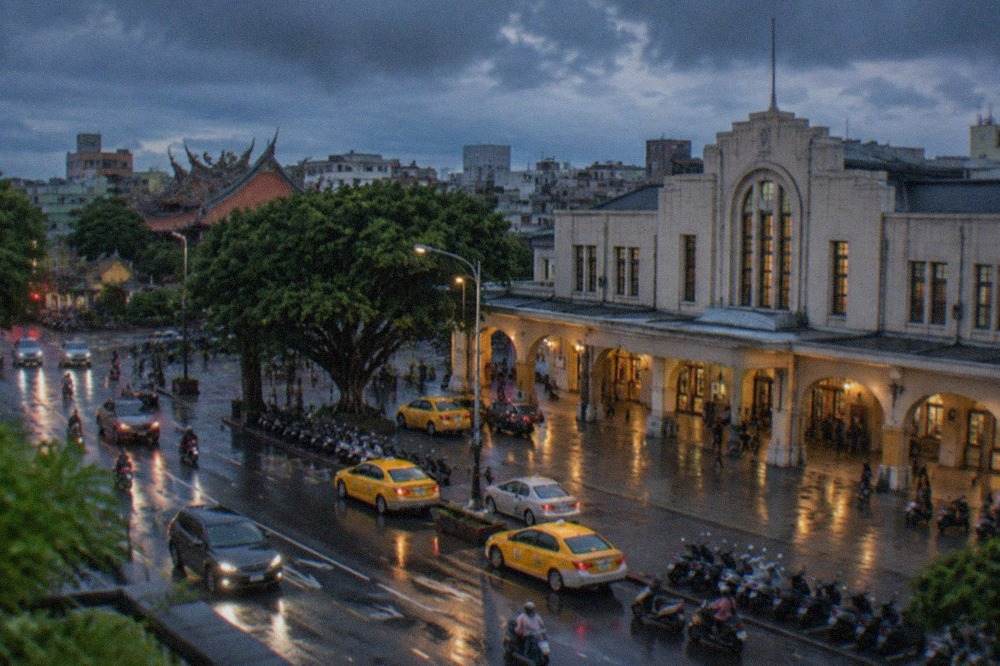
Taiwan does not have one continuous rainy season the way some tropical destinations do. The island's rain is heavily concentrated in the summer half of the year, and the pattern is stark enough that the question "is it rainy season now?" has a genuinely different answer depending on whether the calendar says June or January. The Central Weather Administration's published climate normals for station 467410 in Tainan, covering the period 1991 to 2020, show a city where close to three-quarters of the annual rainfall arrives between May and September, and where the winter half of the year is dry, warm and sunny.
This page works through those numbers for Tainan, in Taiwan's dry and sunny southwest, because that is where this site's reporting is grounded. The same broad shape holds across much of the western plain, though the east coast and the mountains have their own patterns. If the trip is months away, the tables below tell you what to expect; if it is days away, the Central Weather Administration publishes the live forecasts that matter more than any long-run average.
Is It Rainy Season in Taiwan Now?
Whether it is rainy season in Taiwan now depends almost entirely on the month: from May to September it is, with June, July and August the wettest stretch, while from October through March the southwest around Tainan is dry, and December brings only 16.2 mm of rain across about three wet days. There is no single month-long monsoon; the rain arrives in summer bursts and the winter is the dry half of the year.
That answer is drawn from the Central Weather Administration's climate normals for Tainan, the official long-run averages for station 467410, covering 1991 to 2020. August is the wettest month on the record, with 466.1 mm of rain falling across an average of 15.8 wet days. December sits at the other end with 16.2 mm across 3.0 wet days, which is less rain in an entire month than August delivers in a single heavy afternoon.
The jump between spring and summer is abrupt rather than gradual. April averages 69.8 mm of rain, May rises to 165.6 mm, and June leaps to 370.5 mm. That steep step is the pattern travelers notice on the ground: the dry, comfortable stretch ends somewhere in late April or early May, and by June the afternoon downpour is a regular feature of the weather rather than an exception.
How Much Rain Does Each Month Bring to Tainan?
Tainan averages 1,760.6 mm of rain a year, but the distribution is extreme: August alone brings 466.1 mm across 15.8 wet days, while December brings 16.2 mm across 3.0. May to September accounts for close to three-quarters of the annual total, and October has fewer wet days than any other month, just 2.8, while still averaging daytime maxima of 30.8C.
Here is the full month-by-month record from the Central Weather Administration's normals for station 467410, Tainan, 1991 to 2020:
| Month | Mean temp C | Mean max C | Rain mm | Wet days |
|---|---|---|---|---|
| January | 17.9 | 23.0 | 20.7 | 3.8 |
| February | 18.9 | 24.0 | 21.6 | 4.1 |
| March | 21.6 | 26.6 | 30.4 | 4.2 |
| April | 24.9 | 29.3 | 69.8 | 5.9 |
| May | 27.4 | 31.4 | 165.6 | 9.0 |
| June | 28.8 | 32.4 | 370.5 | 12.1 |
| July | 29.3 | 33.0 | 374.6 | 13.0 |
| August | 28.9 | 32.6 | 466.1 | 15.8 |
| September | 28.5 | 32.4 | 170.5 | 8.5 |
| October | 26.3 | 30.8 | 30.8 | 2.8 |
| November | 23.4 | 28.1 | 23.8 | 2.4 |
| December | 19.6 | 24.4 | 16.2 | 3.0 |
Two things in that table are worth pausing on. First, the rain does not mean cold: even the wettest months average maxima above 30C, and the annual mean temperature is 24.6C. Summer rain in Tainan is a heat-and-humidity event, arriving in heavy afternoon bursts rather than as a steady drizzle. Second, October is the hidden gem of the calendar. It has the fewest wet days of any month, 2.8, while still averaging 30.8C maxima, and the city logs 2,185 hours of sunshine a year overall. October to March is the dry, comfortable half of the year.
The table also explains a fact that surprises many visitors planning around European or North American seasons: Tainan's peak visitor months are January and February, driven by temple pilgrimage and Lunar New Year. That is the opposite of the beach-resort instinct, and it matches the climate record exactly. Winter here is not the wet season; it is the season when the weather is at its most reliable. For more on the wet half of the year, see our guide to rainy season in Tainan.
What About Typhoons in Taiwan?
Typhoon risk in Taiwan concentrates in the late summer months, and the rainfall table above shows the same shape independently: June, July and August are the three wettest months on Tainan's record. When a typhoon approaches, the city government may announce a work suspension, and venues close, as the Tainan Art Museum states on its own hours page. Typhoon days are declared locally, not nationally.
A typhoon day, called a typhoon holiday locally, is declared by the city or county government rather than by any national body. When Tainan declares one, schools and many offices close, and attractions and transport may suspend service. There is a verified, concrete example of the consequence: the Tainan Art Museum states on its own hours and tickets page that it closes when the Tainan City Government announces a suspension of work for a typhoon or earthquake. That is the mechanism to watch, and the Central Weather Administration's live warnings are the authoritative source while a storm is actually approaching.
What the long-run record supports is the concentration of risk in the late summer. This site does not publish typhoon frequency statistics, because none were verified against an official source, but the rainfall table stands on its own: June, July and August bring 370.5, 374.6 and 466.1 mm respectively, three to four times the September figure and more than twenty times the December one. The months when a storm is most likely to disrupt a trip are the same months when ordinary rain is heaviest. Our Taiwan typhoon season guide covers the practical side in more depth.
If the forecast is already wet, the planning question changes from "what should we see outdoors" to "what still works indoors", and Tainan answers that well. The city's museums, temples and tea houses are the natural wet-weather spine of a day, and the Tainan rainy day itinerary is built around exactly that problem. Siaobei Night Market is another answer worth knowing: it is indoors and open every day from 12:00 to 00:00, which makes it the wrong-night and wet-weather option among the city's night markets.

Does the Rain Change What You Can Do in Tainan?
Mostly no: Tainan's rain falls in short, heavy summer bursts rather than all-day drizzle, and the city's main indoor options, including the Chimei Museum at NT$200, the National Museum of Taiwan History, and the covered Siaobei Night Market, keep a day moving regardless of weather. The one planning rule that matters is checking museum closed days before you go.
The Chimei Museum's permanent collection costs NT$200 at the gate and takes last entry at 17:00, but it is closed every Wednesday, so a wet Wednesday needs a different plan. The National Museum of Taiwan History is closed Mondays. The Tainan Art Museum is closed Mondays too, though it stays open until 21:00 on Saturdays, which makes it one of the few indoor sights that works after dinner. Those closed-day rules, not the rain, are the constraints that actually break itineraries.
The rain itself is easier to work around than visitors expect. Summer downpours in the record arrive as wet days concentrated in June through August, but even August averages 15.8 wet days, which leaves roughly half the month dry, and the temperatures stay above 30C on most days from April to October. The practical advice is timing rather than cancellation: do the outdoor sights, Anping and the old streets, in the morning, and let the museums, temples and tea houses absorb the afternoon. For whether the city rewards the trip at all, our answer on whether Tainan is worth visiting is a separate question with its own evidence.
The tea ceremony is the example worth singling out, because it is the purest rainy-day product in the roster: a 90-minute indoor oolong ceremony that is entirely unchanged by the weather outside. The Tainan Travel Guide covers the full range of what the city offers across every season.
When Is the Best Time to Visit Tainan If You Want to Avoid Rain?
October to March is the dry, comfortable half of the year in Tainan, and October is the standout: it has the fewest wet days of any month, 2.8, while still averaging 30.8C daytime maxima. November averages just 23.8 mm of rain. If the goal is minimal rain and warm weather, the autumn and winter months beat the summer tourist instinct decisively.
The trade-off is worth naming honestly. Winter in Tainan is dry but cooler, with January maxima averaging 23.0C and the mean temperature at 17.9C, which is mild by most standards rather than beach-hot. Summer is hot and wet, but it is also mango season, with the Yujing harvest running June to July, and the Qigu Seafood Festival falling July to August. Some visitors will take the rain for the festivals; others will take October's near-zero rain days and give up nothing but a few degrees. Both are defensible readings of the same table.
For a trip already booked inside the wet months, the honest position is that the rain is a scheduling problem, not a trip-ending one. The downpours are heavy and short, the indoor infrastructure is strong, and the city's peak visitor season, January and February, falls in the dry half anyway. The best time to visit Tainan question and the is there a typhoon in Taiwan now question are the two related pages worth reading next.
Common Questions About Rainy Season in Taiwan
Is It Rainy Season In Taiwan Now?
It depends on the month. From May to September, yes: that stretch carries close to three-quarters of Tainan's annual 1,760.6 mm of rain. From October to March, no: December brings only 16.2 mm across about three wet days, and October has the fewest wet days of any month on the 1991 to 2020 record.
What Is The Wettest Month In Tainan?
August, with 466.1 mm of rain across an average of 15.8 wet days, according to the Central Weather Administration's climate normals for station 467410. June and July follow closely, at 370.5 mm and 374.6 mm respectively.
Does It Rain All Day In Taiwan's Rainy Season?
Generally no. The verified record shows the rain concentrated in summer wet days, but even August averages 15.8 wet days, leaving roughly half the month dry, and temperatures stay above 30C on most days. Summer rain in Tainan typically arrives as heavy bursts rather than steady all-day rain.
When Is Typhoon Season In Taiwan?
Typhoon risk concentrates in the late summer months, and the rainfall record shows the same shape independently, with June, July and August the three wettest months. When a storm approaches, typhoon days are declared by the city government, not nationally, and the Tainan Art Museum's own hours page states it closes when the city announces a work suspension.
What Is The Driest Month In Tainan?
By wet days, October, at 2.8, and by rainfall volume, December, at 16.2 mm. October is the stronger pick overall because it combines the fewest wet days with daytime maxima still averaging 30.8C.
Should I Cancel A Tainan Trip In The Rainy Season?
No. The rain is a scheduling problem, not a trip-ending one. Tainan's museums, temples, tea houses and the indoor Siaobei Night Market keep days moving in wet weather, and the closed-day rules of the major museums, Wednesday for the Chimei and Monday for others, matter more to an itinerary than the forecast does.
The month on the calendar answers this question better than any forecast. If it falls between May and September, plan for rain and build the afternoons indoors; if it falls between October and March, the verified record says the southwest of Taiwan is in its dry, sunny half of the year, and the question answers itself.