Typhoon Season in Tainan
Tainan's typhoon risk is real but concentrated: the verified rainfall record shows a dry, comfortable half of the year from October to March, and a wet late summer. Here is what the numbers say, what closes when the city declares a typhoon day, and how to plan a trip around both.
Short answer
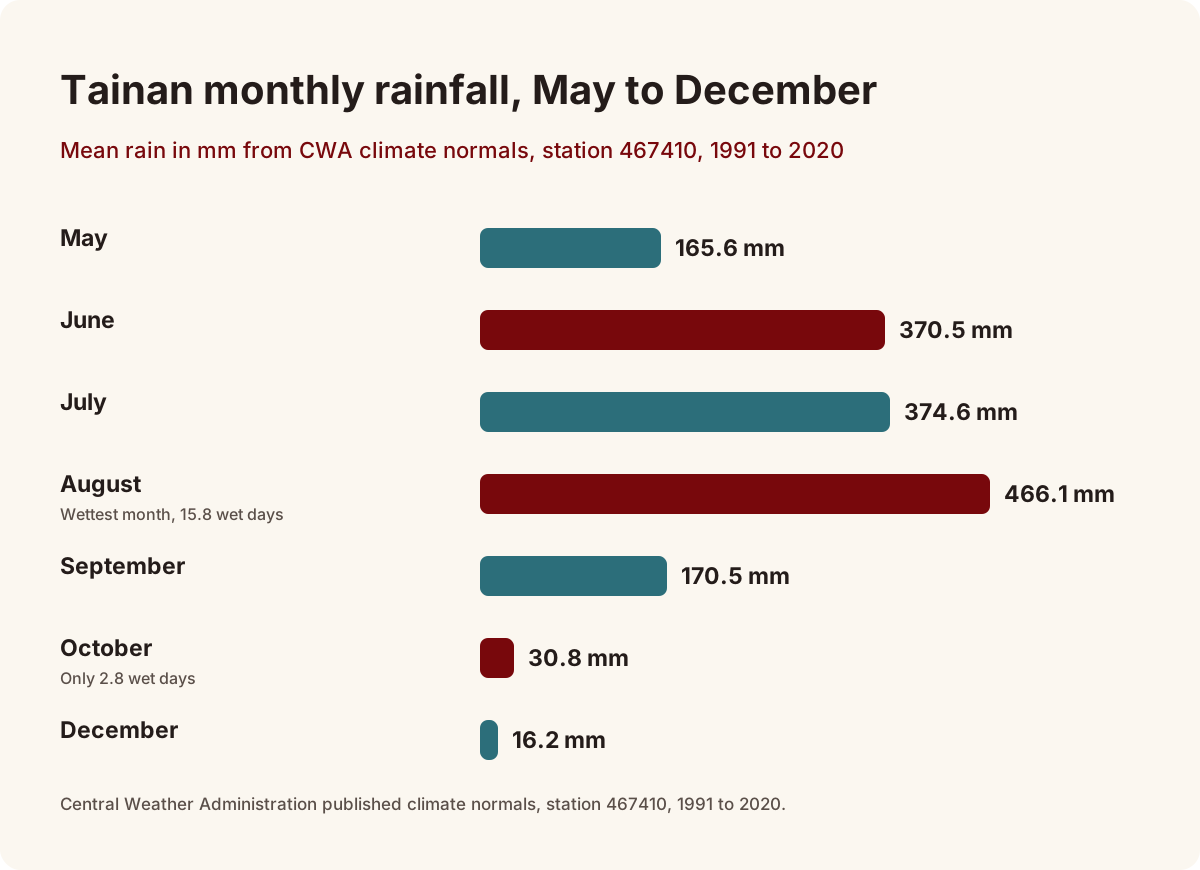
Typhoon risk in Tainan concentrates in the late summer months, and the rainfall record proves it: August alone averages 466.1 mm of rain across 15.8 wet days, while December averages 16.2 mm across 3.0. October to March is the dry, comfortable half of the year.
Tainan sits on Taiwan's southwest coast, facing the Taiwan Strait, and every year the same question arrives from travelers planning summer trips: how badly does typhoon season affect the city? The honest answer is that the risk is real but sharply concentrated. The Central Weather Administration's published climate normals for Tainan, covering 1991 to 2020, show a city whose rain falls almost entirely in one half of the year, and the typhoon risk follows exactly the same shape. This guide sets out what the verified numbers say, what actually happens in the city when a typhoon arrives, and how to build an itinerary that survives a wet day. For the broader rain picture, see our companion page on the rainy season in Tainan, and for month-by-month planning, the best time to visit Tainan.
When Is Typhoon Season in Tainan?
Typhoon risk in Tainan concentrates in the late summer months, with the peak danger window in July, August and September. No official source publishes a fixed start and end date, so the honest planning frame is the rainfall record: nearly three-quarters of Tainan's annual 1,760.6 mm of rain falls between May and September, and August alone averages 466.1 mm across 15.8 wet days.
Taiwan's typhoon threat is a national reality, not a Tainan quirk, and the storms that reach the island form in the western Pacific and track towards it through the warm months. This site does not publish a frequency statistic, because none was verified on an official page, and an invented number would be worse than none. What is verified is the pattern on the ground: the Central Weather Administration's 1991 to 2020 normals for Tainan station 467410 show rain rising steeply from April into June, peaking in August, and collapsing by October.
The practical reading is simple. A trip in late July or August carries the highest chance of encountering a storm system or its outer bands. A trip in October through March carries very little. Between those two halves sits a shoulder, and the numbers below show exactly where the line falls.

The table below is the verified monthly picture, taken from the Central Weather Administration's published climate normals for station 467410, covering the 30 years from 1991 to 2020.
| Month | Mean max (C) | Rain (mm) | Wet days |
|---|---|---|---|
| January | 23.0 | 20.7 | 3.8 |
| February | 24.0 | 21.6 | 4.1 |
| March | 26.6 | 30.4 | 4.2 |
| April | 29.3 | 69.8 | 5.9 |
| May | 31.4 | 165.6 | 9.0 |
| June | 32.4 | 370.5 | 12.1 |
| July | 33.0 | 374.6 | 13.0 |
| August | 32.6 | 466.1 | 15.8 |
| September | 32.4 | 170.5 | 8.5 |
| October | 30.8 | 30.8 | 2.8 |
| November | 28.1 | 23.8 | 2.4 |
| December | 24.4 | 16.2 | 3.0 |
Read the jump from April to June: 69.8 mm becomes 370.5 mm in two months. That steep climb is the arrival of the wet half of the year, and typhoon systems are part of what drives it. No official statement on a plum rain season was verified, so this guide describes the pattern rather than naming a season.
How Much of Tainan's Rain Comes from Typhoons?
No verified breakdown separates typhoon rain from other rain in Tainan, so no percentage can honestly be printed. What the record does show is concentration: August averages 466.1 mm of rain, more than any other month, and December averages 16.2 mm, meaning a visitor in the dry half of the year sees a fraction of the water a visitor in August sees.
The distinction matters for planning. Not every wet summer day in Tainan is a typhoon. Much of the June rainfall, for example, arrives as prolonged frontal rain rather than a named storm, and a frontal rain day closes nothing: temples stay open, indoor markets stay open, and the city carries on. A typhoon day is different, because it is a declared administrative event, not just weather.
The two situations call for different plans. Ordinary summer rain means an umbrella, covered alternatives, and flexibility about boat trips on the lagoon. A declared typhoon day means closures and suspended transport, covered in the next section. If you are checking conditions in real time while packing, our Tainan weather page collects the practical details, and the question is there a typhoon in Taiwan now covers the live-checking habit.
One planning note worth making early: the wet half of the year is also the hot half. The same normals show 185.8 days a year above 30C in Tainan, and from April to October the city is above 30C on most days. A typhoon-season trip is not just a wet trip, it is a hot and humid one, and the dry-season alternative trades storm risk for milder, sunnier days.
If a summer trip is already booked, do not cancel it. The odds on any single week are still decent, and Tainan has enough indoor depth, from museums to tea houses to covered night markets, that a wet day does not have to be a lost day.
What Happens in Tainan When a Typhoon Hits?
When the Tainan City Government announces a suspension of work for a typhoon, museums and public venues close, schools shut, and many attractions and transport services suspend operations for the duration. The Tainan Art Museum states on its own hours page that it closes when the city declares a typhoon or earthquake work suspension, which is a verified, concrete example of the rule.
That museum line is worth dwelling on, because it shows how the system works. A typhoon day in Taiwan, sometimes called a typhoon holiday, is declared by the local city or county government, not nationally. When Tainan declares one, offices and schools close, and public venues follow. The Tainan Art Museum's own hours and tickets page spells this out for its own building, and the same logic applies across the city's public sites.
What stays open is the private, covered economy: convenience stores usually keep running until the wind makes it unsafe, hotels keep feeding guests, and indoor commercial spaces generally operate with reduced staff. The open-air attractions are the casualties. Boat services on the lagoon coast, salt flat viewpoints, old street wandering and temple courtyards all become either closed or genuinely unpleasant and unsafe.

| Situation | What it means for your day |
|---|---|
| Ordinary summer rain | Everything open; umbrellas and covered plans; boat trips may pause for conditions |
| Typhoon watch or warning issued | Check the Central Weather Administration and city announcements; most venues still open until a suspension is declared |
| City declares a work suspension | Museums and public venues close, schools shut, transport may suspend, outdoor sites are off |
| Day after the storm | Some cleanup delays possible; indoor sites reopen as conditions allow |
The single most useful habit is checking the city government's announcements and the weather administration's warnings each morning of a typhoon-season trip, rather than assuming. The declaration is the trigger, and it can come the evening before or the morning of.
Is It Safe to Visit Tainan During Typhoon Season?
Yes, in the sense that typhoon-season travel to Tainan is manageable with basic preparation, and the risk on any given day is low. Taiwan's warning system is well developed, declarations come before the worst weather, and the practical dangers are avoidable by staying indoors during a declared suspension and off coastal and exposed areas while a storm passes.
The honest framing is that the risk is not evenly spread. A three-day trip in August has a real chance of overlapping a storm system. A three-day trip in November has very little. Travelers with fixed dates in the wet half of the year should build slack into itineraries, keep one flexible day, and accept that an outdoor highlight might swap with an indoor one.
The safety rules during an actual storm are unglamorous and effective: stay off the coast, stay away from rivers and drainage channels, do not ride a scooter in high wind, and treat a declared suspension as a full stop on outdoor plans. Coastal sightseeing spots around Qigu and the lagoon are exactly the places to avoid, because storm surge and wind hit open flat coastline hardest.
For travelers who want cultural depth that does not depend on the sky, an indoor experience is worth booking ahead. A tea ceremony is a natural fit for a typhoon-season trip: it runs inside, it lasts about an hour and a half, and it fills a wet afternoon with something that is not weather-dependent.
What Can You Do in Tainan on a Typhoon Day?
On a declared typhoon day the realistic options are indoor ones: your hotel, convenience stores, covered commercial spaces, and any venue that has not suspended operations. Before a suspension is declared, and on ordinary rain days, the city's museums, the indoor Siaobei Night Market, tea houses and department stores all keep the day usable.
The covered night market is the standout. Siaobei Night Market is indoors and open every day from 12:00 to 00:00, which makes it the wet-weather and wrong-night answer to Tainan's rotating outdoor market schedule. The big outdoor markets, Garden, Wusheng and Dadong, run on fixed nights, and their open-air stalls are no fun in driving rain.
| Venue | Typhoon-day suitability | Notes |
|---|---|---|
| Siaobei Night Market | Good on rain days | Indoor, open daily 12:00 to 00:00; closed only if a suspension halts everything |
| Chimei Museum | Good on rain days | Closed Wednesdays, so check the day as well as the weather |
| Tainan Art Museum | Good on rain days | Closed Mondays; Saturdays open to 21:00 |
| National Museum of Taiwan History | Good on rain days | Closed Mondays; check its own notices before a visit |
| Outdoor markets and old streets | Poor | Open-air; empty or shut in heavy rain and wind |
| Lagoon boat trips | Stop in bad weather | Departures depend on conditions on the coast |
A rain day without a declared suspension is a food day. Tainan's food culture is the city's core attraction, and a lot of it is under roofs: beef soup shops, danzai noodle counters, coffin bread bakeries. Our Tainan food guide and the individual pages on beef soup, danzai noodles and coffin bread map the classics, and a guided walk ties them together without you standing in the rain wondering where to go next.
How Do Typhoon Days Affect Travel to and Around Tainan?
A declared typhoon day can suspend trains, buses and flights, and the High Speed Rail runs extra contingency schedules when a storm approaches, so the safe plan is to assume disruption on the storm day itself and to avoid traveling that day. The structural fact to know in advance is that Tainan's HSR station sits at Shalun in Guiren District, outside the old city, so every arrival involves a transfer that a suspension would also affect.
Getting to Tainan is covered in detail on our Taipei to Tainan, Kaohsiung to Tainan and Taiwan High Speed Rail pages, and the airport picture is on the Tainan airport page. The typhoon-season addition to all of them is the same: build a buffer. If a storm is forecast for your transfer day, move the transfer a day early or a day late rather than betting on a train running through the middle of it.
Inside the city, the buses are the main everyday tool, and the city's own bus site documents the fare structure: the first 8 km of trunk and branch routes is free with an electronic card, tap on and tap off, for the 2026 calendar year, and the cash fare for the same trip is 26. Our getting around Tainan page collects the full picture, including the H31 shuttle from the HSR station that is free for rail passengers showing a ticket stub.

Day tours into the coast and countryside are the other thing a storm takes off the table. A trip built around Qigu Salt Mountain, Chihkan Tower and Anping needs a clear day to be worth the drive, and operators reschedule or cancel when the coast is under a warning. Booking one for the day after a forecast storm, rather than the day of, is the standard adjustment.
Which Months Are Best for Avoiding Typhoons in Tainan?
October to March is the dry, comfortable half of the year in Tainan and carries the lowest typhoon risk. October is the standout: it averages fewer wet days than any other month, 2.8, while still averaging 30.8C maxima, so it delivers near-summer warmth with almost none of the rain. December and January are cooler and similarly dry.
The numbers behind that recommendation come straight from the normals. December's 16.2 mm of rain across 3.0 wet days is the year's floor. October's 2.8 wet days is the year's lowest count. Against that, August's 466.1 mm across 15.8 wet days is the ceiling, and the months either side of it, June and July, are not far behind.
There is a trade-off, and it should be stated plainly. The wet half of the year is when several of Tainan's seasonal events happen, including the Qigu Seafood Festival in July and August and the dragon boat championship in June. Travelers who want those events accept storm risk. Travelers who want the safest weather window choose October through March and get the city's temples, old streets and food at their most comfortable.

| Period | Rain character | Typhoon risk | Planning advice |
|---|---|---|---|
| October to March | Dry, 16 to 31 mm per month | Lowest | Best window for a first visit; October is warm and the driest by wet days |
| April to May | Rain rising, 69.8 to 165.6 mm | Low to moderate | Shoulder season; pleasant but watch forecasts |
| June to September | Wet, 170.5 to 466.1 mm | Highest | Build slack, keep an indoor day, book flexible options |
| Late July to September | Peak wet, August worst | Highest | Same as above, plus avoid the coast on warning days |
Common Questions About Typhoon Season in Tainan
When is typhoon season in Tainan?
Typhoon risk concentrates in the late summer months, with July, August and September the peak. No official source publishes a fixed start and end date, so plan on the rainfall record instead: nearly three-quarters of Tainan's annual rain falls between May and September.
Does it rain all day in Tainan during typhoon season?
No. Even in August, the wettest month, the climate normals average 15.8 wet days across the month, so roughly half the days stay dry. When rain does come it can be heavy, but all-day rain for days on end is not the norm.
What closes in Tainan on a typhoon day?
When the Tainan City Government declares a work suspension, public venues close, schools shut and transport may suspend. The Tainan Art Museum states on its own hours page that it closes for a declared typhoon or earthquake suspension, and the same rule applies across the city's public sites.
Is Tainan worth visiting in summer despite typhoons?
Yes, with preparation. Summer trips get hot weather, seasonal festivals and the mango season, but they also carry the highest storm risk. Keep a flexible day, book indoor alternatives such as museums and tea houses, and check the weather administration's warnings each morning.
What is the driest month in Tainan?
December has the lowest rainfall, 16.2 mm across 3.0 wet days. October has the fewest wet days, 2.8, while still averaging 30.8C maxima, which makes October the best combination of dry, warm weather in the city.
Do trains to Tainan stop for typhoons?
Services can be suspended or run on contingency schedules when a storm hits, so avoid planning a long transfer on the storm day itself. The other thing to know in advance is that Tainan's HSR station is at Shalun in Guiren District, outside the old city, so every arrival involves a connection that disruption would also affect.
The short version of all of this: typhoon season in Tainan is a late-summer story, the verified rainfall table tells you exactly where the risk sits, and the city's indoor life, from covered markets to museums to tea houses, means a wet day is an inconvenience rather than a ruined trip. Pick October to March for the safest window, build slack into a summer itinerary, and treat a declared typhoon day as the signal to be indoors. More on planning around the weather, including month-by-month recommendations, is in our best time to visit Tainan guide, and this Tainan Travel Guide page is part of a full set covering transport, food and every major district of the city.