Great South Gate
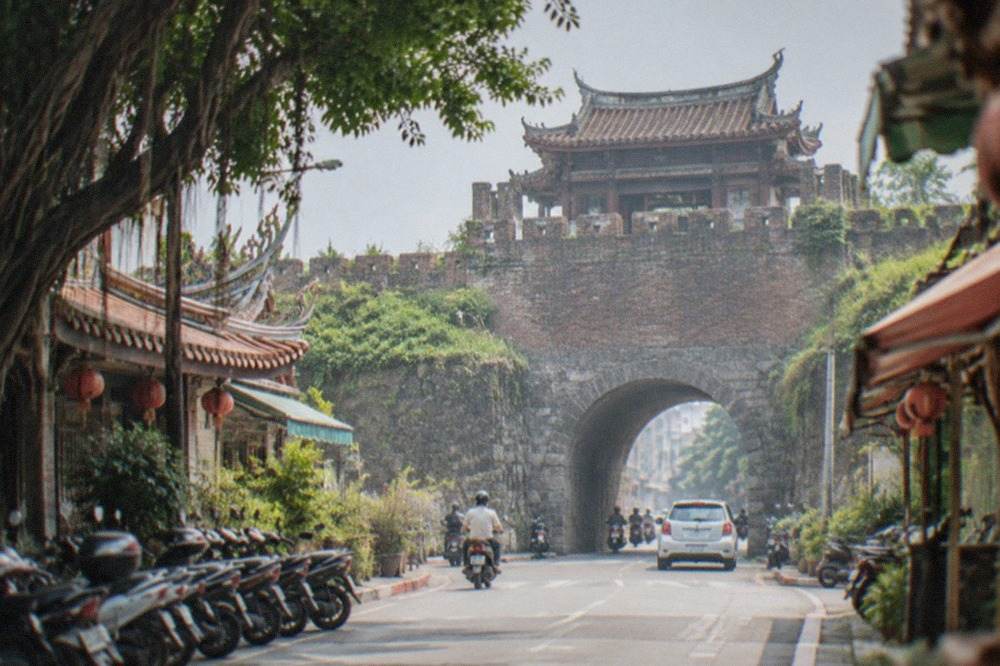
Tainan was Taiwan's capital for more than two centuries, until the late nineteenth century, and the Great South Gate is one of the few pieces of the wall that once enclosed that capital still standing where travelers passed through it.
Short answer
The Great South Gate is a surviving gate of Tainan's Qing-era city wall, best reached on the city's free-for-8-km bus network and best paired with the Confucius Temple and Chihkan Tower in the same walk.
Great South Gate, Tainan: The Old City's Surviving Southern Entrance
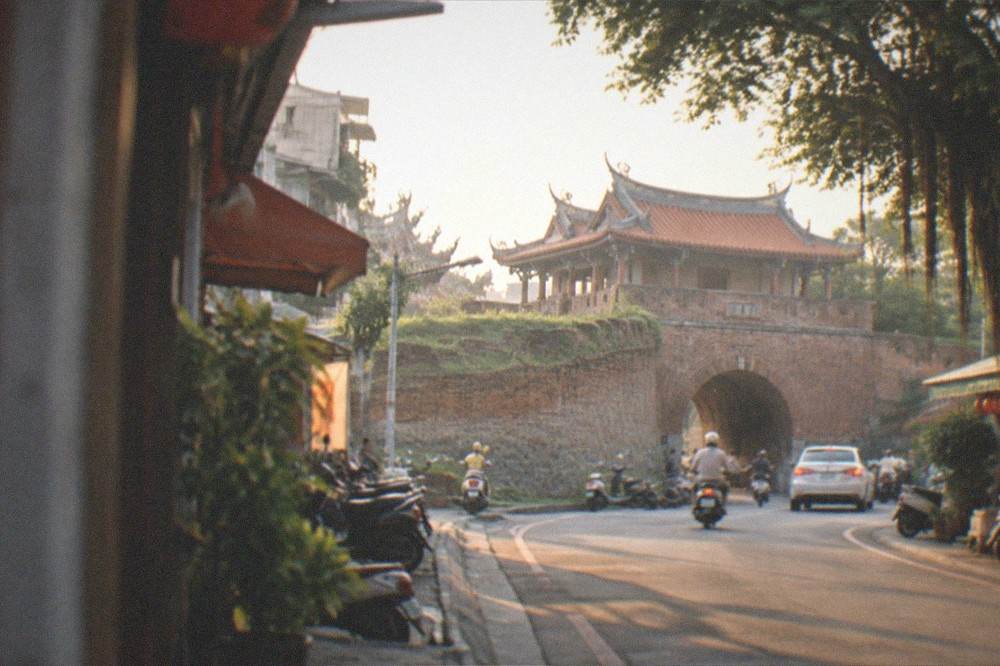
Tainan was Taiwan's capital for more than two centuries, until the late nineteenth century, and for most of that time the city was walled. The Great South Gate is one of the very few sections of that defensive perimeter still standing in place, a stone gatehouse with the distinctive barbican, or moon wall, that Qing military engineers built so attackers who breached the outer arch found themselves trapped in a small courtyard facing a second one. Most visitors to Tainan walk within a few hundred meters of it without knowing it is there, because it sits quietly in a park-like strip between the Confucius Temple and the city's southern boulevards rather than on a main tourist drag.
What Is the Great South Gate?
The Great South Gate is one of the last surviving gates of Tainan's Qing-era city wall, the fortified southern entrance through which travelers once passed between the walled capital and the roads running south toward the ports and temple towns of the coastal plain. Its defining feature is the barbican, a curved outer wall enclosing a small courtyard in front of the main gate, a design built to catch attackers in a kill zone between two arches.
Tainan's old city was enclosed by a wall during the Qing period, with gates at the cardinal points, and the Great South Gate guarded the road out toward the settlements of the southern coastal plain. That geography still shapes the city today: the gate stands near the boundary between the historic West Central district and the areas to its south, close to the Tainan Confucius Temple, which the city lists as free to enter and open 08:30 to 17:30.
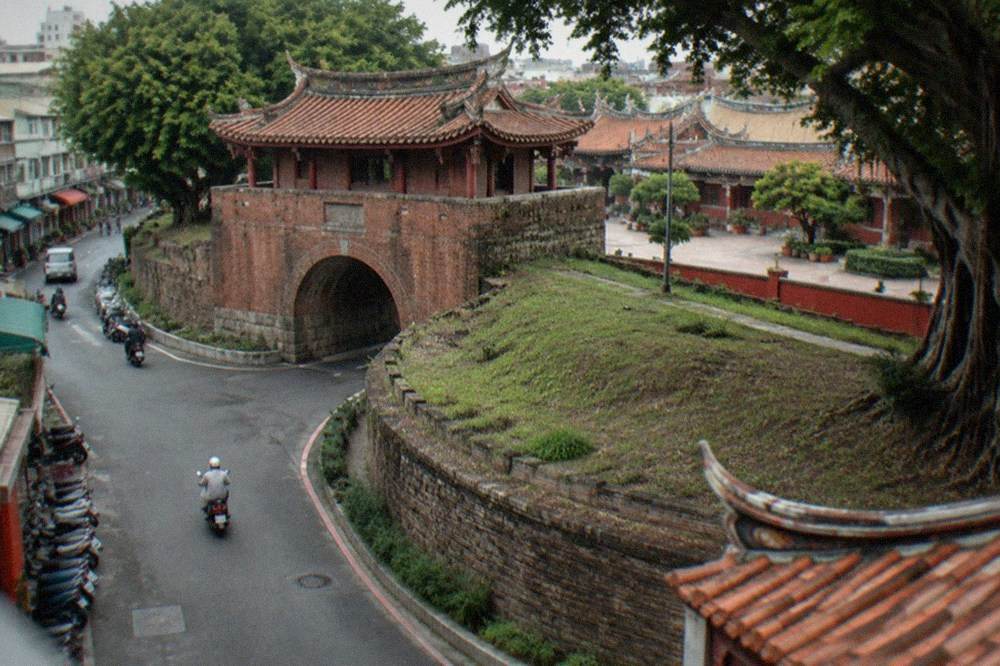
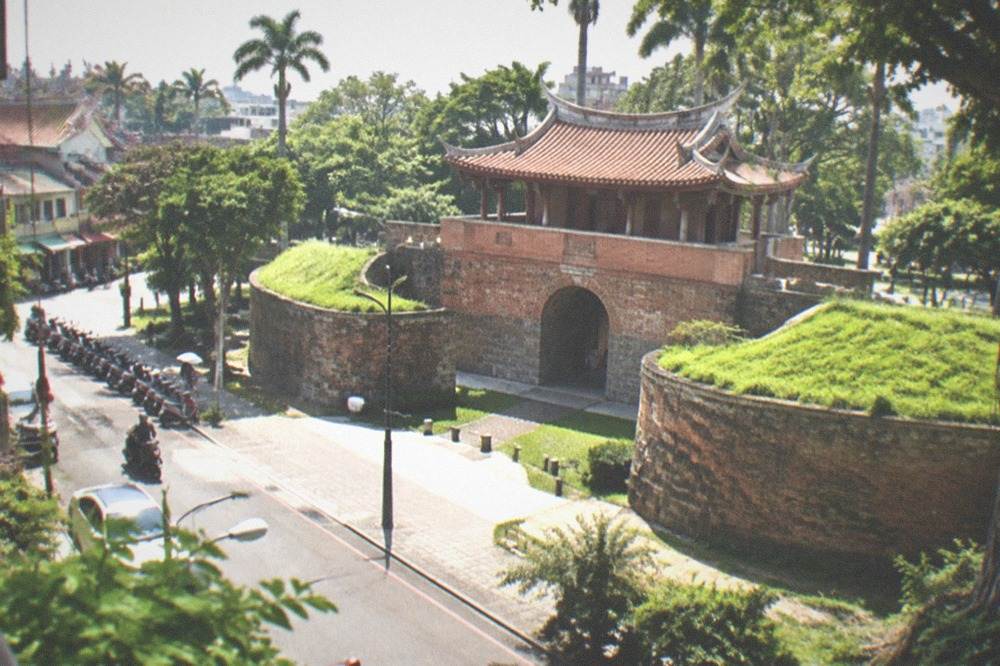
The barbican is the detail worth slowing down for. Instead of a single arch facing outward, the gate has an outer wall curved into a semicircle, so anyone approaching had to enter the courtyard, turn, and pass through a second arch under fire from the walls above. In Chinese this arrangement is called a wengcheng, sometimes translated as an "urn city" or moon gate, and the Great South Gate is one of the clearest surviving examples of it in Taiwan. The design is older than gunpowder warfare in the region and was never decorative: it existed because a straight gate was a weak gate.
What you see today is a restored structure. Like nearly every historic fabric in Tainan, the gate has been rebuilt and repaired across the Japanese colonial period and the postwar decades, and the city's heritage authorities treat it as a monument to the wall's alignment and design rather than as untouched original masonry. That is the honest way to visit it: the value is in the plan and the position, the fact that this is where the wall ran and this is the shape it took, not in any single brick.
Where Is the Great South Gate and How Do You Get There?
The Great South Gate stands on the southern edge of Tainan's old walled core, within easy walking distance of the Confucius Temple and about a kilometer south of Chihkan Tower, and the cheapest way to reach it is the city bus network, where the first 8 km of any trunk or branch journey are free with an EasyCard, iPASS, iCash 2.0 or Citizen Card, against a cash fare of 26.
The bus policy is the genuinely useful fact here. The city's own bus ticketing page states that trunk and branch routes, the green, blue, brown, orange, yellow and red lines, are free for the first 8 km of travel when you tap an electronic card, and the card must be tapped on at boarding and tapped off at the end. Tap off is the step visitors miss, and missing it can cost you the discount. The scheme runs for the 2026 calendar year, so treat it as current policy rather than a permanent right, and check the notice before relying on it.
| Way of arriving | What it costs | What to know |
|---|---|---|
| City bus, trunk or branch route, with EasyCard or iPASS | Free for the first 8 km | Tap on and tap off; the cash fare for the same trip is 26 |
| Walking from Chihkan Tower | Nothing | Roughly a kilometer south through the old core |
| Walking from the Confucius Temple | Nothing | A few minutes; the two pair naturally |
| High Speed Rail arrival | NT$1,350 standard reserved from Taipei | The HSR station is at Shalun in Guiren District, outside the city, so budget for a transfer |
If you are arriving by High Speed Rail, remember the one fact every Tainan arrival article on this site repeats because it is true: the HSR station is not in Tainan. It sits at Shalun in Guiren District, well outside the old city, and reaching the center means a transfer, either the TRA Shalun Line, which is a paid rail ticket, or the H31 HSR express bus, which is free for HSR passengers on production of a ticket stub. Non-HSR passengers on the H31 pay 18 for one section or 36 for two, with the section break at the Chimei Museum, which is worth knowing for a different reason: it means the Chimei Museum sits on the shuttle route. Taiwan High Speed Rail's own fare table lists the Taipei to Tainan standard reserved seat at NT$1,350, and it is the Business Car figure of 2,230 in the corner of that grid that trips up a naive read.
For most visitors, though, the gate does not need a bus at all. It belongs on foot, threaded into a walk of the old core that takes in the Confucius Temple first and then runs north toward Chihkan Tower, which the city's Tourism Bureau page records as open 08:30 to 21:30 daily, one of the few historic sites in Tainan a visitor can see after dinner.
What Can You See at the Great South Gate Today?
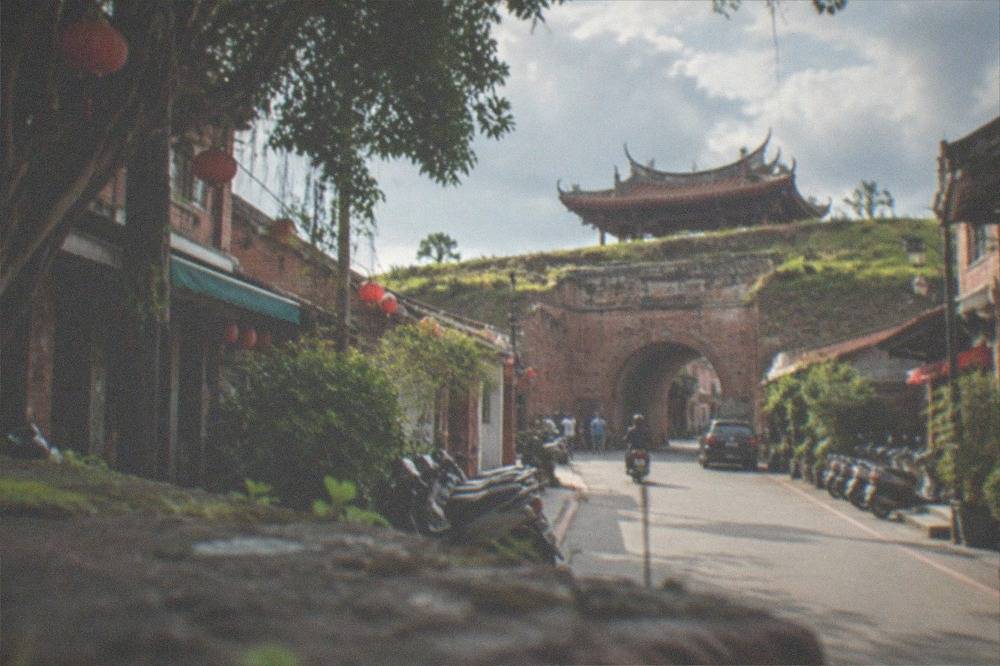
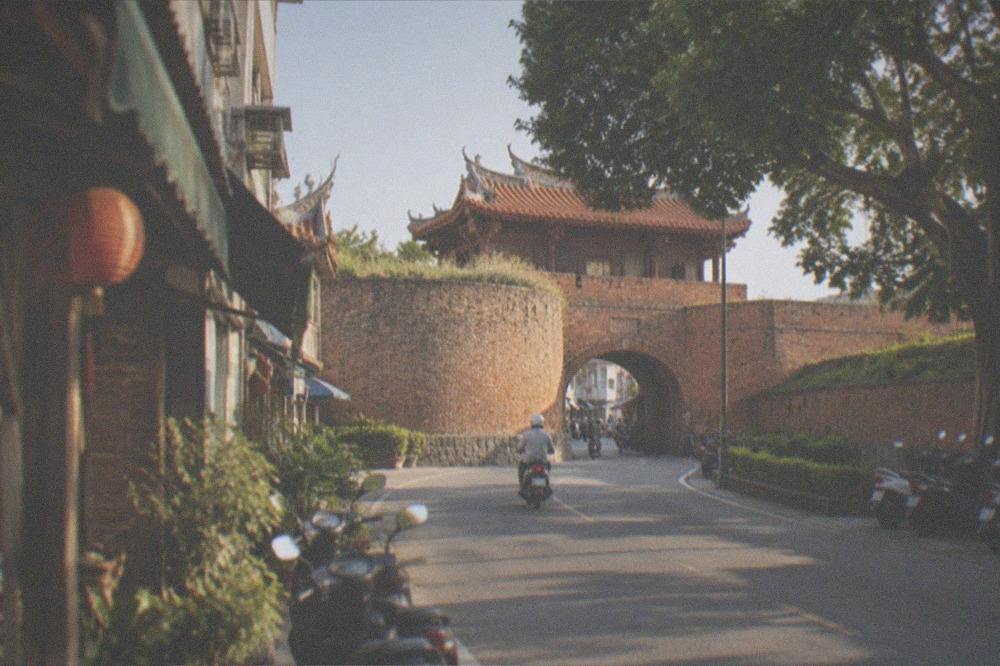
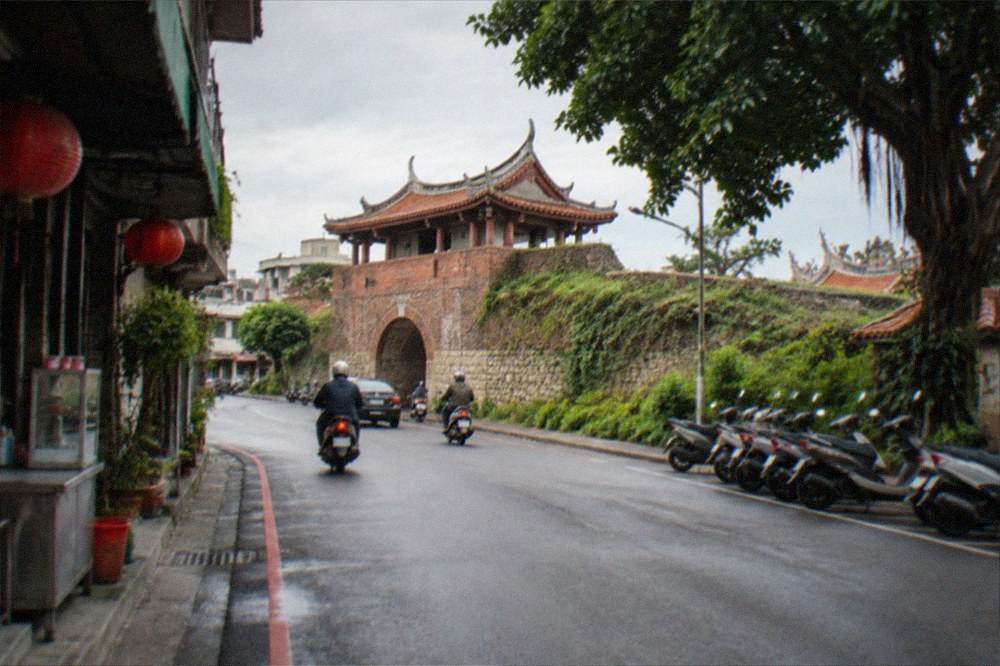
Today the Great South Gate is a freestanding stone gatehouse and barbican set in a green strip, with the main arch, the curved outer wall, crenellated parapets and stone plaque lettering all visible, and no other surviving wall sections attached to it, so it reads as a monument in a park rather than a fortress in use. The surrounding streets still follow the old wall's line.
The gate's setting is its quiet trick. Streets in this part of Tainan still bend around where the wall once ran, so even with the wall itself gone the city's plan remembers it. Walking the blocks south and east of the gate, the alignment of the roads is the ghost of the perimeter, and the Tourism Bureau's material on the old city treats the surviving gates as the anchor points for tracing it.
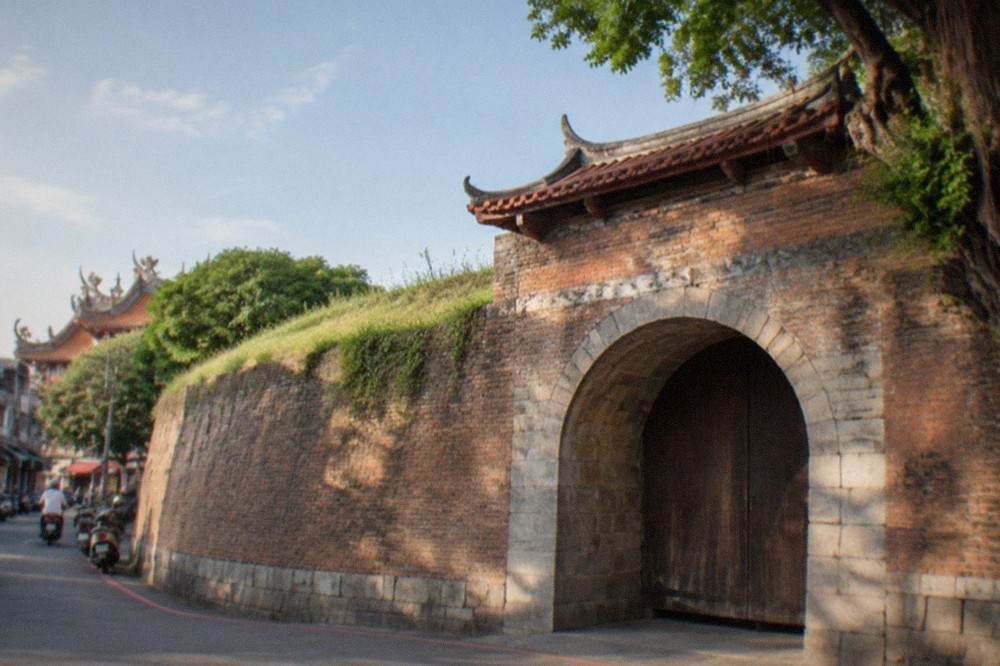
There is not a great deal of interpretive signage, so it pays to arrive knowing what you are looking at. Three things carry the visit: the double-arch barbican plan, the stonework of the gatehouse itself, and the plaque lettering above the arch, which names the gate in the classical style of Qing fortification. Photographers tend to shoot the main arch from inside the courtyard, where the curve of the barbican frames it.
The gate is also a reminder of how much of old Tainan was demolished rather than destroyed. The wall came down as the city modernized, its stones and alignments absorbed into new streets, and what survives survives because it was either useful, rebuilt, or lucky. The Great South Gate is in the lucky category, and visiting it with that history in mind turns a short stop into something more interesting than a photo opportunity.
If you want the old city explained rather than just seen, a guided walk is the efficient route, and the one below covers the historic core with street food built into the route.
What Does It Cost to Visit the Great South Gate and the Sites Around It?
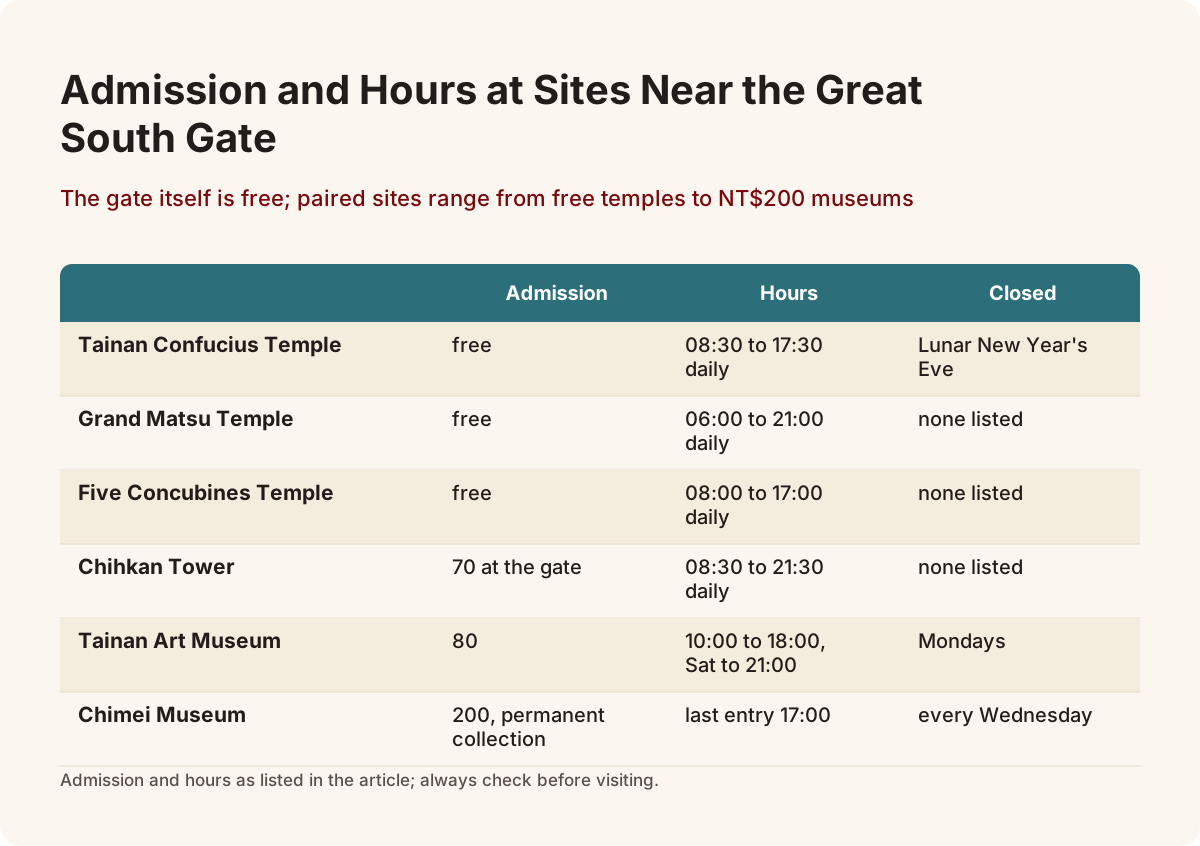
The Great South Gate itself is an open public monument with no ticketed turnstile, and the sites most naturally paired with it range from free temples to NT$70 historic sites: the Confucius Temple, Grand Matsu Temple, Five Concubines Temple and Kaiyuan Temple all list no admission charge, while Chihkan Tower, Anping Old Fort, the Anping Tree House and the Eternal Golden Castle are each 70 at the gate, half price for concessions.
The honest caveat that applies to every price on this site is that the city's own pages state the on-site notice governs, so treat each figure as the published rate rather than a guarantee. Concessions are half price at the city-run sites, and Tainan residents enter free with ID, but a visitor is not a resident, so do not read the residents' line as yours.
| Site | Admission | Hours | Closed |
|---|---|---|---|
| Tainan Confucius Temple | free | 08:30 to 17:30 daily | Lunar New Year's Eve |
| Grand Matsu Temple | free | 06:00 to 21:00 daily | none listed |
| Five Concubines Temple | free | 08:00 to 17:00 daily | none listed |
| Chihkan Tower | 70 at the gate | 08:30 to 21:30 daily | none listed |
| Tainan Art Museum | 80 | Tue to Sun 10:00 to 18:00, Saturdays to 21:00 | Mondays |
| Chimei Museum | 200, permanent collection | last entry 17:00 | every Wednesday |
Pairing the free sites with the gate makes a genuinely cheap half day. The Confucius Temple is minutes away and is, in the city's own framing, tied to the founding of scholarly government in Taiwan; the Grand Matsu Temple, open from 06:00, suits an early start; and the Tainan Art Museum, a short hop north, takes EasyCard and iPASS at its ticket desk and stays open to 21:00 on Saturdays. The museum's own hours page also states it closes when the city government announces a typhoon or earthquake work suspension, which is a useful model for how the whole city behaves on severe-weather days.
A budget note that costs nothing to state honestly: no verified price list exists for Tainan's street food, and none belongs on this page. What is verified is that moving between food stops on the bus network is free for the first 8 km with a card, and that the night markets rotate by day of week, which matters more to an eating plan than any individual stall.
How Does the Great South Gate Fit Into a Day in Tainan?
The gate works best as a ten-minute stop inside a walking loop of the old core: start at Chihkan Tower in the morning, walk south through the temple quarter taking in the Great South Gate and the Confucius Temple, then continue to Shennong Street and the canal for the late afternoon, and finish at a night market, choosing between Garden, Wusheng, Dadong or Siaobei depending on which day of the week it is.
The night market rotation is the single most useful practical fact in Tainan, verified market by market from the Tourism Bureau's own pages, and it should decide which evening plan you build around the gate. Friday is the one night all three big outdoor markets run. Wednesday is the thinnest, with Wusheng alone. Siaobei is indoors and open every day, which makes it the wet-weather and wrong-night answer.
| Day | Big markets open | Hours |
|---|---|---|
| Monday | Dadong | 18:00 to 01:00 |
| Tuesday | Dadong | 18:00 to 01:00 |
| Wednesday | Wusheng | 17:00 to 00:00 |
| Thursday | Garden | 17:00 to 00:00 |
| Friday | Dadong, Wusheng and Garden | from 17:00 |
| Saturday | Wusheng, Garden | 17:00 to 00:00 |
| Sunday | Garden | 17:00 to 00:00 |
Siaobei Night Market, indoor and open daily 12:00 to 00:00, runs alongside all of these. Always check before you go, because the city updates these pages and the days do change.
A loop built around the gate might run like this. Morning at Chihkan Tower, the site of the Dutch Fort Provintia, built in the early 1650s, where the city's page records the unusual 21:30 closing, so it can equally close the day instead. South through the temple quarter to the Great South Gate and the Confucius Temple, both free of turnstiles. Lunch in the streets around Guohua Street or the old core's beef soup shops, which open at dawn and are a Tainan institution. Afternoon along Shennong Street, the restored merchant lane near the canal, and then, if energy allows, the short hop west to Anping Old Fort and the Anping Tree House, both open into the late afternoon.
The Anping pair rewards the effort. The Tourism Bureau's Anping Old Fort page records that the only genuine Dutch-period remains there are the brick walls of the south outer rampart, and that most of what visitors photograph, including the pointed-roof lookout tower, is Japanese-era rebuilding and 1975 city renovation work. Knowing that before you go changes what you look at.
For travelers arriving from Kaohsiung with limited time, a private historical highlights tour is one way to compress the old core into a single guided day.
What Is the Best Time of Year to Visit Tainan's Old City?
The best months to visit Tainan are October through March, the dry half of the year: October is the driest month by wet days, just 2.8, while still averaging 30.8C maxima, and December brings only 16 mm of rain across 3 wet days. The summer is the opposite, with August alone delivering 466 mm across 16 wet days, and typhoon risk concentrating in the late-summer months of July to September.
These figures come from the Central Weather Administration's published 1991 to 2020 climate normals for Tainan station, and they line up with a fact that surprises visitors from northern latitudes: Tainan's visitor peak is January and February, not summer. The Tourism Administration's own dataset puts Nankunshen Daitian Temple at 6,583,100 visitors in 2023 against Chihkan Tower's 443,622, driven by temple pilgrimage and Lunar New Year, exactly the dry, comfortable season the climate table predicts.
| Month | Mean max C | Rain mm | Wet days |
|---|---|---|---|
| January | 23.0 | 20.7 | 3.8 |
| April | 29.3 | 69.8 | 5.9 |
| July | 33.0 | 374.6 | 13.0 |
| August | 32.6 | 466.1 | 15.8 |
| October | 30.8 | 30.8 | 2.8 |
| December | 24.4 | 16.2 | 3.0 |
Nearly three-quarters of Tainan's annual 1,761 mm of rain falls between May and September, and the city records 186 days a year above 30C. For a walking day built around the gate and the temple quarter, that argues for the cooler months, for morning starts in any season, and for the indoor options, Siaobei Night Market and the museums, as the wet-weather plan.
What Else Survives from Tainan's Old City Walls?
Beyond the Great South Gate, the surviving pieces of old Tainan are scattered rather than connected: Chihkan Tower preserves the Dutch Fort Provintia site of the early 1650s, the Great South Gate is the principal remaining gatehouse of the Qing wall, Anping Old Fort marks the 1624 Dutch position at Fort Zeelandia, completed in 1634, and the Eternal Golden Castle is the later artillery fort built partly with stones taken from the older Dutch works.
The chain of dates the verified record supports runs 1624, when the Dutch East India Company occupied Anping and began Fort Zeelandia, 1634, when the works were completed, 1662, when Koxinga took the fort and renamed the place Anping, and 1975, when the city government renovated Anping Old Fort into its present form. Between those anchors, frame the rest as periods. Tainan was the island's capital for more than two centuries, until the late nineteenth century, and no single year for that change should be printed, because the sources disagree on how to count a two-stage administrative shift.
The Eternal Golden Castle, open 08:30 to 17:30 with admission of 70 at the gate, is the most direct descendant of the wall story: the Tourism Bureau's Anping page records that Qing troops dismantled parts of Fort Zeelandia to build it as the Taijiang inner sea silted up and the old harbor city declined. Visiting the gate, the tower and the castle in that order tells the whole arc, from Dutch stronghold to Qing gate to Qing artillery fort, in one day of light travel.
Should You Book a Tour or Explore the Old City on Your Own?
The old core of Tainan is compact, mostly free to enter and genuinely walkable, so independent exploration works well; a guided tour earns its place when you want the wall and temple history explained, when you want street food chosen for you, or when you are arriving from Kaohsiung on a tight schedule and would rather not solve the transfers yourself.
Most of Tainan is not a booking, and this site says so plainly. The gate, the temples, the old streets and the canal cost nothing and need no ticket. The one thing worth paying for is interpretation, and the choice is between a shared walking tour with snacks built in, a private historical highlights day from Kaohsiung, and the themed experiences, like a qipao rental for photographs in the historic streets, that turn the old core into a backdrop.
The qipao option deserves a word because it is popular and cheap relative to the memory it produces: a full-day rental in Anping lets you walk the old streets in period dress, and it pairs naturally with a photography session if you want the results properly shot. It is a culture experience rather than a tour, and it sits well on a second day once the walking loop is done.
If your day is built around the Great South Gate, the Confucius Temple and Chihkan Tower, the walking tour with street food is the closest match, and the private historical highlights tour is the answer for Kaohsiung-based travelers.
Common Questions About the Great South Gate
What is the Great South Gate in Tainan?
It is one of the last surviving gates of Tainan's Qing-era city wall, the fortified southern entrance to the old walled capital, best known for its barbican, a curved outer wall that forced attackers through a second arch into a trapped courtyard.
Is the Great South Gate free to visit?
The gate is an open public monument rather than a ticketed attraction, with no turnstile, and the sites most naturally paired with it, the Confucius Temple, Grand Matsu Temple, Five Concubines Temple and Kaiyuan Temple, all list no admission charge. The nearby ticketed sites, Chihkan Tower among them, are 70 at the gate.
How do I get to the Great South Gate?
It stands on the southern edge of the old walled core, a short walk from the Confucius Temple and roughly a kilometer south of Chihkan Tower. City buses are free for the first 8 km with an EasyCard, iPASS, iCash 2.0 or Citizen Card, provided you tap on and tap off, for the 2026 calendar year.
How long should I spend at the Great South Gate?
Plan on ten to twenty minutes to see the main arch, the barbican and the plaque lettering, longer if you are tracing the old wall's line through the surrounding streets. It works best as one stop inside a walking loop of the temple quarter rather than a destination on its own.
What is the best time of year to visit Tainan's old city?
October through March is the dry, comfortable half of the year. October averages just 2.8 wet days while still reaching 30.8C maxima, and December brings only 16 mm of rain. August, by contrast, delivers 466 mm across 16 wet days, and typhoon risk concentrates in July to September.
Can I visit the Great South Gate in the evening?
The gate is an open public monument, but for a reliable evening historic site, Chihkan Tower is the stronger choice: the city's Tourism Bureau page records it open 08:30 to 21:30 daily, one of the few heritage sites in Tainan that can be seen after dinner.
The Old Wall, One Gate at a Time
The Great South Gate is a small stop with a large story attached, and it is the clearest surviving statement of where Tainan's wall ran and how it was defended: a ten-minute stop that anchors a free, walkable district of temples, old streets and a tower that stays open after dark.
It sits inside a district that is otherwise free to wander: temples with no ticket, streets that still bend to the old perimeter, and a tower ten minutes north that stays open long after the sun goes down. Walk it in the dry months, tap your card on the bus, check the night market schedule before you commit to an evening, and the gate becomes the quiet hinge of a very good day in Taiwan's oldest city. For more on how the pieces fit together, Tainan Travel Guide lays out the itineraries, the food stops and the transport facts, all built from the city's own published pages.