Tainan Breakfast
Tainan treats breakfast as the city's most serious meal, built around beef soup, danzai noodles and morning temple crowds rather than hotel buffets.
Short answer
Tainan breakfast means beef soup served at dawn, danzai noodles, milkfish dishes and soy milk shops, mostly in West Central District and around the temples, eaten early because the city's food culture runs on the morning shift.
Tainan Breakfast: The City's Most Serious Meal
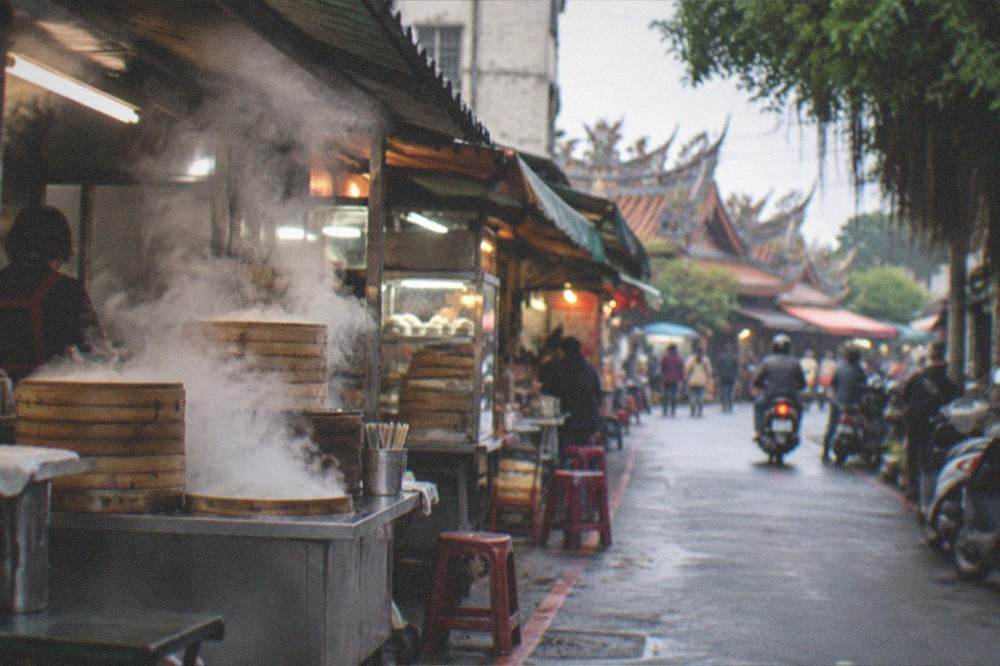
Breakfast in Tainan is not an afterthought to the day. It is the meal the city is known for among Taiwanese travelers, the reason people board trains before sunrise, and the subject of more local argument than any dinner reservation. The Tainan City Government Tourism Bureau frames the city's food culture as its central draw, and the morning is where that culture is most concentrated: beef soup ladled from vats that have been simmering since before light, noodle stalls opening beside temples, and soy milk shops running from before six in the morning.
This guide sets out what Tainan breakfast actually is, which dishes define it, where the morning food clusters sit, and how the practical facts of the city, its free short-hop buses, its rotating night markets, and its early-opening temples, shape the way a visitor eats the first meal of the day. Nothing here is a tasting note: nobody writing this site has eaten in Tainan, and the site reports what sources publish rather than what a plate was like. For the wider picture of eating in the city, start with the Tainan food guide.
What Is Tainan Breakfast, Exactly?
Tainan breakfast is a savory, soup-and-noodle tradition rather than a bread-and-coffee one, centered on beef soup served from dawn, danzai noodles, milkfish dishes, tofu pudding and soy milk shops, and breakfast in the city is eaten early, often before eight, because the best-known stalls open in the pre-dawn hours and the morning temple crowds form their own food economy around them.
The distinction matters. A visitor arriving with a hotel-buffet expectation will find that the city's own breakfast tradition runs on small specialist shops, one dish each, opening very early and often selling out by mid-morning. The beef soup stalls are the famous case: the dish is associated with slaughterhouses supplying fresh cuts in the early hours, and the stalls that built their reputations on it open at or before dawn. The city's Tourism Bureau lists beef soup among the dishes Tainan is known for, alongside danzai noodles, coffin bread and milkfish.
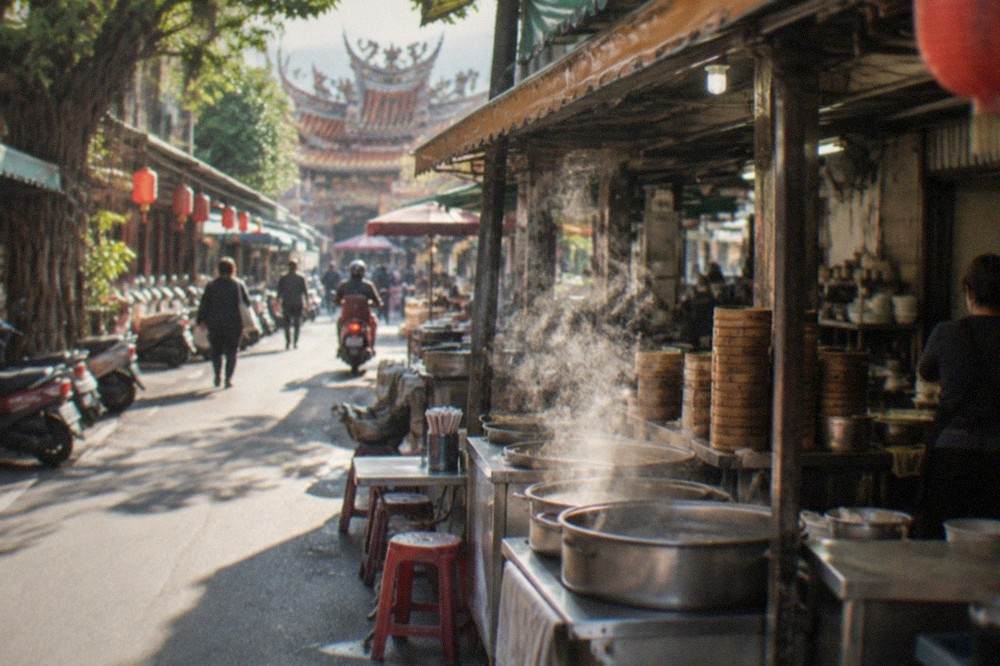
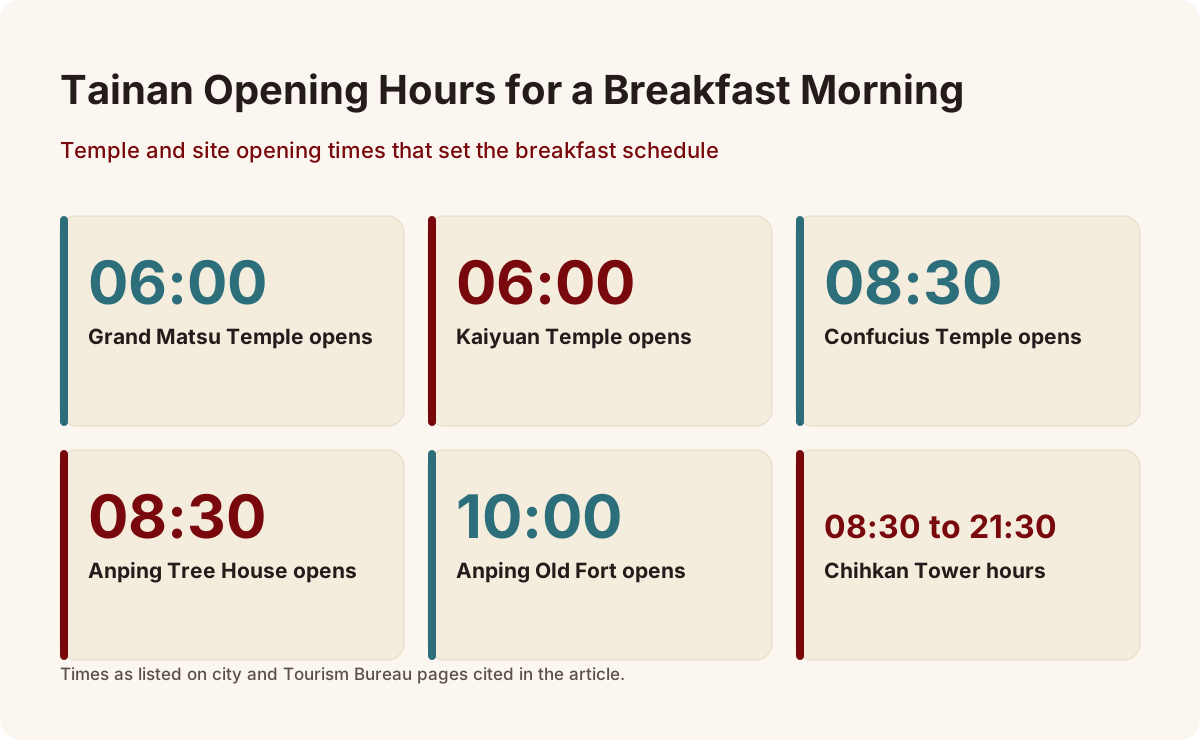
The second thing to understand is that breakfast geography follows temple geography. West Central District, the old walled city around the Grand Matsu Temple, holds the densest cluster of morning food stalls, because temple-goers arriving for the earliest opening hours, the Grand Matsu Temple opens at 06:00 according to the Tourism Bureau's own page, needed to be fed. That pattern, temple first, food second, is the historical spine of the morning meal here.
The third thing is cost, written qualitatively because no verified price list exists for any dish. Tainan is widely described in Taiwanese media as the cheapest of the island's big cities to eat in, and breakfast is the cheapest meal of the day in it. No official price list for a bowl of beef soup or a serving of danzai noodles exists, and this site will not invent one. What can be said is that breakfast is the meal where a modest budget goes furthest.
Which Dishes Define the Tainan Breakfast Table?
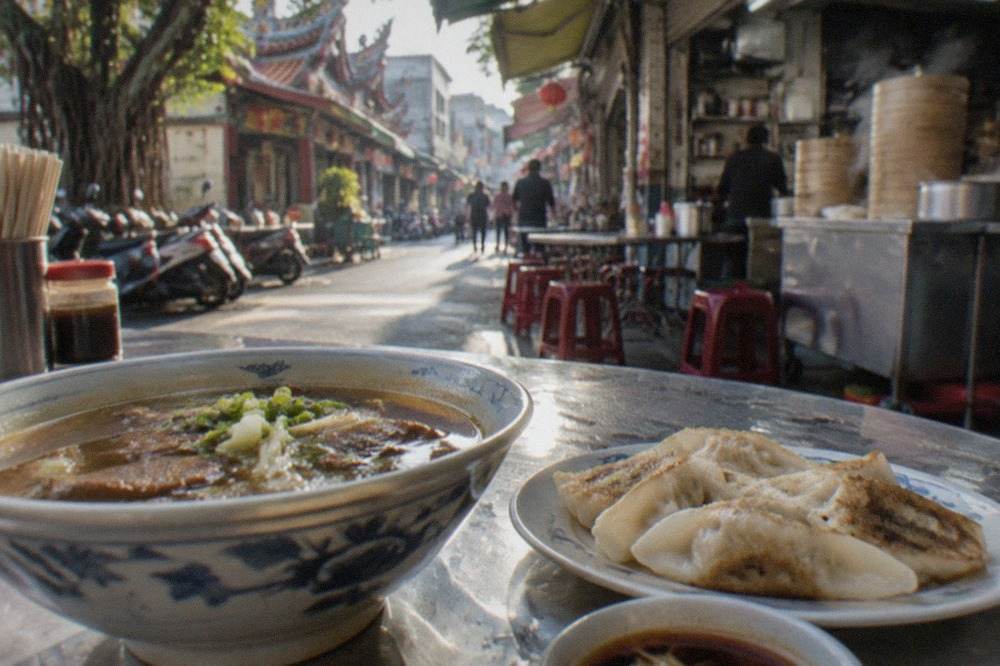
Five dishes carry the tradition: Tainan beef soup, clear broth with fresh beef added raw and cooked in the bowl; danzai noodles, a small serving of noodles in shrimp soup topped with minced pork; milkfish dishes including milkfish belly soup and milkfish porridge; tofu pudding with sweet or savory toppings; and the soy milk and fried dough shops, shaobing, youtiao and warm soy milk, that anchor the Chinese-style breakfast.
Beef soup is the one Tainan claims most loudly. The dish is defined by its method: the broth is kept at a rolling boil and thin slices of fresh beef go in only when the bowl is served, so the meat stays pink and soft. The Tourism Bureau's food pages treat it as a signature Tainan dish, and the city's beef soup stalls are famous for opening at five or six in the morning and selling out by mid-morning. The tradition exists because Tainan historically had access to freshly slaughtered beef in the early hours, which is why the dish is a breakfast and not a dinner item. The dedicated page on Tainan beef soup covers the dish in full.
Danzai noodles, the city's other famous export, are also breakfast food in their home town. The dish is a small bowl by design: noodles in a shrimp-based broth with a spoonful of minced pork and, classically, a single shrimp. The story attached to it, a fisherman selling noodles from a shoulder pole, a "dan zai", during the off-season, is part of the city's self-telling, and the Tourism Bureau repeats it. Portions are small and the point is to eat several things in one morning rather than one large thing.
Milkfish is the third pillar. The fish is farmed heavily on the Tainan coast, and the city's breakfast tables use all of it: the belly in soup, the flesh in porridge, the skin and bones fried. Tofu pudding, douhua, runs sweet with ginger syrup or savory with pickles, and the soy milk shops sell the fried dough and flatbread combination that the whole Chinese-speaking world eats for breakfast, but which Tainan does with its own density and its own hours.
| Dish | What it is | When Tainan eats it |
|---|---|---|
| Beef soup | Clear broth, fresh beef cooked in the bowl at service | Pre-dawn to mid-morning |
| Danzai noodles | Small bowl, shrimp broth, minced pork | Morning onward |
| Milkfish belly soup | Fatty belly cut in clear broth | Breakfast and lunch |
| Milkfish porridge | Rice porridge with milkfish flesh | Breakfast |
| Tofu pudding | Soft tofu, sweet ginger syrup or savory toppings | Morning |
| Soy milk set | Warm soy milk, youtiao, shaobing | Before six until late morning |
Where Do You Find Breakfast in Tainan?
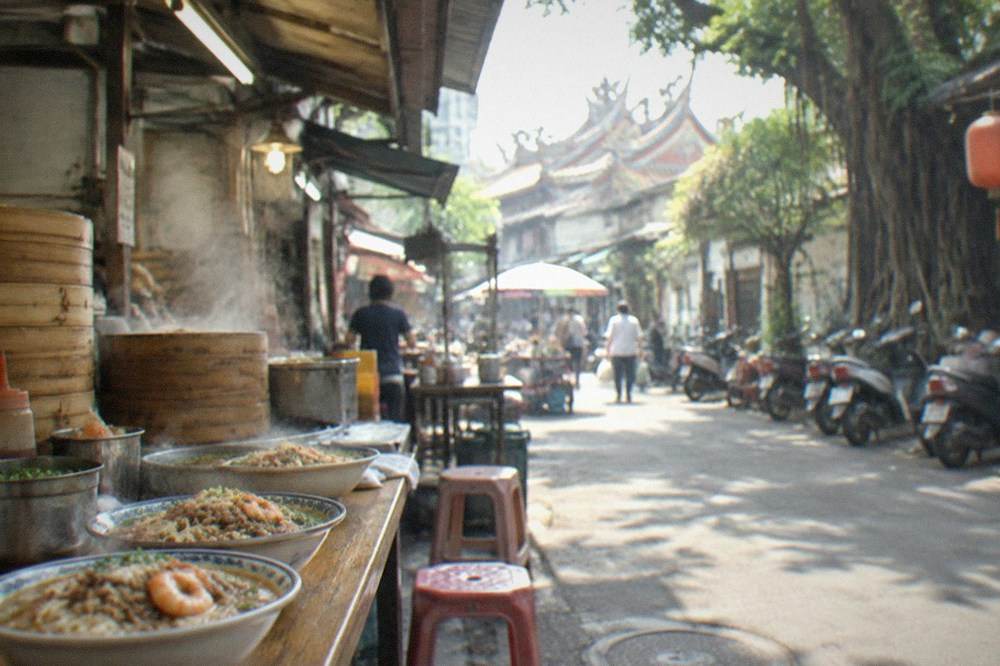
The main breakfast clusters are West Central District around the Confucius Temple and the Grand Matsu Temple, the Guohua Street and Shennong Street area of the old city, the streets around Tainan Railway Station, and Anping, where the old street and fort area opens later but the surrounding neighborhood eats early. Most visitors base themselves in West Central District for exactly this reason.
West Central District is the historical core, and the Tourism Bureau's own attraction pages place the free-entry temples that anchor the morning right in it. The Tainan Confucius Temple opens at 08:30, the Grand Matsu Temple at 06:00, and the food stalls around them open earlier still. Guohua Street, which has its own guide on this site, is one of the densest old food streets in the city, and the area between it and Shennong Street holds a mix of breakfast stalls and daytime snack shops.
Anping works differently. The district's headline sites, Anping Old Fort and the Anping Tree House, open at 10:00 and 08:30 respectively, so the tourist day there starts later, but the residential streets behind the old street eat early like everywhere else in Tainan. The Tourism Bureau's visitor data underlines the district's pull: Anping as a whole drew 4,441,443 visitors in 2023, roughly ten times Chihkan Tower's 443,622, and much of that traffic is food traffic. The caveat the dataset itself carries applies: counts are compiled by each operator, and an open street counts differently from a ticketed museum.
Around the railway station, the breakfast trade serves commuters rather than pilgrims, and the hours run slightly later. For a first-time visitor working out where to sleep, the where to stay in Tainan page maps the districts against the food clusters.
A guided walk is the one booking on this page worth making, because Tainan has no free walking tours at all and the paid options are the whole market. The tour below is the food-focused one: six hours, snacks and street food included, and cancellation is available if plans change.
How Early Do You Need to Get Up for Tainan Breakfast?
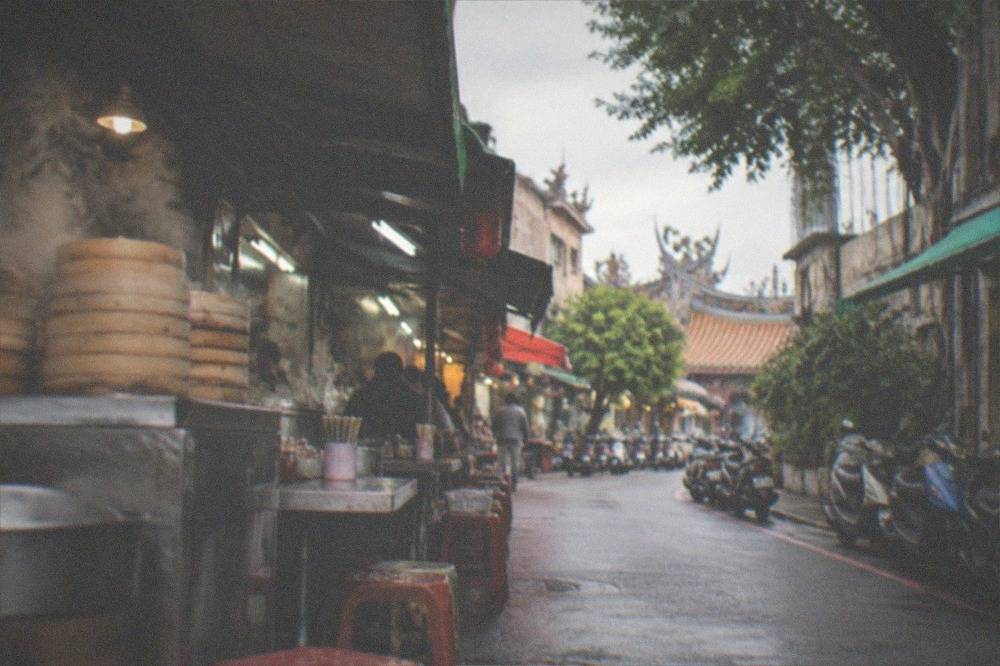
The famous beef soup stalls open at or before dawn, typically around five or six in the morning, and the best-known of them sell out by mid-morning. Soy milk shops open before six. Temple-area stalls follow temple hours, with the Grand Matsu Temple opening at 06:00. A realistic plan is to be eating by seven, and to treat anything after nine as the tail end of the breakfast shift rather than the heart of it.
The early hours are not a gimmick, they are the supply chain. The beef soup tradition depends on fresh cuts arriving from slaughter in the early hours, which is why the dish exists as a morning food at all. Taiwanese food media's coverage of the city's beef soup stalls consistently reports the same pattern: open at five or five-thirty, queue from opening, sell out by ten or eleven. No specific stall's hours are verified in this site's research files, so no individual opening time is printed here; the pattern, not the particular shop, is the reliable fact.
The morning also has a second shift worth knowing about. Tainan's temples open early, the Grand Matsu Temple at 06:00, Kaiyuan Temple at 06:00, and the food economy around them starts with them. The Confucius Temple, free to enter per the city's own page, opens at 08:30, and a breakfast-to-temple morning in West Central District runs naturally in that order: eat first, walk it off second.
For visitors arriving by High Speed Rail, the timing works against the earliest breakfasts. The HSR station is not in Tainan at all but at Shalun in Guiren District, outside the old city, and reaching the center means a transfer, either the free H31 shuttle bus for HSR passengers or a Taiwan Railway connection. The Tainan HSR station guide covers the transfer options. Sleeping in the old city, rather than arriving that morning, is what makes the dawn beef soup realistic.
How Do the Night Markets Shape Tainan's Breakfast Culture?
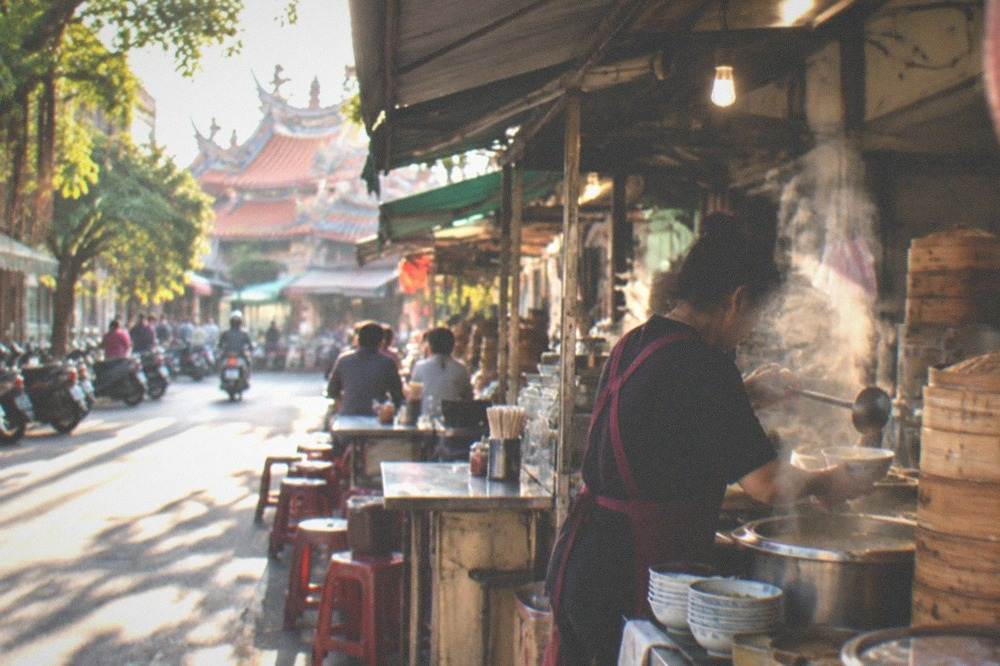
Tainan's big outdoor night markets rotate by day of the week, Garden on Thursday to Sunday, Wusheng on Wednesday, Friday and Saturday, Dadong on Monday, Tuesday and Friday, so the city's eating rhythm runs late into the night, and breakfast culture compensates with lighter, earlier food. Siaobei Night Market is indoors and open every day, noon to midnight, which makes it the wrong-weather and wrong-night fallback.
The rotation is the single most useful practical fact on this site, verified market by market from the Tourism Bureau's own pages. Friday is the only night all three big outdoor markets run, and Wednesday is the thinnest, with Wusheng alone. The days change occasionally, so the standing advice is to check before going.
| Market | Open | Hours |
|---|---|---|
| Garden Night Market | Thu, Fri, Sat, Sun | 17:00 to 00:00 |
| Wusheng Night Market | Wed, Fri, Sat | 17:00 to 00:00 |
| Dadong Night Market | Mon, Tue, Fri | 18:00 to 01:00 |
| Siaobei Night Market | Every day, indoor | 12:00 to 00:00 |
The connection to breakfast is real rather than decorative. A city whose food streets run to midnight and 01:00, Dadong's listed hours, eats a late dinner, and the morning meal that follows it is deliberately lighter: soup, porridge, a small bowl of noodles. The night market pages on this site cover Tainan night markets in full, and Garden Night Market, Dadong and Wusheng each have their own guides.
The other crossover is Chihkan Tower's unusual hours. The city's page lists it open 08:30 to 21:30 daily, one of the few historic sites a visitor can see after dinner, which means a Chihkan evening walk followed by a night market run, followed by a dawn beef soup, is a fully coherent Tainan food day. The Chihkan Tower guide covers the site.
How Do You Get Between Breakfast Stops?
City buses are free for the first 8 km with an electronic card, Citizen Card, iPASS, EasyCard or iCash 2.0, on the trunk and branch network, provided you tap on and tap off. The cash fare for the same trip is 26. The scheme runs for the 2026 calendar year, so treat it as current policy, not permanent. Most breakfast clusters in Tainan, though, are walkable from one another in West Central District.
The tap-off requirement is the part visitors miss, and missing it means the discount does not apply. The city's own bus site states the free first 8 km policy in English, and the same page confirms which cards qualify. EasyCard and iPASS both work on Tainan city buses, and the Tainan Art Museum's ticket desk takes both as well, though neither card works on the High Speed Rail. The EasyCard in Tainan and getting around Tainan pages carry the full transport picture.
For the breakfast plan specifically, the geometry is kind. West Central District's breakfast cluster, the Confucius Temple, the Grand Matsu Temple, Guohua Street and Shennong Street, sits within a walkable rectangle, and the beef soup and soy milk stalls of the old city are inside it or on its edge. Anping is a bus or scooter ride away, and the Anping area guide covers that district's own food streets.
| Transport option | Cost | Notes |
|---|---|---|
| City bus, with card | Free first 8 km | Tap on and tap off; 2026 policy |
| City bus, cash | 26 | Base fare |
| H31 HSR shuttle | Free with HSR ticket stub | Otherwise 18 one section, 36 two |
| Walking | Free | Covers most West Central District breakfast stops |
When Is the Best Season for a Tainan Breakfast Trip?
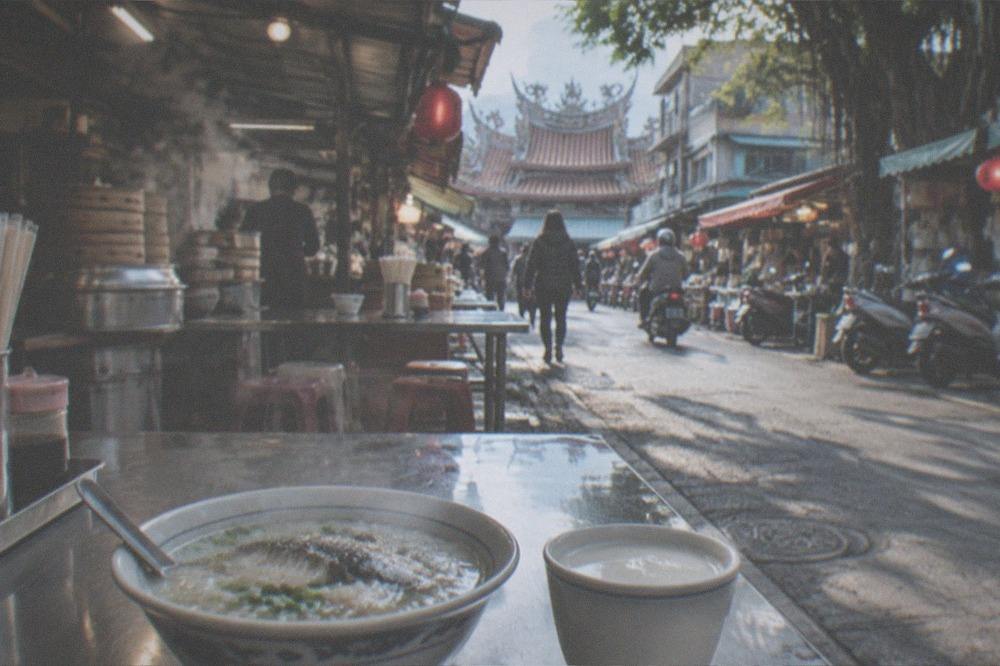
October to March is the comfortable half of the year: October averages 30.8C maxima with only 2.8 wet days, the driest month on the calendar, and December brings just 16 mm of rain. The peak visitor months are January and February, driven by temple pilgrimage and Lunar New Year, which is the opposite of the European assumption. Summer is hot and wet: August alone brings 466 mm across 16 wet days.
The climate figures come from the Central Weather Administration's published normals for Tainan station, 1991 to 2020. Close to three-quarters of the annual 1,761 mm of rain falls between May and September, and 186 days a year go above 30C. For an activity that involves standing in line on a street at seven in the morning, that matters more than it would for a museum day. The Tainan weather and best time to visit Tainan pages carry the full tables.
| Month | Mean max | Rain mm | Wet days |
|---|---|---|---|
| January | 23.0C | 20.7 | 3.8 |
| April | 29.3C | 69.8 | 5.9 |
| July | 33.0C | 374.6 | 13.0 |
| October | 30.8C | 30.8 | 2.8 |
| December | 24.4C | 16.2 | 3.0 |
The visitor data adds a wrinkle worth planning around. The Tourism Administration's own dataset shows Tainan's peak months are January and February, with Nankunshen Daitian Temple drawing 6,583,100 visitors in 2023 and peaking in January, and Anping district peaking in February. The crowds are pilgrimage and Lunar New Year crowds, and they eat breakfast too: the famous stalls queue longest in those months. A November or early-December trip gets the same dry, warm weather with thinner queues. Typhoon risk concentrates in the late summer months, and the Taiwan typhoon season page covers that.
What Does a Full Tainan Breakfast Morning Look Like?
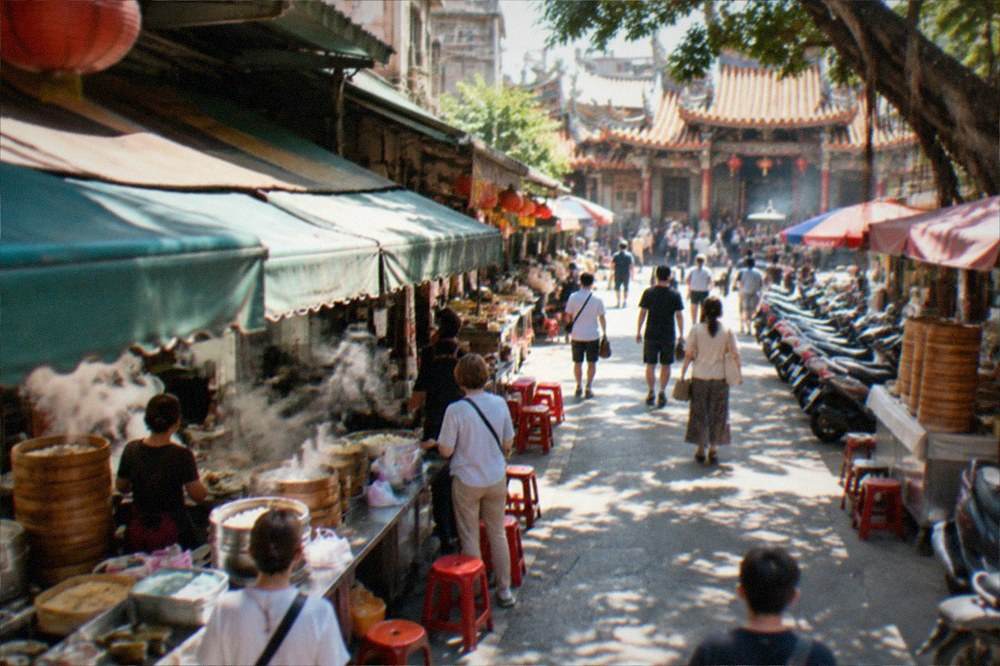
A realistic morning runs: soy milk and fried dough before seven at a shop in West Central District, beef soup at a dawn-opening stall, a walk through the Confucius Temple grounds, free to enter, from 08:30, danzai noodles or a milkfish dish mid-morning, and Chihkan Tower, open from 08:30 to 21:30, whenever the queue mood strikes. The order is flexible, but the early start is not, because the beef soup sells out.
The plan works because the distances are short and the opening hours interlock. The Grand Matsu Temple opens at 06:00, so the earliest risers can do temple, then soup, or soup, then temple. The Confucius Temple, free entry per the city's page, opens at 08:30, which lands neatly after a first breakfast. Chihkan Tower's late closing, 21:30, means it does not need to be in the morning at all, and can close the day instead.
Two cautions keep the plan honest. First, no individual stall's hours are verified in this site's research, so treat the dawn-opening pattern as the plan and check the specific shop the night before, or ask at your hotel, since the front desk of any Tainan hotel in the old city will know which soup stall still has broth left at nine. Second, the city updates its own pages, and the night market days and site hours above carry the standing caveat: the on-site notice governs.
For visitors who want the morning food culture explained rather than just found, a guided walk is the one booking on this page worth making. Tainan has no free walking tours at all, so the paid options are the whole market, and a guided food walk covers in six hours what a first-time visitor would otherwise spend two days assembling.
The trio above covers three different angles on the same city: a food walk, a full-day qipao rental for photographs in the old streets, and a private full-day tour that strings the historic sites together. Any one of them pairs naturally with an early breakfast, since the tours start mid-morning and the stalls sell out before that.
Common Questions About Tainan Breakfast
What do locals eat for breakfast in Tainan?
Beef soup, danzai noodles, milkfish belly soup, milkfish porridge, tofu pudding and the soy milk and fried dough combination. The savory soup-and-noodle tradition dominates over bread or hotel-style breakfasts, and the most famous beef soup stalls open at or before dawn.
Why is beef soup a breakfast food in Tainan?
The tradition exists because fresh beef arrived from slaughter in the early hours, so the stalls that cooked it opened at dawn. The dish is defined by thin fresh slices added to boiling broth only when the bowl is served, and the best-known stalls sell out by mid-morning.
What time do Tainan breakfast stalls open?
The pattern is pre-dawn, typically five or six in the morning for beef soup and soy milk shops, with the best-known stalls selling out by mid-morning. No individual shop's hours are verified here, so check the specific stall the night before or ask your hotel front desk.
Where is the best area for breakfast in Tainan?
West Central District, the old walled city around the Confucius Temple and the Grand Matsu Temple, holds the densest cluster of morning food stalls. Guohua Street and the Shennong Street area are also dense, and Anping's residential streets eat early even though its tourist sites open later.
Is breakfast in Tainan expensive?
No official price list exists for any dish in Tainan, and this site does not invent numbers. Qualitatively, Tainan is widely described in Taiwanese media as the cheapest of the island's big cities to eat in, and breakfast is the cheapest meal of the day in it.
Can you do a Tainan breakfast without speaking Chinese?
Mostly yes. The city runs ongoing bilingual signage programs in tourist areas, though coverage is thinner in small old shops. Pointing at the pot works at a soup stall, and the English in Tainan page covers what to expect.
Where to Read Next in Tainan
The reading path out of this page runs through the city's food and logistics guides: the street food page for the all-day snack economy, the dish guides for danzai noodles and coffin bread, the attractions overview for the sites between meals, and the arrival guides from Taipei and Kaohsiung. Each page stands alone, and together they cover everything a first Tainan breakfast trip needs beyond the morning meal itself.
The morning meal is one piece of the city's food culture, and the pieces connect. The Tainan street food page covers the all-day snack economy, coffin bread and danzai noodles each have their own dish guides, and the Tainan attractions overview maps the sites that sit between meals. For the arrival logistics, Taipei to Tainan and Kaohsiung to Tainan cover the two main entry routes, and Tainan Travel Guide ties the whole city together. Breakfast in Tainan rewards the early alarm more than any other meal in Taiwan, and the plan above is everything a first visit needs: eat early, walk the old city, and let the temples set the schedule.