Eating Tainan with a Guide
Tainan is the city Taiwan points to when the subject is food, and a guided walk is one of the few parts of a Tainan trip that genuinely pays for a guide: the food is spread across rotating night markets, morning-only beef soup shops and old-street stalls that have no English signage. Here is what a guide actually adds, what the verified facts say about the city's food geography, and how to plan the eating days yourself.

Short answer
A guided food walk in Tainan typically runs three to six hours, covers street snacks, night market stalls and old-street eateries in the West Central District, and costs from about US$69 per person. The rest of the eating, night markets, temples and free-entry old streets, costs nothing to enter and needs no booking.
Tainan is the city Taiwan points to when the subject is food. It was the island's capital for more than two centuries, until the late nineteenth century, and the kitchens that grew up around that history produced dishes the rest of Taiwan treats as Tainan's property: danzai noodles, coffin bread, milkfish soup, beef soup served at dawn. The eating here is not concentrated in one dining district. It is spread across rotating night markets, morning-only shops and old streets, which is exactly the situation where a guide earns their fee.
This page lays out what a guided food walk in Tainan actually covers, what the verified facts say about the city's food geography, and how to build the eating days yourself if you would rather go alone. The practical spine is in the Tainan food guide; this page is specifically about eating with a guide, and about the planning facts that make the difference between a good food day and a locked-shutter disappointment.
What Does a Guided Food Tour in Tainan Actually Include?
A typical guided food walk in Tainan runs three to six hours, moves on foot through the West Central District and sometimes Anping, and includes a set number of tastings at street stalls and small eateries, with snacks and street food named in the tour description. Prices start from about US$69 per person for a four-hour walk, and the longest full-day options run around ten hours with a private car. Guides handle ordering, which matters because English signage in Tainan's older food streets is thin.
The standard shape is a walking tour. The shorter evening walks run about three hours and concentrate on one district; the mid-length options run four to six hours and cover both old-street eateries and a night market; the full-day private versions add a car, a driver and out-of-centre stops. What you are paying for is three things: someone who can read the menus, someone who knows which stalls open on which days, and someone who can explain what the dish in front of you is.
What a guide does not change is the city itself. Tainan's food culture is public and cheap to access, and the free-entry parts of it, the night market aisles, the temple courtyards, the old streets, need no ticket at all. A guide is a translator and a scheduler, not a gatekeeper. If you read some Chinese, eat adventurously and are willing to plan around the night market rotation, you can eat extremely well alone. If any of those three does not describe you, the tour fee is a fair trade.
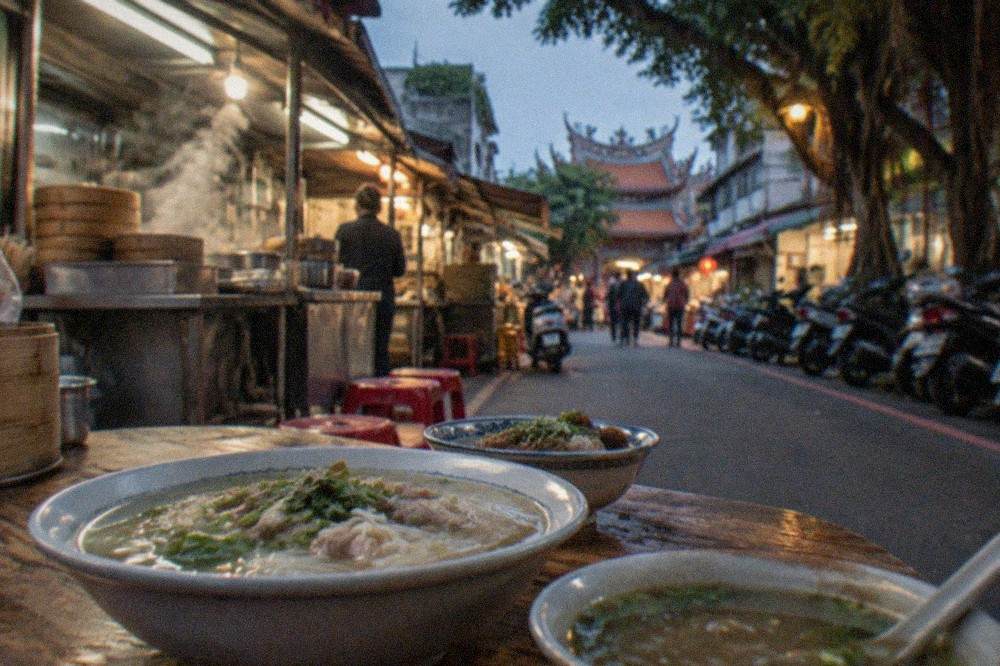
The honest comparison is between the two main bookable formats. A group walking tour with food included costs less and fixes the ordering problem. A private guide with a car costs more and fixes the geography problem, because Tainan's headline dishes are not all in one walkable area. There is no free walking tour option in Tainan; that segment simply does not exist here, so the choice is between a group walk, a private walk, or going alone.
Which Tainan Dishes Should a Tour Cover?
The core Tainan plate is danzai noodles, coffin bread, milkfish soup, beef soup, shrimp rolls and oyster omelette, with beef soup served in the early morning as the city's signature breakfast ritual. A good tour explains what each dish is and where its version comes from, rather than only walking you past stalls. None of these dishes has an official price list, so any tour that quotes you exact stall prices in advance is guessing.
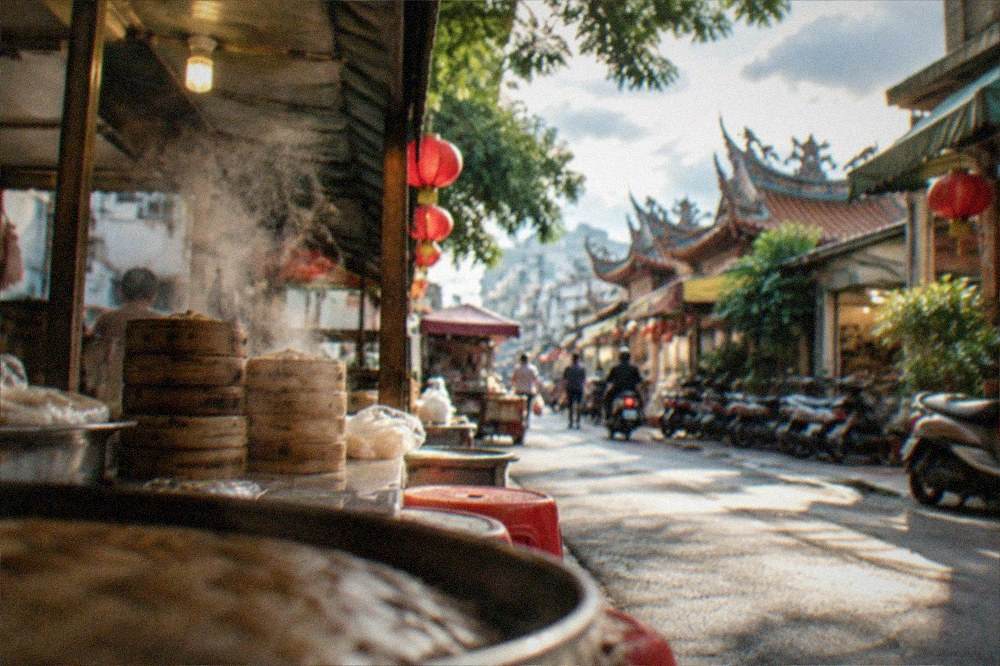
Danzai noodles are the city's most exported dish: a small bowl of noodles in a pork-and-shrimp broth, topped with minced pork and a shrimp. The danzai noodles page covers the dish's Tainan origin story in detail. Coffin bread is a thick fried toast shell filled with a creamy stew, a dish that exists nowhere else in Taiwan in this form; the coffin bread page explains the name. Milkfish, served as soup, porridge or congee, is a coastal Tainan staple tied to the lagoon fisheries north of the city.
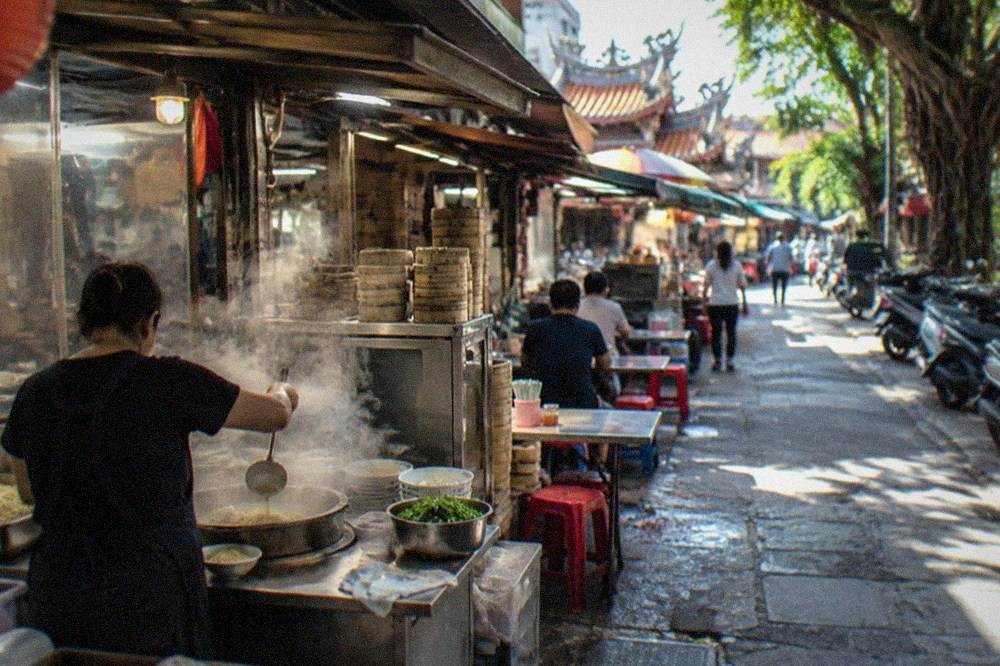
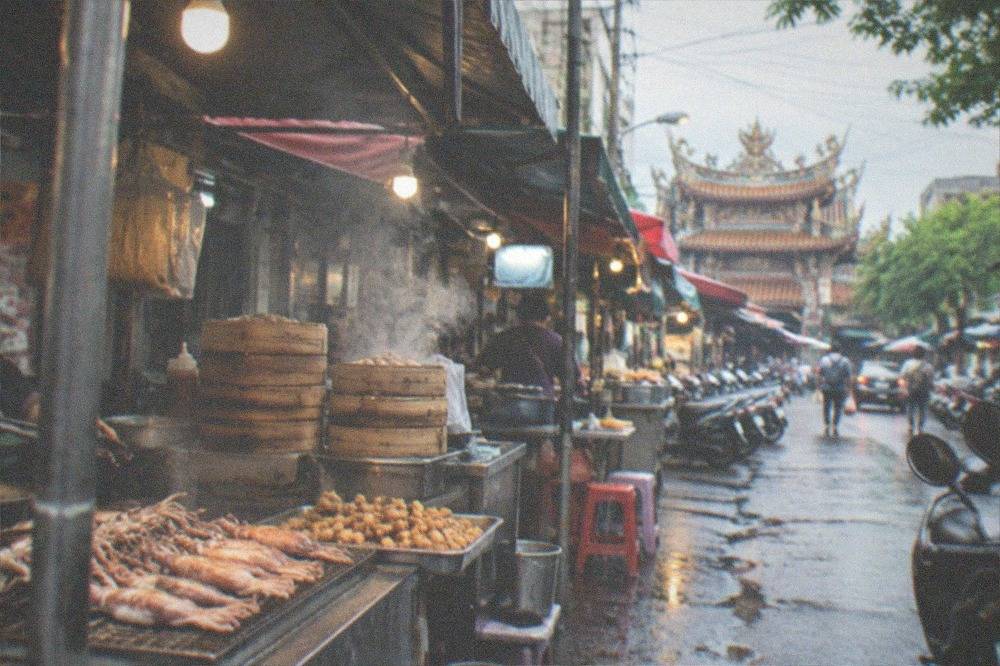
Beef soup is the one with a schedule attached. Tainan's beef soup shops are famous for opening before dawn and selling out by mid-morning, which makes them a breakfast dish, not a dinner one. The Tainan beef soup page covers the ritual and how to find a morning bowl. A guided tour that includes beef soup has to start early, and several of the full-day options do exactly that.
The table below is what a guide should be able to tell you about each dish, and what you can check for yourself.
| Dish | What it is | When to eat it | Where it concentrates |
|---|---|---|---|
| Danzai noodles | Small noodle bowl, pork-and-shrimp broth, minced pork topping | Any time | West Central District old streets |
| Coffin bread | Fried toast shell with a creamy stew filling | Afternoon and evening | West Central District |
| Beef soup | Clear broth with freshly sliced beef, morning slaughter | Early morning, shops sell out | Around the old city, scattered |
| Milkfish soup | Milkfish in broth or congee, a coastal fish dish | Breakfast and lunch | City-wide, strong near the lagoon coast |
| Shrimp rolls | Fried rolls of shrimp paste, Anping specialty | Lunch and evening | Anping old street area |
| Oyster omelette | Oysters in an egg-and-starch omelette with sauce | Evening, night markets | All night markets |
No price appears in that table because no verified price exists. The city publishes no official food price list, and stall prices move. A tour that includes tastings solves the pricing question for its own stops, and for everything else, plan on cash and on prices being low by the standards of Taiwan's bigger cities.
Which Night Market Should Your Tour or Your Evening Hit?
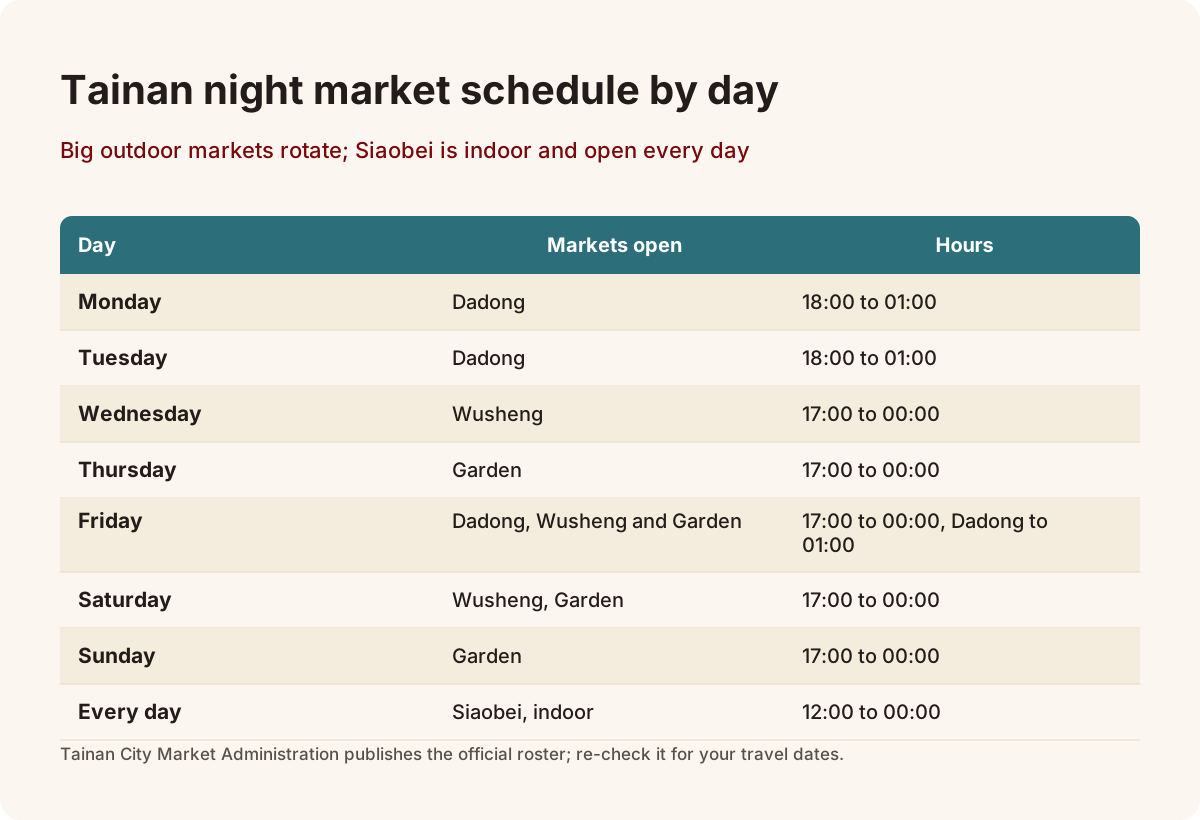
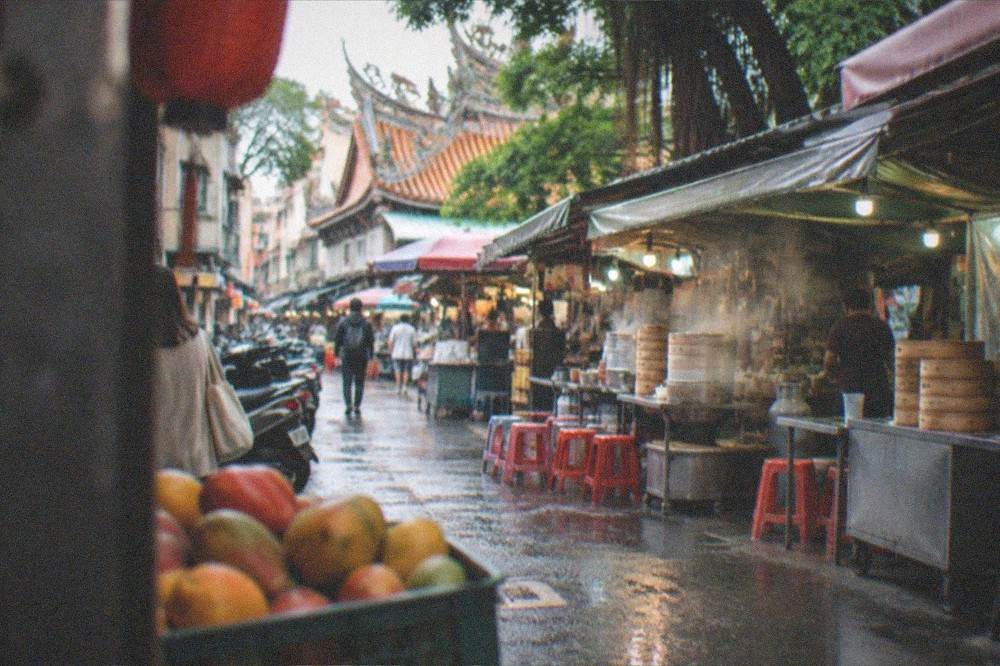
Tainan's big outdoor night markets rotate by day of the week: Garden Night Market runs Thursday to Sunday, Wusheng runs Wednesday, Friday and Saturday, and Dadong runs Monday, Tuesday and Friday. Friday is the only night all three operate. Siaobei Night Market is indoors and open every day from noon to midnight, which makes it the wet-weather and wrong-night fallback. Always check the city's pages before you go, because the days change.
This rotation is the single most useful practical fact for eating in Tainan, and it is verified market by market from the Tainan City Government Tourism Bureau's own attraction pages, not from the folk rhyme. The rhyme locals use, mapping Monday to Sunday onto Dadong, Dadong, Wusheng, Garden, Dadong, Wusheng, Garden, gets the primary market right but understates Friday, when Garden and Wusheng also open alongside Dadong.
The practical reading of the table: plan your food evenings around the days, not the other way round. If you are in Tainan Thursday through Sunday, Garden is your big night. Wednesday is the thinnest night in the city, with Wusheng alone among the outdoor markets. If rain is forecast, or your free night is a Monday, Siaobei is the answer, and it also runs through the afternoon, which no outdoor market does. The Tainan night markets page has the full breakdown.
| Day | Big outdoor markets open | Hours |
|---|---|---|
| Monday | Dadong | 18:00 to 01:00 |
| Tuesday | Dadong | 18:00 to 01:00 |
| Wednesday | Wusheng | 17:00 to 00:00 |
| Thursday | Garden | 17:00 to 00:00 |
| Friday | Dadong, Wusheng and Garden | 17:00 to 00:00, Dadong to 01:00 |
| Saturday | Wusheng, Garden | 17:00 to 00:00 |
| Sunday | Garden | 17:00 to 00:00 |
| Every day | Siaobei, indoor | 12:00 to 00:00 |
The Tainan City Market Administration maintains the official night market roster, and the city updates its attraction pages, so treat the table above as the current published schedule and re-check it for your travel dates. A guided evening tour that includes a night market stop has to be booked on a night the market runs, and the good ones are built around exactly this constraint.
How Do You Get Between Food Stops in Tainan?
City buses are free for the first 8 km with an electronic card, a Citizen Card, iPASS, EasyCard or iCash 2.0, on the trunk and branch network, for the 2026 calendar year. You must tap on and tap off, and the tap off is the part visitors miss. The cash fare for the same trip is NT$26. Walking covers the old city core, and a bicycle or the bus covers the rest.
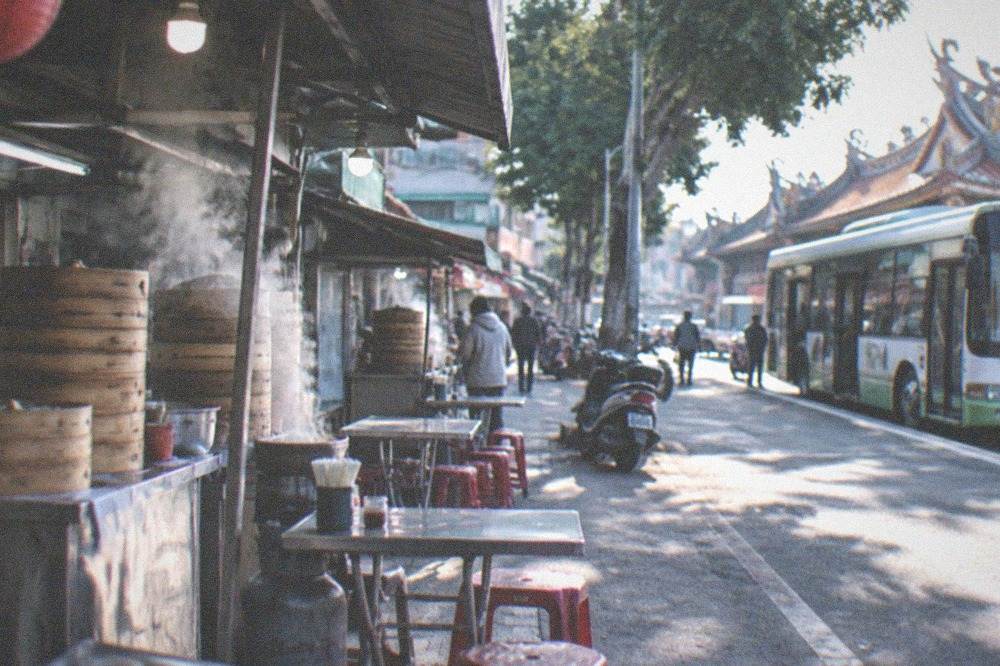
The old city is compact. The West Central District's food streets, the Confucius Temple, Chihkan Tower and the Grand Matsu Temple sit close enough that a walking tour can link them in a few hours without transport at all, which is why the guided format here is a walk rather than a bus tour. Anping is the exception: it is a separate district to the west, and a food day that pairs old-street eating with Anping's shrimp rolls needs a bus, a bicycle or a car. Other pages covering the same trip are gathered on Tainan Travel Guide.
The bus scheme is worth learning on day one. The city's own bus ticketing page sets out the free first 8 km policy and the transfer discount, which takes NT$9 off a bus fare after a Taiwan Railway journey within two hours. The policy is renewed annually, so check it is still running when you travel. The getting around Tainan page covers the rest of the toolkit, and the Tainan bus page has route detail.
One timing fact pairs well with an eating day: Chihkan Tower is open 08:30 to 21:30 daily, and that late closing is unusual. Most of the city's historic sites shut in the late afternoon, but Chihkan Tower is one of the few a visitor can see after dinner, which makes it the natural dessert-adjacent stop on a food evening in the old city. The Chihkan Tower page has the details.
Is a Food Tour in Tainan Worth Booking, or Should You Go Alone?
A guided food walk is worth booking if you do not read Chinese, if your trip is short, or if you want the night market rotation and the dawn beef soup schedule handled for you. It is not worth booking if you eat adventurously, have three or more days, and are willing to plan around the market days yourself, because Tainan's food is public, cheap and mostly unbookable. The honest answer is that the guide replaces research, not access.
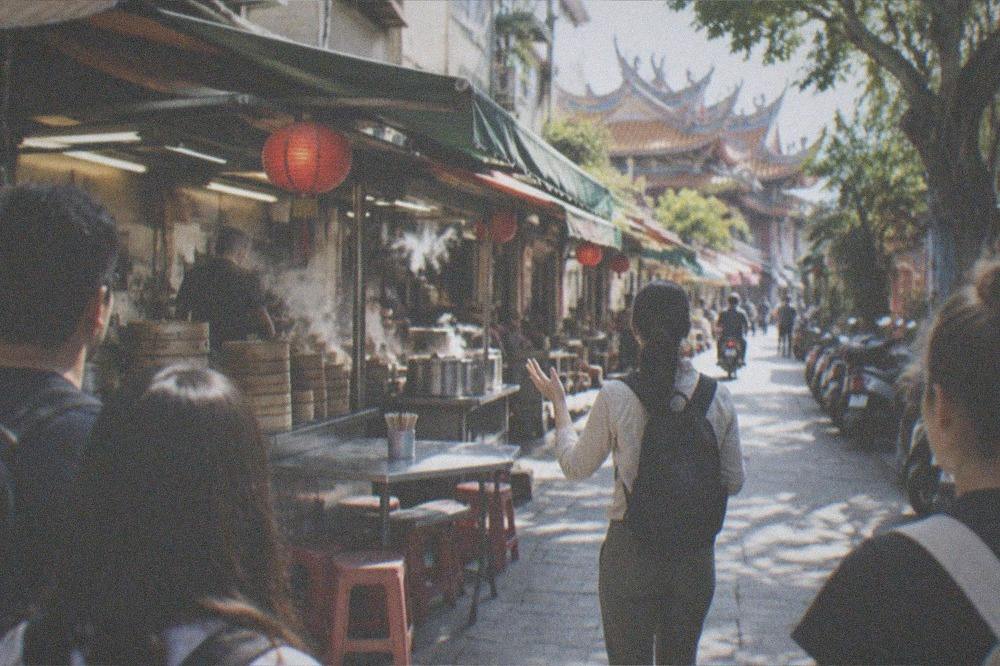
The case for the tour is the language and the logistics. English signage in Tainan exists and is improving, but the city's own information office describes it as an ongoing initiative rather than a finished one, and the older food streets are where it is thinnest. A guide who orders for the group turns a pointing-and-guessing meal into an explained one. A guide who knows which beef soup shop opens at which hour turns a 5 a.m. gamble into a plan.
The case against is that Tainan rewards the self-directed eater. The dishes are documented, the Tainan street food page maps the main ones, and the night market table above removes the biggest scheduling risk. With three days or more, you can give each market its own night, chase beef soup at dawn once, and still leave room for the temple courtyards and old streets that cost nothing. The Tainan weekend and one day in Tainan itineraries show how the food stops slot into full days.
The middle path is the one most travelers land on: one guided walk early in the trip to learn the dishes and the geography, then self-directed eating for the rest of it. That is the format this page's picks are built around. The walking tour below is the standard bearer for the guided half of that plan, and the food and culture walk is the shorter alternative.
A shorter option covers similar ground in four hours. The food and culture walking tour pairs the old city's historic streets with its snack stalls, and its listing shows a strong rating from a few dozen reviews, which for a food walk is a meaningful sample.
What Should a Full Eating Day in Tainan Look Like?
A full eating day in Tainan starts with dawn beef soup in the old city, moves through a morning of temple streets and a danzai noodle lunch, spends the afternoon on Anping's shrimp rolls and old street snacks, and ends at whichever big night market is open that evening, with Chihkan Tower's 21:30 closing as the after-dinner stop on non-market nights. The order matters more than the specific stalls.
The shape below is not a claim about any particular shop, because no stall on this site is certified as the original or the oldest. It is a schedule built from the verified facts: what opens when, what rotates, and what is free to enter. Treat it as a frame and fill it with whatever the guide or your own walking turns up.
| Time | Stop | Why this slot |
|---|---|---|
| Before 08:00 | Beef soup shop, old city | The famous shops open at dawn and sell out by mid-morning |
| 09:00 to 12:00 | West Central District old streets, Confucius Temple area | Free entry, snack stalls, danzai noodle lunch |
| 13:00 to 17:00 | Anping: old street, shrimp rolls, Anping Old Fort or Tree House | Separate district; each site NT$70 at the gate, open to 17:10 and 17:30 |
| 17:30 to 21:00 | Night market open that evening, per the rotation table | Garden Thu to Sun, Wusheng Wed, Fri, Sat, Dadong Mon, Tue, Fri |
| After 21:00 | Chihkan Tower, open to 21:30 daily | One of the few historic sites open after dinner |
Two adjustments for the seasons. In June and July, the city's festival calendar puts the mango season at Yujing in full swing, and mango ice is a Tainan summer institution worth scheduling an afternoon around. In July and August, the Qigu Seafood Festival runs on the lagoon coast, and a seafood day up at Qigu pairs naturally with the lagoon boat rides, both routes NT$200, and the salt mountain, NT$50 on foot at the gate. The Qigu pages cover that trip.
For the seafood half-day specifically, an ecological tour with an oyster buffet included is the bookable version of the lagoon coast's food offer, and it is one of the most heavily reviewed food-adjacent products in the Tainan roster.
How Do You Plan a Food Trip Around Weather and Crowds?
Plan Tainan food trips for October to March, when the city averages fewer than six wet days a month and daytime maxima sit between 24C and 31C, and expect the biggest crowds in January and February around Lunar New Year and temple pilgrimage, which is when the city's visitor numbers peak. Late summer is the wet season: August alone averages 466 mm of rain across 16 wet days, so book indoor-friendly eating, like Siaobei's covered market, in that window.
The climate table in the verified facts backs this up month by month. December is the driest month on record at 16 mm of rain across three wet days. October is the driest by wet days, 2.8, while still averaging 30.8C maxima, which is the combination a walking-and-eating trip wants. The Tainan weather and best time to visit Tainan pages carry the full breakdown, and the Taiwan typhoon season page covers the late-summer risk window.
The crowd pattern is the counter-intuitive part. European-trained planning assumes summer is peak season everywhere; in Tainan the Tourism Administration's own 2023 figures show the peak months are January and February, driven by pilgrimage traffic to temples like Nankunshen Daitian Temple, which drew 6,583,100 visitors that year against Chihkan Tower's 443,622. Those figures come with a caveat, that counts are compiled by each operator and methods differ between a ticketed museum and an open old street, but the shape is clear. Winter in Tainan is both the best eating weather and the busiest eating season, so book a guided walk early if your trip falls in that window.
For the practicalities around an eating trip, the pages on where to stay in Tainan, Tainan hotels and Tainan safety cover the rest of the planning, and the Tainan attractions overview maps the non-food stops. If you are arriving from Taipei or Kaohsiung, the Taiwan High Speed Rail pages cover the fares, and remember the HSR station sits at Shalun outside the old city, so budget a transfer on arrival day.
Common Questions About Eating Tainan with a Guide
Are there free walking tours in Tainan?
No. The free-walking-tour segment does not exist in Tainan; the checked listings show zero such tours. Every guided walk in the city is a paid product, and the genuinely free pages on this site are about free entry and free public space, like the temple courtyards and old streets, not free guiding.
How much does a food tour in Tainan cost?
Group walking tours with food included start from about US$69 per person for a four-hour walk, with six-hour options a little higher. Private tours with a car start from US$125.87 per person and rise with group size and length. No stall or dish price is officially published anywhere in the city, so treat any per-dish price a listing quotes as an estimate, not a fact.
Which night market is best in Tainan?
There is no single best, because only one of the big three is fully open on any given night apart from Friday, when Garden, Wusheng and Dadong all run. Garden Night Market, Thursday to Sunday, is the largest and the one most itineraries build around. Siaobei, indoors and open every day from noon to midnight, is the answer on Wednesdays and in rain.
Can you eat in Tainan without speaking Chinese?
Yes, with friction. The city runs bilingual-signage initiatives and tourist areas carry English menus, but coverage in the older food streets is incomplete, and the city's own information office describes the work as ongoing. A guided food walk exists precisely to absorb this friction, which is the strongest single argument for booking one.
What food is Tainan famous for?
Danzai noodles, coffin bread, milkfish soup, beef soup served at dawn, shrimp rolls from Anping, oyster omelettes and the night market snack culture built around them. Mangoes from Yujing, in season June and July, and lagoon seafood from the Qigu coast round out the calendar. The Tainan food guide on this site covers each dish in detail.
Is a private food tour in Tainan better than a group one?
A private tour is better if your eating day needs to cover Anping as well as the old city, since the two are not walkable from each other, or if you have dietary restrictions that need explaining to each stall. A group walk is better value for a first visit, because the old city core is compact and the standard dishes are all within it.
Eating Tainan with a guide is a scheduling decision more than an access decision. The city's food is public, the night markets cost nothing to enter, the temples and old streets are free, and the one thing a guide reliably adds is the ability to order, explain and route around a rotation that catches most visitors out at least once. Book one walk early in the trip, learn the dishes and the days, and eat the rest of Tainan on your own feet.