What Is the Most Beautiful Part of Taiwan?
Taiwan's beauty ranges from Taroko's marble gorges to the Sun Moon Lake shore, but the country's most rewarding region for travelers is the old capital of Tainan and its lagoon coast.
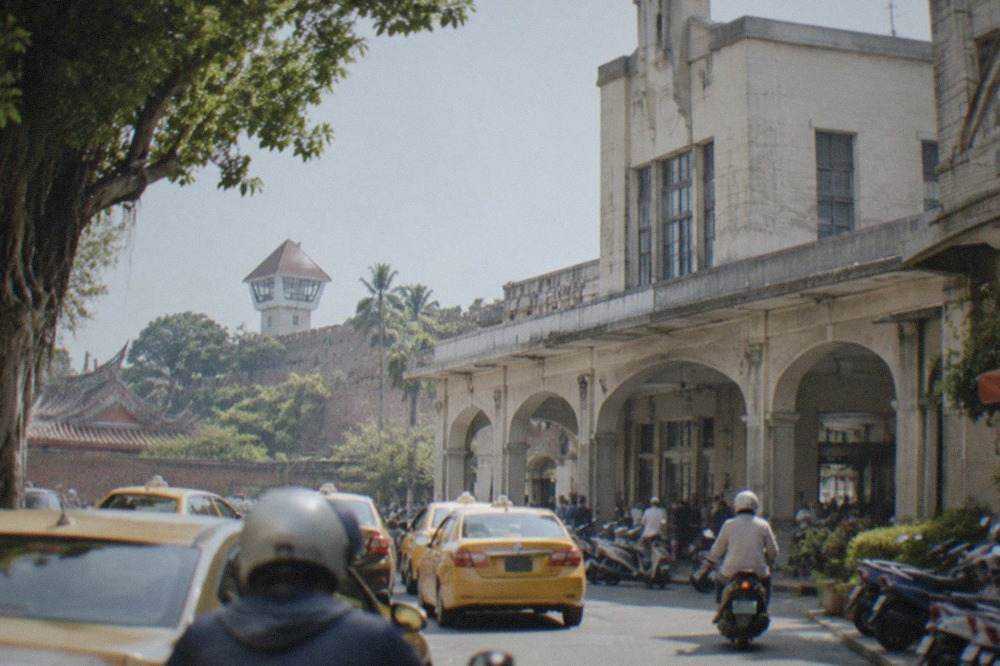
Taiwan is small enough that its landscapes change character within a single train ride, and that is exactly why the question of its most beautiful part never settles. The island holds East Asia's tallest road-accessible mountains, a marble gorge in the east, a sunken lake in the center, and a flat, historic, lagoon-fringed south where the country's oldest city stands. Ask ten residents and you will get a split between the east coast cliffs, the central mountains, and the old capital region around Tainan, and each answer is defensible.
This page makes a case rather than a ruling. The honest answer, argued below from official visitor data, climate records and the city's own tourism pages, is that Taiwan's most beautiful part is the southwest: the old capital of Tainan, its Anping coastline and the Qigu lagoon wetlands, a region that pairs four centuries of built heritage with the island's driest, sunniest weather. If you are weighing the city against the rest of the island, start with whether Tainan is worth visiting and what Tainan is best known for. This Tainan Travel Guide exists to cover that region in depth.
Which Part of Taiwan Do Travelers Find Most Beautiful?
There is no official designation, but the strongest case belongs to the southwest around Tainan, where the country's oldest city meets the lagoon coast. The region combines Dutch-era and Qing-era fortifications, temple architecture, old streets, mangrove waterways and the island's driest, sunniest weather, and the city's own tourism bureau documents more than twenty festivals a year against that backdrop.
Beauty in Taiwan splits into three broad claims. The east coast around Hualien and Taroko Gorge is the dramatic pick, where a river has cut a canyon through marble. The center, Sun Moon Lake and the Alishan cloud forest, is the misty, alpine pick. The south is the human pick: not wilderness, but a working, living landscape of temples, forts, salt flats and oyster beds that the Tainan City Government Tourism Bureau documents site by site, with the Dutch fort at Anping dating to 1624 and its outer walls completed in 1634.
The distinction matters for planning. The east coast is beautiful and occasionally closed, because typhoon and earthquake damage shuts sections of the gorge. The high mountains are beautiful and cold, wet and cloud-bound for much of the year. The southwest is beautiful and reliable: the Central Weather Administration records Tainan's October as the driest month of the year by wet days while still averaging 30.8C maxima, which is a combination no other part of the island matches.
Why Is Tainan Called Taiwan's Most Beautiful Old City?
Tainan was Taiwan's capital for more than two centuries, until the late nineteenth century, and it holds the island's densest concentration of historic architecture: Dutch ramparts from the seventeenth century at Anping, Fort Provintia built in the early 1650s at what is now Chihkan Tower, Qing-era temples, Japanese-era department stores and the landscaped courtyards of the Confucius Temple. No other Taiwanese city layers four eras of building in walkable range.
The city's own pages make the sequence concrete. The Dutch East India Company occupied the Anping site in 1624 and finished Fort Zeelandia in 1634; Koxinga took the fort in 1662 and the site was rebuilt under Japanese rule before taking its present form in a 1975 city renovation. What survives from the Dutch period at Anping Old Fort is modest, the brick walls of the south outer rampart, and the city says so plainly, which is the kind of honesty that makes the place more interesting rather than less.
The beauty is not only in the monuments. Shennong Street's low storefronts, the canal-side evenings, the sword lion carvings scattered across Anping and the free-entry temples, the Grand Matsu Temple opens at 06:00 and closes at 21:00, all add up to a city whose ordinary streets carry more history than most capitals' museums. For a first visit structured around these streets, where to go in Tainan for the first time covers the ordering question.
The practical case for the city as the island's most beautiful region also rests on access. Chihkan Tower stays open until 21:30 daily, one of the few historic sites in Taiwan a visitor can see after dinner, and the city bus network's first 8 km are free with an electronic card under the city's current-year policy, which makes the old core unusually cheap to explore.
What Does the Climate Say About the Best Time to See the South?
The southwest is Taiwan's dry, sunny half, and the verified climate normals show it. Tainan receives 466 mm of rain in August across 16 wet days but only 16 mm in December across 3, and October records the fewest wet days of any month, 2.8, while still averaging 30.8C daytime maxima. October to March is the comfortable window, and it is exactly when the region's biggest festivals run.
The Central Weather Administration's 1991 to 2020 normals for the Tainan station turn the island's beauty question into a scheduling question. The high mountains and the east coast get their rain in the same summer window, but they lack the southwest's winter payoff. Tainan's mean annual temperature is 24.6C, and from April to October it exceeds 30C on most days, so the dry half of the year is not just dry, it is warm.
| Month | Mean max (C) | Rain (mm) | Wet days | Days over 30C |
|---|---|---|---|---|
| January | 23.0 | 20.7 | 3.8 | 0.0 |
| April | 29.3 | 69.8 | 5.9 | 14.9 |
| July | 33.0 | 374.6 | 13.0 | 28.9 |
| August | 32.6 | 466.1 | 15.8 | 27.6 |
| October | 30.8 | 30.8 | 2.8 | 23.6 |
| December | 24.4 | 16.2 | 3.0 | 0.5 |
Typhoon risk concentrates in the late summer months, and the rainfall table shows the same shape independently. The city's own festival calendar matches the dry season: the Yanshui Beehive Fireworks are held in February on the Lantern Festival, the Yuejin Lantern Festival runs February to March, and the Guanziling Hot Spring and Food Festival stretches from September to November. If you are choosing between the south and the east coast on weather alone, the south wins from October to March.
The one planning caution: the calendar is why the region's peak months are January and February, not summer. Pilgrimage traffic and Lunar New Year crowds fill the temples in those months, so travelers chasing quiet beauty should aim for the shoulder of late October to early December.
How Does Tainan Compare with Taiwan's Other Beautiful Regions?
Taroko Gorge and the east coast are the dramatic pick, Sun Moon Lake and Alishan are the alpine pick, and the southwest around Tainan is the heritage-and-coast pick. On verified visitor numbers the southwest outdraws them: Anping as a district recorded 4,441,443 visitors in 2023 and Nankunshen Daitian Temple 6,583,100, figures the Tourism Administration compiled directly from site operators.
The comparison is fairer if you separate what each region is beautiful at. The gorge is unmatchable scenery but a thin experience: you drive it, you look at it, you leave. The lake and the cloud forest are resort beauty, built around sunrise viewing and forest railways. The southwest is inhabited beauty, where the landscape and the buildings and the food belong to the same continuous story, and where the sites are cheap or free: the Confucius Temple, the Grand Matsu Temple, Five Concubines Temple and Kaiyuan Temple all charge no admission at all, while the ticketed forts cost NT$70 at the gate.
| Region | Signature beauty | 2023 anchor figure | Best months |
|---|---|---|---|
| Southwest (Tainan, Anping, Qigu) | Dutch and Qing heritage, lagoon wetlands | Anping district: 4,441,443 visitors | October to March |
| East coast (Hualien, Taroko) | Marble gorge, coastal cliffs | not comparable, national park data not in this file | autumn and spring |
| Center (Sun Moon Lake, Alishan) | Alpine lake, cloud forest | not comparable, not in this file | spring and autumn |
Caveats belong on those numbers. The Tourism Administration's counts are compiled by each operator, methods differ between a ticketed museum and an open old street, and the 2020 to 2022 years are COVID-depressed. But the direction is unmistakable: the temple-and-old-street south outdraws the fort-and-museum circuit by a wide margin, and the region's beauty is the reason.
For travelers splitting a trip between cities, which city is better to visit, Tainan or Kaohsiung covers the pairing that most southern-Taiwan itineraries end up making.
Which Coast and Wetland Landscapes Surround Tainan?
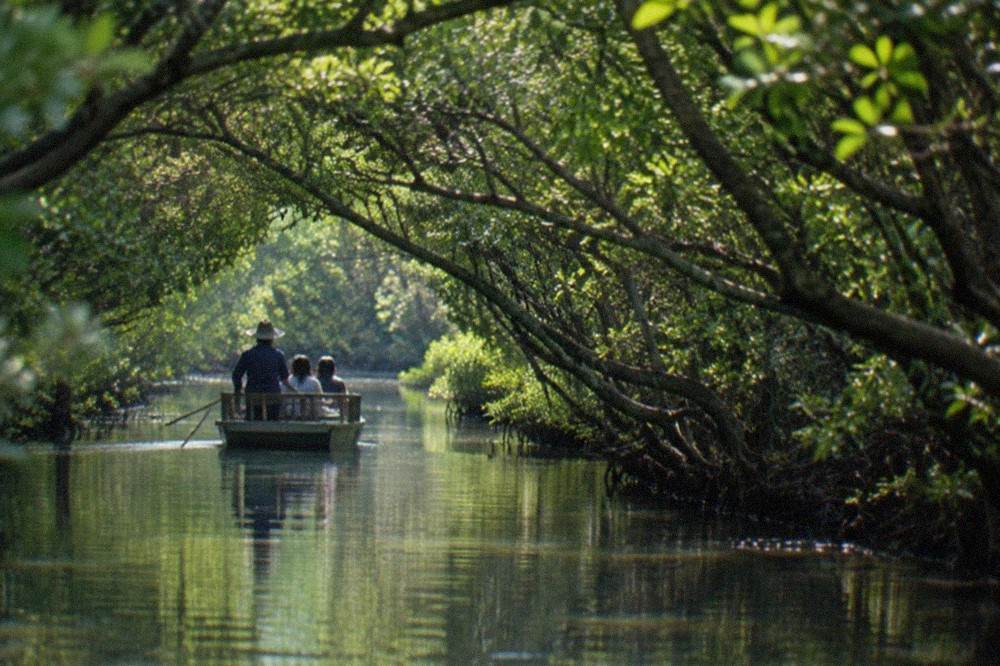
The city's beauty extends west into the Taijiang lagoon system: the Sicao Green Tunnel's mangrove waterway, the Qigu Salt Mountain's white heap, the black-faced spoonbill wintering grounds and the oyster platforms of the Qigu lagoon. The Sicao boats run daily from 08:00 to 16:00 at NT$200 full fare, and Qigu Salt Mountain charges a NT$50 cleaning fee per person on foot.
This is the part of the answer that surprises travelers who expected only temples. The coast is where the old capital meets open water, and the Taijiang National Park pages describe a landscape of sandbars, mangroves and abandoned salt fields that the city has turned into a slow-tourism corridor. The black-faced spoonbills arrive in the Qigu wetlands around September and October and stay toward March, which puts one of East Asia's rarest large birds inside the same dry-season window as the festivals.
The salt landscapes are unique on the island. Qigu Salt Mountain is a heap of leftover industrial salt, and the Jingzijiao tile-paved salt fields nearby recorded 636,193 visitors in 2023, more than Chihkan Tower, which tells you how strongly the salt-coast aesthetic pulls. The boat rides through the Sicao mangroves are the quietest hour on the coast, and both the Green Tunnel and the longer Taijiang route cost the same NT$200, so there is no cheap-versus-expensive trade-off to make.
If the coast sells you on the region, a good 3-day itinerary for Tainan shows how to fold Anping, the lagoon and the old core into one stay.
What Is the Most Beautiful Part of Taiwan?
Stated as a verdict rather than a case: the southwest, anchored by Tainan. The region holds the island's oldest city, its densest heritage architecture, a mangrove and salt-flat coast, the year's driest and sunniest weather, and a festival calendar that fills the comfortable season. Taroko and Sun Moon Lake are more spectacular in photographs, but the southwest is the part of Taiwan that rewards the most hours on the ground.
The distinction between spectacular and rewarding is the whole argument. A gorge is fully seen in a morning. The old capital is not fully seen in a week: the night markets rotate by day of the week, the temples open at dawn, the forts close late, and the coast changes with the bird season. The city's own tourism pages list Garden Night Market on Thursday through Sunday, Wusheng on Wednesday, Friday and Saturday, and Dadong on Monday, Tuesday and Friday, with indoor Siaobei open daily as the wrong-night fallback, a schedule that makes the city different on every night of a stay.
The Chimei Museum, sitting on the HSR shuttle route with its NT$200 permanent collection, gives the region a world-class indoor anchor for the hot afternoons, and whether the Chimei Museum is worth it takes that question head on. Between the museum, the forts, the temples, the coast and the markets, the southwest is the part of Taiwan where beauty and itinerary meet most easily.
Common Questions About Taiwan's Most Beautiful Places
What Is The Most Beautiful Part Of Taiwan?
There is no official answer, but the strongest case is the southwest around Tainan: the island's oldest city, its Dutch and Qing heritage, the Qigu lagoon and salt coast, and the driest, sunniest weather on the island, with the peak visiting season in the dry months of October to March and the festival peak in January and February.
Is Tainan the oldest city in Taiwan?
Yes, Tainan is generally regarded as Taiwan's oldest city. The Dutch occupied the Anping site in 1624 and completed Fort Zeelandia in 1634, and the city served as the island's capital for more than two centuries, until the late nineteenth century.
When is the best time to visit southern Taiwan?
October to March. The Central Weather Administration's normals show October as Tainan's driest month by wet days while still averaging 30.8C maxima, and December brings only 16 mm of rain. Summer, June to September, carries most of the year's rainfall and the typhoon risk.
Is Taroko Gorge more beautiful than Tainan?
Taroko is more dramatic, but it is a drive-through landscape and sections close after typhoon and earthquake damage. Tainan rewards more days on the ground with heritage sites, night markets that rotate nightly, free-entry temples and a lagoon coast, all in the island's most reliable weather.
What is the most beautiful coastal area near Tainan?
The Taijiang lagoon system west of the city: the Sicao Green Tunnel mangrove boat ride at NT$200, the Qigu Salt Mountain, the Jingzijiao tile-paved salt fields and the black-faced spoonbill wintering grounds, which the birds occupy from around September to March.
The question of Taiwan's most beautiful part will keep its plural answers, and the east coast will always have its advocates. But on the evidence the island's own agencies publish, the climate normals, the visitor counts and the festival calendar, the southwest around Tainan is the region where the country's beauty is deepest, cheapest to enter and easiest to reach, and that combination is what turns scenery into a trip.