Sacrificial Rites Martial Temple
The Sacrificial Rites Martial Temple is one of Tainan's most historically significant temples, a Guandi temple whose name records the fact that it once received official state sacrifices. This guide covers what it is, what to look for, and how to fold it into a day in the old city.
Short answer
The Sacrificial Rites Martial Temple is a temple dedicated to Guandi, the God of War, in Tainan's West Central District, close to the Grand Matsu Temple and Chihkan Tower. Its name refers to its former status as a temple where the state itself performed official rites. The city does not publish a ticket price for it, and most of Tainan's historic temples charge no admission.
Sacrificial Rites Martial Temple
Tainan was Taiwan's capital for more than two centuries, until the late nineteenth century, and the temples that survive from that era are the clearest record of what the city cared about. The Sacrificial Rites Martial Temple, known in Chinese as the Sidian Wumiao, is one of them: a temple dedicated to Guandi, the God of War, whose honorific title, "Sacrificial Rites," marks it as a temple where the state itself once performed official rites rather than a purely local place of worship. It sits in the West Central District, in the dense temple quarter near the Grand Matsu Temple and within easy walking distance of Chihkan Tower, which makes it one of the most naturally combinable stops in the old city.
This guide explains what the temple is, what the name means, what to look for inside, and how to plan a visit around it. One honest note up front: the Tainan City Government Tourism Bureau's verified data for this page covers the temple's identity and location, but the city's published hours and ticket pages in our verified research cover other temples in the district in detail. Where a figure is not in a verified official source, this page says so rather than guessing, and where the surrounding temples have verified hours and prices, they are given in full.
What Is the Sacrificial Rites Martial Temple in Tainan?
The Sacrificial Rites Martial Temple is Tainan's principal temple dedicated to Guandi, the God of War, a deified historical general revered across the Chinese-speaking world for loyalty and righteousness. Its "Sacrificial Rites" title records that it once received official state sacrifices, a status granted to only a small number of temples. It stands in the West Central District, in the old city's temple quarter, a short walk from the Grand Matsu Temple and Chihkan Tower.
The naming is the part most visitors miss, and it matters. In the Qing period, a temple could be elevated to receive official rites, which meant the state itself, through its officials, performed sacrifices there on a set schedule. That status was an honor granted to relatively few temples, and a temple that held it carried the word for sacrificial rites in its formal name. The Sacrificial Rites Martial Temple in Tainan carries that marker to this day, which is why its full name is longer and more formal than the names of the neighborhood temples around it.
Guandi himself is one of the most widely worshipped figures in the Chinese religious world. He began as a historical general of the Three Kingdoms period and was progressively deified over the following centuries, so that today he is worshipped as a god of war, of loyalty, of righteousness, and by extension of commerce and fraternal associations. A Guandi temple is therefore not a martial museum; it is a working temple where people pray for protection, integrity and success. The Sacrificial Rites Martial Temple is Tainan's foremost example, and its long history in the old capital is the reason it holds its elevated status.
For context on how Tainan's temple landscape actually draws visitors, the numbers are instructive. The Tourism Administration's 2023 dataset shows that Tainan's biggest temple draws are not the downtown historic sites at all: Nankunshen Daitian Temple in Beimen drew 6,583,100 visitors in 2023, roughly fifteen times Chihkan Tower's 443,622. The downtown temples, including this one, draw a different kind of visitor, one who is walking the old city rather than arriving on a pilgrimage bus, and the experience reflects that.
If a guided structure appeals, these are the tours that pair well with a temple-quarter visit.
Where Is the Sacrificial Rites Martial Temple and How Do You Get There?
The Sacrificial Rites Martial Temple stands in Tainan's West Central District, in the old city's temple quarter, a short walk from the Grand Matsu Temple and roughly ten minutes on foot from Chihkan Tower. There is no mass transit station at the doorstep: visitors arrive on foot from the surrounding old streets, by city bus to a nearby stop, or as part of a walking route through the historic core.
The temple quarter is compact and walkable, which is the main practical point. The Grand Matsu Temple is the nearest headline neighbor, and the two temples are so close that a visitor walking between them spends more time crossing the street than moving between them. Chihkan Tower, the city's most famous Dutch-era site, is within the same walking radius, and the Confucius Temple is a longer but still easy walk south. A sensible route strings them together rather than treating each as a separate trip.
For bus travel, one verified policy is worth knowing. Tainan city buses are free for the first 8 km of travel on the trunk and branch network, provided you hold an electronic card such as an EasyCard, iPASS, iCash 2.0 or a Citizen Card, and provided you tap on AND tap off; the tap off is the part visitors miss. The same trip paid in cash costs 26. The Tainan city bus ticket page states the scheme runs for the 2026 calendar year, so treat it as a current policy rather than a permanent one.
| Bus cost scenario | Fare |
|---|---|
| Trunk or branch bus, first 8 km, with EasyCard / iPASS / iCash 2.0 / Citizen Card | Free, tap on and tap off |
| Same trip paid in cash | NT$26 |
| Transfer from Taiwan Railway to a city bus within 2 hours, with card | NT$9 discount |
| H31 HSR shuttle bus, with an HSR ticket stub | Free |
| H31 HSR shuttle bus, without HSR ticket | NT$18 one section, NT$36 two sections |
One caveat on the transfer discount: inserting another mode between the train and the bus, such as a public bike, voids the discount, so plan the sequence if the saving matters to you.
What Can You See Inside the Sacrificial Rites Martial Temple?
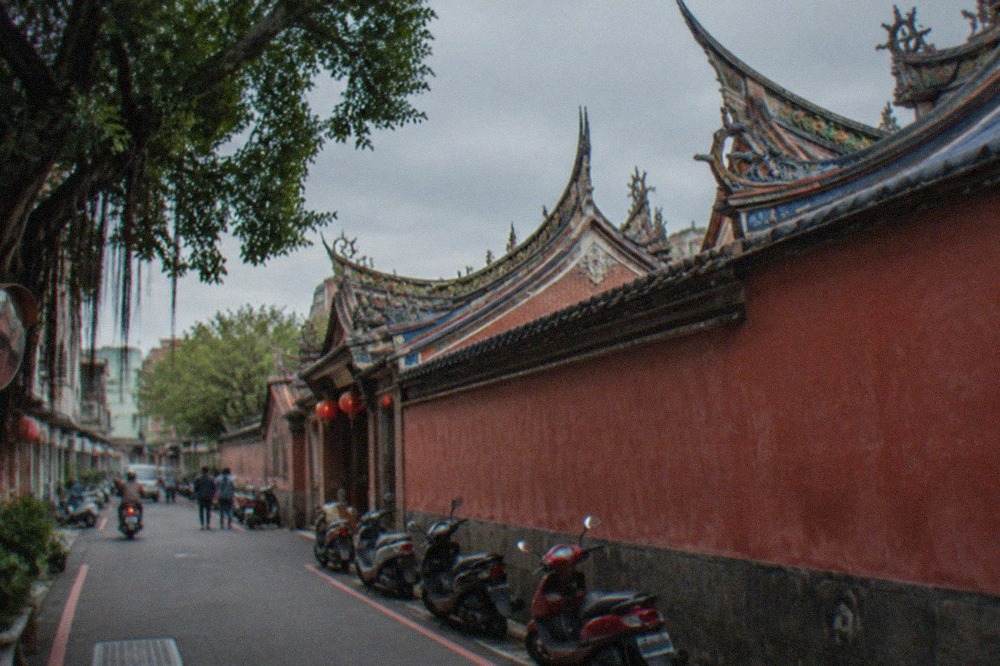
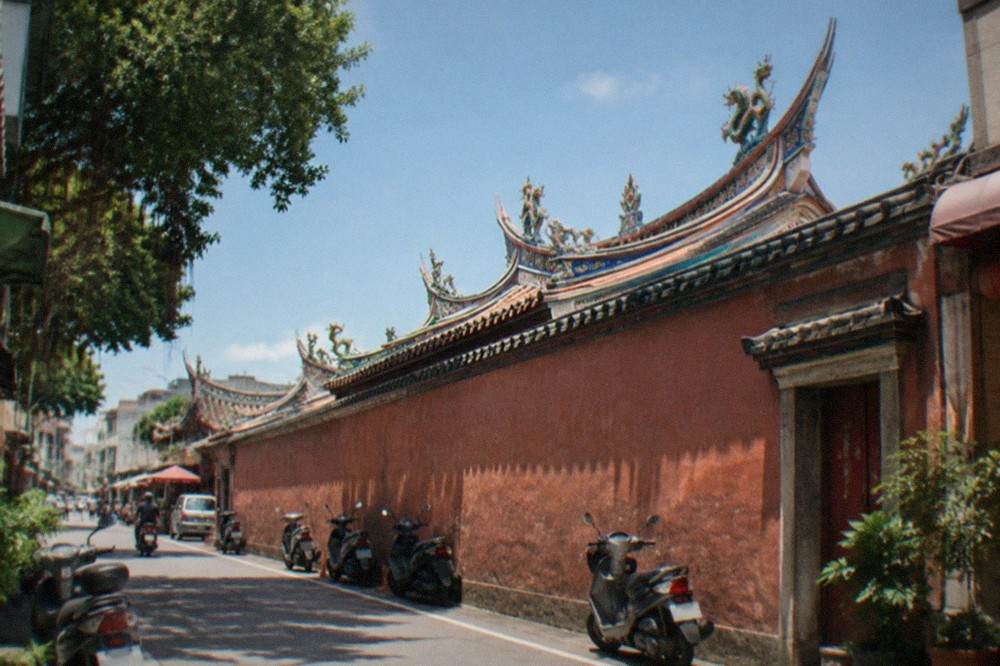
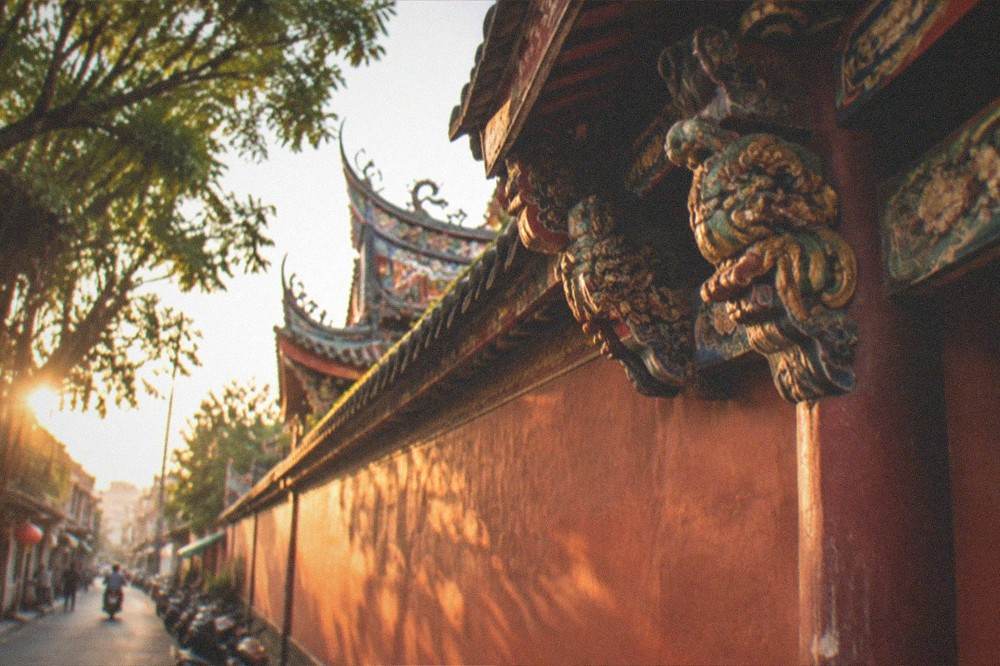
Visitors to the Sacrificial Rites Martial Temple can expect a classic Taiwanese temple interior: a main hall dedicated to Guandi with his statue on the altar, incense burners, hanging plaques and couplets, ornate carved and painted woodwork, and the curved swallowtail rooflines typical of Taiwan's historic temple architecture. The temple's scale and formality set it apart from the small neighborhood shrines around it.
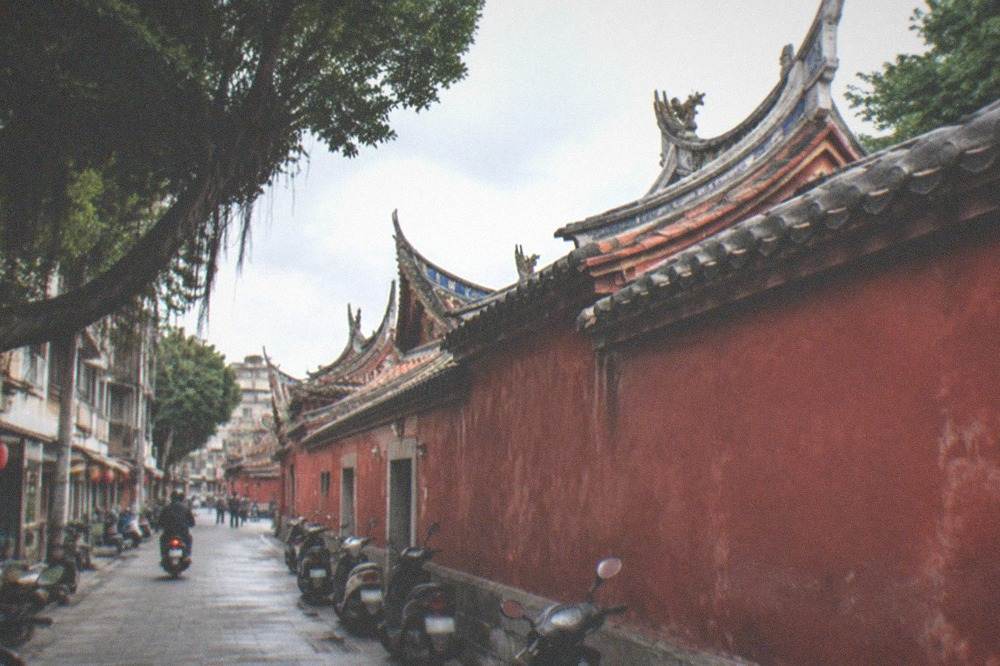
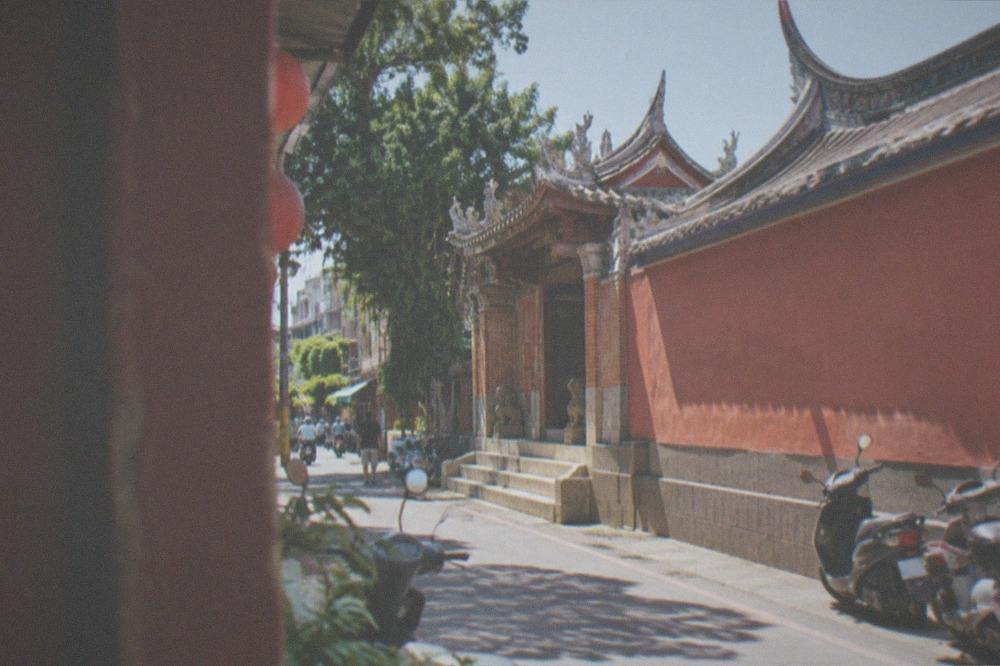
The architecture follows the conventions of Taiwan's major historic temples. The roofline carries the upturned swallowtail ridges that mark a temple of rank, decorated with cut-and-paste ceramic figurines, and the entrance portico carries the dragon columns and painted door guardians that a temple of this standing is expected to have. Inside, the main hall holds the image of Guandi, and the side spaces carry secondary altars. This page does not inventory individual artifacts, because our verified sources for this temple describe its identity and status rather than cataloguing its contents, and inventing a plaque-by-plaquette tour would be exactly the kind of guesswork this site refuses to do.
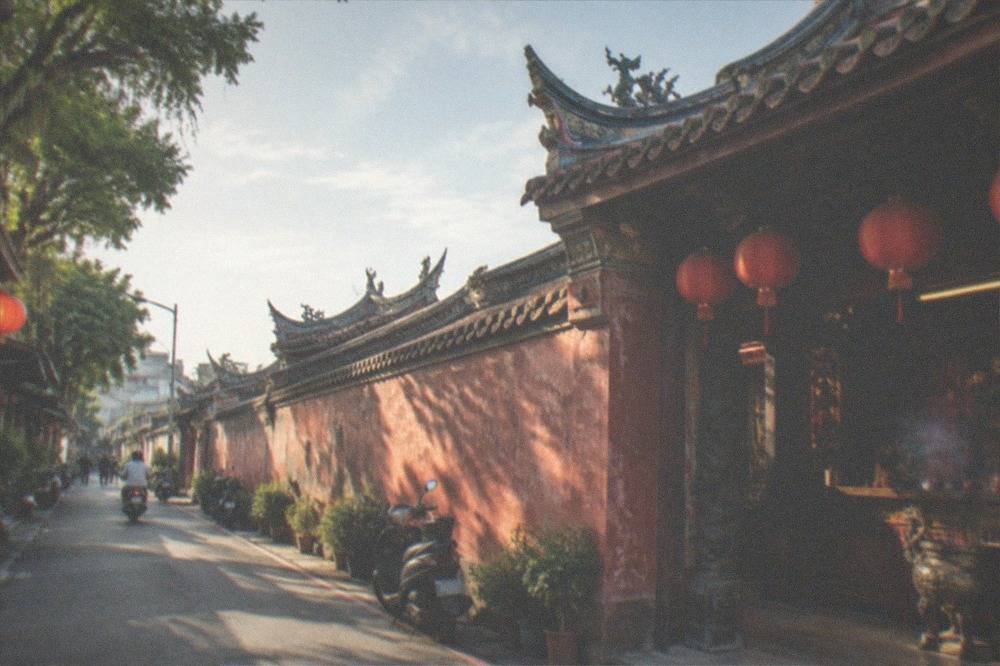
What can be said with confidence is architectural and historical context. Tainan's old city holds the densest concentration of historic temples in Taiwan, a direct consequence of its two centuries as the island's capital, and the Sacrificial Rites Martial Temple belongs to the top rank of that stock. Its neighbors make the point: the Tainan Confucius Temple, the city's "first academy of Taiwan," and the Tainan City God Temple are both in the same historic core, and a visitor can walk a full temple circuit in an afternoon. The Tainan temple trail itinerary strings the best of them together in a planned order.
Because this is a working temple rather than a ticketed attraction, behavior matters more than logistics. Our guide to temple etiquette in Tainan covers the basics of respectful visiting, and a related question, what to wear, is answered in detail on the page about the dress code at the Tainan Confucius Temple, whose principles apply to any temple in the city.
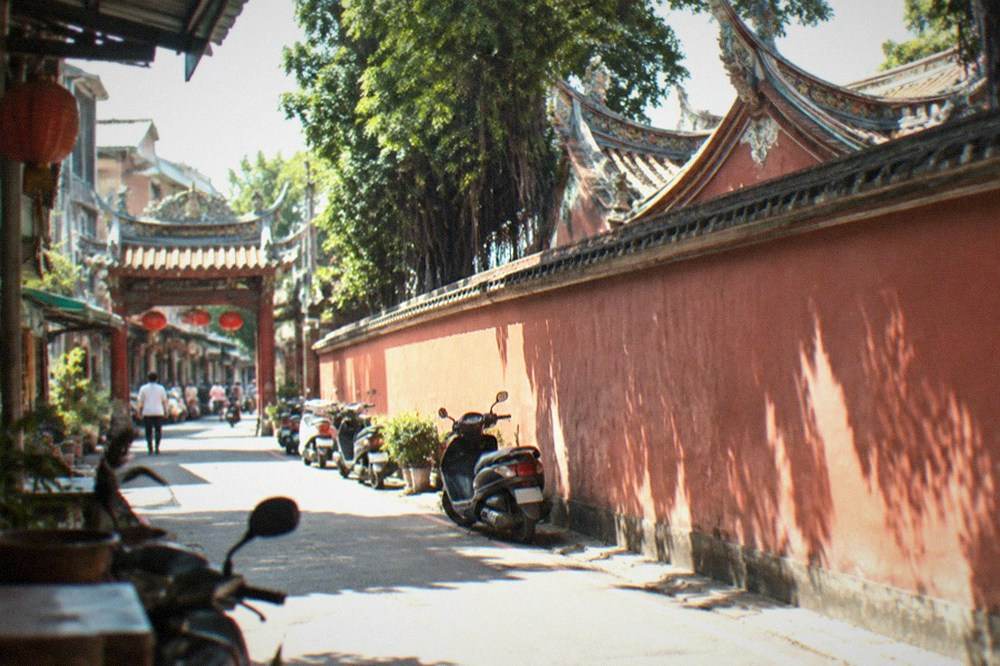
A qipao rental is a popular way to photograph the old city's streets and temples, and the temple quarter's red walls and stone paving make it one of the best backdrops in Tainan for it.
The rental runs a full day, which is long enough to cover the temple quarter in the morning and carry the dress out to Anping in the afternoon, and the operator's live listing shows current availability and options.
How Much Does the Sacrificial Rites Martial Temple Cost to Visit?
The Tainan City Government Tourism Bureau's verified data does not list a ticket price for the Sacrificial Rites Martial Temple, and this page will not print a number the city has not published. What is verified is the pattern around it: Tainan's major historic temples, including the Confucius Temple, Grand Matsu Temple, Five Concubines Temple and Kaiyuan Temple, all charge no admission at all, while the city's Dutch-era forts and museums charge between NT$70 and NT$200.
The honest answer is that a temple of this kind in Tainan is almost certainly free or nearly free to enter, but "almost certainly" is not a fact, and the city's own pages carry the standing disclaimer that the on-site notice governs. The practical advice is therefore simple: walk in, and if there is a donation box, a small contribution is the normal way to support a working temple. Do not show up expecting a ticket desk, and do not expect a combined ticket with the surrounding sites, because no such combined ticket is verified for this temple.
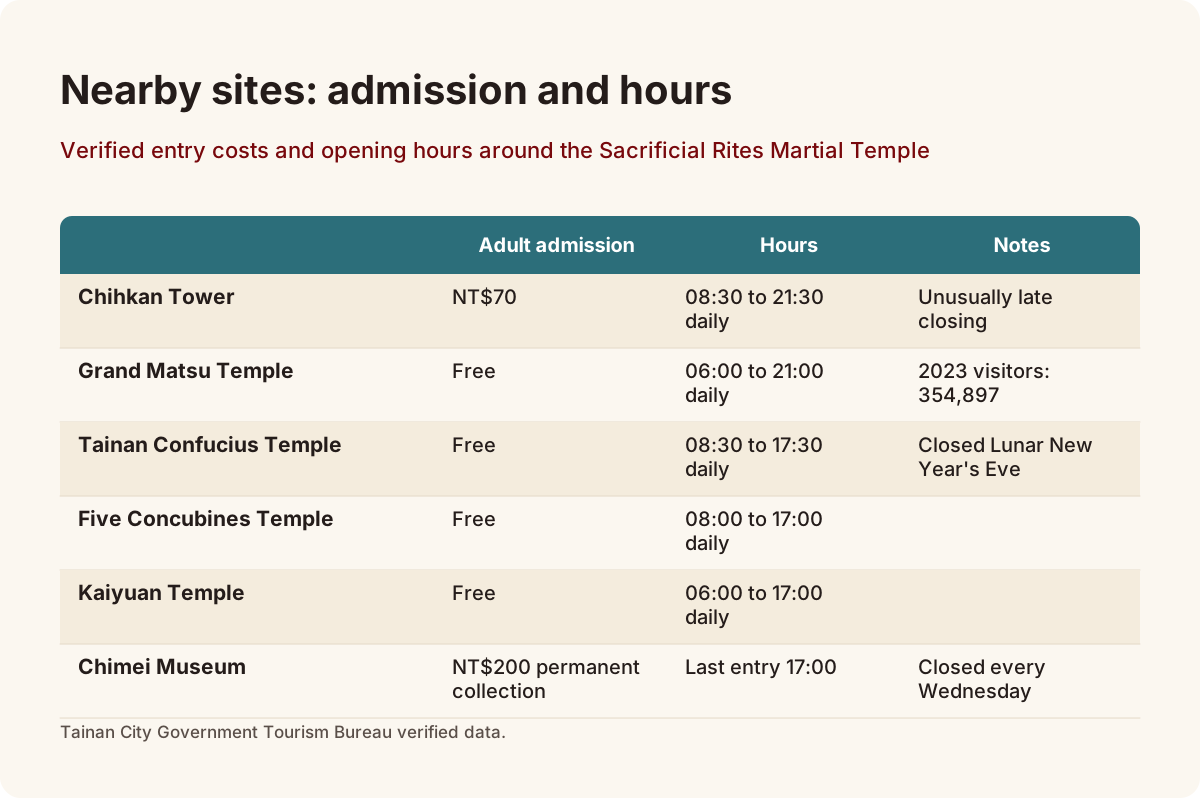
The surrounding sites, by contrast, have fully verified prices, all "at the gate" rather than guaranteed:
| Nearby site | Adult admission | Hours | Notes |
|---|---|---|---|
| Chihkan Tower | NT$70 | 08:30 to 21:30 daily | Unusually late closing; one of the few historic sites open after dinner |
| Grand Matsu Temple | Free | 06:00 to 21:00 daily | 2023 visitors: 354,897 |
| Tainan Confucius Temple | Free | 08:30 to 17:30 daily | Closed Lunar New Year's Eve |
| Five Concubines Temple | Free | 08:00 to 17:00 daily | |
| Kaiyuan Temple | Free | 06:00 to 17:00 daily | |
| Chimei Museum | NT$200 permanent collection | Last entry 17:00 | Closed every Wednesday |
Concessions at the paid city sites are half price, and Tainan residents enter free with ID; a visitor is not a resident, so do not read that line as applying to you.
When Is the Best Time to Visit the Sacrificial Rites Martial Temple?
The best months to visit Tainan, and therefore this temple, are October to March, when the city is dry, warm and sunny: October averages 30.8C maxima with just 2.8 wet days, the lowest of any month, while August brings 466 mm of rain across 16 wet days. Within a day, mornings are the quieter window at temple sites, and the surrounding old streets are at their best before the evening crowds arrive.
The climate case is unusually clear-cut, and it comes from the Central Weather Administration's own published normals for Tainan station, covering 1991 to 2020. Tainan's rain is almost entirely a summer event: close to three-quarters of the annual 1,761 mm falls between May and September, and the city records 186 days a year above 30C. The Central Weather Administration's climate statistics publish the full table, and the shape of it is the reason this site tells every visitor the same thing: come in the cool half of the year.
| Month | Mean max C | Rain mm | Wet days |
|---|---|---|---|
| January | 23.0 | 20.7 | 3.8 |
| April | 29.3 | 69.8 | 5.9 |
| July | 33.0 | 374.6 | 13.0 |
| August | 32.6 | 466.1 | 15.8 |
| October | 30.8 | 30.8 | 2.8 |
| December | 24.4 | 16.2 | 3.0 |
There is a second, counter-intuitive timing fact worth knowing. Tainan's peak visitor months are January and February, driven by temple pilgrimage and Lunar New Year, not by summer holidays. That is the opposite of the assumption most long-haul visitors arrive with, and it matches the climate table exactly: the city's busiest season is its driest and most comfortable one. If you want the temple quarter to yourself, aim for a weekday in the shoulder months rather than a Lunar New Year week, when temples across the city are at their busiest and most atmospheric at the same time.
Typhoon risk concentrates in the late summer months, July to September, and when the Tainan City Government declares a typhoon day, attractions and transport may suspend; the Tainan Art Museum's own hours page states it closes when the city announces a work suspension, which is a concrete example of the general rule. Check the live forecast rather than the calendar if you are traveling in that window.
What Should You Combine with the Sacrificial Rites Martial Temple?
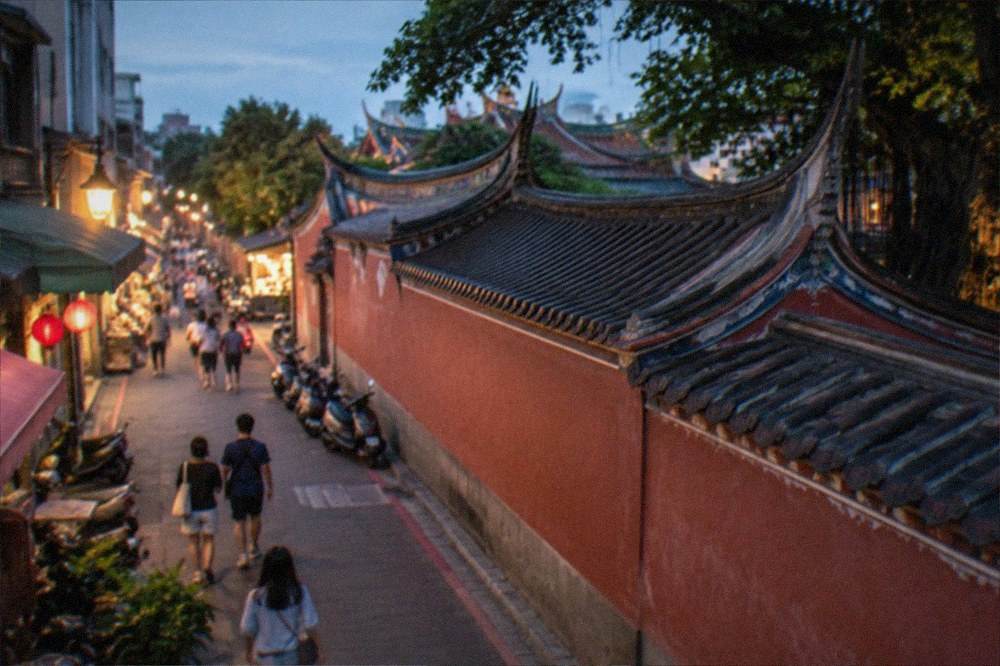
The natural combination is the surrounding temple quarter and old streets: the Grand Matsu Temple next door, Chihkan Tower within a short walk, the Confucius Temple and City God Temple in the same historic core, and Shennong Street's old-shopfront atmosphere in the evening. A half day covers the temple quarter on foot; a full day adds Anping's forts and the Tree House to the west.
The walkable core is the reason to base yourself nearby. Chihkan Tower's late closing, 21:30 daily, makes it one of the few historic sites in the city a visitor can see after dinner, and the surrounding snack streets fill the gaps between temples. Shennong Street is the best-known of the old streets in the evening, and the night markets rotate by day of week, so check the schedule before planning an evening: Garden Night Market opens Thursday to Sunday, Wusheng Wednesday, Friday and Saturday, Dadong Monday, Tuesday and Friday, and Siaobei is indoors and open every day, which makes it the wet-weather and wrong-night answer.
For a fuller circuit, the Tainan temple trail itinerary is this site's planned route through the city's temples, and the temple immediately adjacent to this one is covered on its own page, alongside the City God Temple and the other core temples. Visitors with more time can push out to Anping Old Fort and the Anping Tree House, both NT$70 at the gate, or to the Chimei Museum, NT$200 for the permanent collection and closed every Wednesday. Anping Old Street rounds out the west-side walk with its shopfront lanes and snack stalls.
An evening walking tour is one way to see the old city after the temples close, with the operator's live listing showing current availability.
Is the Sacrificial Rites Martial Temple Worth Visiting with Limited Time?
Yes, for visitors with any interest in Tainan's temples or history, because the temple costs nothing to enter in practice, sits inside the densest cluster of historic sites in the old city, and adds a formal, state-ranked temple to a circuit that otherwise emphasizes Dutch forts and academies. Visitors with no interest in temple architecture can skip it without guilt and lose little.
The honest calculus is about what the temple adds to a day. Chihkan Tower, the Confucius Temple and the Grand Matsu Temple each carry a distinct story: Dutch administration, imperial scholarship and popular religion. The Sacrificial Rites Martial Temple carries a fourth, the state's formal cult of loyalty and war, and it is the only one of the four whose name itself records its rank. That is a real addition, and it costs a visitor perhaps twenty minutes. For a one-day visitor deciding between the temple quarter and Anping, the answer is not either-or: the temple quarter fills a morning, Anping fills an afternoon, and Chihkan Tower's 21:30 closing means the evening is free for either.
For visitors who want a deeper grounding in the island's history before or after the temple quarter, the National Museum of Taiwan History is the strongest option, and its entry ticket can be arranged in advance through the operator's live listing.
These are the experiences that pair best with a visit to the old city's temple quarter.
Common Questions About the Sacrificial Rites Martial Temple
Is the Sacrificial Rites Martial Temple free to enter?
The Tainan City Government Tourism Bureau's verified data does not publish a ticket price for this temple, and this site does not print numbers the city has not published. Tainan's major historic temples, including the Confucius Temple, Grand Matsu Temple, Five Concubines Temple and Kaiyuan Temple, all charge no admission, and a small donation at the box is the normal way to support a working temple.
What god is worshipped at the Sacrificial Rites Martial Temple?
The temple is dedicated to Guandi, the God of War, a deified Three Kingdoms general revered for loyalty and righteousness. Guandi is one of the most widely worshipped figures in the Chinese religious world, and this is Tainan's foremost temple in his cult.
What does "Sacrificial Rites" in the temple's name mean?
It records the temple's former status as a recipient of official state sacrifices, an honor granted to only a small number of temples in the imperial period. The formal name distinguishes it from ordinary neighborhood shrines.
How long does a visit take?
Allow roughly twenty to thirty minutes for the temple itself, longer if you are photographing the architecture. Most visitors fold it into a half-day walk through the surrounding temple quarter, which includes the Grand Matsu Temple, Chihkan Tower and the Confucius Temple.
What else is within walking distance?
The Grand Matsu Temple is immediately adjacent, Chihkan Tower is roughly ten minutes on foot, and the Confucius Temple and City God Temple sit in the same historic core. Shennong Street and the surrounding old-shopfront lanes make a natural evening continuation.
When is the best time of year to visit?
October to March is Tainan's dry, comfortable half of the year: October averages 30.8C maxima with just 2.8 wet days, against August's 466 mm of rain across 16 wet days. January and February are the city's busiest temple months because of Lunar New Year pilgrimage, so expect crowds then.
The Sacrificial Rites Martial Temple is not the loudest attraction in Tainan, and that is precisely its value. It sits quietly in the temple quarter, a formal state-ranked temple among the snack streets and old shopfronts, and it rewards the visitor who walks in knowing what its long name means. Pair it with the Grand Matsu Temple next door, give Chihkan Tower its due, and finish the day on Shennong Street, and you will have seen the old capital's religious core as it actually fits together. More on the whole city's layout and planning is available throughout Tainan Travel Guide, including the temple trail itinerary and the etiquette guide linked above.