Tainan Desserts and Shaved Ice
Tainan's reputation for sweets runs ahead of almost everything else the city is known for, and the dessert culture here is not an accessory to the temples and forts, it is a reason people come in the first place.
Short answer
Tainan is famous across Taiwan for its dessert culture: shaved ice piled with fresh mango in summer, tofu pudding, traditional sweet shops that have been trading for generations, and rotating night markets where dessert stalls cluster. Mango season runs June and July, night markets open on fixed days of the week, and city buses are free for the first 8 km with a tap card.
Tainan Desserts and Shaved Ice
Tainan's reputation for sweets runs ahead of almost everything else the city is known for, and the dessert culture here is not an accessory to the temples and forts, it is a reason people come in the first place. The city was Taiwan's capital for more than two centuries, until the late nineteenth century, and the sweet traditions that grew up around that long period as an administrative and trading centre are still served in shops and stalls across the old districts today. This page lays out what to order, where the night markets are open on any given night, when mango season falls, and how to move between dessert stops without burning the day.
Why Is Tainan Considered Taiwan's Dessert Capital?
Tainan is widely described as Taiwan's dessert capital because the city's long history as the island's administrative centre left it with a dense concentration of old sweet shops, traditional dessert houses and night market stalls that later cities never matched. The reputation is cultural rather than statistical: no official ranking exists, but the sheer number of heritage sweet shops in the old districts, and the way dessert eating is woven into daily life here, are what the reputation rests on.
The claim deserves care. Nobody has counted Tainan's dessert shops against Taipei's or Kaohsiung's on an official register, so this site will not pretend a number exists. What is verifiable is the context: Tainan was the island's capital for over two centuries, and the trading wealth and temple culture that came with that status produced a food culture in which sweets were not an afterthought. The city's tourism bureau markets the food scene heavily, and dessert eating is one of the pillars of that marketing.
What that means in practice is density. In the West Central District around Chihkan Tower and Guohua Street, traditional dessert houses sit a few doors from each other, and the night markets add a rotating layer of stalls on top. A visitor does not need to research hard to find sweets here, the difficulty is choosing.
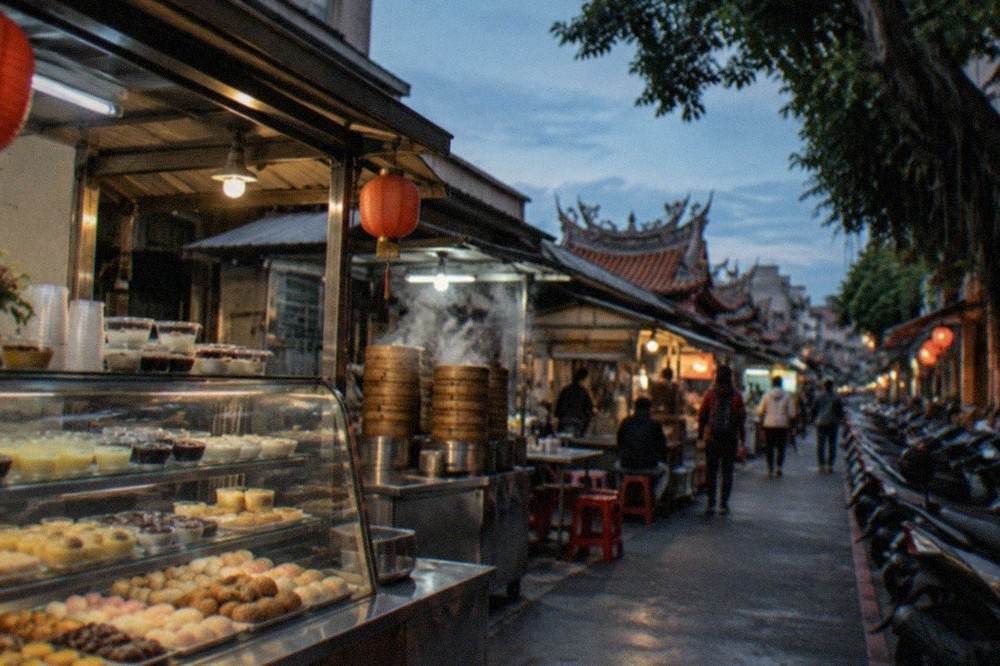
The other half of the answer is the climate. The Central Weather Administration's 1991 to 2020 normals for Tainan show 186 days a year above 30C, and April to October is above 30C on most days. A city that hot, with a night market culture that runs until midnight and later, will naturally build a shaved ice tradition. Cold desserts are not a novelty in Tainan, they are a survival strategy.
What Desserts and Sweets Is Tainan Known For?
The core Tainan dessert list runs: shaved ice topped with fresh fruit or taro balls, douhua (soft tofu pudding in sweet syrup), traditional pastries including mochi-style sweets and flaky Chinese-style cakes, and fresh mango everything during the June and July season. Night market stalls add ice cream wraps, candied fruit and deep-fried sweets. None of these is unique to Tainan, but the density of old-school shops serving them is what sets the city apart.
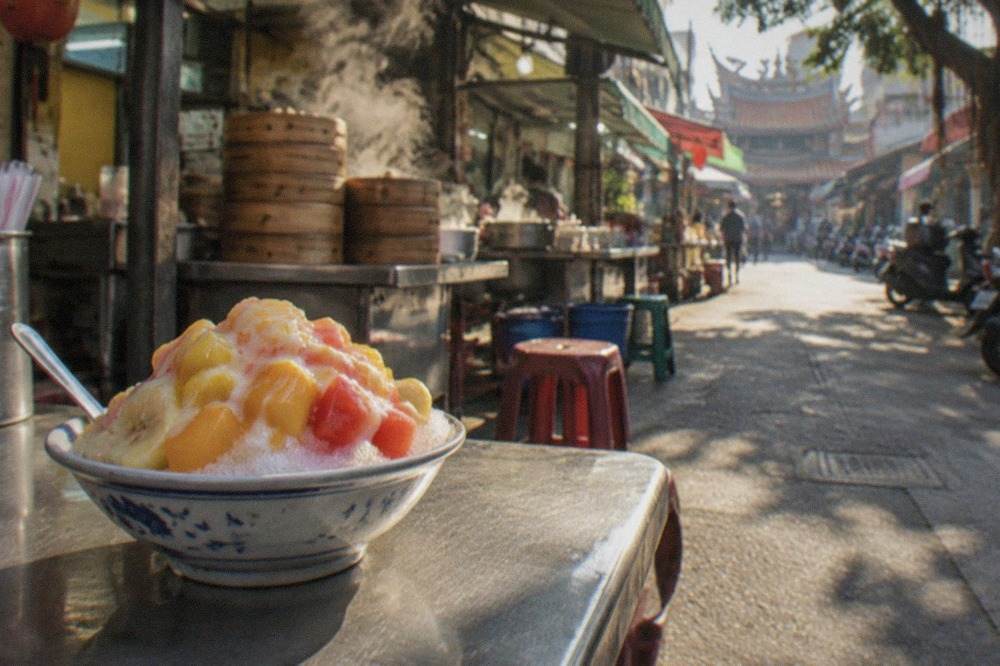
Start with shaved ice, because it is the headline. Taiwanese shaved ice is finer than the crushed ice of Western desserts, closer to snow, and it is dressed rather than drowned: condensed milk, syrup, fresh fruit, taro or sweet potato balls, red bean, grass jelly. In summer the topping everyone wants is mango, and Tainan's own Yujing district is one of Taiwan's primary mango growing areas, which means the fruit in the bowl in season is local.
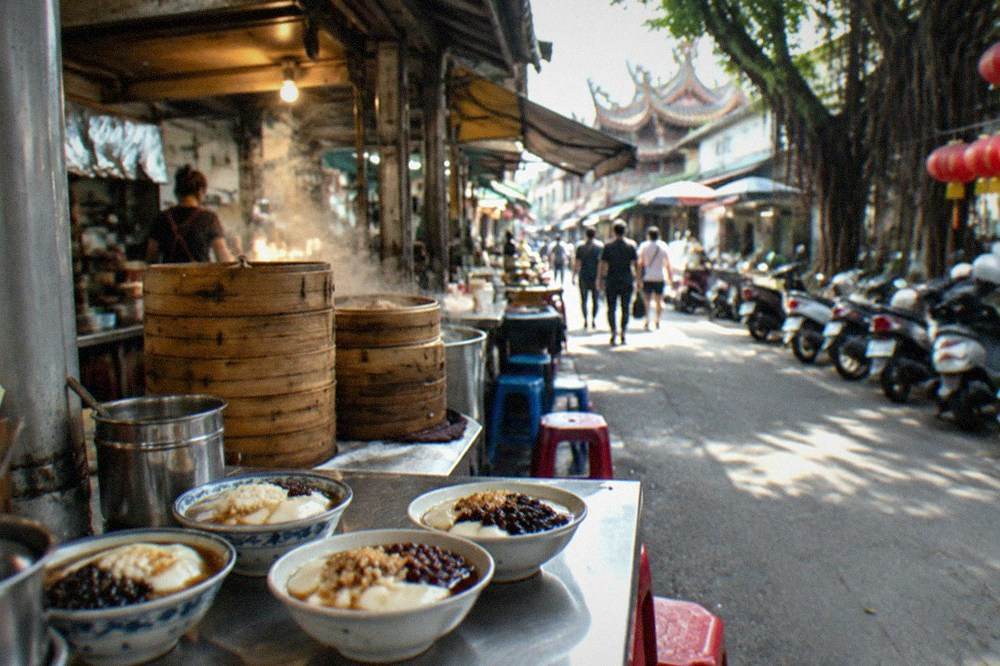
Douhua is the other essential. It is a silken tofu pudding served in a sweet syrup, warm in winter and iced in summer, with toppings that range from peanuts to tapioca pearls. It is one of the oldest dessert forms on the island, and Tainan's traditional douhua shops are part of the heritage the city is known for.
Then come the baked and wrapped things: flaky pastries with fillings such as mung bean paste, mochi-style rice sweets rolled in coatings from peanut powder to black sesame, and egg rolls. These are the souvenir end of the spectrum, and they travel well, which is why Tainan pastry boxes show up in luggage across Taiwan. For the savoury-leaning reader who has not yet accepted that a food page can be about sweets, the same streets serve danzai noodles, coffin bread and beef soup, so a dessert crawl can be welded onto a full food crawl without moving districts.
A word on prices: this site will not print one for any dish, stall or restaurant. No official price list exists for Tainan street food, and inventing a plausible-sounding figure is worse than saying nothing. What can be said honestly is that street dessert portions in Taiwan's old cities are generally inexpensive by the standards visitors bring from Europe, North America or Australia, and that the honest way to plan is to carry cash and expect to pay per item at the counter.
Where Do You Find the Best Shaved Ice in Tainan?
Shaved ice in Tainan concentrates in three places: the night markets, which rotate by day of the week; the traditional dessert streets of the West Central District around Guohua Street; and the Anping old street area, where dessert shops sit among the historic sites. There is no verified single best shop, and this site will not crown one: the reliable strategy is to pick the district that matches your evening and order what is seasonal.
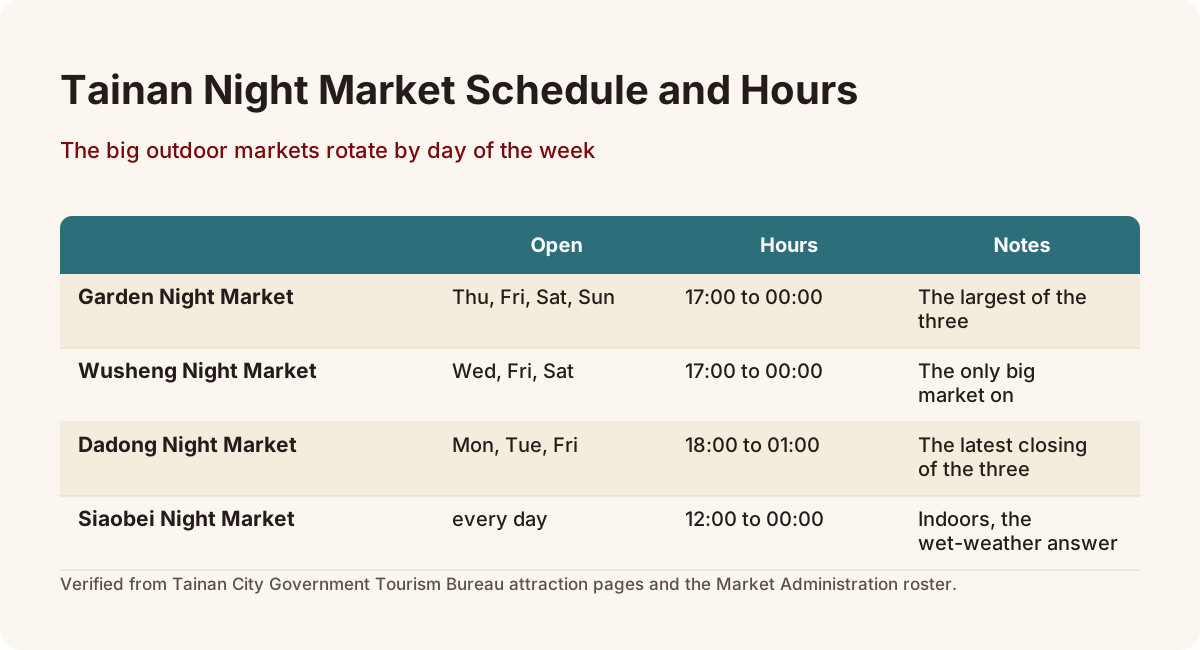
The night markets are the volume answer. Garden Night Market, the largest, opens Thursday, Friday, Saturday and Sunday from 17:00 to midnight, and its dessert stalls run from shaved ice to fruit stands. The full rotation is in the table further down this page, and it is the single most useful piece of planning information on this site: turning up on the wrong night means finding the big market closed.
The old streets are the quality answer. Guohua Street and the lanes around it hold a dense cluster of long-standing dessert houses serving douhua, ice dishes and traditional sweets, and this is where the heritage reputation is earned. Anping adds a third layer: the Anping Old Street area combines dessert stops with the Anping Tree House and the old fort, so a half day of history ends somewhere sweet.
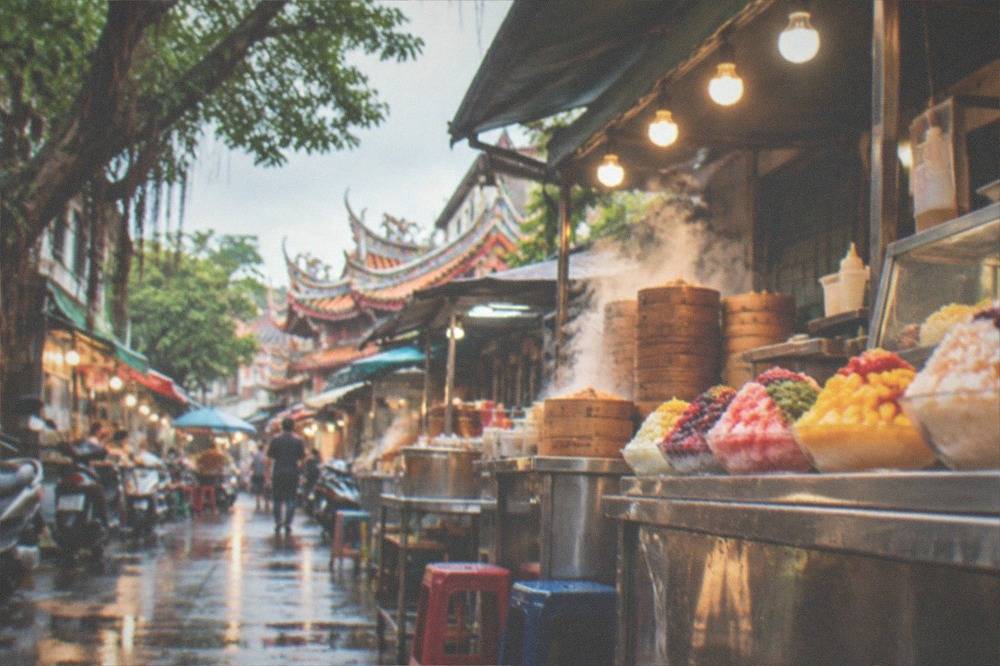
Season changes the order. In June and July, mango shaved ice is the thing to have, because the local Yujing crop is in season and the fruit is at its best. From October to March, the city's dry and comfortable half of the year, warm douhua and hot sweet soums make more sense, and the shaved ice stalls thin out. The best time to visit Tainan for dessert purposes is either mango season or the cool dry months, and the climate table makes clear why: December brings 16.2 mm of rain across 3.0 wet days, while August brings 466.1 mm across 15.8.
If you want the sweets chosen for you rather than researched by you, a guided walk does the sorting.
Which Night Markets Are Open on Which Nights in Tainan?
Tainan's big outdoor night markets rotate by day of the week: Garden opens Thursday to Sunday, Wusheng opens Wednesday, Friday and Saturday, and Dadong opens Monday, Tuesday and Friday, all from 17:00 or 18:00 until midnight or 01:00. Siaobei is indoors and opens every day from 12:00 to midnight. Friday is the only night when all three big outdoor markets run, and Wednesday is the thinnest night, with Wusheng alone.
This rotation is the fact most visitors get wrong, and it is verified market by market from the Tainan City Government Tourism Bureau's own attraction pages. The city's Market Administration maintains the official night market roster, and the days do change, so treat the table below as the schedule and check before you go.
| Market | Open | Hours | Notes |
|---|---|---|---|
| Garden Night Market | Thu, Fri, Sat, Sun | 17:00 to 00:00 | The largest of the three |
| Wusheng Night Market | Wed, Fri, Sat | 17:00 to 00:00 | The only big market on Wednesday |
| Dadong Night Market | Mon, Tue, Fri | 18:00 to 01:00 | The latest closing of the three |
| Siaobei Night Market | every day | 12:00 to 00:00 | Indoors, the wet-weather answer |
Read as a week, the pattern looks like this:
| Day | Big markets open |
|---|---|
| Monday | Dadong, plus Siaobei indoors |
| Tuesday | Dadong, plus Siaobei indoors |
| Wednesday | Wusheng, plus Siaobei indoors |
| Thursday | Garden, plus Siaobei indoors |
| Friday | Dadong, Wusheng and Garden all open |
| Saturday | Wusheng and Garden |
| Sunday | Garden |
For a dessert crawl, Friday is the jackpot and Wednesday is the night to plan around. If rain ruins a market night, Siaobei's indoor hall keeps the shaved ice option alive regardless. Locals compress all this into a seven-character rhyme, but it is folk shorthand rather than an official schedule, and against the city's current published hours it misses some Friday openings, so rely on the table.
When Is Mango Season in Tainan?
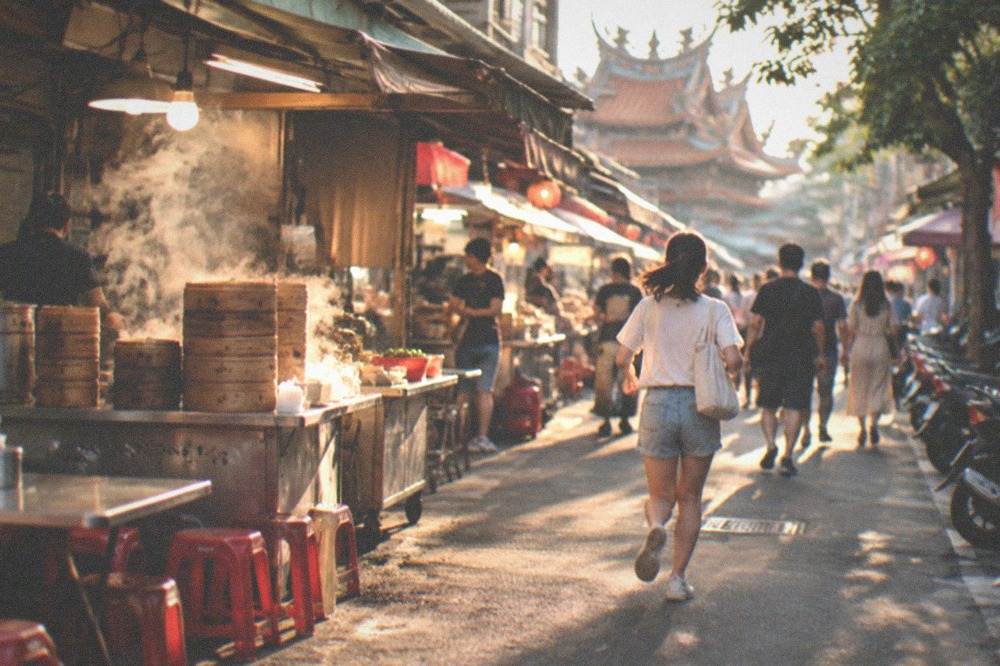
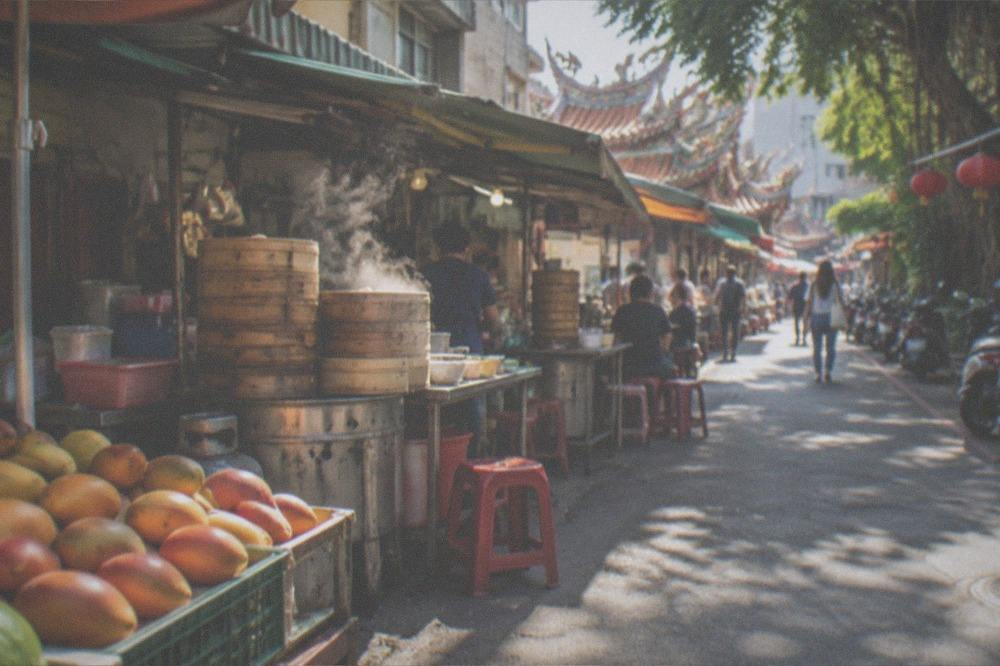
Mango season in Tainan runs June and July, according to the city government's own festival calendar, which lists the Taiwan Mango Season and Tainan International Mango Festival in that window. Yujing district is a primary mango production area, and the Irwin variety that peaks in those months is the fruit most often heaped on shaved ice. The season is weather dependent, so treat June and July as the reliable core and late fruit as a bonus.
This matters more here than in most cities, because mango shaved ice is Tainan's signature summer dessert and the fruit is local. A bowl of shaved ice in February uses imported or frozen fruit; the same bowl in early July is built on Yujing mangoes that were on the tree days earlier. The Tainan mango guide covers the varieties and the growing country in detail.
The climate explains the calendar. The Central Weather Administration's 1991 to 2020 normals for Tainan show June averaging 370.5 mm of rain across 12.1 wet days and July 374.6 mm across 13.0, which is exactly the summer monsoon pattern that ripens a subtropical mango crop. The same table shows why the festival calendar places the Qigu Seafood Festival in July and August: the coast's summer season and the fruit season overlap.
If dessert is the purpose of your trip, plan around the Tainan weather rather than fighting it. A July visit buys you the mango bowls and the risk of a typhoon day; a December visit buys you 3 wet days a month, comfortable 24C maxima and a menu tilted toward warm douhua instead.
What Traditional Sweets Should You Order in Tainan?
The traditional Tainan sweet order list runs: douhua with peanuts or tapioca, taro or sweet potato ball desserts, mochi-style rice sweets coated in peanut or sesame powder, flaky pastries filled with mung bean or taro paste, and grass jelly drinks and ice desserts. Each of these is a heritage form served across the old districts, and none requires an adventurous palate, they are mild, sweet and textural rather than challenging.
A short glossary, because the English signage at a traditional counter may not stretch to every dish:
| Dish | What it is | When it suits |
|---|---|---|
| Douhua | Silken tofu pudding in sweet syrup, warm or iced | Year round, warm in the cool months |
| Shaved ice with mango | Fine shaved ice, fresh mango, condensed milk | June and July, the local season |
| Taro and sweet potato balls | Chewy dyed and plain balls over ice or in soup | Year round |
| Mochi-style rice sweets | Soft rice dough rolled in peanut or sesame powder | Year round, good souvenir |
| Grass jelly | Herbal jelly in drink or dessert form | Summer, mildly bitter against the sweet |
| Flaky pastries | Chinese-style layered pastry with bean or taro fillings | Year round, travels well |
None of these dishes has a verified price, so this site prints none. What can be said is structural: the traditional shops cluster in the West Central District, the night markets add the ice and fried end of the spectrum, and Anping gives you dessert within walking distance of the historic sites. The Tainan food guide covers the savoury side of the same streets, and the street food overview places the sweets in the wider scene.
One honest caution: this site names no shop as the original, the oldest or the best, because no such claim is verified. Plenty of Tainan sweet shops advertise long histories, and some of those histories are real, but a page that repeats a shop's own marketing as fact is not doing its job. Choose by what is in the case and what is in season.
How Do You Plan a Dessert Crawl Across Tainan?
Plan a Tainan dessert crawl around three anchors: a night market matched to the day of the week, a traditional dessert street such as Guohua Street in the West Central District, and a district walk in Anping that combines sweets with the historic sites. City buses make the moving between stops free for the first 8 km with an electronic card, provided you tap on and tap off, so a multi-district crawl costs nothing in transport if you carry the right card.
The bus detail is the under-used one. The city's own bus site states that trunk and branch routes are free for the first 8 km of travel with a Citizen Card, iPASS, EasyCard or iCash 2.0, with the 26 base fare waived, and that the policy runs for the 2026 calendar year. The catch visitors miss is tap off: forgetting it means the discount does not register. The getting around Tainan page covers the full mechanics.
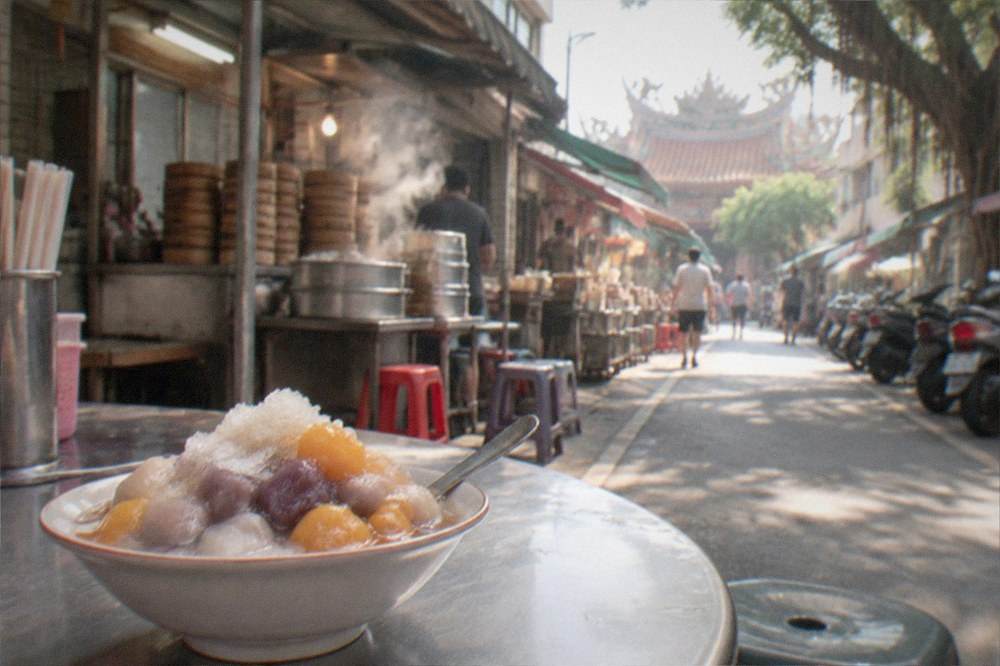
Timing matters as much as routing. Chihkan Tower stays open until 21:30 daily, one of the few historic sites in the city a visitor can see after dinner, so a West Central District evening can pair heritage and dessert in one walk. The night markets open at 17:00 or 18:00 and run past midnight, which makes them the natural last stop rather than the first. A workable shape is: late afternoon douhua on Guohua Street, an early evening walk past Chihkan Tower, then a bus or short ride to whichever big market is open that night.
For visitors arriving from outside the city, the arrival logistics are covered in the Taiwan High Speed Rail, Taipei to Tainan and Kaohsiung to Tainan guides, and the Tainan HSR station page explains the transfer situation at Shalun. If you would rather have the crawl arranged end to end, a full-day guided circuit does the routing for you.
And if the day is about photographs as much as pudding, dressing the part is its own Tainan activity.
What Dessert Souvenirs Travel Well from Tainan?
The Tainan desserts that travel well are the dry ones: flaky Chinese-style pastries with mung bean or taro fillings, mochi-style rice sweets in sealed packs, egg rolls and pineapple-style cakes. Anything wet, iced or fresh, including shaved ice, douhua and fresh mango, does not travel at all and should be eaten on the spot. Buy pastry boxes on your last day rather than your first, and keep them cool and flat in transit.
This is the practical end of the dessert page. Tainan's pastry shops box their goods for gifting, and gift boxes are a genuine part of the culture, but a box of pastry that spends two days in a hot backpack is a disappointment. Buy late, pack carefully, and eat the fragile things immediately.
The fresh mango deserves the same honesty. Yujing mangoes in season are one of the best food souvenirs in Taiwan, but only for the journey's next stop, not for the flight home a week later. If your timing is right and the calendar says June or July, eat the mango in Tainan and take the pastries on the plane.
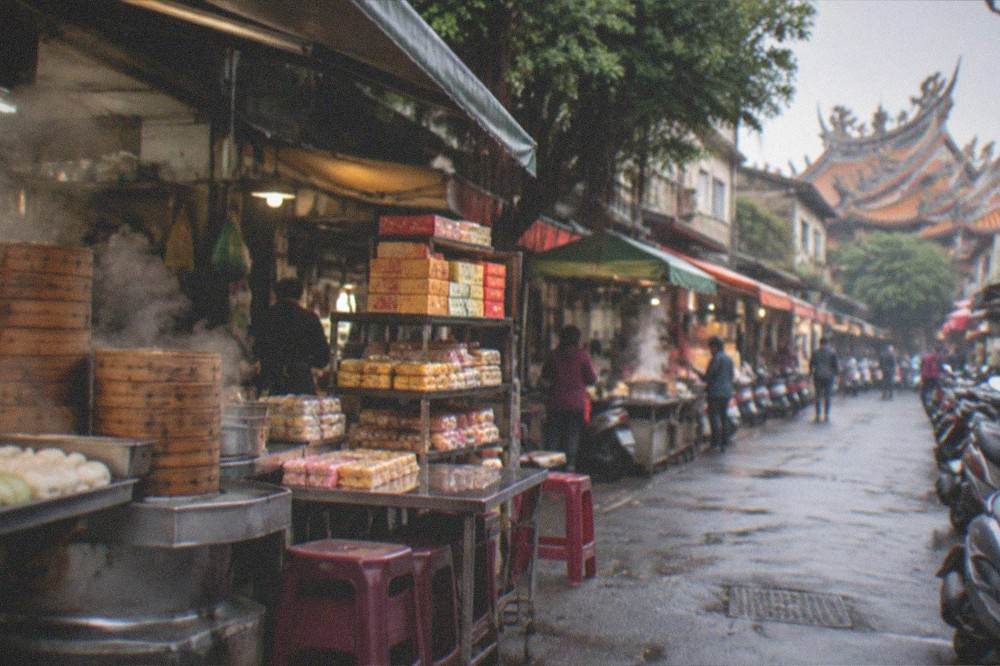
For a fuller sweep of the city than desserts alone, the Tainan attractions overview and the Tainan history page set the sweets in their context, and Tainan Travel Guide is the front door to all of it. The dessert crawl is one thread of a city that rewards several visits.
Common Questions About Tainan Desserts and Shaved Ice
What is Tainan most famous for in desserts?
Shaved ice with fresh mango during the June and July season, douhua tofu pudding served in traditional dessert houses, and the dense cluster of heritage sweet shops in the West Central District. The reputation rests on the density and age of the traditional shops rather than on any single verified champion stall.
When is mango season for shaved ice in Tainan?
June and July, per the city government's own festival calendar, which lists the Taiwan Mango Season and Tainan International Mango Festival in that window. Yujing district is a primary mango production area, so the fruit on the ice in those months is local and at its best.
Which night market should I go to for desserts?
Match the market to the day. Garden Night Market, the largest, opens Thursday to Sunday. Wusheng opens Wednesday, Friday and Saturday. Dadong opens Monday, Tuesday and Friday. Siaobei is indoors and opens every day, which makes it the answer on a rainy night or a thin market night. Check the current days before you go, because they do change.
How much do desserts cost in Tainan?
This site does not print dish prices, because no official price list exists for Tainan street food and none will be invented here. Street dessert portions in Taiwan's old cities are generally inexpensive by European, North American and Australian standards, and the practical advice is to carry cash and pay per item at the counter.
Is shaved ice available in winter in Tainan?
Yes, the shops keep serving it, but the smart winter order is warm douhua or a hot sweet soup instead. December to March is the city's dry, comfortable half of the year, with December averaging 16.2 mm of rain across 3.0 wet days, and the traditional menu tilts toward warm desserts accordingly.
Can I do a dessert crawl using public transport?
Yes. City buses are free for the first 8 km with a Citizen Card, iPASS, EasyCard or iCash 2.0, provided you tap on and tap off, under a policy running for the 2026 calendar year. The cash fare for the same trip is 26. That makes a multi-district dessert crawl essentially free in transport costs.