Xinhua Old Street
Xinhua Old Street is one of Tainan's most visited old streets, drawing 1,668,283 visitors in 2023, more than Yanshui Old Street and second only to Anping among the district-level draws in the city's east. Here is what the sources say about the street, how to reach it, and what to pair it with.
Short answer
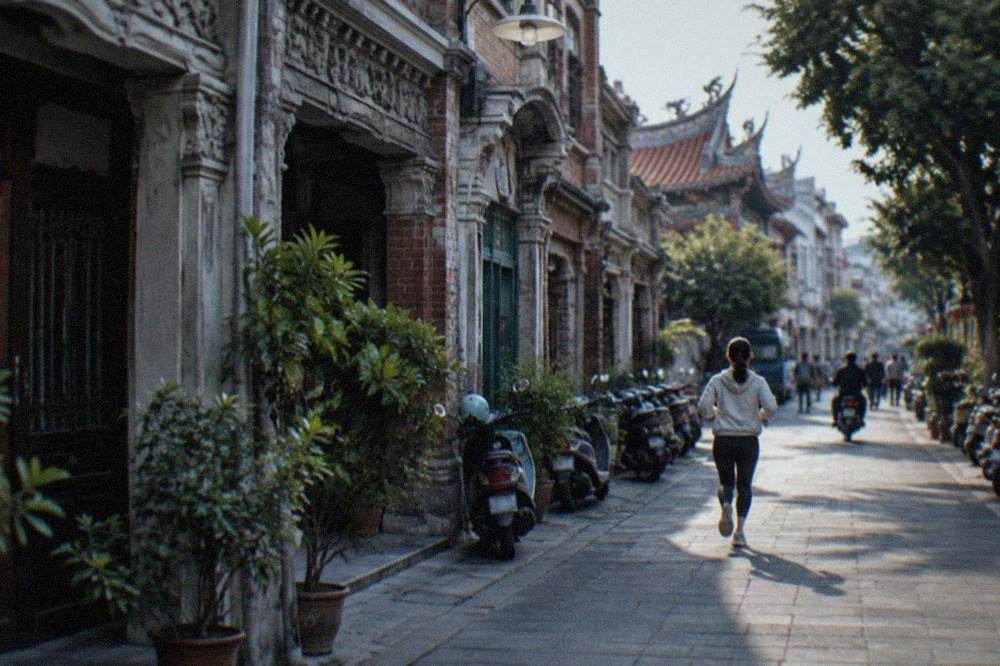
Xinhua Old Street is a historic shopping street in Xinhua District, on the eastern edge of Tainan, known for its ornate shophouse facades from the Japanese period. It drew 1,668,283 visitors in 2023, peaking in January, and it is usually combined with Yujing mango country or Guanziling hot springs rather than visited alone.
Xinhua Old Street sits in Xinhua District, on the eastern side of Tainan, where the city's coastal plain starts to climb into the hills. The street is one of the quieter names on the international visitor's list and one of the louder ones on the domestic list: the Tourism Administration's own dataset records 1,668,283 visitors in 2023, which is more than Yanshui Old Street drew in the same year and more than three times the count at Chihkan Tower. The street's reputation rests on a run of ornate shophouse facades built during the Japanese period, when Tainan was a provincial city of the island's southern lowlands rather than the political center it had been for more than two centuries, until the late nineteenth century.
This page lays out what the sources actually say: what the street is, what there is to do on it and around it, how to reach it from the HSR station or the old city, when the weather argues for and against a visit, and which neighboring districts make sense to bolt onto the same day. It is part of Tainan Travel Guide's district coverage, alongside the pages for Yujing mango country and Guanziling hot springs, both of which are within easy reach of Xinhua and both of which appear in the day-trip planning below.
What Is Xinhua Old Street?
Xinhua Old Street is a historic commercial street in Xinhua District, on Tainan's eastern edge, lined with decorated shophouse facades from the Japanese period. It is a living shopping street rather than a museum, and the Tourism Administration's dataset records 1,668,283 visitors in 2023, with January its single busiest month. It is the second-busiest old street in the dataset after Anping as a district.
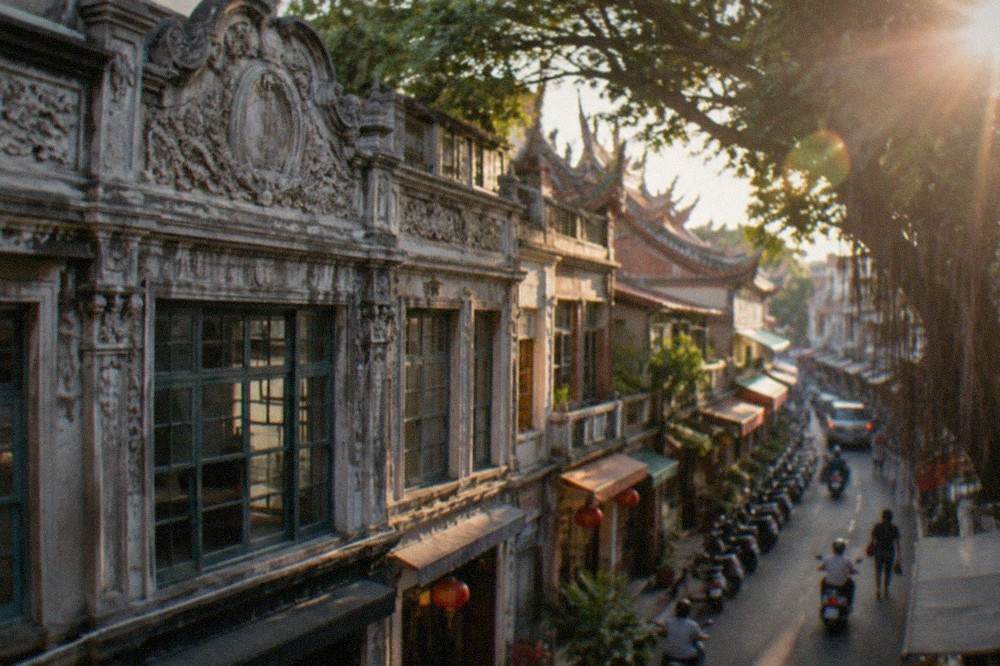
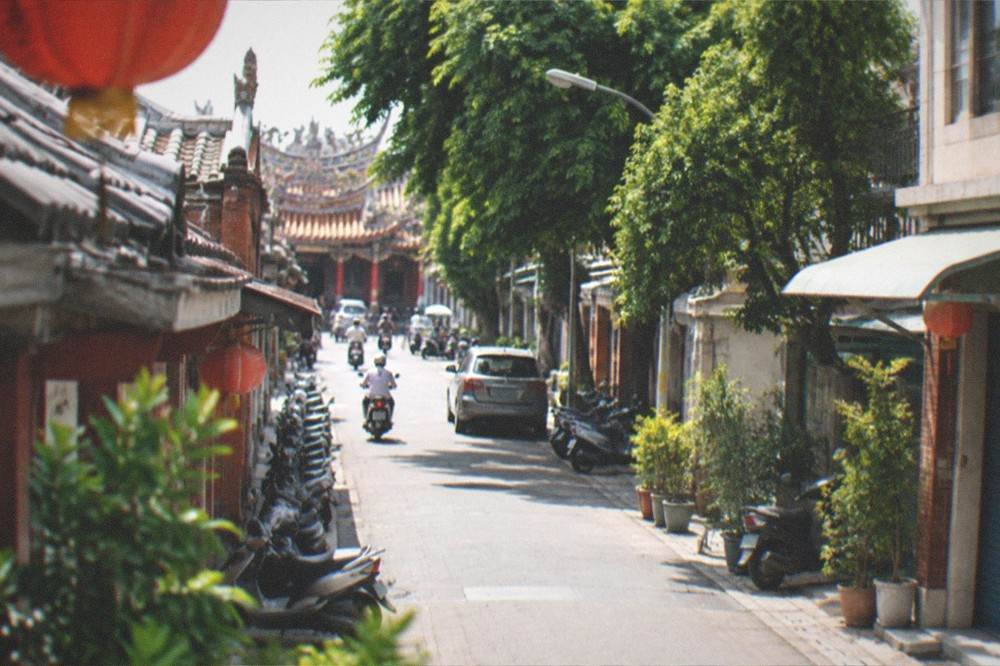
The street's architecture is the reason people photograph it. The facades along the old street date from the Japanese period, an era that reshaped building styles across Taiwan, and they carry the ornamental frontages that Taiwanese street photographers call by the baroque label. That decorative layer sits on top of an older trading function: Xinhua was a market town serving the farming country between the Tainan plain and the hills, and the old street was its commercial spine. The shops that occupy the ground floors today are ordinary working businesses, bakeries, pharmacies and food stalls among them, which is what keeps the street useful to locals rather than preserved for visitors.
The visitor numbers are worth pausing on, because they say something about who this street is for. Nearly 1.7 million visitors in a single year, against Chihkan Tower's 443,622, means the audience is overwhelmingly domestic. The peak month is January, driven by Lunar New Year travel and temple pilgrimage, which matches the pattern across Tainan: the city's biggest draws, including Nankunshen Daitian Temple with 6,583,100 visitors in 2023, peak in the cool, dry winter rather than in summer. A visitor arriving from overseas in July will find a quieter street than the one a domestic traveler meets in January.
One caveat belongs in every sentence built on those figures. The counts are compiled by each site operator and reported to the Tourism Administration, methods differ between a ticketed museum and an open street where nobody collects anything, and the 2020 to 2022 years are COVID-depressed. The numbers are real, but they measure foot traffic on a free public street, not ticketed admissions.
What Can You See and Do on Xinhua Old Street?
The main activity on Xinhua Old Street is walking the facade line, eating from the street's food stalls and old bakeries, and photographing the Japanese-period frontages, all of it free and unticketed. There is no entry gate, no admission price and no closing hour for the street itself, so the visit costs nothing and lasts as long as the shops stay open.
Start with the facades, because they are the draw. The decorated upper stories above the shopfronts are the street's signature, and the best light for photographing them, according to the climate record rather than anyone's eye, is the October-to-March half of the year, when Tainan averages fewer than 31 mm of rain a month and the humidity sits in the low seventies. The street is short enough to walk end to end in a matter of minutes, which is exactly why the surrounding district matters: the old street is the anchor, not the whole day.
The eating is the second reason to come. Xinhua's food reputation runs through the same channels as the rest of Tainan's, snack stalls, old bakeries and family shops, and no official price list exists for any of it, so treat costs qualitatively: Tainan is the cheapest of Taiwan's big cities to eat in, and an old-street lunch runs cheaper than anything in the tourist core of West Central District. For the wider food context, the Tainan street food guide covers the dishes the city is known for, and several of them, danzai noodles and beef soup among them, appear on old-street menus across the district.
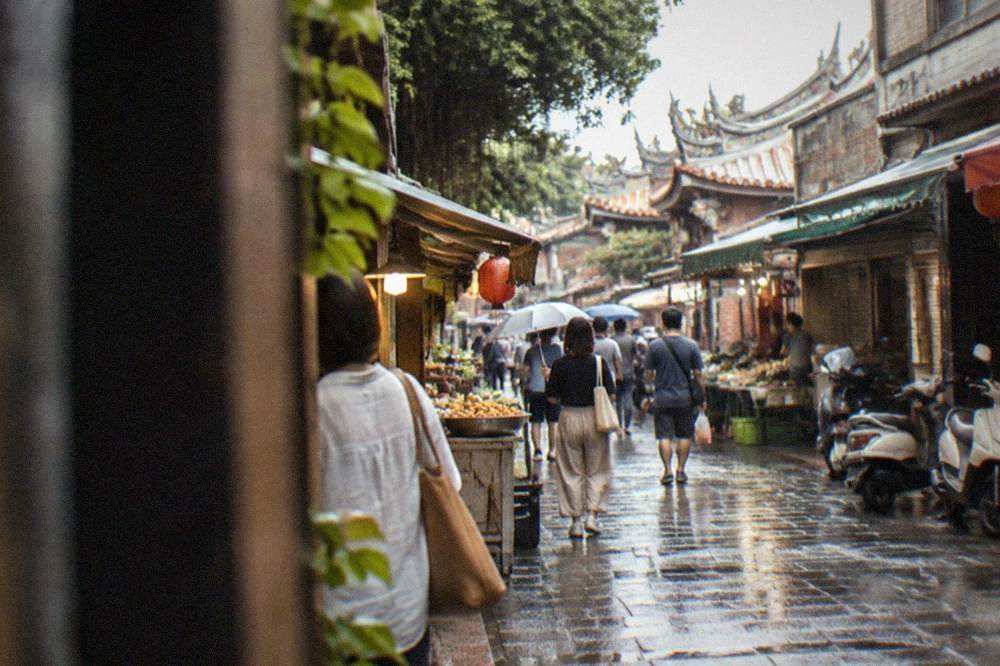
The third activity is people-watching at market rhythm. The street is a working one, and the Tourism Bureau's listing for the district places it among the old streets the city promotes alongside Jingliao Old Street and Guohua Street, two streets with the same unticketed, shopfront-level character. If your trip has room for only one old street inside the old city, Anping Old Street is the largest and best documented; Xinhua's advantage is that almost no international itinerary includes it, so the crowd profile stays domestic.
How Do You Get to Xinhua Old Street?
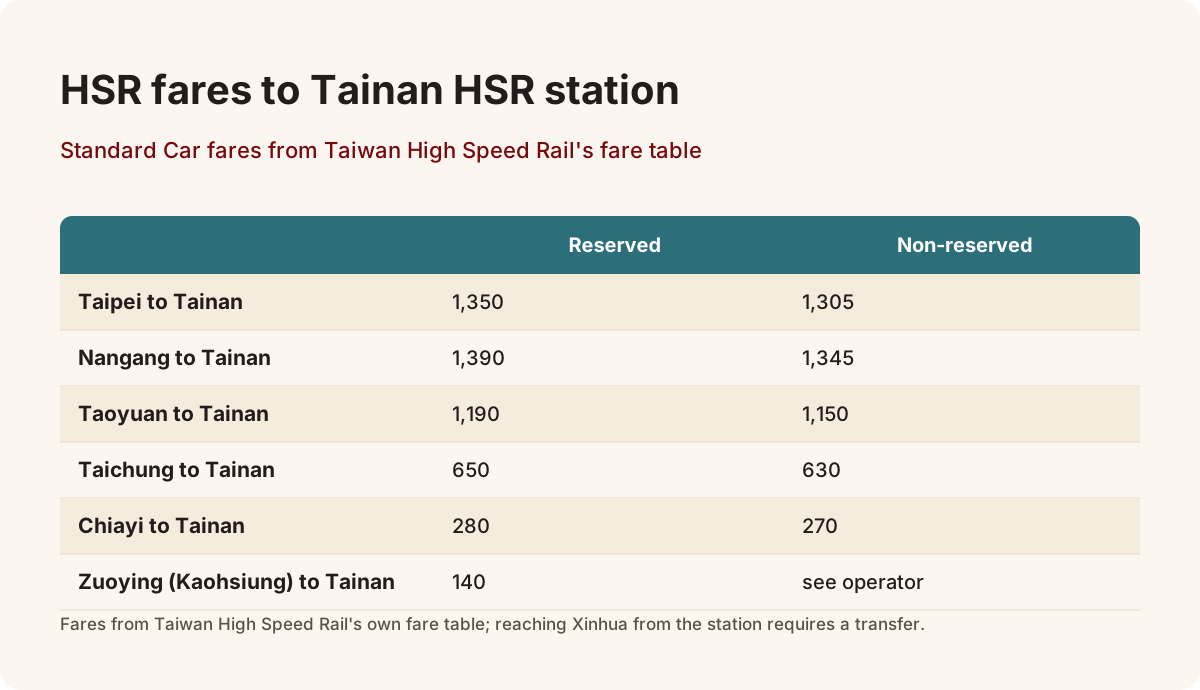
Xinhua Old Street is reached overland from central Tainan by city bus, car or scooter, with no rail station in the district itself; the nearest High Speed Rail stop is Tainan HSR station at Shalun in Guiren District, well outside the old city, and reaching Xinhua from it requires a transfer. Taipei to Tainan HSR costs NT$1,350 for a reserved standard seat, per the operator's own fare table.
The rail geography is the first thing to get right, because it catches almost every first-time visitor. The HSR station is not in Tainan: it sits at Shalun in Guiren District, and the transfer from there into the old city is a separate leg, either the paid Taiwan Railway Shalun Line or the H31 HSR shuttle bus, which is free for HSR passengers on production of a ticket stub. From the old city, Xinhua is an eastward run across the plain. City buses are free for the first 8 km with an electronic card, Citizen Card, iPASS, EasyCard or iCash 2.0, on the trunk and branch network, per the city's own bus fare page, and you must tap on and tap off, with tap off being the step visitors miss; the cash fare for the same trip is 26. That free-distance scheme runs for the 2026 calendar year, so treat it as current policy rather than permanent.
| HSR route to Tainan | Standard Car, reserved | Non-reserved |
|---|---|---|
| Taipei to Tainan | 1,350 | 1,305 |
| Nangang to Tainan | 1,390 | 1,345 |
| Taoyuan to Tainan | 1,190 | 1,150 |
| Taichung to Tainan | 650 | 630 |
| Chiayi to Tainan | 280 | 270 |
| Zuoying (Kaohsiung) to Tainan | 140 | see operator |
The fares above come from Taiwan High Speed Rail's own fare table, and one warning belongs next to them: the grid prints Standard Car in its lower-left triangle and Business Car in the upper-right, and a careless read of that grid returns the Business fare and overstates the price by 65 percent. Taipei to Tainan standard reserved is 1,350, not 2,230. Journey times in minutes are not published in the material this site works from, so check the operator's timetable search for those.
Driving or scootering east is the other option, and it comes with a rule that is easy to get wrong. An International Driving Permit is not automatically sufficient in Taiwan: the country expects an IDP to be registered at a Motor Vehicles Office, and rental shops may refuse without that registration. Do not assume a permit alone unlocks a scooter, and do not assume it cannot, the honest instruction is to check the official Motor Vehicles Office page before booking anything. For most visitors, the bus-and-transfer route above is the simpler day.
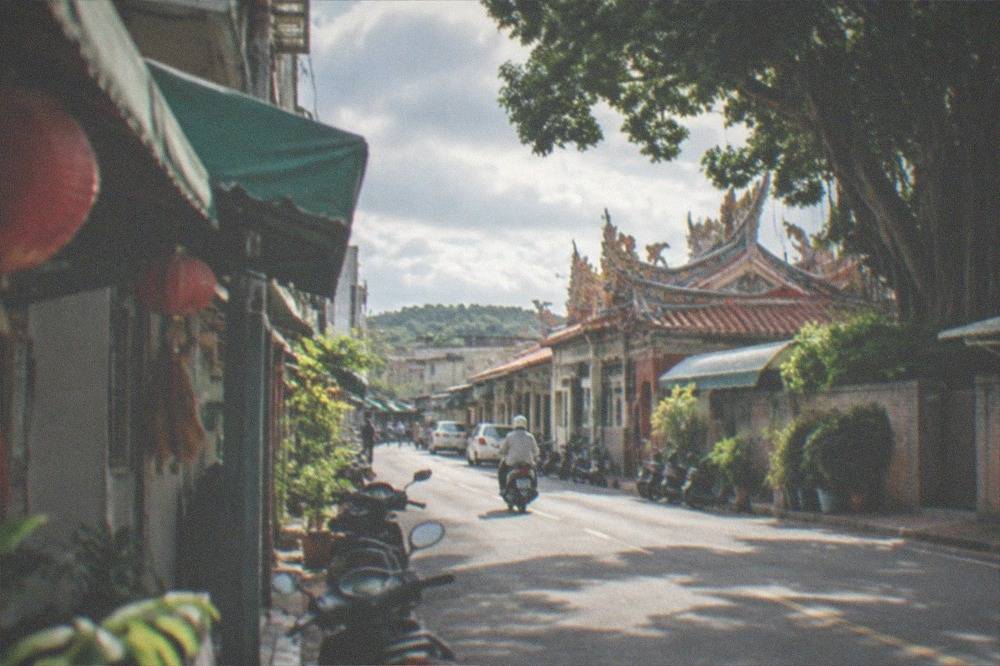
If the day is going to be a photography day rather than a transport day, one option deserves a mention here, at the point where the itinerary is being shaped. The qipao rental experience on this site's roster is a full-day costume rental, and a full day means the outfit can travel: old street in the morning, old city in the afternoon. The box below is the quick route to it.
The rental itself is worth a closer look than a box allows. It is the related product for this page because the old street's facades are exactly the backdrop a costume shoot wants, and the listing's rating and review count are rendered by the operator's live listing rather than typed into this page. Availability moves with the seasons, so the booking page is the source of truth for dates and sizes.
When Is the Best Time to Visit Xinhua Old Street?
October to March is the best window for Xinhua Old Street, because Tainan's rain is almost entirely a summer event: August brings 466 mm across 16 wet days while December brings 16 mm across 3, and October records the fewest wet days of any month, 2.8, while still averaging 30.8C maxima. The domestic peak is January, so the weather optimum and the crowd peak overlap.
The climate record behind that answer is the Central Weather Administration's 1991 to 2020 normals for station 467410, Tainan, published at the Central Weather Administration's own statistics page, and it is unusually lopsided for a subtropical city. Close to three-quarters of the annual 1,761 mm falls between May and September. June, July and August are the three wettest months, and August alone carries more rain than the entire October-to-March stretch combined. From October the tap shuts off: November averages 23.8 mm, December 16.2 mm, and the whole October-to-March stretch stays under 31 mm a month. Anyone planning a photography day on the old street's facades should read that table as a green light for winter.
| Month | Mean max C | Rain mm | Wet days |
|---|---|---|---|
| January | 23.0 | 20.7 | 3.8 |
| February | 24.0 | 21.6 | 4.1 |
| March | 26.6 | 30.4 | 4.2 |
| June | 32.4 | 370.5 | 12.1 |
| August | 32.6 | 466.1 | 15.8 |
| October | 30.8 | 30.8 | 2.8 |
| December | 24.4 | 16.2 | 3.0 |
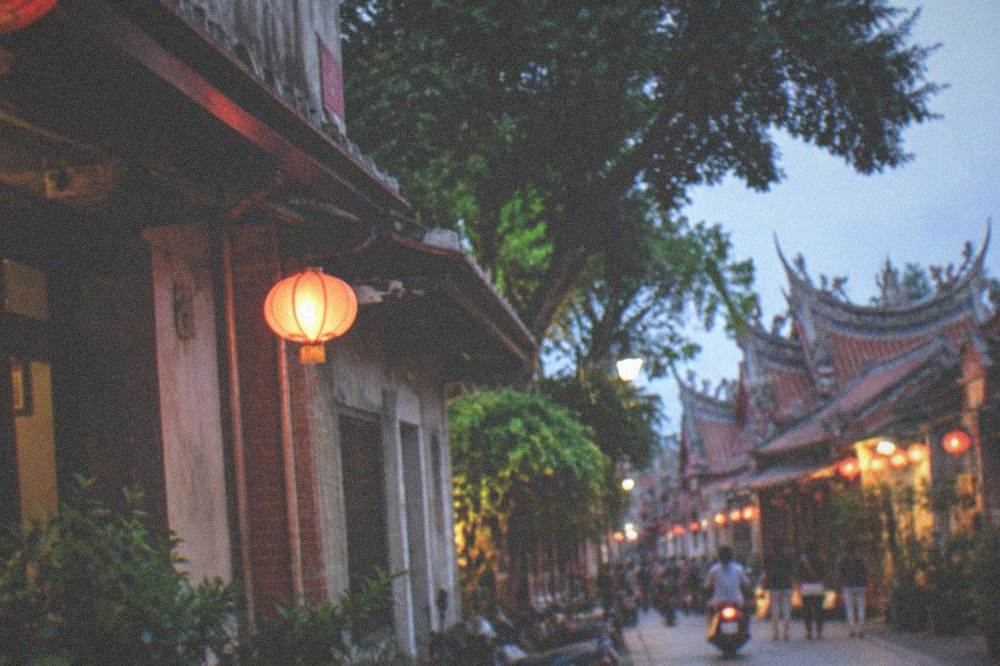
The second headline in the same dataset is heat. Tainan records 186 days a year above 30C, and from April to October it is above 30C on most days. A summer walk along an unshaded shopping street is therefore a morning activity or an evening one, and the evening option has a Tainan-specific bonus: the city's big outdoor night markets rotate by day of week, and the Tourism Bureau's own pages publish the schedule, Garden on Thursday, Friday, Saturday and Sunday, Wusheng on Wednesday, Friday and Saturday, Dadong on Monday, Tuesday and Friday, with indoor Siaobei open every day from 12:00 to midnight as the wet-weather answer. Friday is the only night all three big outdoor markets run, and the days do change, so check before you go.
Typhoon risk concentrates in the late summer months, July to September, which is the same stretch the rainfall table independently shows as the wet quarter. When Tainan's city government declares a typhoon day, schools and many offices close and attractions and transport may suspend; the Tainan Art Museum states on its own hours page that it closes when the city announces a work suspension for a typhoon or earthquake, a concrete example of the mechanism. No frequency statistic belongs in this paragraph, because none is verified.
What and Where Should You Eat Around Xinhua Old Street?
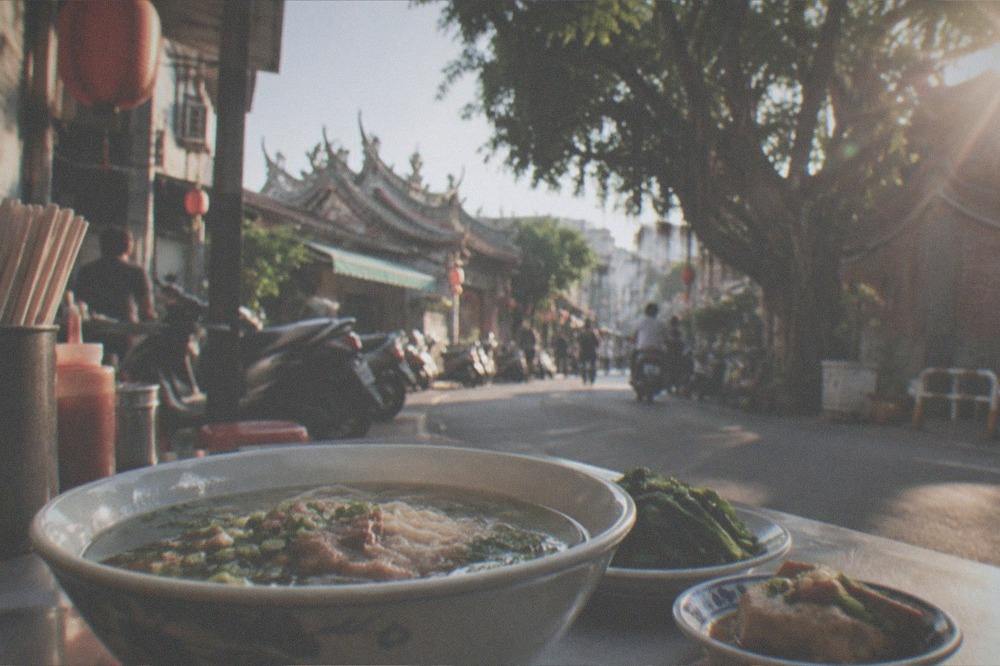
Eating around Xinhua Old Street means old-street snacks, family bakeries and the market-town food culture of eastern Tainan, all of it unticketed and cheap by big-city standards, since no official price list exists for any dish and none is invented here. The verified planning facts are that city buses are free for the first 8 km with a tap-on, tap-off electronic card, and that the street itself has no gate, no hours and no admission.
The honest way to write about Tainan food prices is to not print them. No Taiwanese government body publishes what a bowl of beef soup or a plate of danzai noodles costs, on Xinhua Old Street or anywhere else, and a number typed without a source is worse than a gap. What the sources do support is the shape of the market: Xinhua was, and remains, a market town serving farming country, and market-town pricing runs below the tourist core of the old city. The dishes themselves are Tainan's citywide repertoire, covered dish by dish in the Tainan street food guide, from danzai noodles and coffin bread to the beef soup the city is most argued about.
Two practical notes carry real weight. First, cash: cards work at hotels, department stores and convenience chains, but night markets, street stalls, small eateries and many buses outside the major systems remain cash-first territory, so carry notes. Second, water: do not plan on drinking from the tap. The safe, honest line is that bottled and filtered water are everywhere, convenience stores sit on every corner, and most locals boil or filter rather than drink untreated tap water.
For an evening after the old street, the Tainan by Night evening walking tour covers the after-dark old city, and its operator's live listing carries current availability. The tour is one of the few structured ways to see the city's night layer, since there are no free walking tours in Tainan at all; the free end of the spectrum is genuinely free entry, temples and old streets, not tip-based walks.
What Is Near Xinhua Old Street Worth Combining Into One Day?
The natural pairings for Xinhua Old Street are Yujing mango country to the northeast, Guanziling hot springs to the east, and the return leg through the old city or Anping, with Chihkan Tower open until 21:30 daily making it the one historic site that still works after dinner. Anping Tree House and Anping Old Fort both charge NT$70 at the gate and close in the late afternoon.
The geography makes this easy. Xinhua sits on the eastern edge of the plain, with the hill districts behind it, so a single day can run old street in the morning, hills in the afternoon and old city at night. Yujing is the mango capital of the region, with the season running June to July on the city's own festival calendar, and the Yujing mango country page covers it in detail. Guanziling is the hot-spring town, whose own festival window on the city calendar runs September to November, and the Guanziling hot springs page handles the soak-and-eat logistics. Both are hill-country drives from Xinhua, and neither has a rail station, so the day is a bus, car or tour day.
The return leg through the old city is where the ticketed sites sit, and the verified prices are these: Chihkan Tower 70 at the gate, open 08:30 to 21:30 daily, an unusually late closing that makes it one of the few historic sites a visitor can see after dinner; Anping Old Fort 70, 10:00 to 17:10; Anping Tree House 70, 08:30 to 17:30; Eternal Golden Castle 70, 08:30 to 17:30. Concessions are half price at the city sites, and Tainan residents enter free with ID, a benefit that does not extend to visitors. The city's own pages state that the on-site notice governs, so read every price here as "at the gate" rather than guaranteed.
| Old street or district draw | 2023 visitors | Peak month |
|---|---|---|
| Anping district | 4,441,443 | February |
| Xinhua Old Street | 1,668,283 | January |
| Yanshui Old Street | 998,388 | January |
| Chihkan Tower | 443,622 | (ticketed site) |
| Tainan Confucius Temple | 195,109 | (free entry) |
That table is the argument for Xinhua in one view. Among Tainan's old streets, only Anping outdraws it, and Anping draws ten times Chihkan Tower's numbers as a district. The old-street format, free, open, shopfront-level, is what Tainan's visitors actually vote for with their feet, and Xinhua is its second-largest instance. Carry the dataset caveat: operators compile their own counts, and an open street measures foot traffic differently from a ticketed museum.
For visitors who prefer the Anping end of the day, the Anping Tree House admission ticket can be arranged ahead through the operator's live listing, and the Anping district page maps the full fort-and-street circuit. A private-guide day with a car is the comfortable alternative to self-driving the hills, and several operators on the roster run full-day circuits that take in the east.
Does Xinhua Old Street Fit a Photography or Costume Plan?
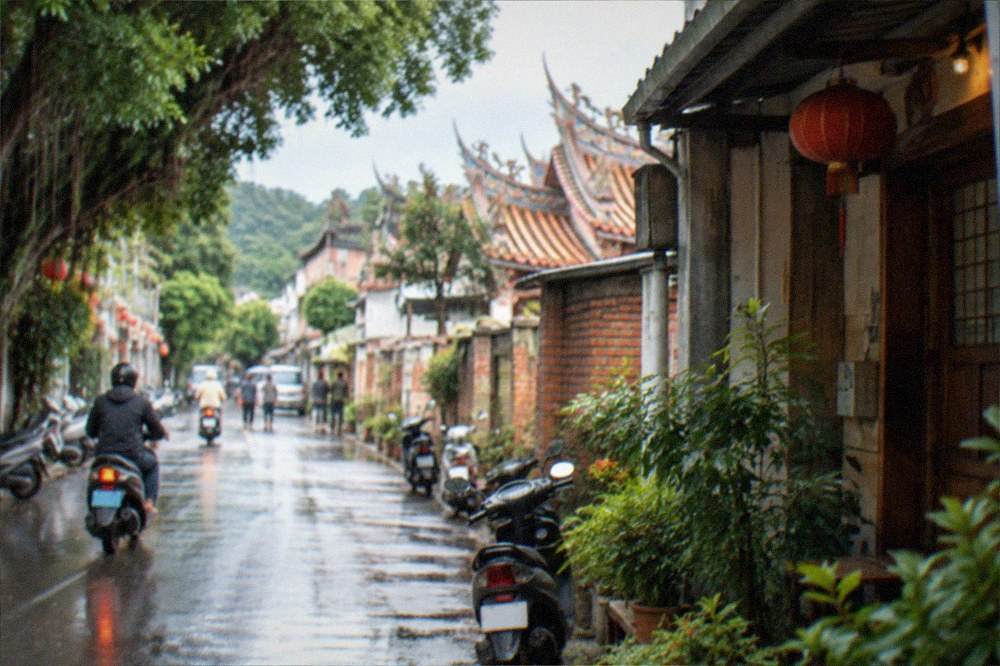
Yes, and the qipao rental is the product that matches it: a full-day rental lets a visitor shoot in period costume against period facades, and the operator's listing rates it 4.9 from 137 reviews at the time this site's data was compiled. The street's Japanese-period frontages, free access and domestic crowd profile make it a natural backdrop that the tour buses have not found.
The logic is straightforward. Costume photography needs a backdrop with texture and age, and the old street supplies both without a gate, a ticket or a closing hour. The qipao rental runs a full day, so the same outfit can shoot at Xinhua in the morning and in the old city, at Shennong Street or around Chihkan Tower, in the afternoon and evening, which is how most renters use it. The listing's rating and review count are rendered by the operator's live listing rather than typed here, and availability moves with the seasons, so the booking page is the source of truth.
The climate table argues for a winter shoot. October to March gives the lowest wet-day counts of the year, 2.8 days in October against 15.8 in August, and the mean maxima stay between 23.0C and 30.8C across that stretch, which is comfortable for an outdoor session in costume. A summer shoot is a morning proposition: from April to October the city is above 30C on most days, and the facades face a sun that does not soften until late afternoon.
Common Questions About Xinhua Old Street
Is Xinhua Old Street free to visit?
Yes. The street is a public road with no gate, no ticket and no published closing hour; the shops keep their own hours. This is the old-street pattern across Tainan, where the biggest draws by visitor count, Anping and Xinhua among them, are free public spaces rather than ticketed sites.
How many visitors does Xinhua Old Street get?
The Tourism Administration's dataset records 1,668,283 visitors in 2023, peaking in January. The count is compiled by the operator and measures foot traffic on an open street, so it is not comparable one-for-one with a ticketed museum's admissions.
How do I get to Xinhua Old Street from Tainan HSR station?
The HSR station is at Shalun in Guiren District, outside the old city, so reaching Xinhua means a transfer: the paid Taiwan Railway Shalun Line or the H31 shuttle, which is free with an HSR ticket stub, into the city, then a bus or car east. City buses are free for the first 8 km with an electronic card in 2026, tap on and tap off.
What is the best month to visit Xinhua Old Street?
October to March. October records the fewest wet days of any month, 2.8, and December just 3, against 15.8 wet days in August, per the Central Weather Administration's 1991 to 2020 normals for Tainan. January and February are also the domestic crowd peak.
Can I combine Xinhua Old Street with Yujing or Guanziling in one day?
Yes, that is the standard pairing. Xinhua sits on the eastern edge of the plain with Yujing mango country to the northeast, season June to July, and Guanziling hot springs to the east, festival window September to November. Neither has a rail station, so the day runs by bus, car or guided tour.
Is Xinhua Old Street worth visiting for international travelers?
It is worth it for travelers with a second or third day in Tainan who want the old-street format without the international crowds of Anping. It drew nearly 1.7 million domestic visitors in 2023, so the street is busy but the audience is overwhelmingly local, and the facades, food and free access are the same proposition the city's bigger draws offer.
The short version of all of the above: Xinhua Old Street is Tainan's second-busiest old street, free, open and at its best in the dry October-to-March half of the year, and it earns its place on an itinerary as the eastern anchor of a day that runs on into Yujing or Guanziling before returning to the old city for the late-closing sites. Check the bus scheme, the market days and the weather table before locking a date, and let the operator's live listings, not this page, set the final prices and availability for anything bookable.