Is Tainan Safe? A Practical Guide
Tainan is one of the safest cities a visitor can spend time in, and the risks worth planning for are weather and traffic, not crime. This guide reports what the official sources actually say.
Short answer
Yes. Tainan is widely considered a very safe city for visitors, and no verified source reports a crime problem affecting travelers. The real planning risks are typhoon-season weather, scooter traffic and sun exposure, all of which are manageable with ordinary care.
Tainan has a reputation as the calmest of Taiwan's big cities, and the reputation holds up against the official record. Taiwan's government travel advisories, the island's own statistics offices and the city's published climate data describe a place where the things most likely to inconvenience a visitor are a wet August afternoon and a scooter at an intersection, not crime. This guide works through the question the way the sources answer it: what the risks actually are, what the numbers show, and what a visitor should plan for. Nothing here rests on anecdote. Every figure comes from an official page, and where no verified figure exists, this guide says so instead of guessing.
Is Tainan Safe for Tourists?
Yes. Tainan is a very safe city for tourists by every measure this site could verify. Taiwan as a whole carries the lowest-level travel advisory from the United States State Department, which advises normal precautions only, and no verified source reports crime affecting visitors in Tainan specifically. The risks that deserve planning here are weather, traffic and heat, and each has a well-documented, manageable shape.
The honest framing matters. "Safe" is not a single question, it is four: crime, weather, transport and health. On crime, the advisory record is about as good as it gets. The US State Department's standing advisory for Taiwan sits at Level 1, Exercise Normal Precautions, the lowest of its four tiers, and the UK Foreign Office's guidance for Taiwan is likewise routine, with its substantive content focused on typhoon-season timing rather than on personal security. Neither advisory singles out Tainan, and neither names a district to avoid.
That said, this site will not print a crime statistic, a safety index or a ranking, because none was verified on an official page, and an invented number is worse than an honest absence. What the advisory sources support is a qualitative claim: Tainan is a city where ordinary urban caution, watching your bag in a crowded night market, locking a rental bicycle, is enough, and where the local safety challenges are the same ones residents manage daily.
The practical risks are concrete and well documented. The Central Weather Administration's 1991 to 2020 climate normals for Tainan show a city with 186 days a year above 30C and an August that brings 466 mm of rain across 16 wet days. Typhoon risk concentrates in the late summer months. City buses are free for short trips with an electronic card, which removes one of the more stressful parts of getting around. And the night markets rotate by day of the week, so a visitor's evening plans should be checked against the schedule rather than assumed. The sections below take each of these in turn.
What Are the Real Risks in Tainan?
The real risks in Tainan are heat, summer rain, typhoon-season disruption and road traffic, in roughly that order of likelihood. The Central Weather Administration's climate normals show 186 days a year above 30C and nearly three-quarters of the annual 1,761 mm of rain falling between May and September, while typhoon risk concentrates in the late summer months. Crime does not register in any verified advisory.
Start with the numbers, because the numbers are unusually clear. The Central Weather Administration's published normals for station 467410, covering 1991 to 2020, show that October to March is the dry, comfortable half of the year: October averages just 30.8 mm of rain over 2.8 wet days, December 16.2 mm over 3.0, and mean maxima sit between 24C and 31C. From April onward the heat builds, and from April to October the city is above 30C on most days. A visitor walking the old streets in July is dealing with a mean maximum of 33C and high humidity, and that, not any human threat, is the thing most likely to cause a bad afternoon.
Rain is almost entirely a summer event. June, July and August together carry the bulk of the year's rainfall, while the six months from October to March stay close to bone dry by tropical standards. The table below is the planning tool: it is the official record, not a forecast, and it tells you which months reward an umbrella and which reward sunscreen.
| Month | Mean max (C) | Rain (mm) | Wet days |
|---|---|---|---|
| January | 23.0 | 20.7 | 3.8 |
| February | 24.0 | 21.6 | 4.1 |
| March | 26.6 | 30.4 | 4.2 |
| April | 29.3 | 69.8 | 5.9 |
| May | 31.4 | 165.6 | 9.0 |
| June | 32.4 | 370.5 | 12.1 |
| July | 33.0 | 374.6 | 13.0 |
| August | 32.6 | 466.1 | 15.8 |
| September | 32.4 | 170.5 | 8.5 |
| October | 30.8 | 30.8 | 2.8 |
| November | 28.1 | 23.8 | 2.4 |
| December | 24.4 | 16.2 | 3.0 |
Source: the Central Weather Administration climate normals for Tainan, 1991 to 2020. More detail is in our Tainan weather guide.
Typhoons are the one genuinely disruptive risk, and they are a seasonal one. Typhoon impact on Taiwan concentrates in the July to September window, with the broader season usually given as running into October. When a typhoon approaches, the Tainan City Government may declare a typhoon day, and on those days schools and many offices close and attractions and transport may suspend. This is not a national decision, it is made by the city, and venues publish their own rules. The Tainan Art Museum's own hours page, for example, states that it closes when the city government announces a suspension of work for a typhoon or earthquake. Our Taiwan typhoon season guide covers the mechanics, and the best time to visit Tainan covers how to route around the season entirely.
Traffic is the remaining everyday risk, and it deserves a sentence of respect rather than alarm. Tainan is a scooter city, and intersections mix scooters, buses, bicycles and pedestrians in flows that take a day or two to read. The rules of thumb are unglamorous and effective: cross at marked crossings, look both ways even on a one-way street because scooter traffic does not always respect the one-way, and never assume a turning vehicle has seen you. If you are considering riding a scooter yourself, read the licensing section below before you do, because the legal situation for foreign visitors is stricter than many expect.
Is It Safe to Walk Around Tainan at Night?
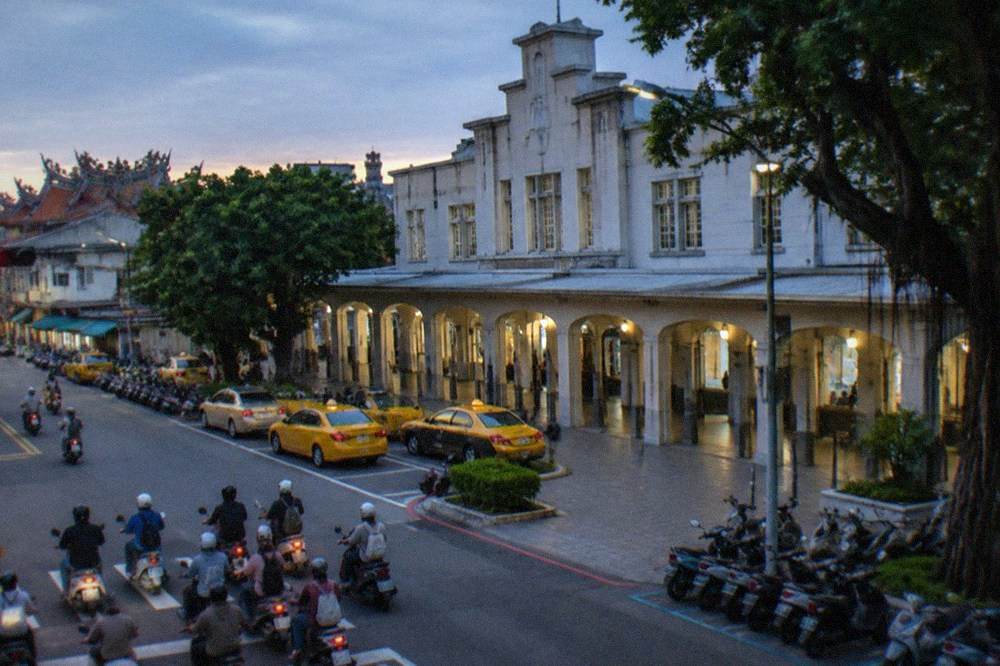
Yes. Tainan's evening street life is extensive and well lit, and no verified advisory identifies night hours as a risk period in the city. The three big outdoor night markets run until midnight or 1 a.m., Chihkan Tower stays open until 21:30, and the practical considerations at night are the same as by day: scooter traffic at crossings, heat in summer and checking which market is actually open on your night of the week.
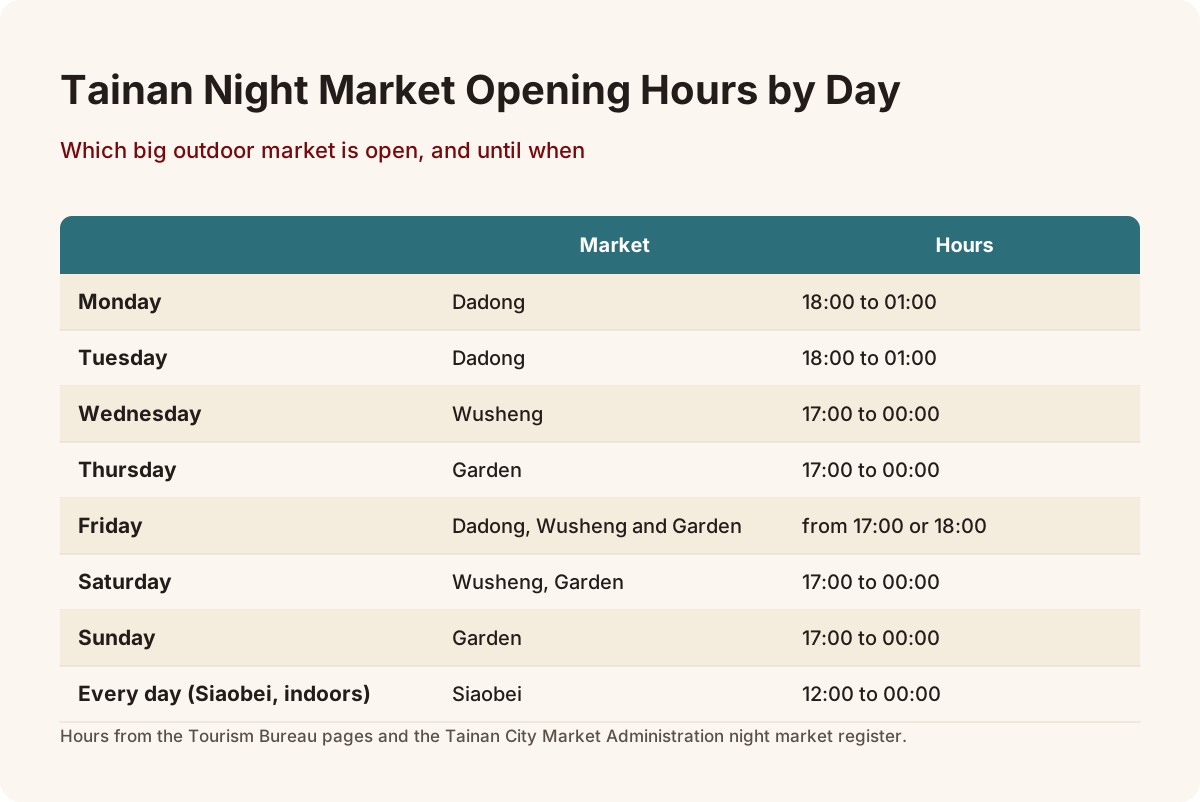
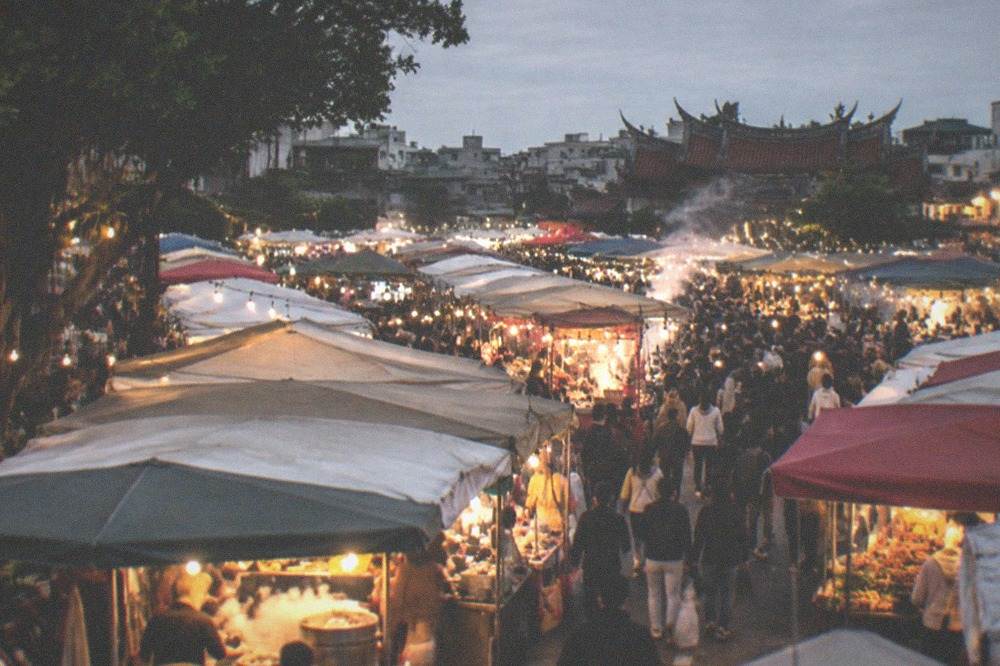
Tainan is, structurally, a night city. The Tourism Bureau's own pages show Garden Night Market open 17:00 to 00:00 on Thursday through Sunday, Wusheng on Wednesday, Friday and Saturday at the same hours, and Dadong on Monday, Tuesday and Friday from 18:00 to 01:00. Siaobei Night Market is indoors and open every day, noon to midnight, which makes it the wrong-night and bad-weather answer. The days rotate, so the first safety tip for an evening out is logistical, not personal: check the schedule before you set out, because the city updates these pages and the days do change.
| Day | Big outdoor markets open | Hours | |---|---|---|---| | Monday | Dadong | 18:00 to 01:00 | | Tuesday | Dadong | 18:00 to 01:00 | | Wednesday | Wusheng | 17:00 to 00:00 | | Thursday | Garden | 17:00 to 00:00 | | Friday | Dadong, Wusheng and Garden | from 17:00 or 18:00 | | Saturday | Wusheng, Garden | 17:00 to 00:00 | | Sunday | Garden | 17:00 to 00:00 |
Siaobei, indoors, runs every day from 12:00 to 00:00. Friday is the only night all three big outdoor markets run; Wednesday is the thinnest, with Wusheng alone. The Tainan City Market Administration maintains the official roster, and the city's night market register is the page to check before you go. Our Tainan night markets guide carries the full picture.
Beyond the markets, the historic core stays active late in a way that surprises visitors. Chihkan Tower's published hours run to 21:30 daily, which makes it one of the few historic sites in the city a visitor can see after dinner, and the Grand Matsu Temple lists hours of 06:00 to 21:00. Streets around Shennong Street and the West Central District are busy through the evening. The sensible precautions are the ones you would take in any city at night: keep your phone out of your back pocket in a crowd, know roughly where you are, and let your hotel know if you are heading out to Yanshui or the coast rather than staying central.
For a structured evening, a guided walk is a reasonable way to cover ground without working out the route yourself, and the solo pick below is the one this site rates for a first full day, day or night.
Is Tainan Safe for Solo Travelers and Women?
Yes. No verified advisory, government or otherwise, identifies solo travel or women's safety as a specific concern in Tainan, and Taiwan's standing advisories from both the US and UK governments describe routine precautions only. The practical solo considerations are the ordinary ones: managing heat, planning around the rotating night market schedule, and knowing that English support is thinner outside the tourist core.
The advisory record here is short because there is little to say. Taiwan's Level 1 US advisory and the UK's standard guidance apply island-wide and contain no Tainan-specific or gender-specific warnings. This site will not dress that up into a statistic, because none exists on an official page. What can be said is structural: Tainan's evening economy is family-scale and street-facing, night markets are crowded and continuously occupied, and the city's temple culture means major sites keep long, public hours.
Solo logistics are worth more attention than solo safety. The free first 8 km bus policy, described in the next section, makes short hops genuinely free with an electronic card, which cuts both cost and the friction of buying tickets in a second language. A solo traveler's real evening risk is arriving on a Wednesday expecting Garden Night Market and finding only Wusheng, or arriving in August without a rain plan. Both are solved by the tables above.
Is Tainan's Public Transport Safe and Easy to Use?
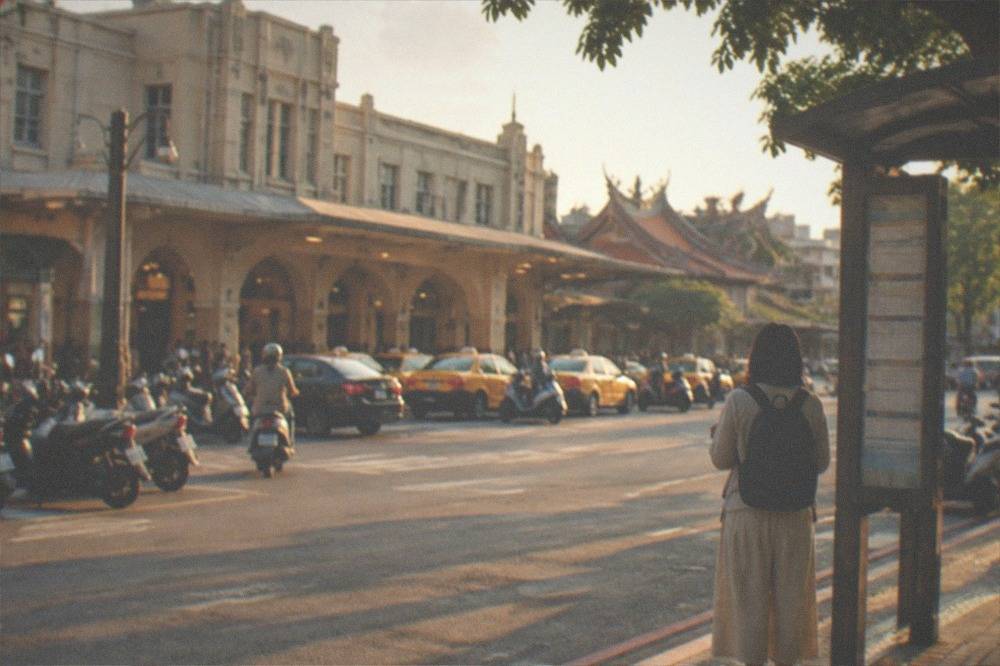
Yes. Tainan's city buses are safe and, for short trips, free with an electronic card under a policy the city runs through the 2026 calendar year: the first 8 km on trunk and branch routes cost nothing with a Citizen Card, iPASS, EasyCard or iCash 2.0, provided you tap on and tap off. The cash fare for the same trip is NT$26. The one thing to plan for is that the HSR station is at Shalun, outside the old city, so every rail arrival involves a transfer.
The bus policy is verified on the city's own ticketing page, which states plainly that trunk and branch routes are free for the first 8 km of travel with a stored-value card. The conditions matter. You must hold one of the four named cards, you must tap on and you must tap off, and tap off is the part visitors miss, since forgetting it can leave you charged the full fare or flagged for a fare dispute. The scheme covers the green, blue, brown, orange, yellow and red route networks and runs for the 2026 calendar year, so treat it as a current policy rather than a permanent one, and re-check in January. The city bus ticketing page is the source.
For arrivals, the structural fact that catches people is geography. Tainan's High Speed Rail station is not in Tainan's center, it is at Shalun in Guiren District, and reaching the old city means a transfer. The verified transfer option that costs nothing is the H31 Tainan City Government Line, free for HSR passengers on production of a ticket stub, with no card tap needed; other passengers pay NT$18 for one section or NT$36 for two, with the section break at the Chimei Museum. The fare from Taipei is NT$1,350 for a reserved standard seat, from Zuoying NT$140, and our Taiwan High Speed Rail and Tainan HSR station guides carry the full arrival picture, including the Kaohsiung to Tainan route.
| Transport | Cost | Condition |
|---|---|---|
| City bus, first 8 km | Free | Electronic card, tap on and tap off, trunk and branch routes |
| City bus, same trip in cash | NT$26 | No card |
| H31 HSR shuttle bus | Free | HSR ticket stub shown at boarding |
| H31 for non-HSR passengers | NT$18 one section, NT$36 two | Section break at Chimei Museum |
| HSR Taipei to Tainan, standard reserved | NT$1,350 | Operator's fare table |
| HSR Zuoying to Tainan, standard reserved | NT$140 | Operator's fare table |
Scooters are where safety and legality genuinely intersect. The verified position is stricter than the folk advice suggests: an International Driving Permit is not automatically sufficient in Taiwan, Taiwan expects it to be registered at a Motor Vehicles Office, and rental shops may refuse without it. This site will not tell you that you can simply turn up with an IDP, and it will not tell you that you cannot, because the exact mechanics were not confirmed on an official page. What it will tell you is that riding without the right paperwork is both a legal risk and an insurance risk, and that the getting around Tainan guide lays out the alternatives, including the bus network above.
Is the Food and Water Safe in Tainan?
The food is safe by any reasonable standard: Tainan's street food culture is cooked-to-order at high heat, served immediately, and no verified source flags a visitor health problem. On water, the honest answer is that no official statement was verified either way, so this site does not claim tap water is safe to drink straight: bottled and filtered water are everywhere, convenience stores are on every corner, and most locals boil or filter rather than drinking it unboiled.
Split the question, because the two halves have different answers. Street food in Tainan is cooked in front of you, at temperature, and eaten within minutes. Beef soup, the city's signature breakfast, is a live demonstration: the Tourism Bureau's food pages describe a dish built around fresh meat dropped into boiling broth to order. Danzai noodles, coffin bread, oyster omelettes, all follow the same logic of high heat and immediate service. That cooking style is precisely the one food-safety guidance recommends for eating anywhere in Asia, and Tainan's version of it is unusually consistent. Our Tainan food guide and Tainan street food pages cover what to eat; the practical safety line is simply to prefer stalls with fast turnover and food cooked in front of you, which in Tainan describes most of them.
Water is the question this site gets asked most and can answer least. The verified position is an absence: no official statement from the water utility was confirmed that says Tainan tap water is safe to drink straight from the tap. The general Taiwanese position is that treated water meets national standards but that aging building pipes and storage tanks are the reason boiling is widely advised, and most locals boil or filter. So the honest, sourceable line is the one at the top of this section: drink bottled or filtered water, which is cheap and everywhere, and do not plan around drinking from the tap. Convenience stores stock bottled water on essentially every corner.
Heat and hydration deserve a mention here because they are the most common actual health complaint. With 186 days a year above 30C, a visitor walking the Anping district or the temple trail in summer needs to drink more than they think, and the free first 8 km bus policy is a legitimate heat-management tool, not just a money saver. A guided food walk is one way to pace a hot day, and the pick below is the culture option this site rates for exactly that.
What About Health Care, Money and Language?
Tainan has functioning health care and a low-friction practical environment, with three caveats worth planning for. Carry cash for night markets and small eateries, since cards are accepted at hotels and chains but not at stalls. English signage is improving in tourist areas but is not universal in older spots. And no specific health-service claim about Tainan is verified on an official page, so this site reports the structural position rather than inventing a statistic.
On money, the pattern is consistent across the practicalities sources: Visa and Mastercard work at hotels, department stores, chain restaurants and convenience stores, while cash remains essential at night markets, street stalls, temples and many taxis. The standard advice is a mix, with convenience-store ATMs, at 7-Eleven and FamilyMart, the reliable withdrawal points. There is no verified official fee schedule for taxis, so this site prints none; what can be said is that taxis are metered and plentiful, and that the bus network covers most of what a visitor needs.
On language, the city's own initiatives are the story. Tainan runs an English-Friendly Emblem program, and tourist areas, key markets, buses and public facilities increasingly carry bilingual Chinese-English signage, with Japanese and Korean appearing at major sites. It is not universal, especially in smaller and older establishments, and occasional signage errors have been noted in local reporting. The practical read: the tourist core is manageable in English, the outer districts are less so, and a translation app closes most of the gap. Our English in Tainan guide goes deeper.
On health care, the structural claim is safe and the specifics are not. Taiwan has a national health system with visitor access through fees, and pharmacies and clinics are present throughout the city, but no specific claim about Tainan's hospitals, costs or visitor procedures was verified on an official page, so this guide does not manufacture one. The genuinely useful verified planning facts are the environmental ones: heat, rain and typhoon timing, all covered above. For US citizens specifically, our is it safe to travel to Taiwan right now answer carries the advisory detail.
Are Tainan's Coastal and Rural Day Trips Safe?
Yes, with weather as the one planning variable. The coastal and rural destinations around Tainan, Qigu, Sicao, Beimen, Yanshui, are low-traffic, low-crime environments by any verified measure, and the boat operations are licensed commercial services, with both Sicao routes costing NT$200 full fare. The considerations are sun exposure on the exposed flats, midges near the mangroves, and checking weather before committing to a boat day.
The Sicao Green Tunnel is the model case. The Tourism Bureau's page for the site lists daily boat operations from 08:00 to 16:00 at NT$200 full fare, with concessions for children, and both routes, the Green Tunnel and the longer Taijiang route, cost the same. Boats depart when roughly 30 passengers have assembled or after a wait, and operations are weather dependent, which is the honest reason to book or check ahead rather than any safety concern. The mangrove environment is the point of the trip, and insect repellent is standard kit for mangrove boardwalks anywhere in the tropics.
Qigu Salt Mountain carries a NT$50 cleaning fee per person on foot, NT$100 per car, and is open 09:00 to 18:00. The site is an open, exposed salt landscape, so the safety arithmetic is sun and heat rather than anything else: water, a hat, and sensible timing. The black-faced spoonbill reserve at Qigu is a winter season draw, with the birds present roughly from autumn to spring, and the viewing infrastructure is built for it.
For the coast's food, the oyster and ecological tour below is the pick this site rates, and it bundles the boat experience with a meal, which removes the guesswork from a coastal day.
A coastal day rewards the same calendar logic as the city. The exposed flats at Qigu and the boat rides at Sicao are at their best in the dry months, when the wind is steady and the skies are clear, and a winter visit doubles as spoonbill season. In late summer, check the weather before you commit, because boat operations are weather dependent and a typhoon-day announcement suspends them along with everything else.
Common Questions About Safety in Tainan
Is Tainan safe at night?
Yes. The big night markets run until midnight or 1 a.m., Chihkan Tower is open until 21:30 daily, and no verified advisory flags night hours as a risk period. The practical evening concerns are scooter traffic at crossings and checking which market is open on your night of the week.
Is Tainan safe for solo female travelers?
No verified advisory from the US or UK governments identifies solo or women's travel as a specific concern in Tainan or Taiwan, both of which carry only routine-precaution guidance. The practical considerations are heat, hydration and night market scheduling, not personal security.
Can you drink tap water in Tainan?
This site does not claim you can. No official statement was verified either way, and most locals boil or filter. Bottled and filtered water are everywhere, convenience stores are on every corner, and that is the reliable answer.
Is Tainan safe during typhoon season?
Yes, with planning. Typhoon risk concentrates in the late summer months, and the city government may declare a typhoon day on which attractions and transport suspend. The Tainan Art Museum's own page states it closes on such announcements. October to March is the dry, comfortable half of the year.
Is street food in Tainan safe to eat?
Tainan's street food is cooked to order at high heat and eaten immediately, which is the cooking pattern food-safety guidance recommends. Prefer stalls with fast turnover, which in Tainan describes most of them.
Are Tainan's buses safe for visitors?
Yes, and short trips are free with a Citizen Card, iPASS, EasyCard or iCash 2.0 under the city's 2026 policy, provided you tap on and tap off. The cash fare for the same trip is NT$26.
The summary this site stands behind is short. Tainan is safe in the ways that matter, the advisory record is as clean as it gets, and the risks that deserve your planning time are the weather calendar and the road. Bring water in summer, an umbrella from May to September, check the night market schedule before your evening, and read the scooter licensing rules before you ride one. For the fuller picture of what to do with a safe city at your disposal, start with Tainan Travel Guide and the Tainan attractions overview.